

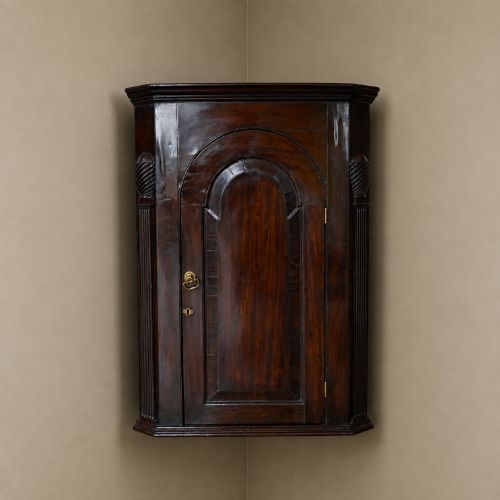
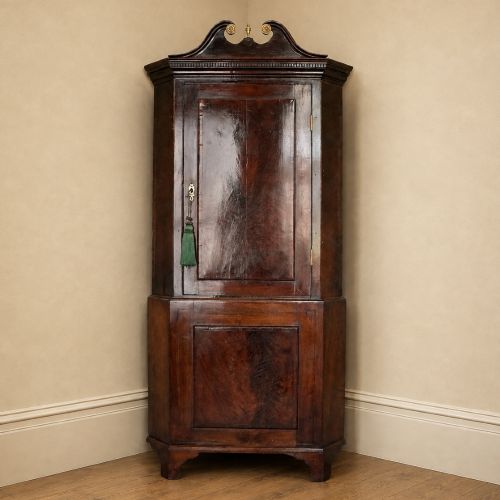
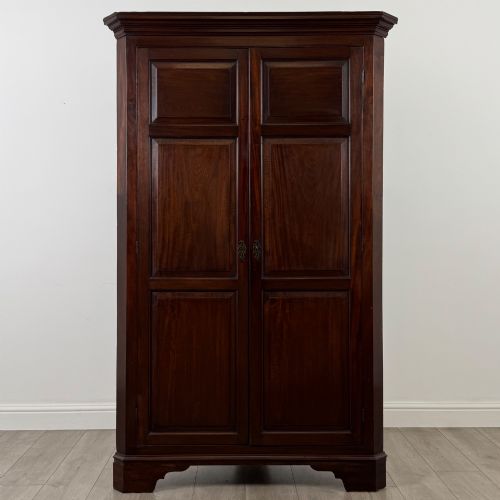
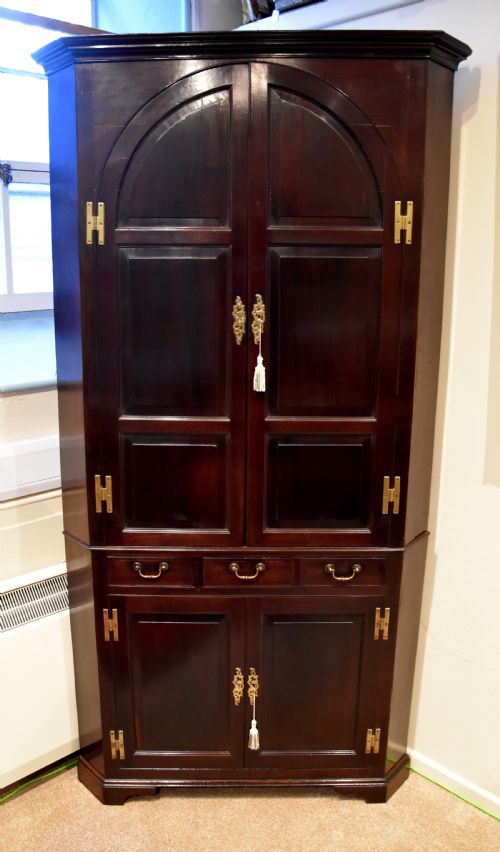


Panelled Mahogany Corner Cupboard
A panelled mahogany corner cupboard turns dead angles into storage, bringing rich grain and period timber to a neglected room.
Panelled Mahogany Corner Cupboard
A panelled mahogany corner cupboard fits snugly into the angle of a room, saving floor space while providing sturdy storage behind timber doors. These practical pieces range from small wall-hanging cabinets to tall floor-standing cupboards.
Most examples found here date from the Georgian era and the eighteenth century, constructed to utilise awkward corners in period interiors. Both standing and hanging formats appear frequently across these listings.
The timber varies from standard mahogany to figured Cuban mahogany and flame mahogany, often paired with satinwood inlay. Makers built these corner cabinets to last, using solid construction tailored to domestic rooms.
How They Were Made
Cabinet makers built these pieces using solid mahogany and figured Cuban mahogany, frequently selecting flame mahogany veneers for prominent door panels. Internal shelves and structural carcases relied on sturdy secondary timbers to bear weight safely.
Joinery techniques included mortise and tenon frames for the panelled doors, ensuring stability against seasonal humidity changes. Brass hardware such as hinges and escutcheons secured the doors and added functional detail to the facade.
Panelled Mahogany Corner Cupboard Retail Price Guide 2026
Typical asking prices for panelled mahogany corner cupboard among the pieces listed under this phrase on Sellingantiques today, from the lower quarter to the upper quarter. They describe what is for sale here now, not the wider market.
The listings span the Georgian period, the eighteenth century, and the nineteenth century, executed in mahogany, Cuban mahogany, and flame mahogany.
What Varies in Quality
The selection of timber dictates much of the visual merit, with highly figured Cuban mahogany and rich flame mahogany setting superior examples apart from plain stock. Subtle additions like contrasting satinwood inlay indicate more ambitious workshop production.
Proportion and scale distinguish standard provincial output from pieces commissioned for substantial country houses. Crisp moulding profiles and original brass hardware demonstrate a higher standard of cabinet-making skill.
The Panelled Mahogany Corner Cupboard Glossary
- Corner Cupboard
- A cabinet specifically shaped with a flat front and angled sides to fit directly into the ninety-degree corner of a room.
- Cuban Mahogany
- A dense, dark timber imported from the Caribbean, prized for its rich colour and exceptional grain patterns in eighteenth-century furniture.
- Flame Mahogany
- A veneer cut from timber where the branch meets the trunk, producing a rippling flame-like pattern across door panels.
- Satinwood Inlay
- Contrasting light-coloured wood inserted into recesses in the mahogany surface to create decorative borders or motifs.
- Hanging Cabinet
- A wall-mounted version designed to be fixed securely at height, leaving the floor space underneath entirely clear.
Panelled Mahogany Corner Cupboard: Frequently Asked Questions
How do I hang a wall cabinet safely?
Hanging corner cupboards require secure fixing directly into masonry or heavy wall studs using appropriate brackets. Because the solid mahogany construction carries significant weight, professional installation prevents any strain on the original fixings.
Ensure the height allows easy access to the interior shelves while clearing existing skirting boards or dado rails. Placing the cabinet correctly in the corner distributes the load evenly against the supporting walls.
What is the difference between standing and hanging cupboards?
Standing cupboards rest directly on the floor, often featuring a base section or substantial plinth that anchors the tall frame. These tall pieces offer much greater internal capacity for heavy storage.
Hanging cupboards mount directly to the wall above furniture like sideboards or tables. They utilise vertical space without occupying precious floor area in smaller rooms.
How do I care for mahogany timber?
Mahogany responds best to a stable environment away from direct heat sources and strong sunlight that can fade the rich colour. Regular dusting with a soft, dry cloth preserves the polished surface without building up residue.
Occasional application of traditional beeswax feeds the timber and maintains the natural lustre of the grain. Avoid modern liquid polishes containing silicone, which can penetrate and damage historic finishes.
How can I tell a Georgian cupboard from a Victorian one?
Georgian and eighteenth-century pieces typically display simpler, cleaner architectural lines with hand-cut dovetails and timber pegs. The proportions reflect earlier interior standards, often featuring fielded panels and brass H-hinges.
Victorian pieces, such as those from the mid-nineteenth century, sometimes introduce heavier mouldings or different internal configurations. Examining the secondary woods and construction marks helps confirm the manufacturing period.