



Glazed Corner Bookcase
A glazed corner bookcase maximises awkward angles by turning wasted wall space into handsome display for your volumes.
Glazed Corner Bookcase
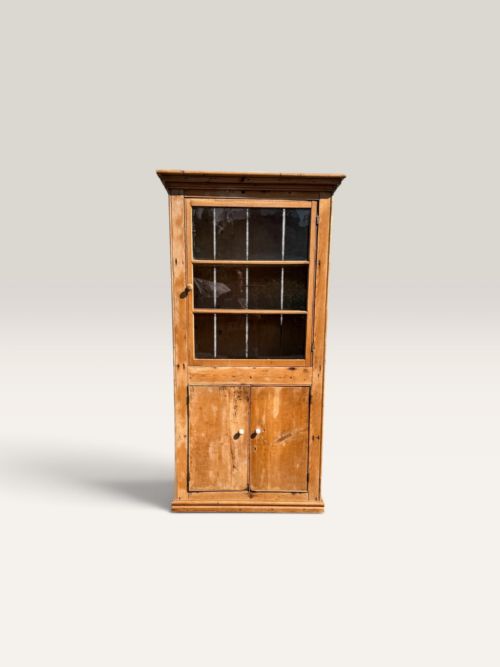
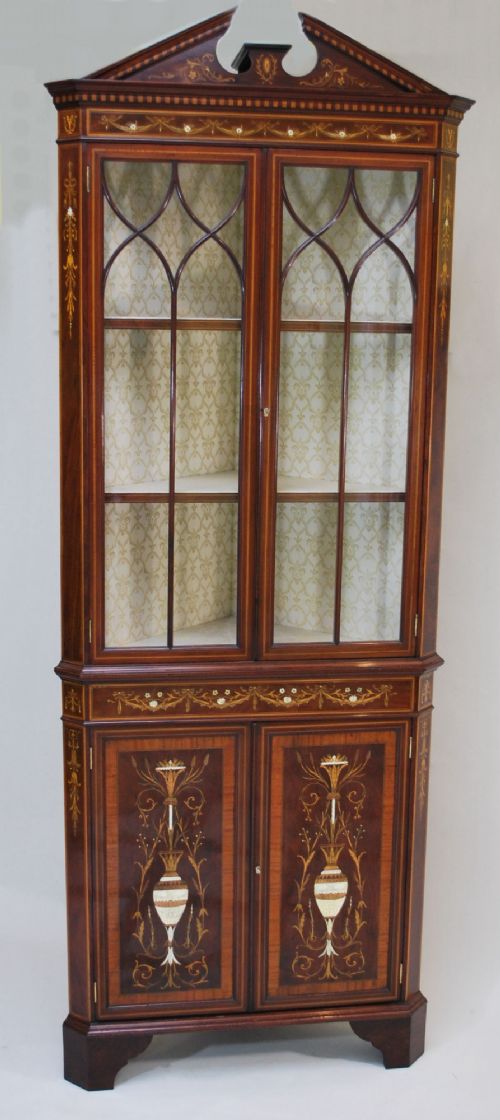
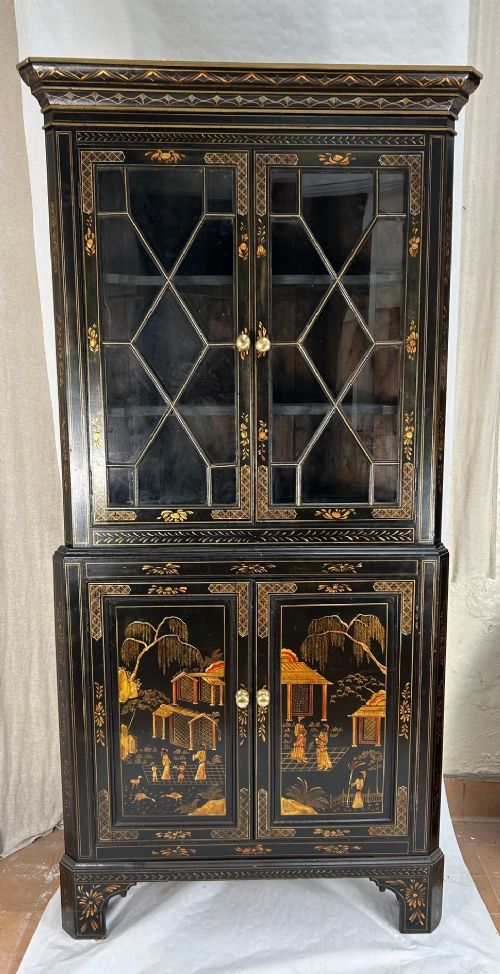
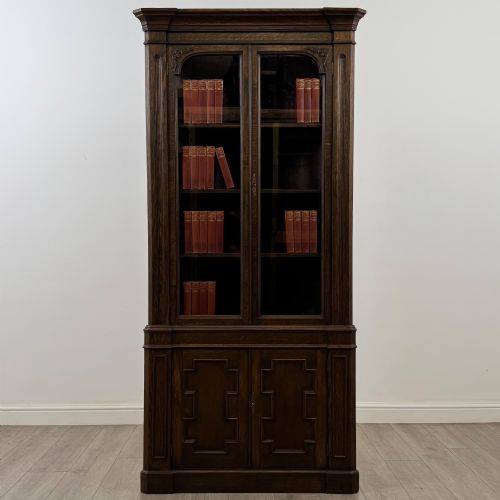
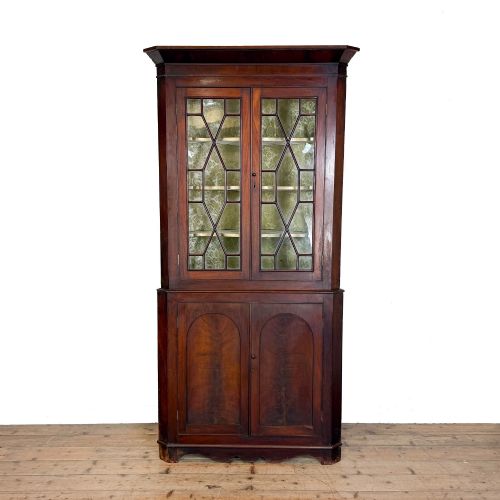
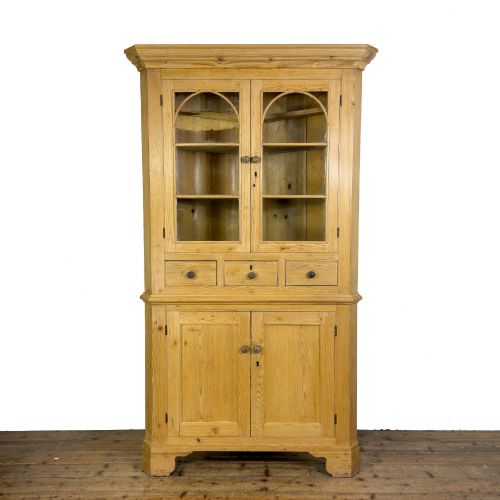
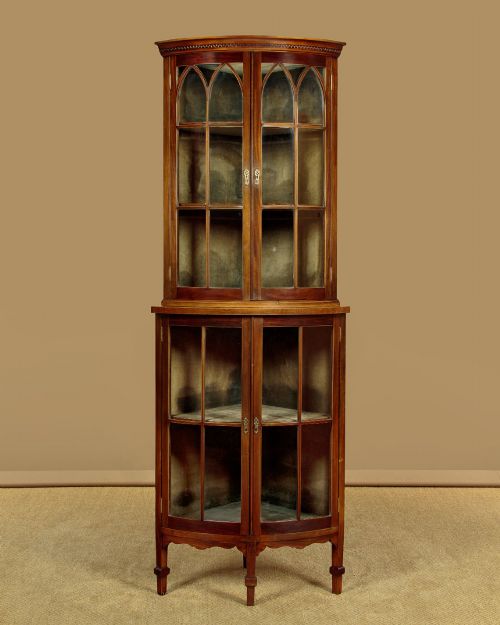
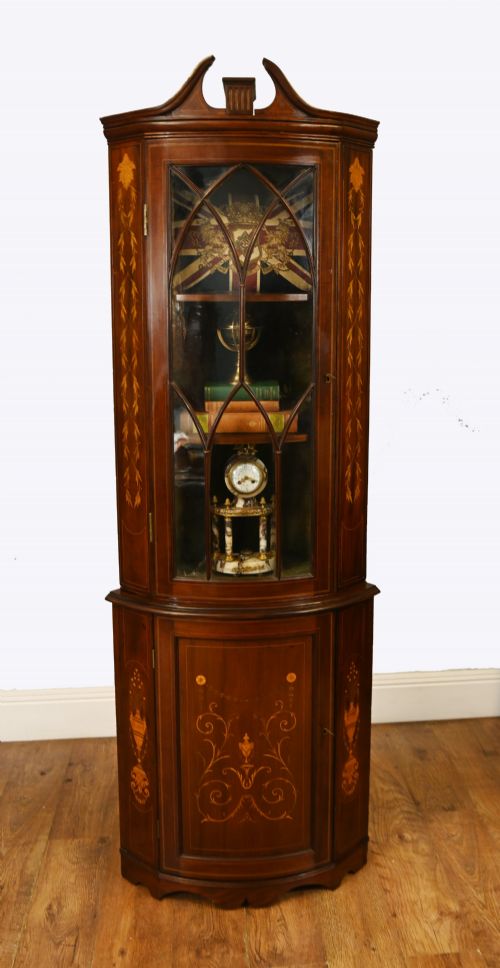
A glazed corner bookcase provides fitted shelving designed specifically to slot into ninety-degree room junctions. The pieces you encounter most often span the Edwardian and Victorian eras, frequently rendered in rich mahogany with glass-paned doors.
Makers shaped these units to sit flush against domestic walls, ranging from compact single-height hanging cupboards to imposing double-height standing variations. You will find forms spanning Georgian elegance through to later Art Deco designs.
The primary purpose remains housing books and treasured objects safely behind protective glazing while drawing the eye toward neglected corners of a room.
Materials and construction
Cabinet makers relied heavily on mahogany as a foundational timber, frequently embellishing surfaces with delicate satinwood inlay, marquetry, and brass mounts. Oak, walnut, and pine also appear across different regional workshops and periods.
Glazing techniques dictate the visual weight of each piece, utilising leaded, pitch, or astragal glass bars to secure the individual panes within the wooden framework. Joinery methods range from pegged joints in earlier examples to precision machine-cut elements in twentieth-century pieces.
Barrel-backed corners were originally built to trap warmth around the reader, proving that eighteenth-century bookworms understood the value of a snug reading nook.
Distinguishing quality
The grade of a piece hinges on the crispness of its marquetry work, the choice of figured veneer, and the delicacy of the timber mouldings. Superior examples demonstrate rigorous symmetry in the glazing bars and well-matched grain patterns across the doors.
Maurice Adams·Goodhall Lamb and Heighway·Edwards And Roberts
The Glazed Corner Bookcase Glossary
- Astragal glazing
- Timber glazing bars that divide glass panes into smaller geometric sections. These delicate wooden strips provide structural support while framing the contents within.
- Marquetry
- Decorative veneer patterns applied to furniture surfaces using various wood types to create pictorial or abstract designs. Craftsmen carefully cut and fit these contrasting veneers together by hand.
- Vitrine
- A glass-fronted display cabinet used specifically for showcasing porcelain, books, or curiosities. These pieces place maximum visual emphasis on the items stored inside through extensive use of glass.
- Serpentine front
- A furniture front characterised by a wavy contour featuring a convex centre flanked by concave curves. This shaping demands advanced cabinet-making skill to execute cleanly.
- Bow front
- A convex curved cabinet front that projects outward in a smooth arc. The curvature softens the hard geometry typical of standard corner furniture.
Glazed Corner Bookcase: Frequently Asked Questions
How do I secure a corner cabinet to the wall?
Tall or standing corner units require discreet wall brackets near the top to prevent tipping, particularly on uneven historic flooring.
Most pieces feature pre-existing structural anchor points or can be secured safely through the internal upper framing without damaging visible exterior surfaces.
Are these cabinets suitable for small rooms?
These units perform exceptionally well in compact spaces because they utilise dead wall junctions that standard rectangular bookcases cannot occupy.
Single-height hanging models lift furniture off the floor entirely, maintaining an open flow through smaller living areas.
How do I distinguish Georgian from Edwardian pieces?
Georgian examples typically display heavier timber construction, hand-cut dovetails, and simpler internal adjustments. Edwardian interpretations often revive earlier styles with lighter proportions, machine-finished elements, and intricate satinwood inlay.
Secondary woods and backboards also help identify the period through historical timber availability.
Can adjustable shelving be added safely?
Many antique units rely on fixed wooden support glides or traditional notched interior framing to hold the shelves in place. Inserting modern brass shelf tracks alters the original timber and reduces historical integrity.