


Early Victorian Mahogany Furniture
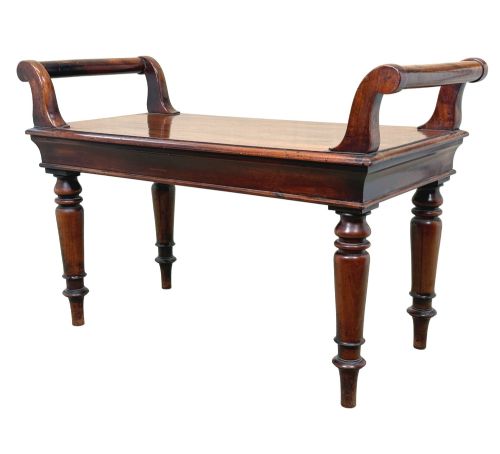
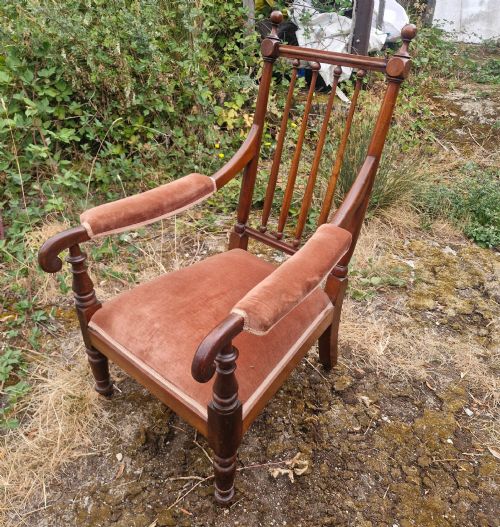
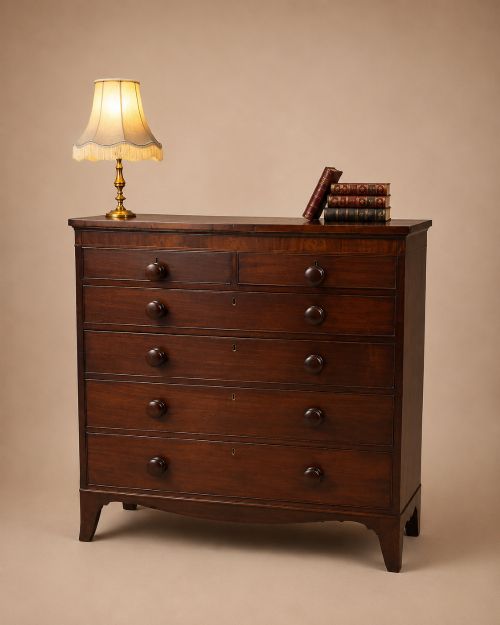
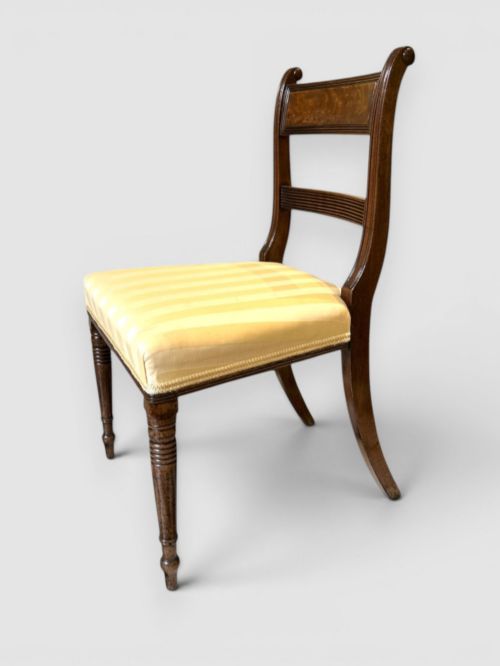
Early victorian mahogany furniture brings dense timber and confident proportions into a room, offering functional pieces built to last.
Early Victorian Mahogany Furniture
Early victorian mahogany furniture encompasses a range of domestic timber items made during the nineteenth century, blending formal Regency lines with heavier Victorian utility. Buyers seeking early victorian mahogany furniture will encounter dining chairs, chests of drawers, bookcases, and various tables designed for practical household use.
What varies in quality
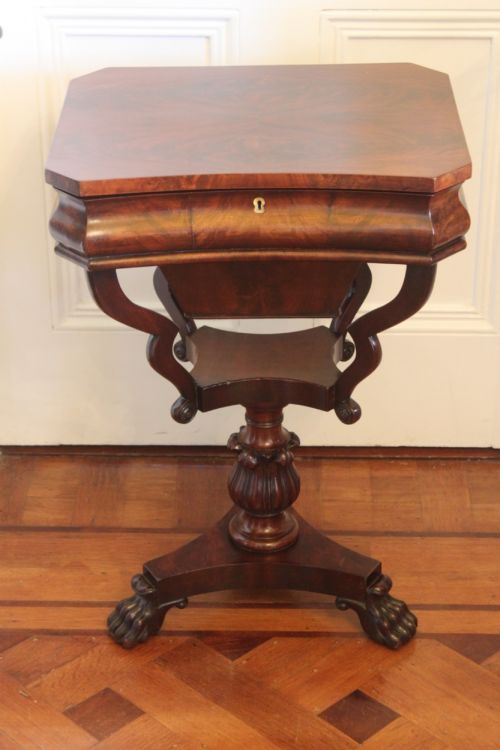
Quality differences depend largely on the selection of timber veneers, such as flame mahogany or curl grain, and the crispness of any hand-carved details. Pieces demonstrating unusually small or large proportions executed with balanced symmetry stand apart from standard production.
The integration of functional mechanics, such as in metamorphic reading tables, revolving tiers, and secretaire drawers, also dictates the standard of execution. Maker attribution and the retention of original brass fittings further distinguish exceptional examples from simpler utilitarian items.
The selection includes specialised forms such as revolving dumb waiters, 20-drawer collectors cabinets, metamorphic reading tables, and boat-shape canterburys.
Gillows·Howard and Sons·Heal and Son·Holland and Sons
The Early Victorian Mahogany Furniture Glossary
- Flame mahogany
- A veneer cut from the fork of the mahogany tree to create a distinctive flickering flame pattern. This highly decorative figure is typically reserved for the primary display surfaces of high-end cabinetry.
- Pembroke table
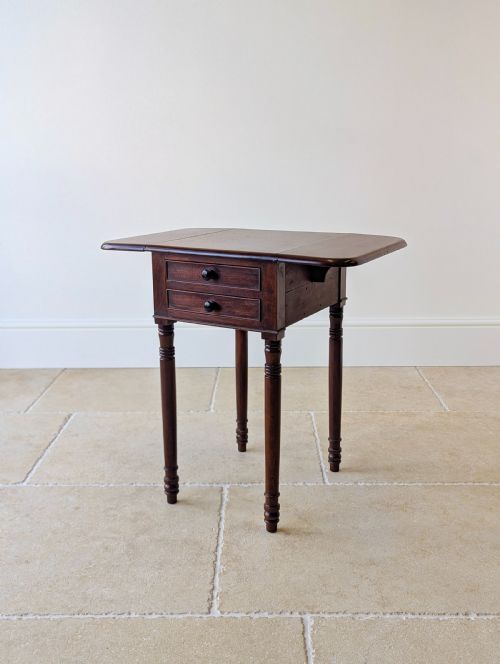
- A small table featuring two hinged drop leaves on opposing sides. It often includes one or more drawers and was traditionally used for breakfast or needlework.
- Whatnot
- An open shelving unit with three or more tiers supported by vertical columns or legs. It was designed for displaying ornaments, books, or writing materials.
- Chiffonier
- A low sideboard or cabinet featuring a combination of drawers and enclosed shelving below. It frequently incorporates a small shelf or mirror superstructure on top.
- Dumb waiter
- A tiered revolving stand placed beside a dining table to hold dishes and cutlery. This allows diners to serve themselves without constant servant attendance.
Early Victorian Mahogany Furniture: Frequently Asked Questions
What is a pembroke table used for?
A pembroke table functions as a versatile occasional or breakfast table with drop leaves that raise when extra surface area is needed. Its compact footprint makes it suitable for smaller rooms or placement beside seating.
Cabinet makers frequently incorporated small drawers for sewing accessories or writing materials. This adaptability allowed the table to move easily around the home as daily requirements shifted.
How do you identify flame mahogany?
Flame mahogany displays a distinctive, fiery wood grain pattern created by slicing across the branch bifurcations of the tree. This decorative veneer appears primarily on the drawer fronts and primary panels of finer nineteenth-century cabinets.
Makers positioned these striking grain patterns symmetrically to enhance the visual depth of the piece. Standard mahogany surfaces lack this intense figuring, utilising straight or simpler grain lines instead.
Where were tiered whatnots placed?
Tiered whatnots stood against drawing room or parlour walls to hold books, ceramics, and decorative objects. Their open shelving kept frequently used items accessible.
The multiple tiers utilised vertical space efficiently without crowding the floor area. They served as both storage and display furniture in nineteenth-century interiors.
What distinguishes a chiffonier from a sideboard?
A chiffonier is generally smaller than a dining room sideboard and includes enclosed lower cupboards with an optional upper shelf. It was typically kept in the parlour or living quarters rather than the formal dining room.
These pieces provided convenient storage for table linen, writing supplies, or spirits close to hand. Their modest proportions accommodated the scale of domestic nineteenth-century rooms.