


Pale Wood Desk
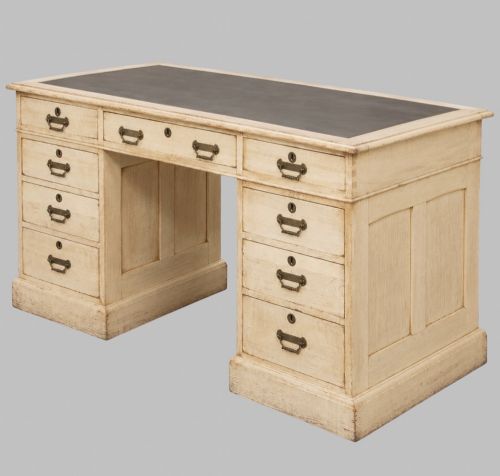
These pale wood desk examples and related tables offer functional surfaces in lighter timbers like oak, pine, and bleached oak.
Pale Wood Desk
When you search for pale wood desk items, you encounter a selection of tables, servers, and desks created from lighter timbers. The examples span periods from the Victorian era through the 1930s, reflecting various regional influences.
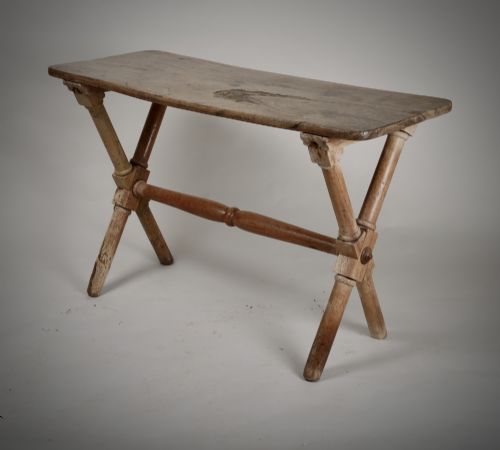
The objects on this page include items designated as desks alongside a range of tables such as trestle tables, side tables, and tavern tables. Materials range from oak and pine to beech, mahogany, maple, poplar, and ash.
Stylistic origins vary widely, incorporating English country, French provincial, rustic farmhouse, Spanish traditional, and Art Deco designs. Many pieces demonstrate utilitarian forms intended for practical use in kitchens, dining rooms, and studies.
Materials and construction
Construction relies on solid timbers such as oak, pine, ash, and elm, often combined with secondary woods like poplar and beech. Surfaces are frequently scrubbed, hand-stripped, or bleached to achieve a pale finish.
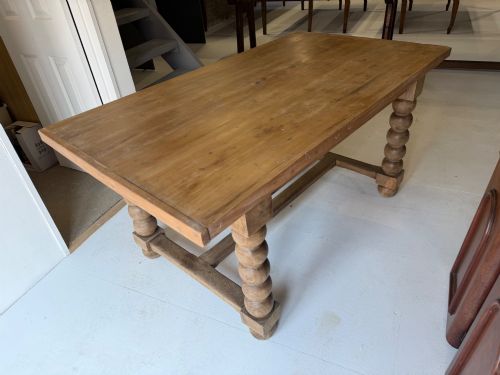
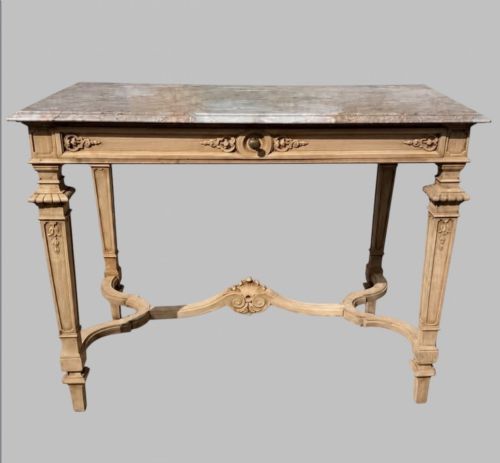
Joinery techniques support sturdy everyday use, seen in trestle forms, bobbin legs, and integrated drawers. Marble tops also appear on select side pieces, adding a contrasting surface texture to the wooden frames.
Bobbin legs bring a cheerful spool-like rhythm to nineteenth-century tables, proving that even a humble support can join the fun.
Assessing quality and finish
Quality rests in the choice of timber and the integrity of the original construction, whether dealing with a substantial trestle table or an English carved desk. The success of surface treatments, such as hand-stripping or bleaching, influences the visual coherence of the piece.
Detailing ranges from simple rustic construction to carved decorative elements and turned supports like bobbin legs. The integration of functional components, including drawers, demonstrates the maker's attention to practicality.
The Pale Wood Desk Glossary
- Scrub top
- A wooden table top that has been repeatedly scrubbed clean, resulting in a pale, weathered surface texture. This finish is typical of utilitarian kitchen and work tables.
- Trestle table
- A table consisting of two or more trestles supporting a long horizontal board or top. This form provides stable support without obstructing legroom.
- Bobbin legs
- Furniture legs turned on a lathe to resemble a string of bobbins or spools. This decorative turning style appears on 19th-century pieces.
- Bleached oak
- Oak timber treated to lighten its natural colour. This process highlights the grain while removing darker tones.
- Sycamore
- A dense hardwood used in furniture and table construction. It provides a pale, fine-grained surface suitable for heavy use.
Pale Wood Desk: Frequently Asked Questions
What periods do these pale wooden items come from?
The listings span the Victorian era, the nineteenth century, and the 1930s. Pieces reflect the specific manufacturing methods and stylistic preferences of those eras.
Designs draw on English, French, and Spanish traditions, showing a range of vernacular and revival styles.
Are these pieces made from solid timber?
Construction utilises solid woods such as oak, pine, ash, elm, maple, and mahogany. Secondary timbers like poplar and beech also appear in internal or structural parts.
Surfaces are frequently found in their natural state or treated with hand-stripping and bleaching techniques to lighten the wood.
How do I care for a scrubbed or bleached surface?
Unsealed and scrubbed wooden surfaces benefit from gentle cleaning without harsh chemical detergents. Regular dusting and prompt attention to spills help maintain the condition of the timber.
Applying appropriate waxes or oils, where suited to the finish, can protect the wood from excessive drying.
What styles are represented in this selection?
The selection includes French provincial, rustic farmhouse, English country, Spanish traditional, and Art Deco styles. These regional approaches determine the overall proportions and decorative details.
Form follows function across tables and desks, with trestle bases, turned legs, and marble tops marking different regional traditions.