




Long Narrow Console
A long narrow console provides a slender surface for narrow hallways and corridors, using minimal floor space while offering generous length.
Long Narrow Console
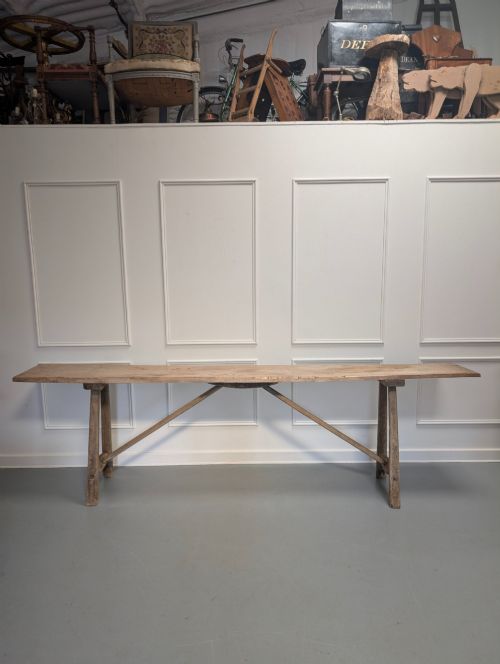
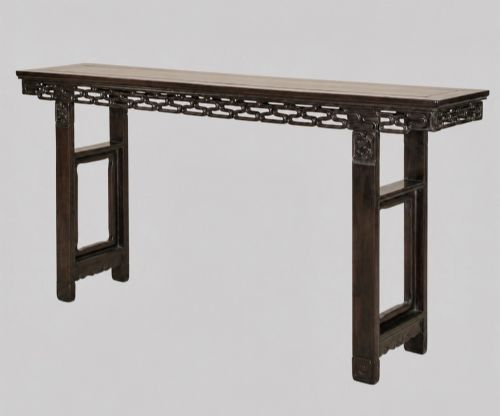
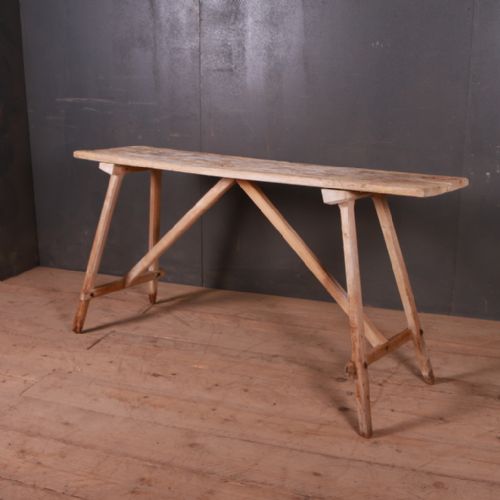
A long narrow console serves as a practical surface for hallways, corridors, and reception spaces where floor space is at a premium. The selection includes Chinese altar tables, French trestle tables, and English oak examples spanning the nineteenth and early twentieth centuries.
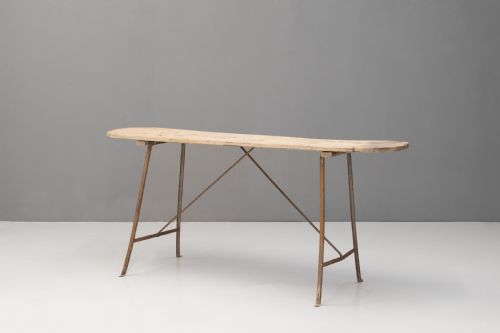
Forms vary from scrubbed pine laundry tables and preparation tables to butler consoles and potboard servers. These pieces combine extended proportions with shallow depths, designed specifically to sit flat against walls without blocking movement.
Materials and construction
Construction relies heavily on timbers such as pine, oak, elm, poplar, and hardwood, often finished with paint or left in a scrubbed state. Joinery methods support utilitarian daily use, utilising sturdy trestle frames, gateleg mechanisms, and Gothic underframes.
Makers utilised available regional woods, pairing durable tabletops with robust supports to handle heavy domestic or ritual duties. Surfaces show the marks of preparation and service, retaining patinas developed through decades of active use.
Some tables spent decades in French laundries and English ships, working hard before earning a quiet retirement in a hallway.
Evaluating quality and proportion
Quality rests in the integrity of the timber and the balance of the proportions, particularly how the length relates to the shallow depth. Superior examples maintain structural stability without heavy restoration, preserving original surfaces and joints.
The character of the timber grain, whether scrubbed pine, figured oak, or dense hardwood, dictates the visual weight of the piece. Details such as underframe carving or potboard lower shelves elevate utility into fine craftsmanship.
The Long Narrow Console Glossary
- Console table
- A table designed to be fixed against a wall, typically supported by legs or brackets at the front. These pieces suit narrow circulation areas.
- Trestle table
- A table consisting of two or more supports connected by a longitudinal beam. This construction provides ample legroom along the length of the console.
- Potboard server
- A serving table featuring a lower shelf for storing pots and kitchen utensils. The lower board adds structural rigidity to the base.
- Altar table
- A traditional Chinese form characterised by elongated proportions and recessed legs. These tables often feature upturned ends or carved spandrels.
- Scrubbed pine
- Timber that has been repeatedly scrubbed clean, resulting in a pale, matte surface. This finish reveals the natural grain and wear of the wood.
Long Narrow Console: Frequently Asked Questions
Where should I place a long narrow console?
These pieces fit naturally in entrance halls, narrow corridors, and passage spaces where standard furniture blocks movement. Their shallow depth allows them to sit flush against walls while offering a useful surface for lamps and everyday items.
They also function well behind sofas or in dining rooms as serving surfaces, utilising length rather than width to occupy minimal floor area.
How do I clean a scrubbed pine table?
Scrubbed pine surfaces respond best to gentle cleaning with a damp cloth and mild soap. Avoid harsh chemical cleaners that strip the pale, matte finish accumulated over decades of use.
Allow the wood to dry naturally after cleaning. Occasional light waxing can protect the timber without adding unwanted gloss to the historic surface.
Are these tables suitable for daily use?
Most of these tables originated as functional preparation, laundry, or altar furniture built to handle active tasks. Their sturdy frames of oak, pine, and hardwood easily withstand daily household demands.
Using coasters and mats helps protect historic wooden surfaces from moisture rings and heat marks during everyday placement of objects.
How do I identify Chinese altar tables?
Chinese altar tables feature distinct proportions, combining great length with very shallow depths and recessed legs. Many examples incorporate subtle upward curves at the short ends and open carved spandrels beneath the top.
Constructed from dense hardwoods like those from the Qing dynasty, these tables carry a different visual weight and joinery style compared to European country furniture.