

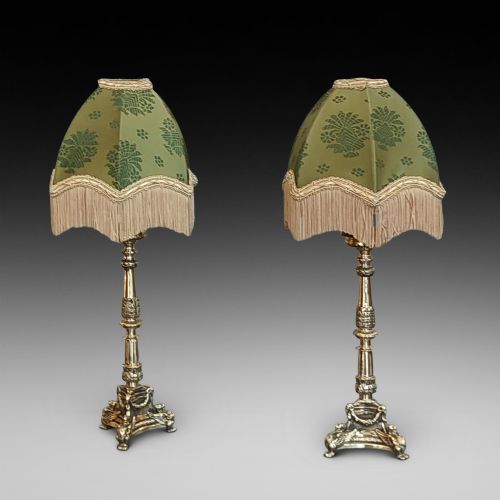
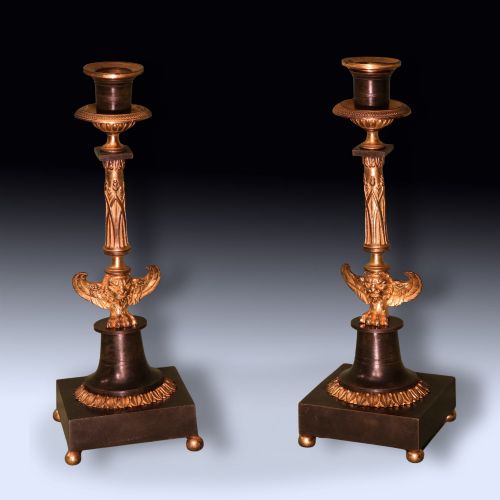
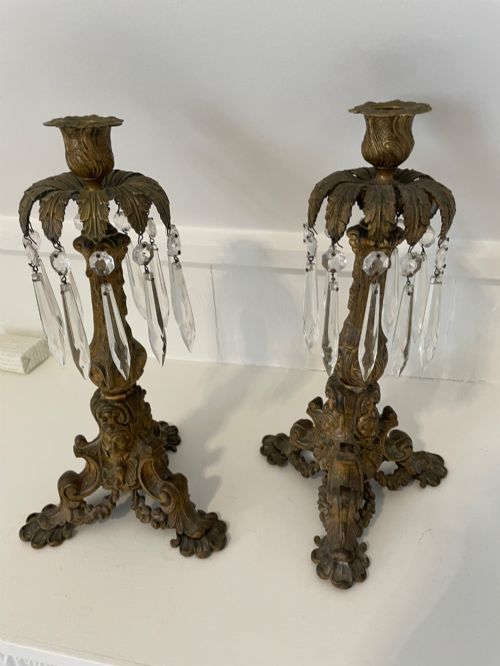
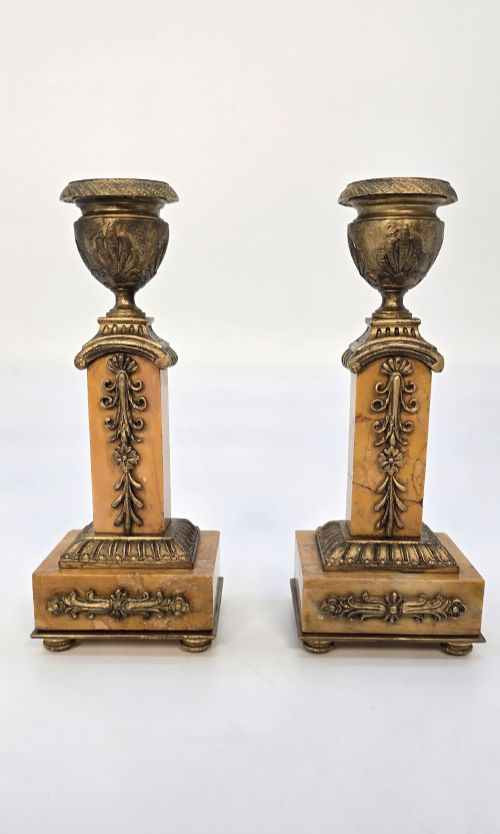
Paired Bronze Candlesticks
Paired bronze candlesticks bring symmetry and weight to a mantelpiece, combining cast metal and classical design across the nineteenth century.
Paired Bronze Candlesticks
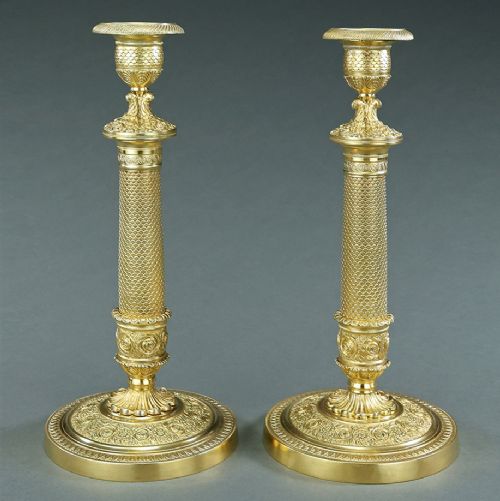
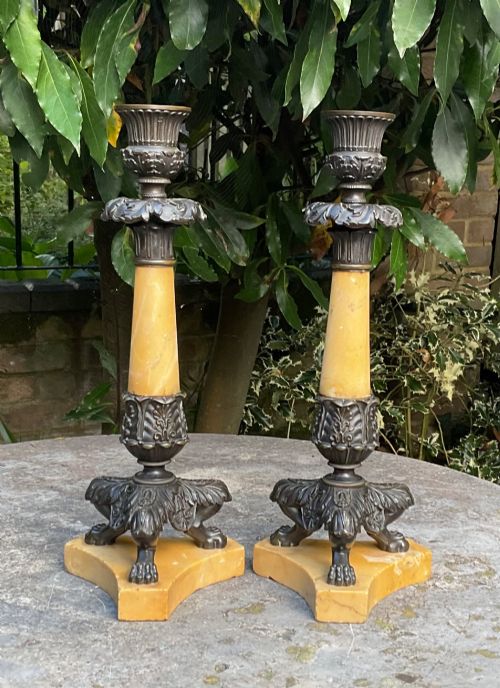
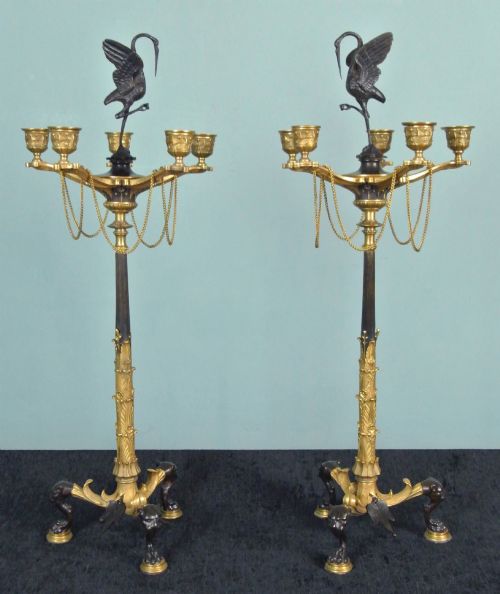
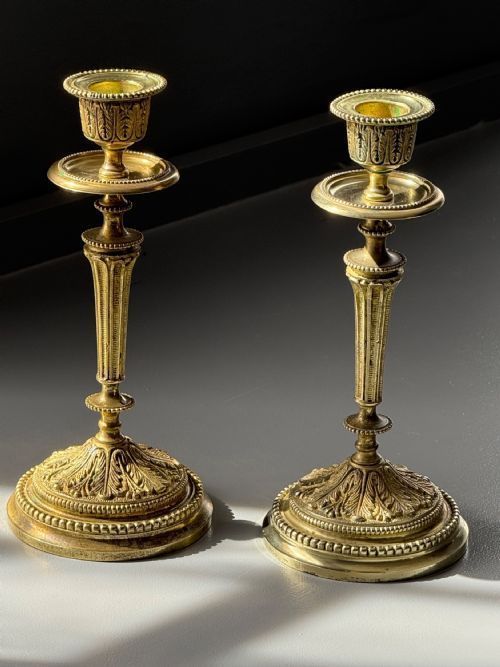
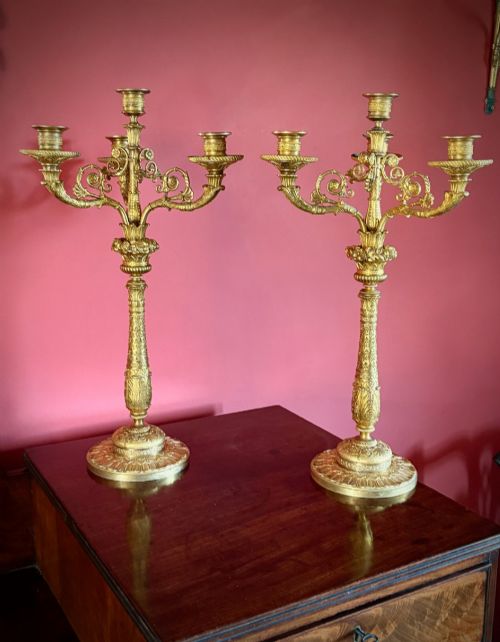
When searching for paired bronze candlesticks, buyers encounter items designed to burn candles or hold taper lights in pairs, often associated with French Empire, Regency, and Louis XVI styles. These domestic objects appear alongside taller candelabra and occasional table lamps adapted from earlier forms.
The nineteenth century dominates the available options, with pieces stretching from eighteen hundred into the early twentieth century. Common materials include patinated bronze paired with gilt bronze, ormolu, marble bases, and occasional substitutions like spelter.
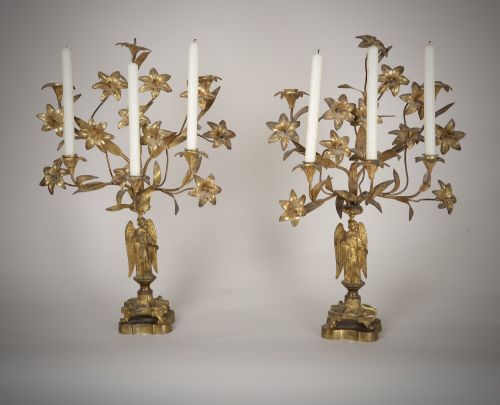
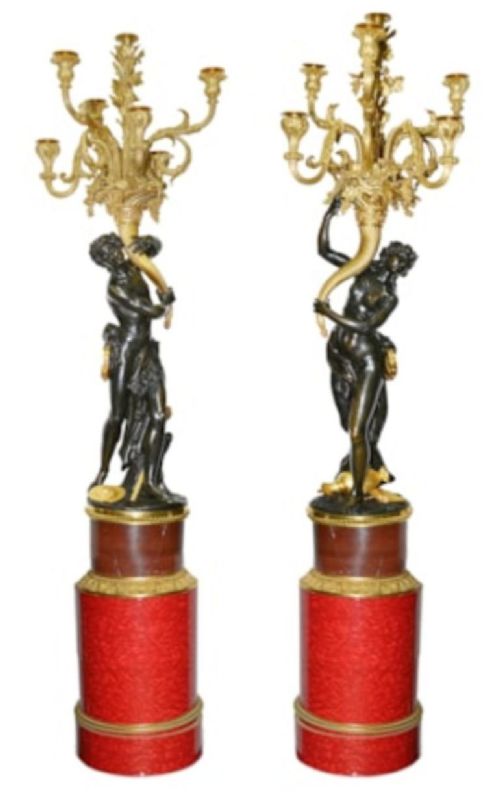
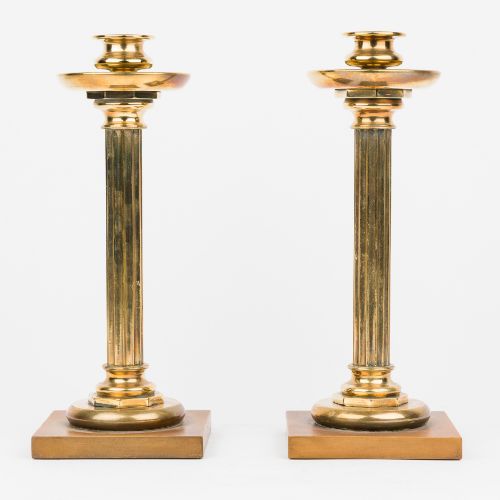
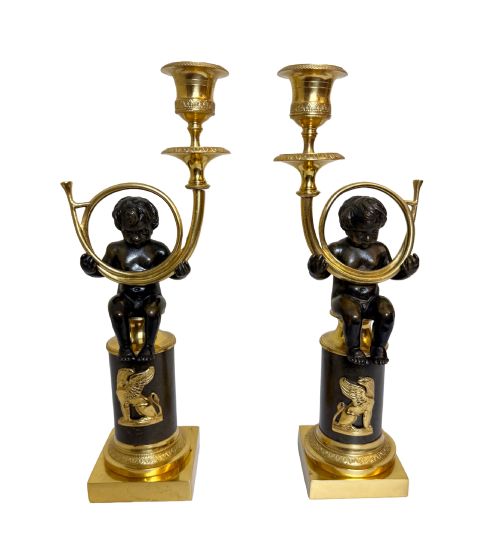
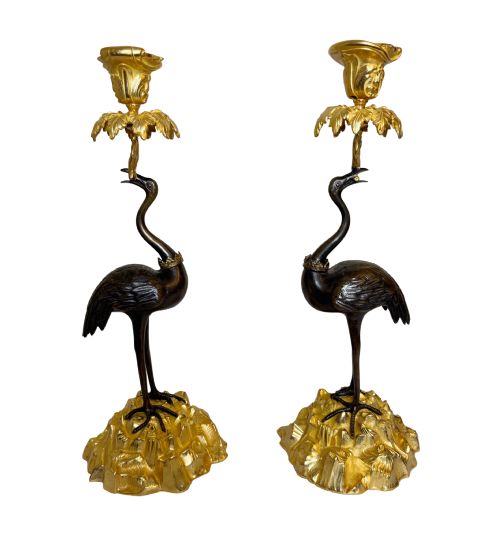
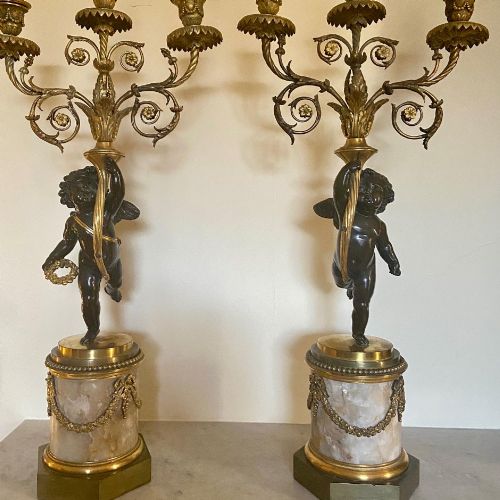
Examples range from simple column shapes to figurative models incorporating putti, animals, and architectural motifs. Continental workshops, particularly French makers adhering to neoclassical or revival tastes, produced the majority of these symmetrical pairs.
Materials and casting techniques
Makers utilised bronze and brass for structural frames, often combining dark patinated surfaces with bright gilt bronze and ormolu highlights. Metal components were cast in sections and joined, frequently incorporating marble or onyx plinths for added stability.
Surface decoration relied on chasing and fire-gilding to create contrast between matte and polished areas. Some items employ champlevé enamel or cold-painted finishes on spelter bodies to introduce colour and detail.
Paired Bronze Candlesticks Retail Price Guide 2026
Typical asking prices for paired bronze candlesticks among the pieces listed under this phrase on Sellingantiques today, from the lower quarter to the upper quarter. They describe what is for sale here now, not the wider market.
Distinctions in manufacture and design
The integration of secondary materials such as Carrara marble, fluorspar, or onyx influences the overall character of the pair. Well-balanced proportions and heavier gauge metal distinguish superior workshop production from lighter commercial output.
Barbedienne·Francois Redmond·Dugourc·Thomas Hope
The Paired Bronze Candlesticks Glossary
- Ormolu
- Finely ground high-carat gold applied to a bronze base using a mercury amalgamation process. This technique creates a durable golden finish seen on many nineteenth-century pieces.
- Patinated bronze
- Metal treated with chemical solutions to darken the surface and create a stable brown or black tone. This finish contrasts against gilded highlights.
- Pricket candlestick
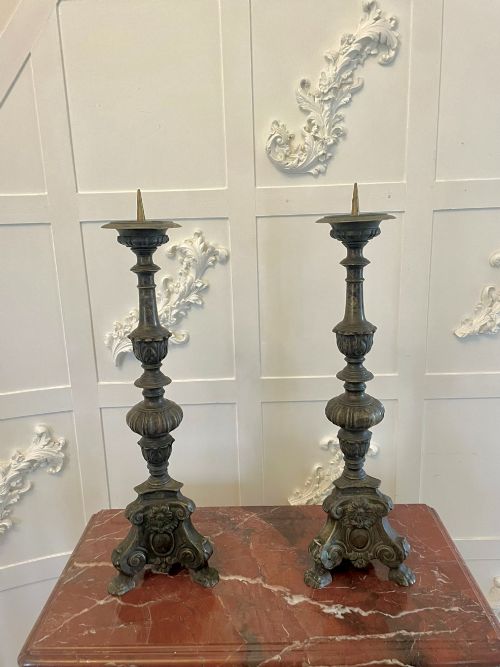
- A lighting device featuring an upright metal spike upon which a wax candle is impaled. These appear in Gothic revival and ecclesiastical contexts.
- Campana sconce
- A flared, bell-shaped socket designed to catch wax drippings below the candle. The shape derives from classical Roman pottery.
- Caryatid
- A sculpted female figure serving as an architectural support or column part. They frequently appear on the stems of neoclassical candlesticks.
Paired Bronze Candlesticks: Frequently Asked Questions
How were paired bronze candlesticks used?
These items stood in symmetrical arrangements on mantelpieces, sideboards, and dining tables to provide domestic illumination before electric lighting became common. The matched pairs created visual balance within formal interior decorative schemes.
Servants moved and tended the lights daily, trimming wicks and clearing wax drippings from the sconces. Their heavy metal construction ensured stability when holding heavy wax candles.
How do I date a pair of candlesticks?
Dating relies on stylistic clues, manufacturing methods, and material combinations recorded across the nineteenth century. Neoclassical motifs often point to the early decades, while later Victorian items incorporate eclectic revival styles.
Inspect the assembly methods and the nature of the bronze casting for signs of period production techniques. Marked bases or specific stylistic crossovers help narrow down the decade of origin.
Are spelter and bronze different?
Bronze is an alloy of copper and tin known for its strength, weight, and capacity to hold fine cast details. Spelter is a cheaper zinc-based metal used as a substitute for bronze in decorative figures.
Spelter items feel lighter and often show a softer surface texture compared to traditional bronze castings. Patination on spelter was typically painted rather than chemically induced.
Can these hold modern candles?
Most antique candle holders accommodate standard taper candles, though variations in nineteenth-century sizing mean some tapers may require minor trimming. The sconce diameter dictates the appropriate candle size for safe burning.
Using dripless candles or inserting discreet adapters protects the metal and any surrounding stone bases from wax accumulation. Many owners prefer to display them unlit as decorative sculptural objects.