

Paired Tables
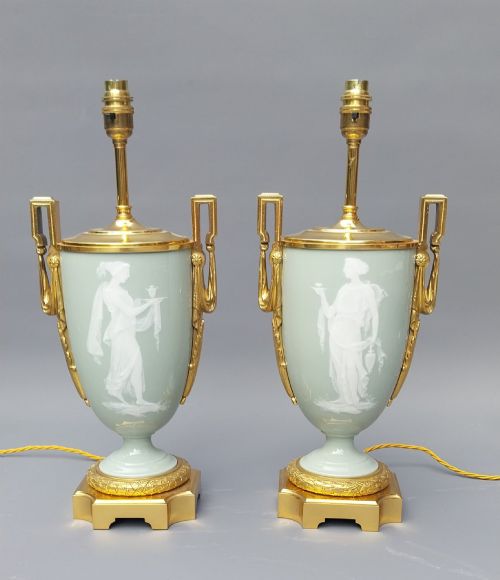
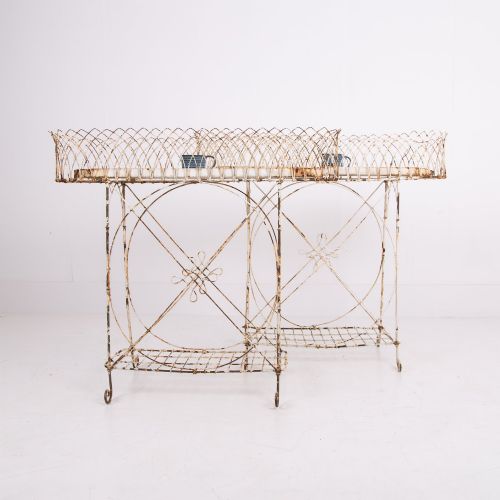
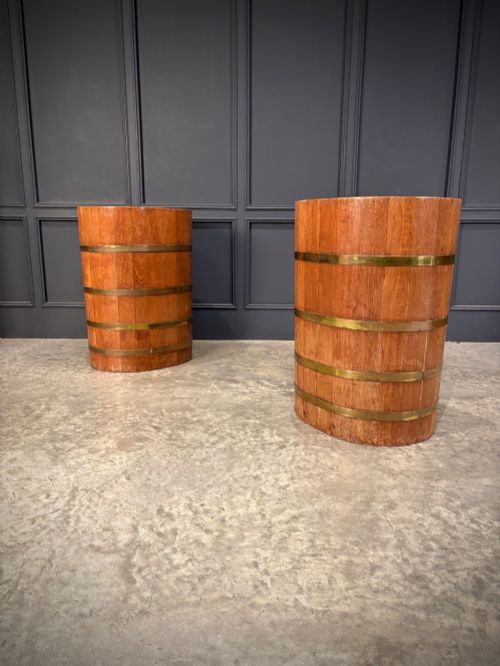
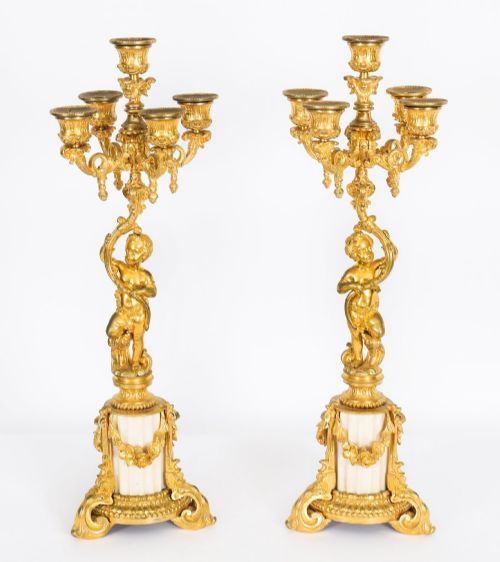
These paired antique tables offer symmetry and utility, bringing matched proportions to a room.
Paired Tables
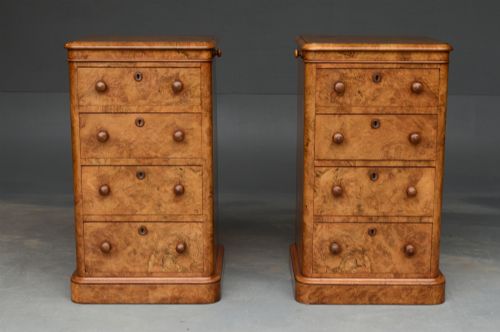
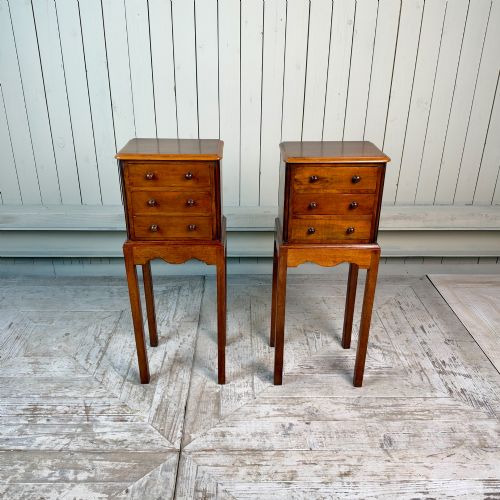
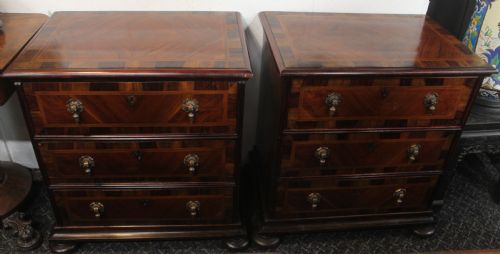
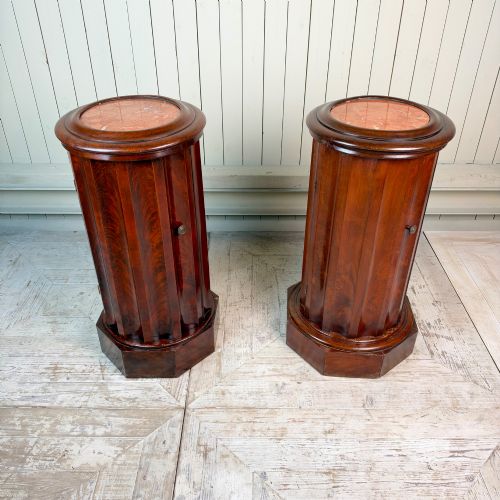
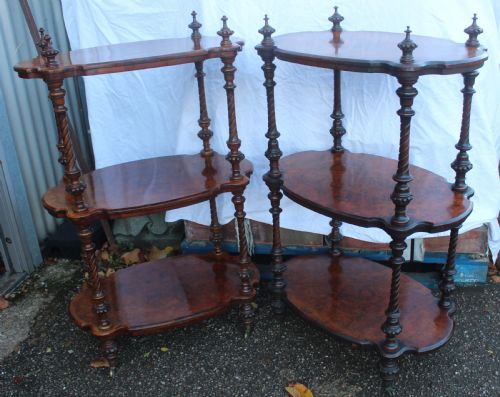
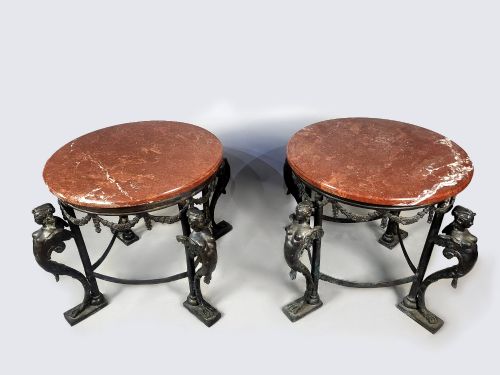
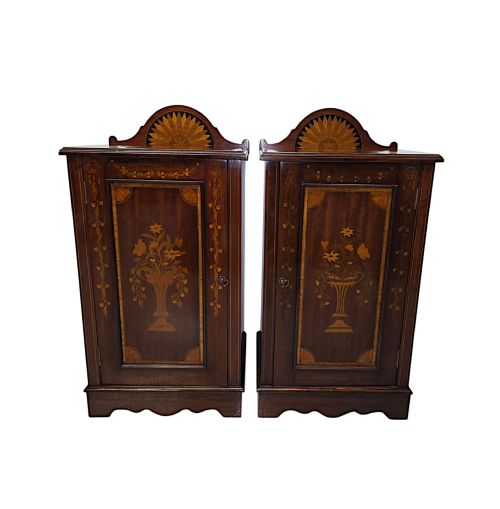
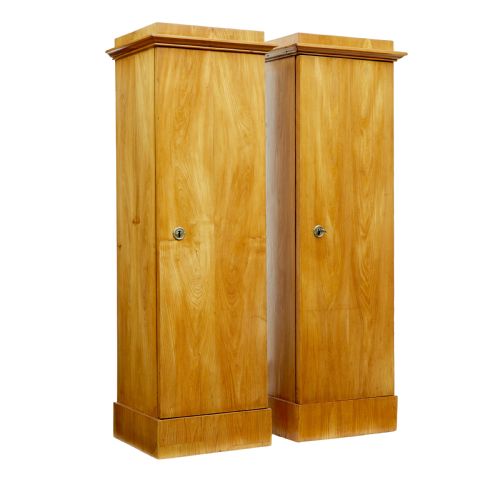
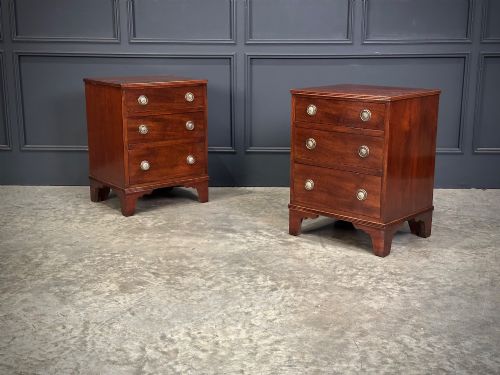
When searching for paired antique tables, you encounter matching items designed to sit together, most frequently taking the form of bedside chests, side tables, or console tables. These pieces originate from various eras, spanning the Georgian, Victorian, and Edwardian periods, as well as early twentieth-century workshops.
Mahogany forms the most common timber across the selection, often accompanied by oak, walnut, and cherry wood. Bedside cabinets and small chests dominate the current offerings, alongside wine tables, console tables with marble tops, and drop-leaf side tables.
Stylistic influences range from George III designs and Sheraton inlays to French provincial cabinet-making. Buyers often select these pairs to flank a bed, mirror, or fireplace, providing balanced surface space and enclosed storage.
Materials and Construction
Cabinet-makers relied heavily on solid hardwoods like mahogany, oak, and walnut, frequently applying fine veneers and satinwood stringing to drawer fronts and tabletops. Construction techniques include traditional dovetail joints for drawers and turned or fluted legs supporting the upper structures.
Surface treatments involve hand-polished finishes that highlight the natural grain of the timber. Marble inserts appear on specific console and bedside variants, while brass handles, gallery rails, and ormolu mounts provide functional and decorative accents.
Paired Tables Retail Price Guide 2026
Typical asking prices for paired tables among the pieces listed under this phrase on Sellingantiques today, from the lower quarter to the upper quarter. They describe what is for sale here now, not the wider market.
Listings feature mahogany, oak, walnut, and cherry wood across Victorian, Edwardian, and Georgian periods.
Distinctions in Standard
The degree of refinement in timber selection and inlay work marks the difference between standard production and exceptional examples. Finer pairs exhibit meticulous matching of wood grain across both pieces and precise execution of decorative stringing or marquetry.
Structural integrity and the retention of original hardware, such as brass pulls and locks, influence the overall character. The crispness of carved details, whether on pie-crust edges or tripod bases, demonstrates the maker's skill.
Rebecca Emes & Edward Barnard I·Thomas Hemming
The Paired Tables Glossary
- Dovetail joint
- A carpentry joint formed by interlocking wedge-shaped fingers, commonly used in drawer construction to ensure durable corners.
- Galleried top
- A low decorative railing surrounding the edge of a table top to prevent items from sliding off.
- Ormolu
- Gilt bronze or brass ornamentation applied to furniture and decorative objects, widely used in French cabinet-making.
- Satinwood
- A durable, yellowish timber prized for its lustrous grain, frequently utilised for contrasting inlays and banded borders.
- Tripod table
- A small freestanding table supported by a central pillar resting on three spreading feet.
Paired Tables: Frequently Asked Questions
How do I match antique tables with modern beds?
Selecting tables with clean lines and classic timber tones allows them to integrate smoothly alongside contemporary bedroom furniture.
Matching the height of the table surface to the mattress level ensures practical daily use.
Were these tables always sold as pairs?
Many bedside chests and side tables were manufactured together from the outset to provide symmetrical balance in a room.
Some examples represent closely matched pieces assembled later based on shared timber and style.
What is the difference between a bedside chest and a cabinet?
Bedside chests feature stacked drawers suitable for concealed storage, while bedside cabinets typically enclose space behind a single door.
Both forms served the same functional purpose in historic bedrooms.
How do I care for antique mahogany surfaces?
Maintaining these wooden surfaces requires dusting with a soft dry cloth and avoiding placement near direct heat sources.
Occasional application of appropriate wax polish helps preserve the finish and nourishes the timber.