
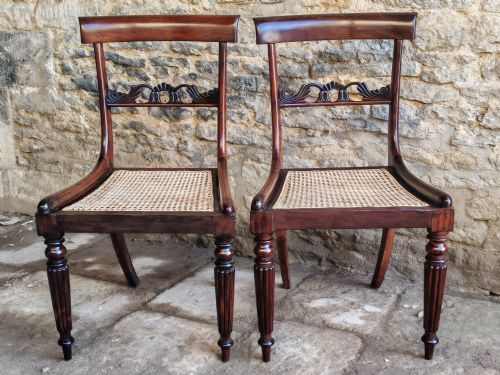
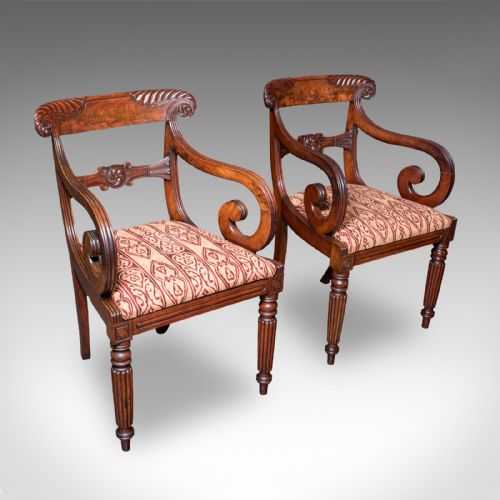
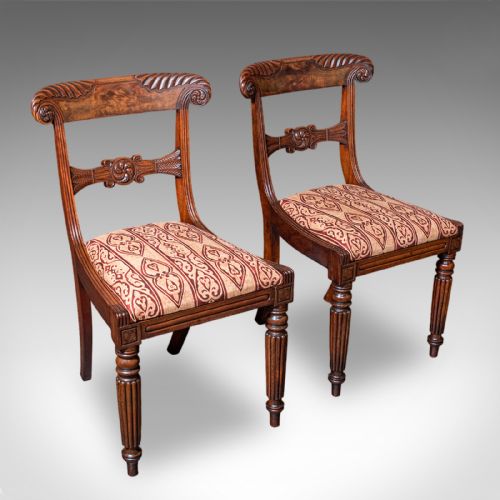
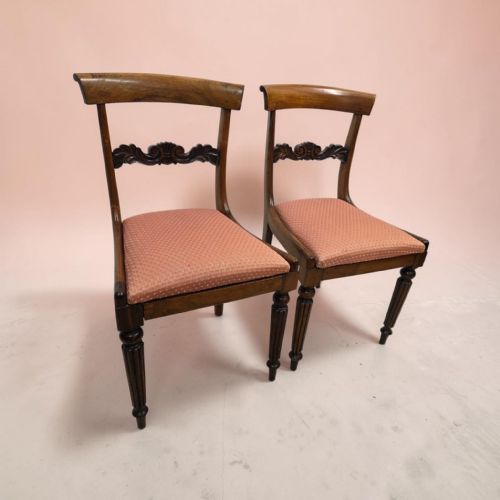
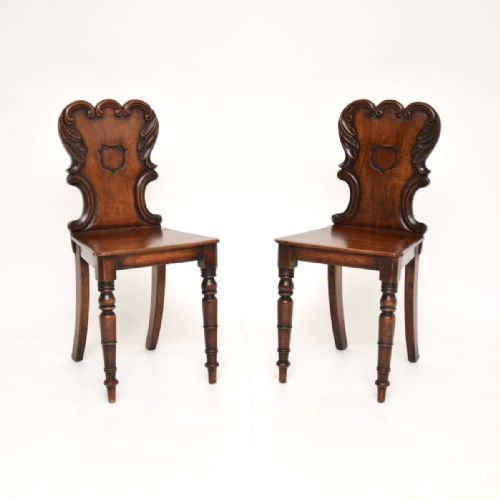
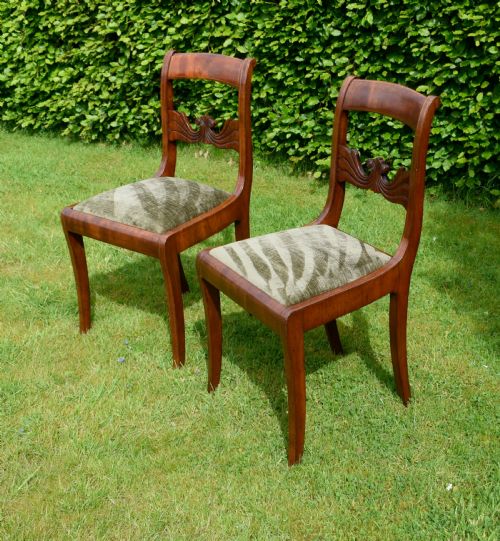


Pair William IV Chairs
When you search for pair william iv chairs, you encounter sturdy timber seating crafted during an era of robust English design.
Pair William IV Chairs
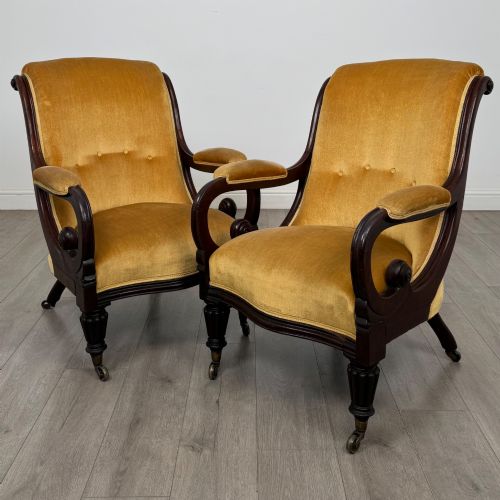
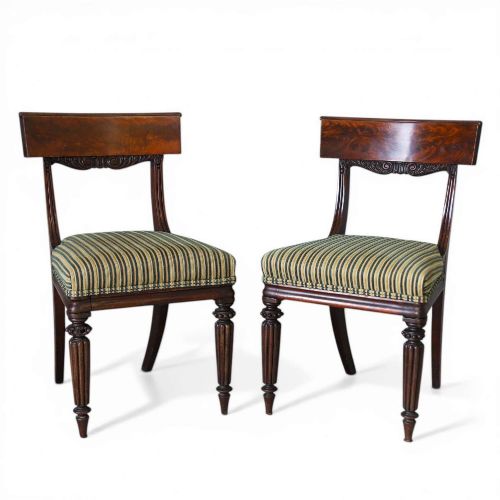
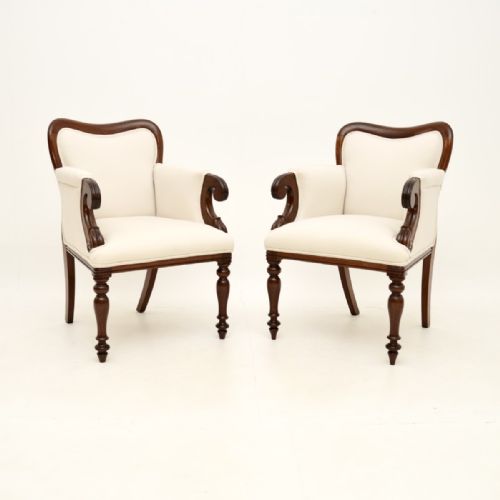
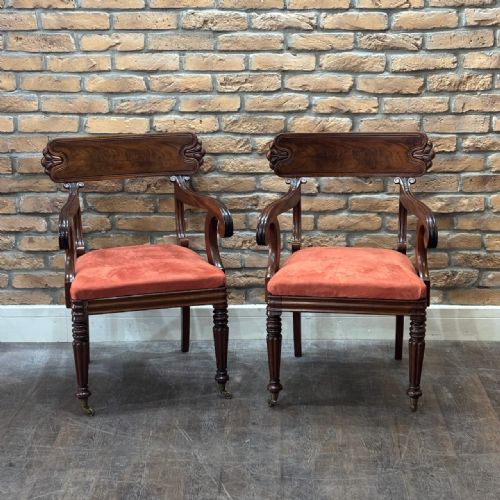
These listings comprise matching pairs of seating from the nineteenth century, encompassing dining chairs, library armchairs, and hall chairs designed in the William IV style. You are most likely to meet mahogany side chairs and carvers featuring the characteristic scrolled details of the period.
The selections span formal reception seating and robust library chairs, originating from English workshops around eighteen thirty. Alongside mahogany, examples emerge in rosewood, oak, and laburnum wood.
Makers of the era drew upon late Regency traditions while introducing heavier proportions and carved cresting. Pairs survive in various formats, from simple wooden hall chairs to leather-upholstered armchairs.
Materials and construction
Makers relied heavily on solid mahogany and rich rosewood, selecting dense tropical timbers that accepted deep carving and dark polishing. Oak and maple also appear in specific utilitarian or regional pieces.
Joinery involved traditional mortise and tenon frames, reinforced with turned legs and sabre or scroll supports. Upholstered variants utilised horsehair and springs beneath leather, cane, or fabric coverings.
Several matched pairs once stood in York Minster and stately English reception rooms.
Judging the standard
Quality rests upon the crispness of the timber carving and the architectural proportion of the frame. Superior examples display substantial weight, well-figured grain, and meticulous joinery without excessive modern intervention.
The distinction between ordinary utility seating and exhibition pieces lies in the complexity of the scrollwork, turned legs, and original upholstery materials like stamped leather or silk velvet.
Gillows
The Pair William IV Chairs Glossary
- Carver
- An armchair, often designed with open elbows to sit at the head of a dining table. These frequently match a set of smaller side chairs.
- Hall chair
- A rigid wooden seat, usually without upholstery, intended for an entrance hall. They often feature carved or painted family crests on the backrest.
- Bergère
- An enclosed upholstered armchair with cane panelling on the sides and back. This French-inspired form appeared frequently in English libraries.
- Bar back
- A chair design featuring a horizontal wooden splat across the upper back, resembling the curved rail of a tavern bench.
- Curricle
- An armchair type featuring sweeping, continuous armrests that curve down from the top rail. The shape recalls the carriage of the same name.
Pair William IV Chairs: Frequently Asked Questions
What defines a William IV chair?
These pieces date from the second quarter of the nineteenth century, bridging Regency elegance and early Victorian heaviness. They typically feature heavy scrolled carving, turned legs, and substantial mahogany timber.
Designers of the period favoured classical motifs executed on a massive scale, departing from the lighter neoclassical lines of the previous decades.
How were hall chairs used?
Hall chairs stood in the grand entryways of large English houses for guests to use briefly upon arrival. Because comfort was secondary to display, these wooden seats rarely featured upholstery.
Carved family crests or painted heraldry often adorned the wooden backrests, serving as a formal greeting to visitors.
Are these chairs suitable for daily dining?
Many of these pieces served as dining furniture originally and remain robust enough for regular use today. Solid mahogany frames offer lasting structural stability.
Buyers should inspect the leg joints and verify that the timber has not dried out excessively over the centuries.
How do I care for rosewood and mahogany?
Maintain these antique timbers by applying a light coat of natural beeswax rather than modern silicone sprays. Keep them away from direct heat sources and strong sunlight to prevent the wood from splitting.
Routine dusting with a soft, dry cloth preserves the patina built up over generations.