
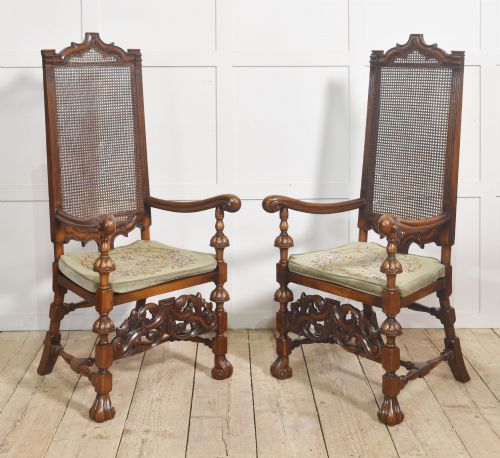
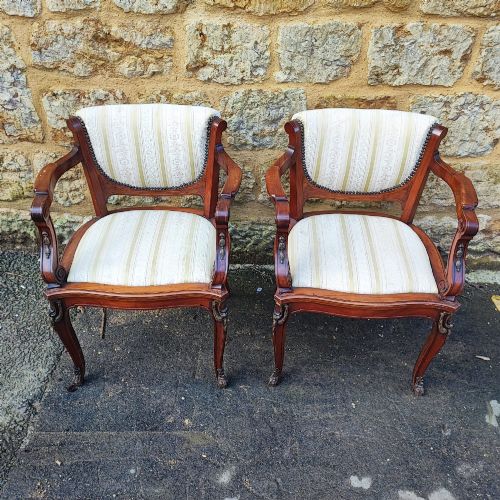
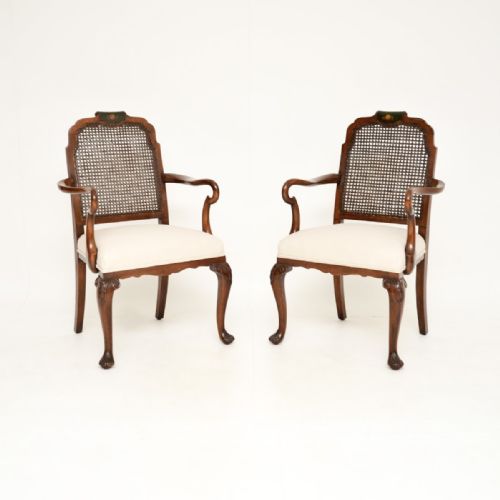

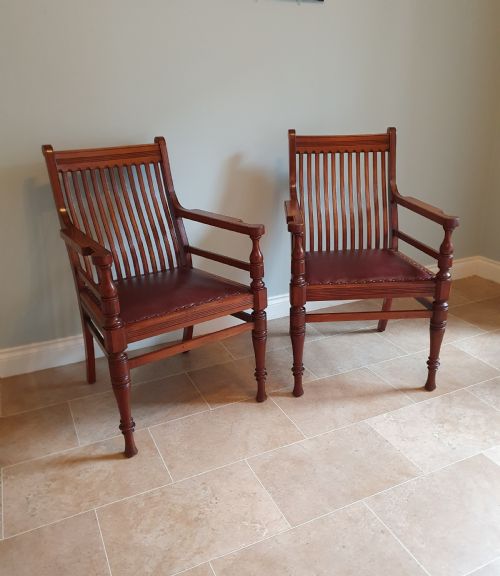


Pair Walnut Carvers
Pair walnut carvers are matching armed timber seats built for the head of the table or desk, offering substantial presence and support.
Pair Walnut Carvers
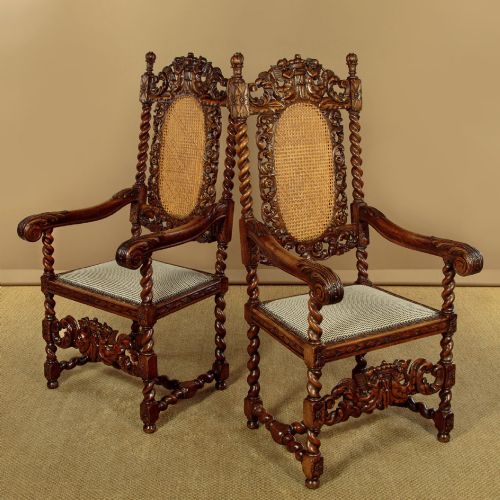
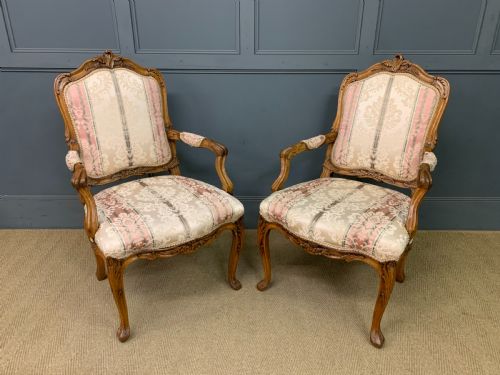
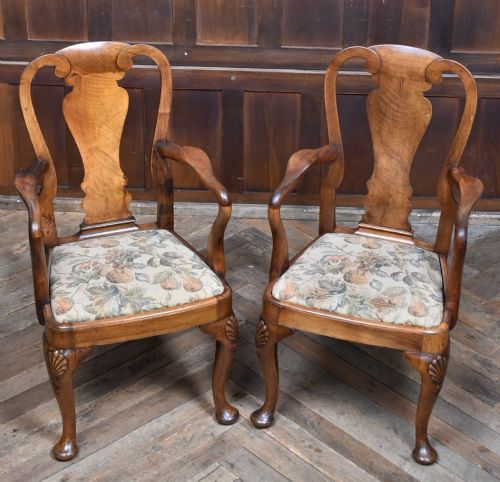
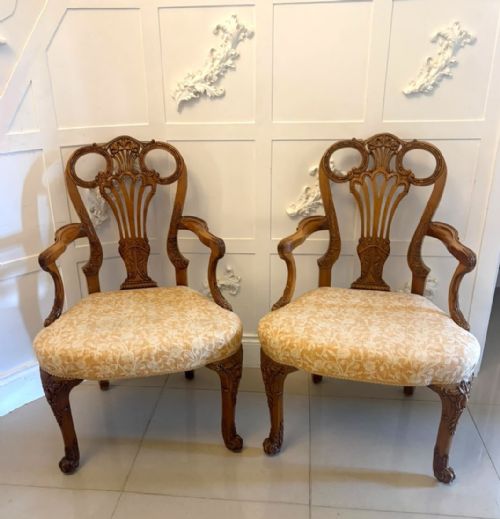
Pair walnut carvers take the form of heavy timber armchairs designed for pairing in a dining room, library or study. When you search for pair walnut carvers, you encounter matching seats featuring open arms, high backs and sturdy construction.
The selections span the Victorian era, Edwardian period and the early twentieth century, alongside revivals looking back to Queen Anne and William and Mary styles. Most examples date from the nineteenth century up to the nineteen-thirties, reflecting diverse craftsmanship across Britain, France, Holland and Scotland.
Whilst primarily encountered as desk chairs, library chairs or dining carvers, the inventory also includes unusual sculptural high-back formats and turned candlesticks utilising the same timber. Buyers select these matches to anchor a room with balanced symmetry and period character.
Materials and construction
The primary timber is walnut, selected for its rich grain, paired with secondary hardwoods where structural strength is required beneath the seat. Workshops utilised carving, turning and spiral twist techniques to shape the legs, arms and crest rails.
Seating areas rely on traditional methods, incorporating drop-in or fixed pads covered in fabric, leather, velvet, upholstery fabric or cane inserts. Brass details and gilding occasionally appear on select frames to accent the carved woodwork.
Current listings span the Victorian era, Edwardian period, and the nineteen-twenties, incorporating Queen Anne revival and French styles.
Distinguishing quality
Quality rests in the crispness of the hand-carving and the choice of walnut timber, where deep figuring and substantial weight elevate a piece above standard production. The rigidity of the frame joints and the symmetry achieved between both chairs dictate the integrity of the pair.
Finer examples display careful attention to secondary materials, such as tight caning, thick leather hides or superior upholstery fabrics that complement the age of the woodwork. The depth of the design, from simple turned members to elaborate sculptural high backs, marks the distinction between everyday seating and masterwork commissions.
J. and T. Scott, Edinburgh
The Pair Walnut Carvers Glossary
- Carver
- An armchair, typically designed for the head of a dining table or for use at a desk, featuring supportive arms integrated into the frame.
- Cane
- Woven rattan or split reed used to form breathable panels for seats and high backs.
- Queen Anne Style
- A design tradition characterised by spooned backs, cabriole legs and pad feet, prominent in revival pieces.
- Marquetry
- Decorative inlay work using various coloured veneers to create pictorial or geometric patterns on the wood surface.
- Scroll arm
- An armrest curved outward at the terminal in a volute or scroll shape, common on nineteenth-century seating.
Pair Walnut Carvers: Frequently Asked Questions
What is a carver chair?
A carver chair is an armchair built with sturdy wooden arms, traditionally placed at the ends of a dining table or positioned at a heavy desk.
The term distinguishes armed seating from the smaller side chairs that line the rest of the table.
How do I date walnut furniture?
Dating involves examining the construction methods, tool marks on the underside, and the specific revival style influences present in the carving.
Changes in timber finishing and upholstery techniques across the Victorian and Edwardian periods also provide clear chronological markers.
Can I use these at a desk?
Many of these chairs function exceptionally well as desk chairs due to their supportive arms and solid wooden construction.
Ensure you check the seat height against your desk clearance before placing them in a study.
How do I care for walnut wood?
Walnut benefits from occasional polishing with suitable wax and protection from direct sunlight and extreme temperature shifts.
Keep the timber away from heat sources to prevent the wood from drying out or splitting.
Are cane seats durable?
Caned panels offer flexibility and strength when woven tightly, though they require gentle treatment to avoid puncturing.
Distributed weight and avoiding kneeling on the seat will preserve the integrity of the cane for decades.