


Pair Victorian Sconces
Pair Victorian sconces illuminate interiors with dual points of candle or gas light, bringing period symmetry and polished metal or mirrored reflection to walls.
Pair Victorian Sconces
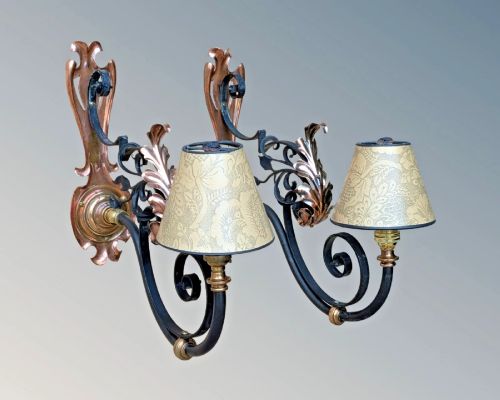
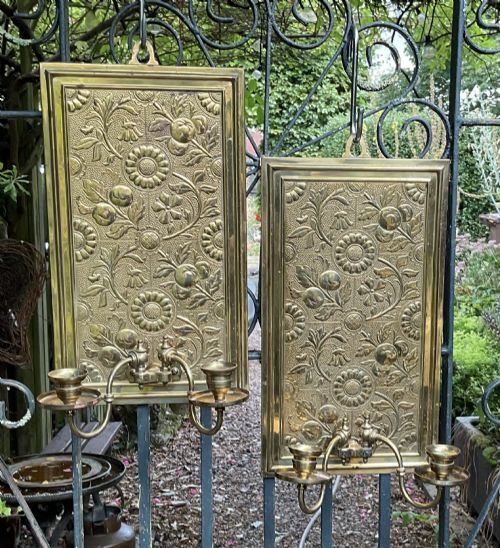
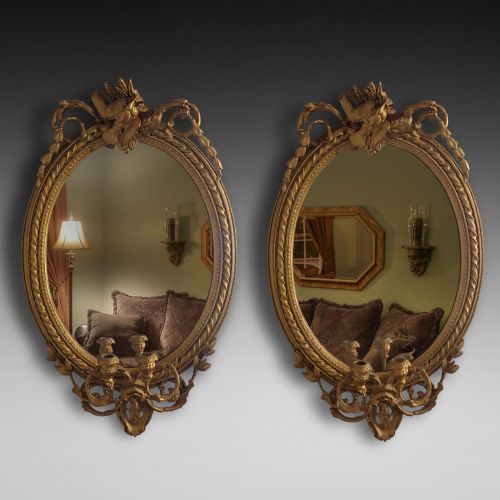
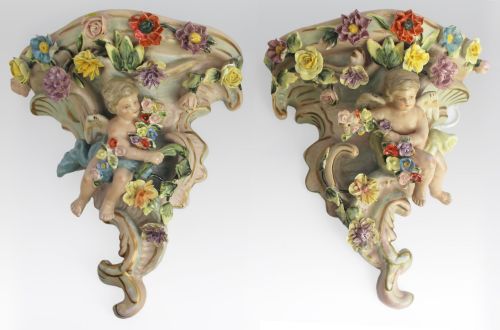
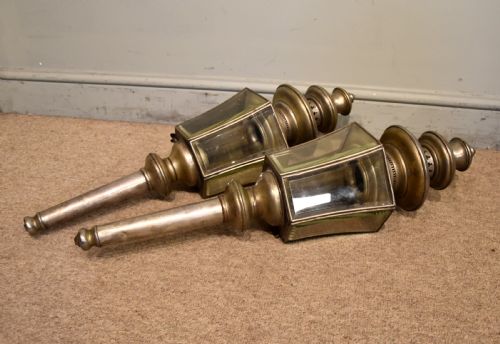
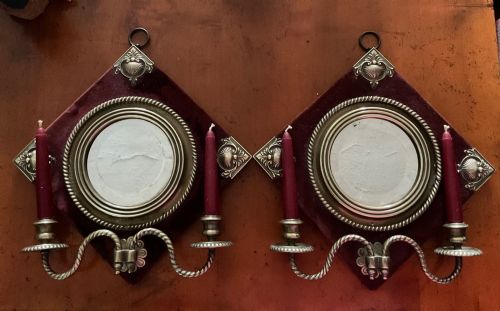
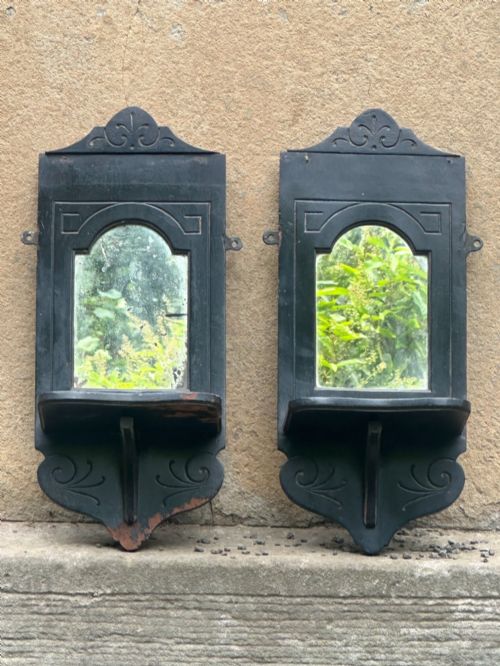
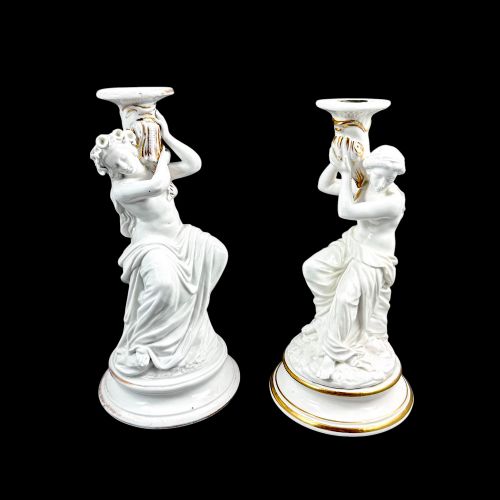
Pair Victorian sconces comprise matched sets of wall-mounted lighting fixtures designed to hold candles or gas burners, frequently incorporating reflective mirrors known as girandoles. The selection draws heavily from late nineteenth-century output, ranging from utilitarian brass brackets to ornate giltwood and porcelain figural designs.
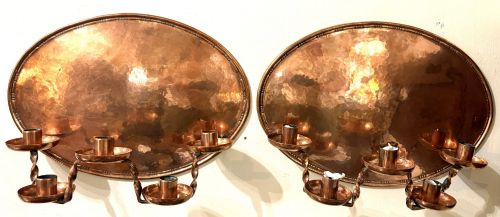
Makers and designers of the period embraced diverse revival styles, producing pieces that span Gothic, Rococo, and Neoclassical vocabularies alongside cleaner Arts and Crafts copper work. Buyers encounter both simple brass domestic wall lights and elaborate sculptural pairings featuring cherubs, mermaids, and soldiers.
The inventory demonstrates a strong representation of mirrored wall sconces alongside standard metal bracket fixtures. These items served functional illumination needs in hallways and reception rooms while doubling as decorative wall furniture.
How they were made
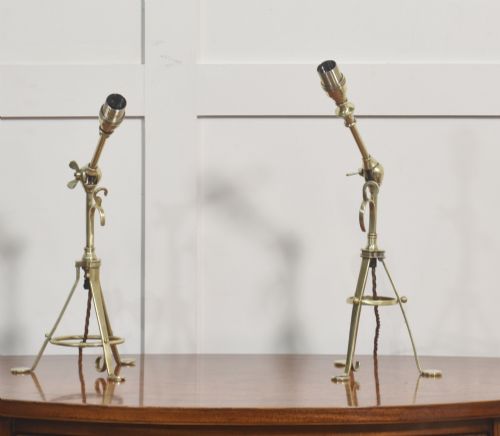
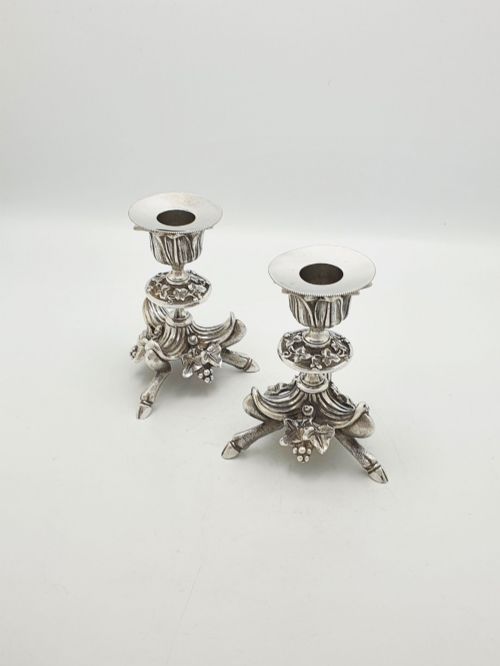
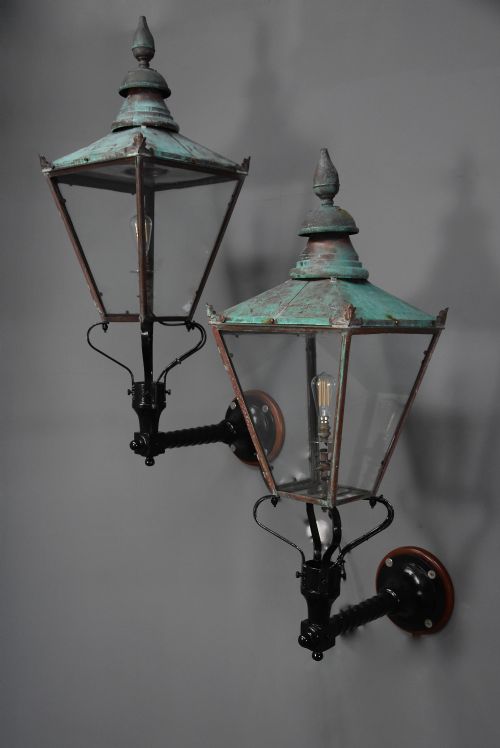
Metalworking dominates construction, utilising cast brass, wrought iron, copper, and silver plating formed through foundry casting, hand beating, and chasing. Many brass and bronze examples rely on combination assemblies where distinct cast arms attach to backplates via threaded screws or rivets.
Reflective components incorporate bevelled glass mirror plates backed by original wooden or gessoed frames, while ceramic variants employ glazed porcelain moulded into figural corbels and candlesticks. Surface finishes vary from patinated verdigris and gilt paint to polished ormolu and silver plate.
Mermaids hold the light in several Victorian gas and candle sconces, bringing nautical mythology directly into the parlour.
What varies in quality
The refinement of the casting and chasing separates standard production hardware from pieces attributed to notable designers or workshops. Crisp detail in figural elements like mermaids, cherubs, or soldiers indicates superior artisan involvement during the moulding process.
The integrity of the original components, such as matching mirror plates, uncompromised backplates, and intact briolette or cut crystal drops, dictates the standing of a pair. Weight, gauge of metal, and the subtlety of patination further distinguish higher-tier examples.
W.A.S. Benson·Bruce Talbert·Cottier and Co·Sutherland and Sons·Royal Worcester Hadley·Liberty·Sitzendorf
The Pair Victorian Sconces Glossary
- Girandole
- A branched candle sconce incorporating a wall mirror to multiply the reflected light. These fixtures often feature elaborate giltwood or brass frames.
- Champlevé
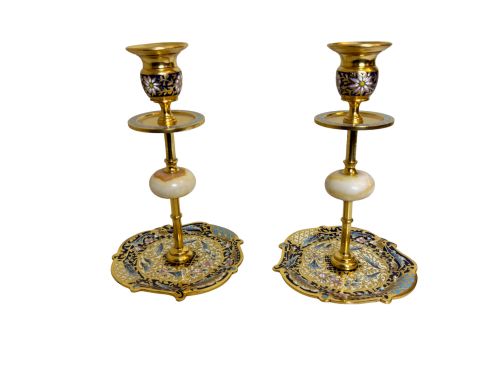
- An enamelling technique where depressions are carved into a metal surface and filled with vitreous enamel before firing. It appears frequently on decorative nineteenth-century candlesticks and bases.
- Ormolu
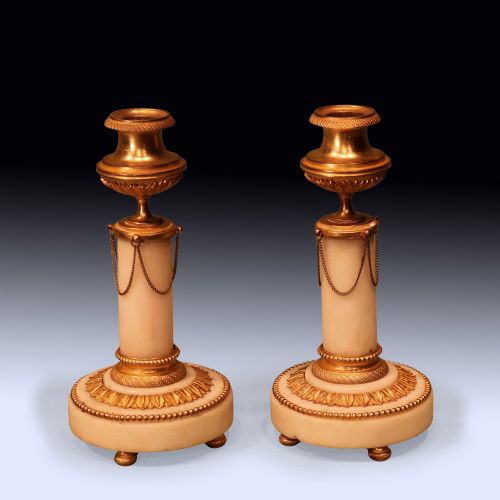
- Gilded bronze produced by applying a mercury-gilt amalgam to cast bronze. The technique yields a rich golden surface found on upscale decorative mounts.
- Spelter
- An alloy of zinc and lead used as a cheaper substitute for bronze in decorative figures. It takes patination well to simulate heavier metals.
- Aesthetic Movement
- A late nineteenth-century design style emphasising visual beauty over narrative or moral function. It championed simplified forms and Japanese-inspired motifs.
Pair Victorian Sconces: Frequently Asked Questions
How do I mount antique wall sconces safely?
Most antique pairs rely on original screw holes or mounting plates behind the backplate. Ensure fixings engage directly with wall studs or appropriate wall anchors to support the weight of cast metal or glass.
Electrical conversion requires professional assessment to ensure internal wiring meets modern standards without compromising the historic metal housing or arm assemblies.
Were these pieces meant for candles or gas?
Nineteenth-century lighting accommodated transitional technologies, so pairs may be engineered for wax candles, early gas jets, or subsequent early electrical wiring. Gas sconces typically feature heavier key-taps and thick hollow tubing designed to route fuel.
Candle versions rely on drip pans and bobeches to catch wax, while mirror-backed girandoles directed candlelight across darkened Victorian reception rooms.
How should I clean patinated brass and copper?
Dust gently with a soft dry cloth and avoid chemical metal polishes that strip historic patination. Preserving the dark oxidation on copper or patinated brass maintains the visual depth expected of nineteenth-century metalwork.
Glass mirror plates and crystal drops benefit from mild glass cleaner applied to a cloth rather than sprayed directly near old wood or metal frames.
How do I distinguish Gothic Revival from Rococo pieces?
Gothic Revival items utilise architectural motifs such as pointed arches, quatrefoils, and heavy ironwork reminiscent of medieval ecclesiastical hardware. They favour straight lines and austere structural silhouettes.
Rococo Revival embraces asymmetry, C-scrolls, naturalistic floral garlands, and exuberant organic forms often populated by cherubs or shell carvings.