

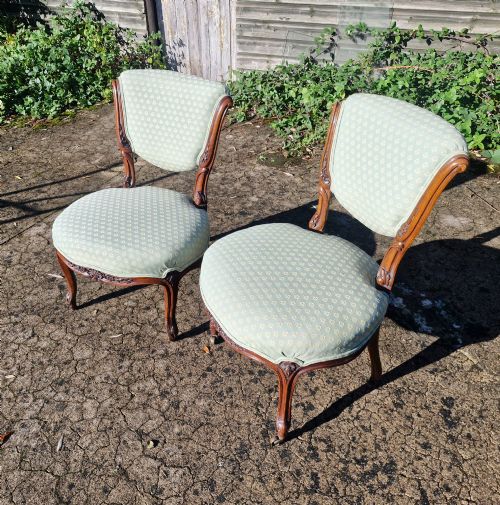
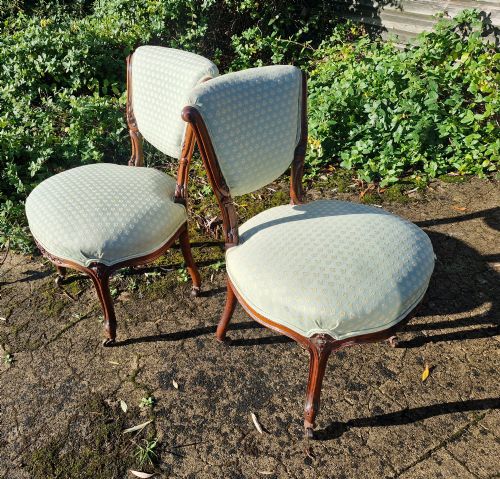
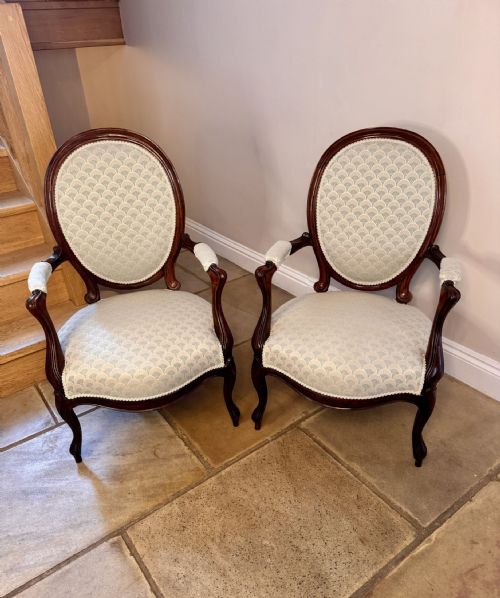
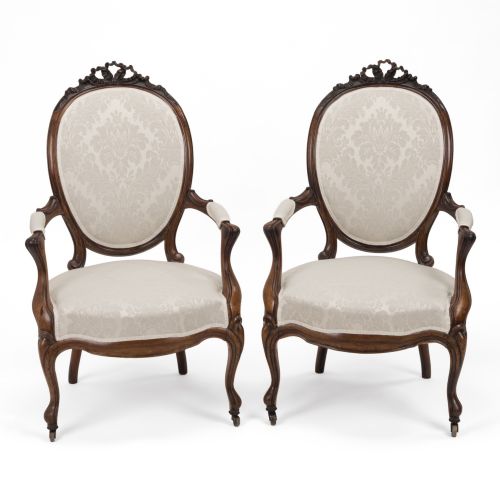
Pair Victorian Salon Chairs
Pair victorian salon chairs bring nineteenth-century drawing-room elegance to modern spaces, offering matched seating with ornate carved frames.
Pair Victorian Salon Chairs
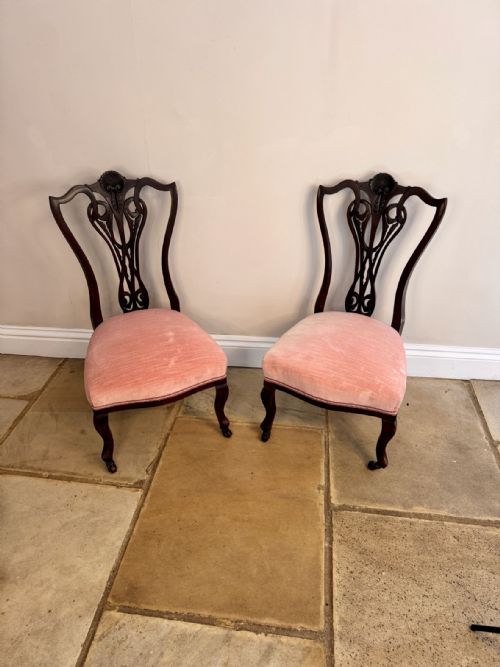
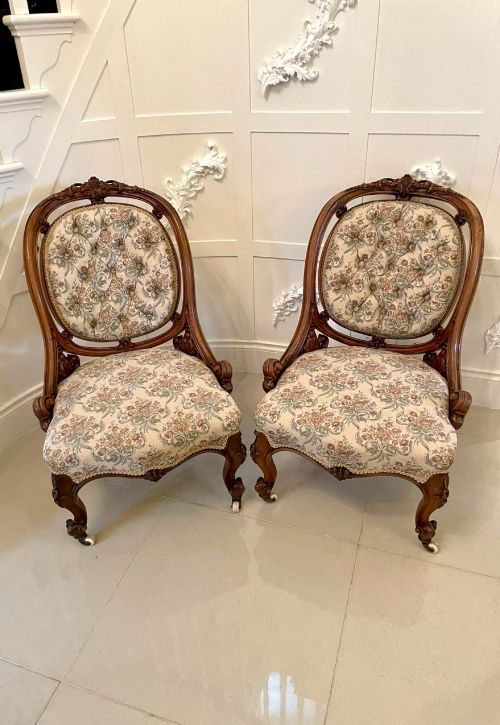
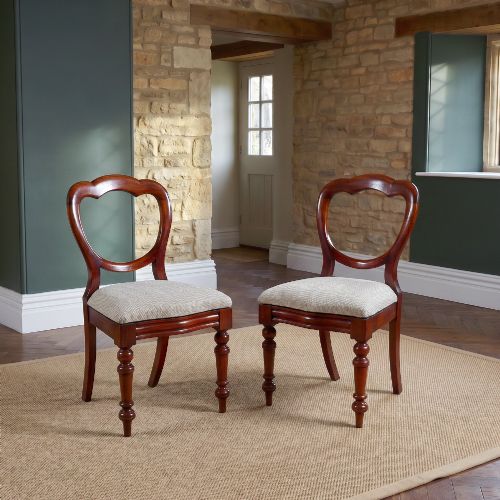
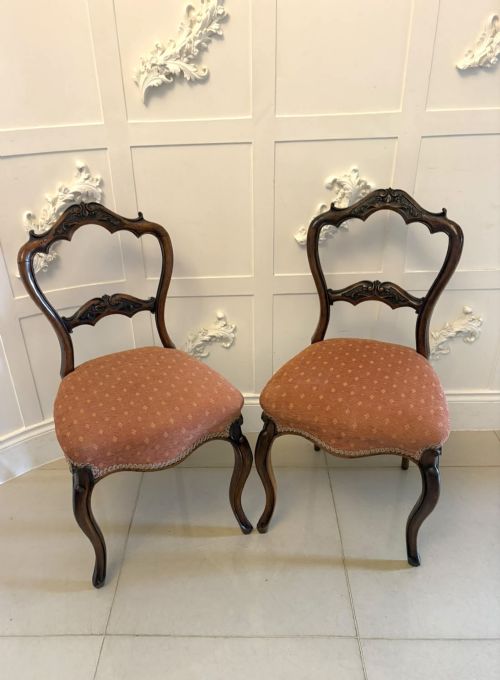
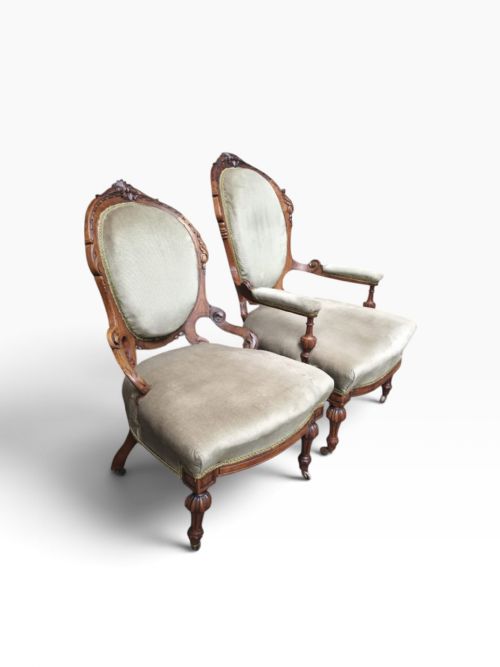
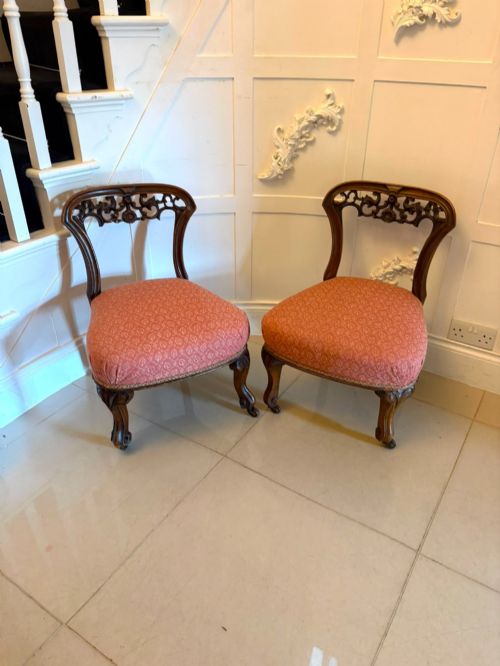
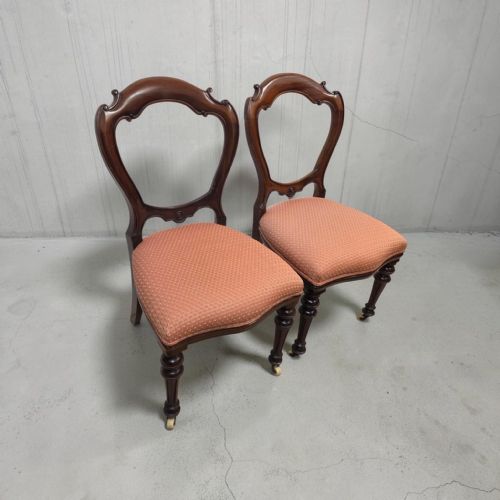
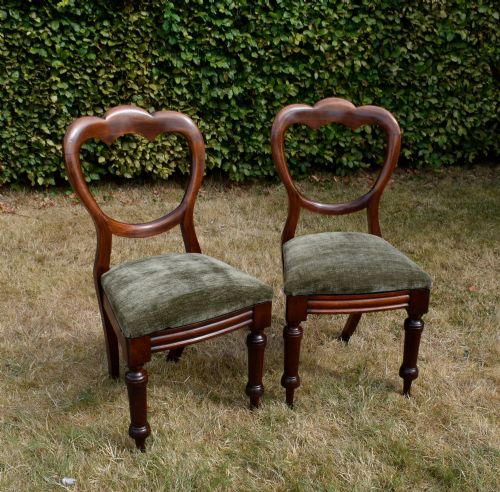
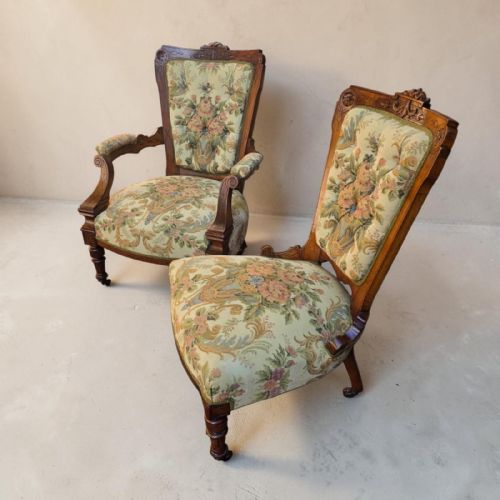
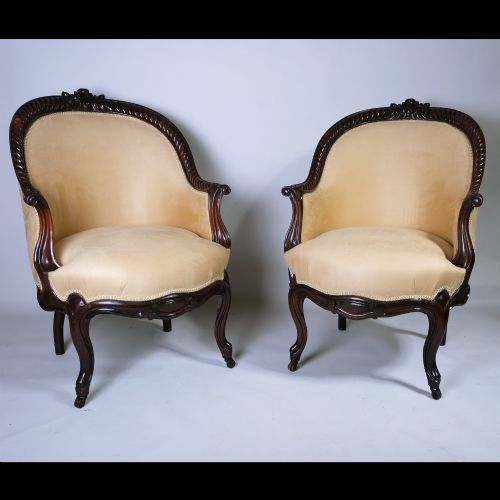
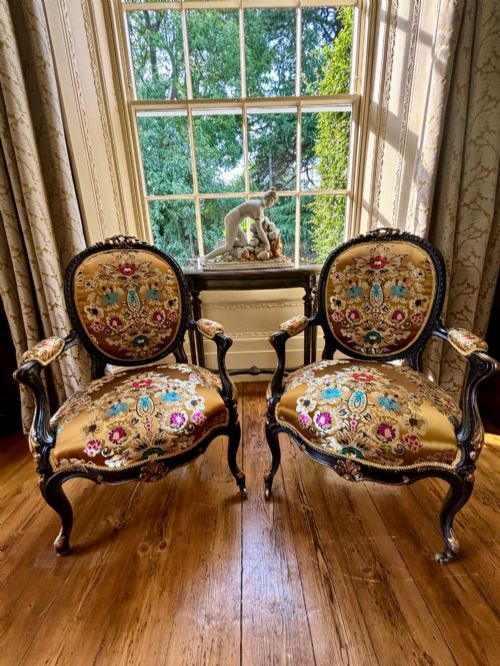
A pair victorian salon chairs comprises matching seats designed for formal nineteenth-century entertaining and drawing-room display. The inventory shows walnut, mahogany, and rosewood frames taking forms such as balloon backs, spoon backs, and open armchairs.
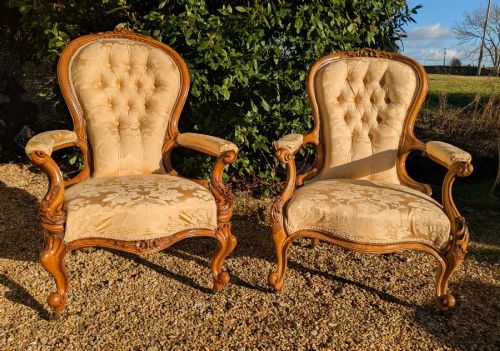
Makers produced these seats in matching pairs, sometimes designated as his and hers sets featuring one larger armchair and a companion side chair. Examples span the nineteenth century, incorporating revival styles like Rococo, Louis XV, and Aesthetic movement influences.
Buyers encounter diverse seating configurations, from button-backed upholstered easy chairs to slender occasional and side chairs. Walnut and mahogany predominate among surviving pairs, frequently finished with carved details or marquetry inlay.
How They Were Made
Cabinetmakers utilised dense hardwoods like walnut, mahogany, and rosewood for the structural frames, allowing for deep relief carving and slender cabriole legs. Joinery relied on traditional mortise and tenon construction to support the curves of balloon and spoon backs.
Upholstery techniques involved horsehair stuffing and spring placement secured with webbing, finished in velvet, silk, leather, or patterned fabric. Decorative touches included brass castors, button tufting, and elaborate scrollwork carved directly into the timber.
Pair Victorian Salon Chairs Retail Price Guide 2026
Typical asking prices for pair victorian salon chairs among the pieces listed under this phrase on Sellingantiques today, from the lower quarter to the upper quarter. They describe what is for sale here now, not the wider market.
Listings feature Victorian walnut, mahogany, and rosewood frames with balloon backs and cabriole legs.
What Varies in Quality
The crispness of the hand-carving defines the distinction between standard production and top-tier workshop output. Skilled carvers achieved deep, clean relief work on walnut and mahogany frames, whereas lesser examples display softer, shallower ornamentation.
Timber selection and grain matching across a pair indicate the original investment in the furniture. Superior sets utilise highly figured burr veneers, premium rosewood, or exotic hardwoods with robust structural integrity in the joinery.
Holland and Sons·Hewetson and Milner
The Pair Victorian Salon Chairs Glossary
- Balloon back
- An oval or rounded wooden chair back resembling a hot air balloon, popular in mid-nineteenth-century seating. This design provides ergonomic support while offering a graceful silhouette.
- Spoon back
- A padded chair back shaped like the bowl of a spoon, curving inward to fit the human spine. It is frequently seen on nineteenth-century walnut armchairs.
- Marquetry
- Decorative inlay work using various coloured wood veneers to create pictorial or geometric patterns on surfaces. Craftsmen applied this technique to mahogany and satinwood panels.
- Aesthetic movement
- A late nineteenth-century design style emphasising visual beauty over narrative content, often featuring ebonised wood and contrasting inlay. Pieces from this period exhibit restrained, artistic lines.
Pair Victorian Salon Chairs: Frequently Asked Questions
What is a pair of salon chairs?
A pair of salon chairs consists of two matching seats designed for nineteenth-century formal entertaining and drawing rooms. These pieces matched the interior decor of the home and offered comfortable seating for guests.
They include side chairs, armchairs, and his and hers sets featuring carved wooden frames and upholstered seats. The matching pair provided a unified aesthetic for Victorian reception rooms.
How were salon chairs used?
Victorian households utilised salon chairs for social gatherings, music recitals, and formal reception duties. They were arranged around drawing rooms to facilitate conversation and display the homeowner's taste.
Armchairs provided comfort for the host or principal guests, while lighter side chairs were easily moved about the room. Their decorative frames ensured they looked appropriate even when unoccupied.
How do I live with salon chairs?
Living with these chairs involves placing them in sitting rooms, bedrooms, or hallways where their carved frames can be appreciated. Their compact nineteenth-century proportions suit modern living spaces as accent seating.
Pairing them with contemporary interiors creates a striking contrast between old and new styles. Careful placement protects the antique wood and fabric from direct sunlight.
How do I tell Victorian styles apart?
Distinguishing Victorian styles requires examining the carving, wood choice, and silhouette of the frame. Early examples often feature heavy mahogany and restrained classical lines, while mid-century pieces favour walnut with elaborate Rococo revival curves.
Later Victorian and Aesthetic pieces introduce ebonised finishes, geometric inlay, and lighter forms. Observing these shifts helps date the seating accurately.