
Pair Tufted Armchairs
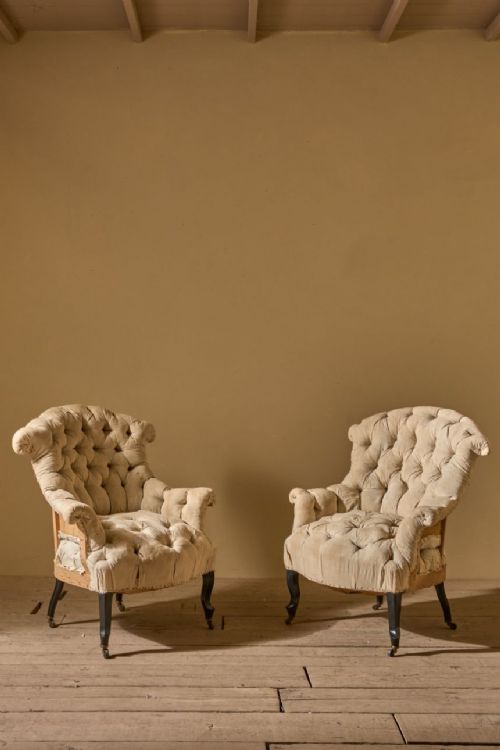
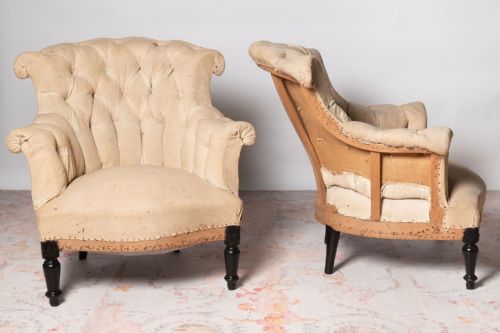
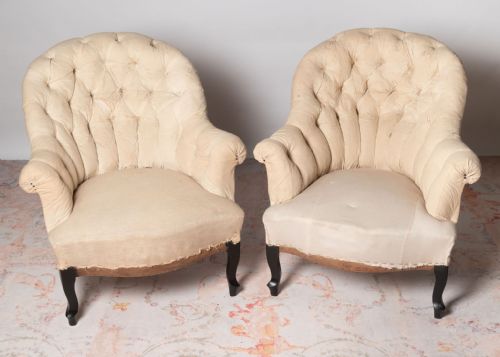
Pair tufted armchairs bring matched comfort and buttoned upholstery to a room, spanning nineteenth century French forms and English club styles.
Pair Tufted Armchairs
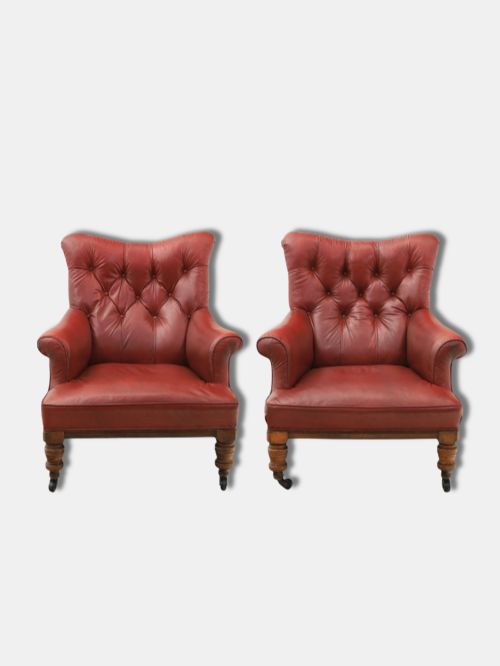
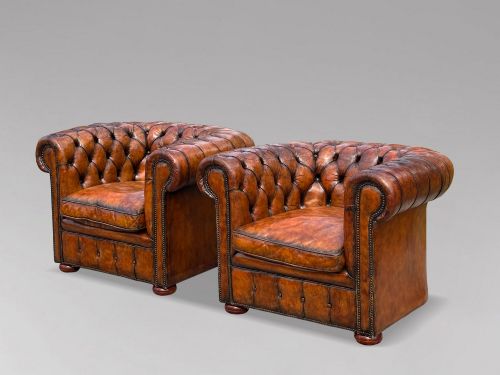
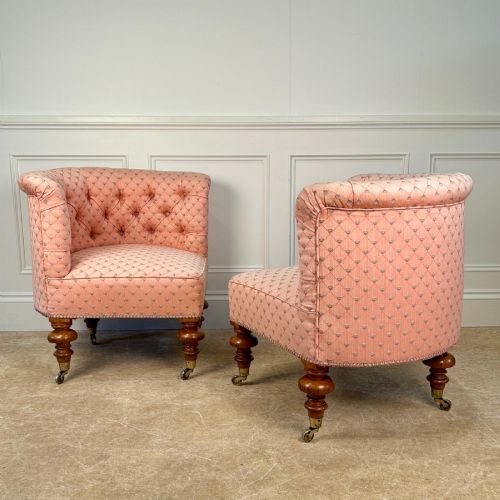
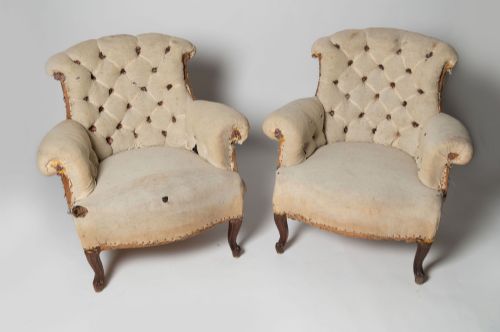
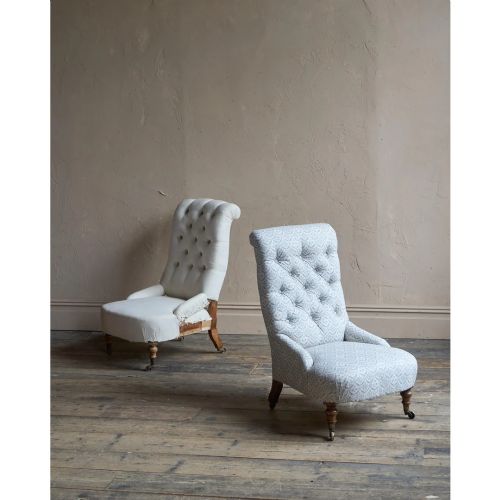
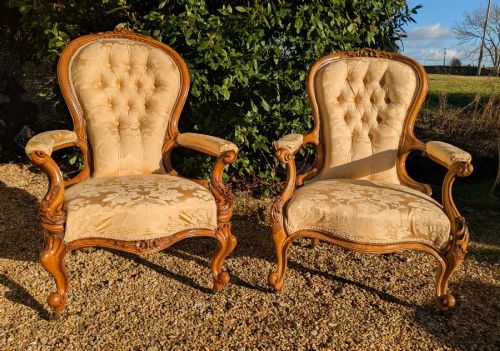
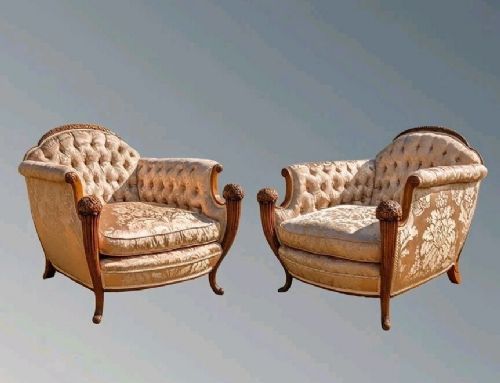
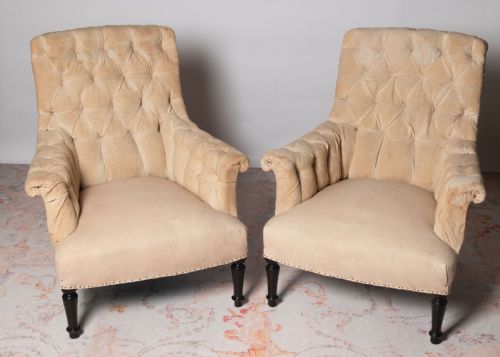
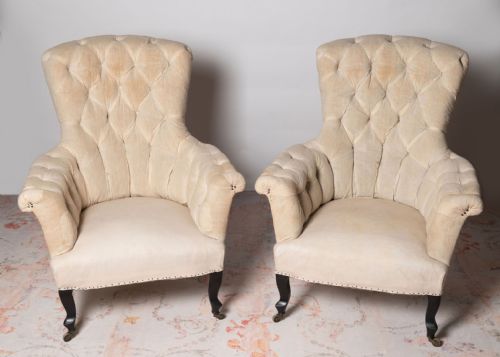
Pair tufted armchairs comprise matched seating with buttoned upholstery, appearing frequently in nineteenth century Victorian and French Napoleon III designs. Buyers find diverse forms on this page, including library armchairs, Chesterfield club chairs, and low slipper chairs.
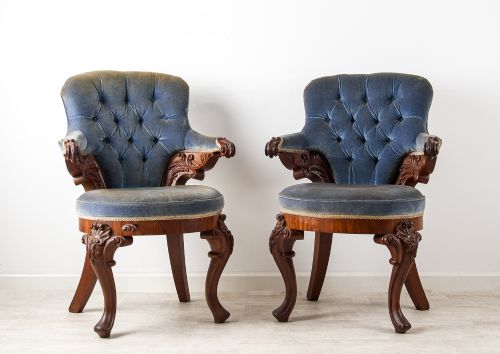
Originating largely from English workshops and French chateaux, these pairs span compact bedroom seats to substantial walnut and mahogany library chairs. The selection ranges from Regency brass inlaid timber frames to deep seated Victorian buttoned leather models.
How they were made
Frames rely on sturdy timbers such as mahogany, walnut, oak, and rosewood, often shaped with carved details or barley twist supports. Brass inlays and gilding appear on select frames, highlighting fine cabinetmaking traditions.
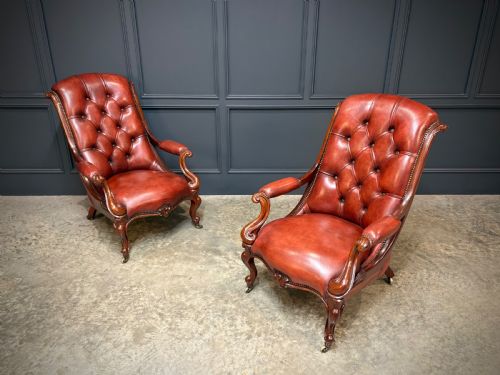
Upholstery involves deep buttoning across leather, velvet, silk, or rexine, secured with traditional stuffing techniques. Craftsmen shaped these chairs for endurance, pairing robust wooden structures with resilient fabric coverings.
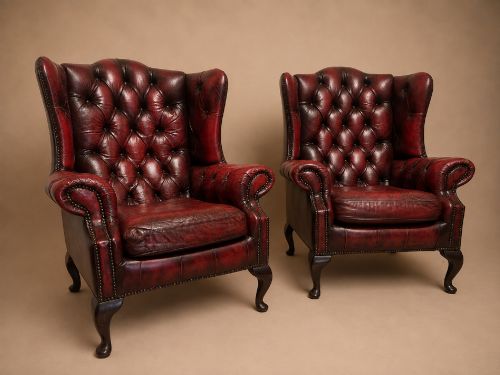
His and hers matching leather armchairs ensure nobody ever argues over the best seat by the fire again.
What varies in quality
The integrity of the wooden frame and the crispness of any carving set apart finer examples from simpler provincial pieces. Walnut and mahogany structures with intact brass inlays or Gillows attribution display superior construction standards.
The depth of the button tufting and the quality of the covering material dictate the visual impact of the seating. Original leather patination or pure silk upholstery distinguishes exceptional library and salon chairs from standard versions.
Howard and Sons·Gillows
The Pair Tufted Armchairs Glossary
- Tufting
- A method of upholstery where buttons are pulled deep into the padding to create a patterned diamond effect. This secures the internal stuffing and provides structured support.
- Fauteuil
- An open framed French armchair with upholstered arms and back, originating in historical chateaux. These pieces often feature gilded or carved wooden frames.
- Chesterfield
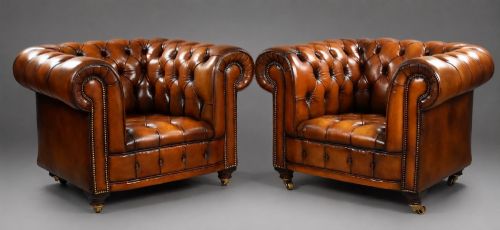
- A traditional English seating style characterised by deep buttoned leather and rolled arms of equal height. They appear frequently in club and library settings.
- Spoonback
- A Victorian chair design with a padded back shaped like the bowl of a spoon, matching the natural contour of the spine. Walnut and mahogany were typical woods for this form.
- Barley twist
- A turned wooden furniture leg resembling a twisted rope, popular during the Victorian period. It adds decorative texture to the structural supports.
Pair Tufted Armchairs: Frequently Asked Questions
Are pair tufted armchairs comfortable for daily use?
These chairs combine deep buttoned padding with sturdy wooden frames, offering substantial support for daily sitting.
Deep seated club and library models provide particularly relaxed lounging options for living spaces.
How do I identify a Victorian tufted armchair?
Victorian examples typically feature dark hardwoods like walnut or mahogany, often with buttoned leather or velvet upholstery. Look for characteristic details such as spoonbacks or barley twist legs.
English library chairs from this era prioritise robust construction and deep buttoning.
What is the difference between French and English styles?
French Napoleon III and fauteuil armchairs often display gilded frames, exposed curved woodwork, and silk or velvet covers. English Chesterfield and library chairs lean towards robust leather upholstery and darker timber structures.
Both traditions utilise tufting but apply distinct aesthetic emphases to the frame.
How should I care for antique leather chairs?
Keep leather upholstered chairs away from direct sunlight and heat sources to prevent the material from drying out. Regular dusting and occasional conditioning maintain the natural patination.
Avoid harsh chemical cleaners that might strip the historic surface finish.