
French Club Armchairs
French club armchairs combine deep, enveloping comfort with heavy leather or fabric upholstery, offering a grounded seating option for a relaxed interior.
French Club Armchairs
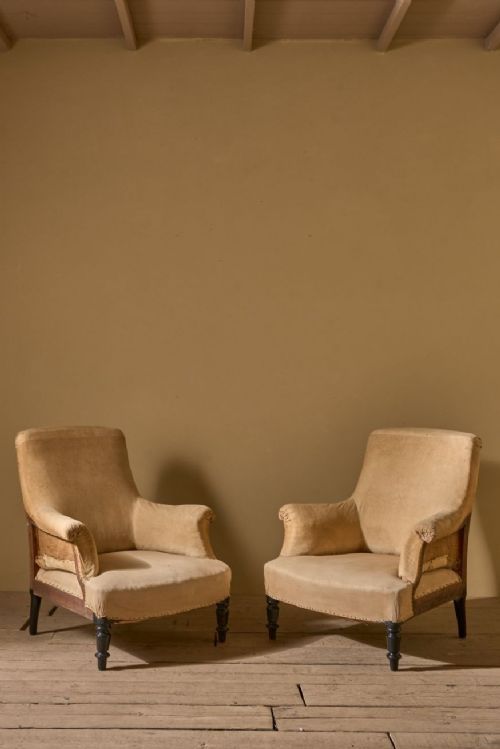
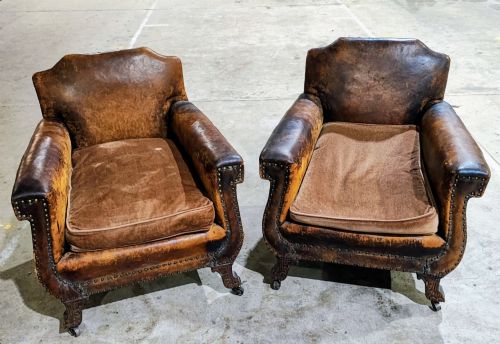
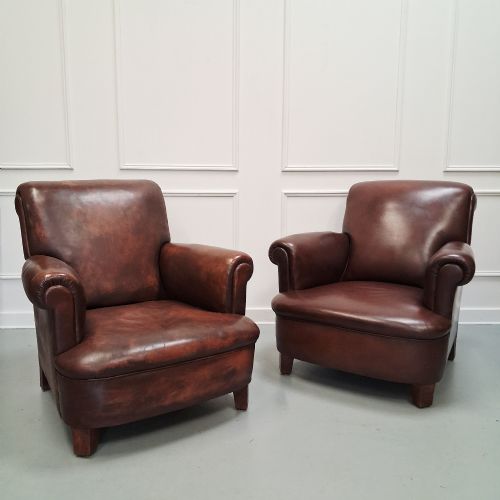
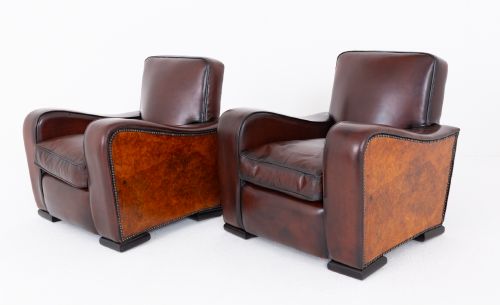
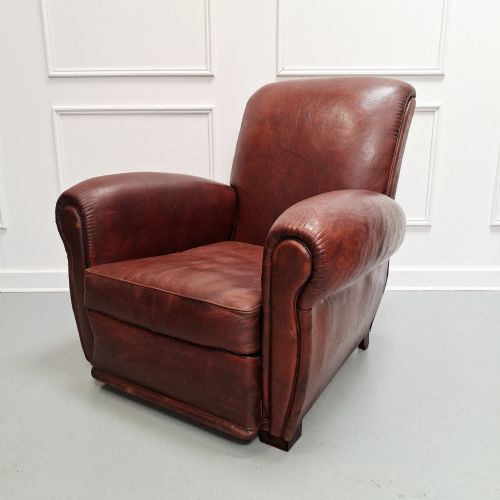
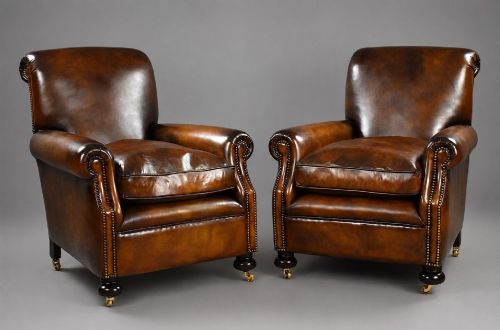
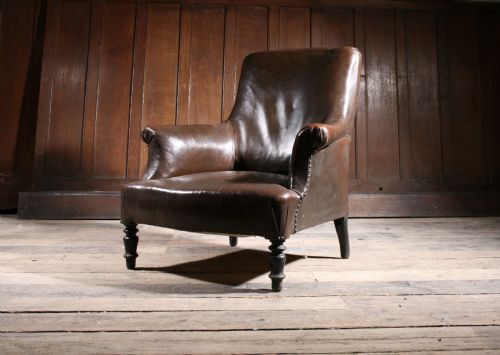
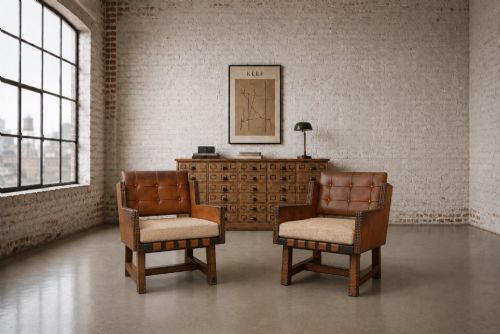
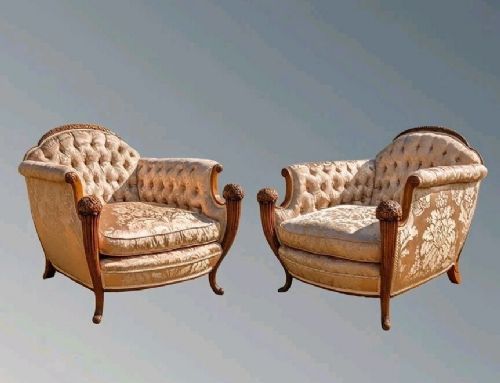
When you search for french club armchairs, you encounter low-slung, substantial seating designed primarily for lounging rather than formal posture. The forms span robust leather designs from the 1930s through to earlier nineteenth-century button-backed shapes and Napoleon III variants.
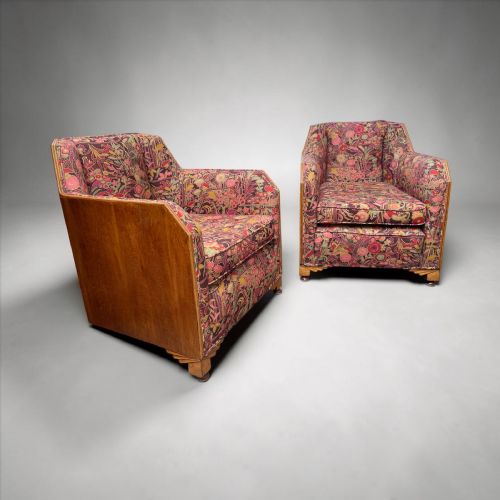
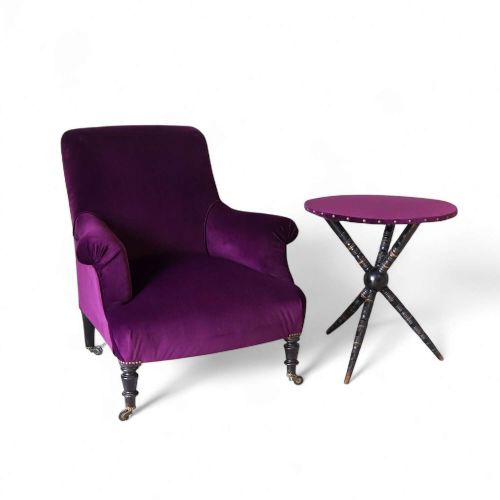
You meet these pieces as individual seats or in matched pairs, often accompanied by occasional tables or set within larger lounge suites. The origins stretch from nineteenth-century workshops into twentieth-century Art Deco interpretations.
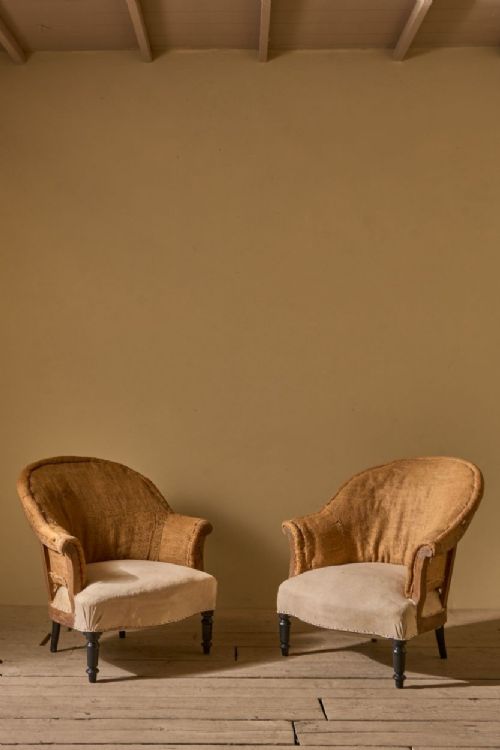
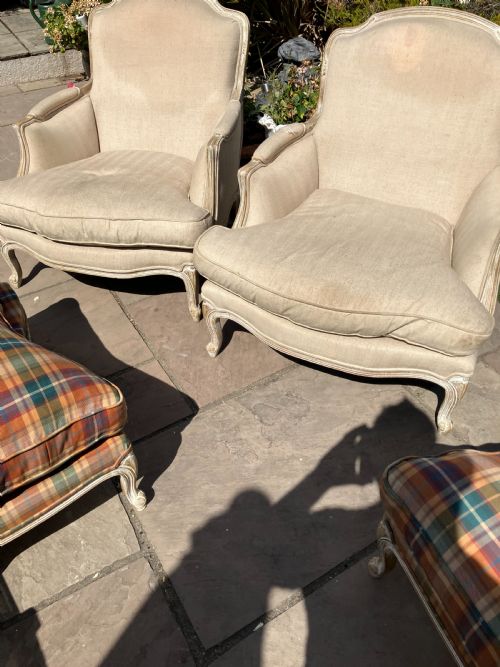
The aesthetic ranges from plain square backs and tub chair silhouettes to curved buttoned designs and Louis style frames. Many examples retain their original leather or upholstery, while others arrive ready for new fabric.
How they were made
Makers constructed the foundational frames using timber, hardwood, and walnut, often shaping the exposed wood for decorative effect alongside structural support. Internal elements employed traditional upholstery techniques to build deep, resilient cushioning.
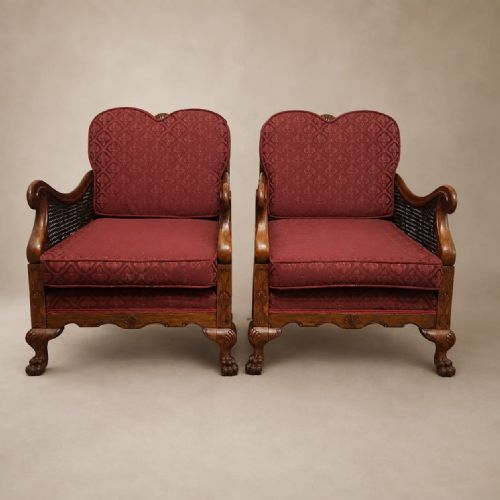
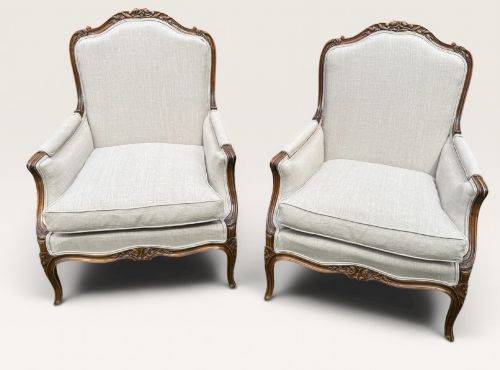
Upholstery materials combined leather, sheep's hide, calico, velvet, and silk, secured with brass detailing where appropriate. Caning also appears on specific bergere variations, incorporating split cane into the wooden framework.
The integration of sturdy wooden frames with heavy leather or fabric coverings created chairs capable of withstanding daily use. Wood finishes included ebonised treatments and polished walnut to complement the chosen textiles.
Listings feature pieces spanning the nineteenth century through to the 1960s, encompassing walnut, hardwood, leather, and velvet.
What varies in quality
The integrity of the underlying timber frame dictates the fundamental durability of each chair. Solid walnut and dense hardwood constructions provide superior longevity compared to lighter timber builds.
Leather quality and tanning methods define the character and tactile appeal of the upholstery. Supple hides that have aged naturally present a different tactile experience from replacement leathers or fabric alternatives such as velvet and silk.
The precision of the upholstery work, from button-tufting to the neat application of brass tacks, separates standard production from finer craftsmanship.
The French Club Armchairs Glossary
- Club chair
- A deep, comfortable armchair characterised by thick upholstered armrests and a low back. This seating type originated in France and gained popularity for domestic lounging.
- Bergere
- An enclosed upholstered armchair with a wooden frame where the sides are frequently filled with cane or upholstery. It provides a lighter visual weight than a solid leather club chair.
- Napoleon III
- A nineteenth-century style spanning the reign of Napoleon III, known for eclectic revivals of earlier French periods and comfortable, button-backed upholstery. Pieces often feature ebonised or polished wooden supports.
- Art Deco
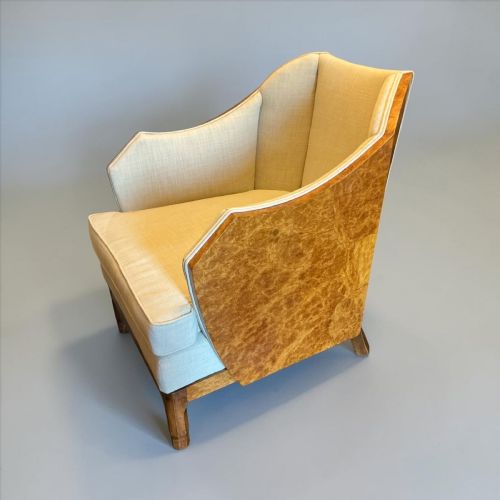
- A twentieth-century design style emphasising streamlined forms, geometric shapes, and modern materials. In chair design, this translates to rounded silhouettes and smooth leather finishes.
- Tub chair
- An armchair featuring a rounded back that wraps continuously into the arms to form a deep, enclosed seat. This form appears across nineteenth-century and later variations.
French Club Armchairs: Frequently Asked Questions
How do I identify a 1930s club chair?
Twentieth-century examples from this decade often display distinct Art Deco influences with rounded, chunky silhouettes and smooth leather upholstery. The proportions tend to prioritise low, deep seating with minimal exposed wood on the main body.
Makers frequently utilised thick sheep's hide or plain leather, sometimes pairing the chairs with matching sofas. Examining the stitching and the contour of the armrests helps distinguish these twentieth-century pieces from earlier nineteenth-century variants.
Are these chairs suitable for daily use?
These pieces were originally built for domestic comfort and robust lounging, making them practical for everyday seating. Their deep cushions and sturdy wooden frames support regular use in living spaces.
When evaluating a chair for daily life, consider whether the leather or fabric has been restored or if it retains a vintage finish that requires careful maintenance. Many examples have survived decades of use precisely because of their solid construction.
How do I distinguish Napoleon III chairs?
Napoleon III pieces date from the nineteenth century and typically feature prominent button-tufting on high curved or square backs. The upholstery often wraps the entire frame tightly, occasionally concealing the wooden legs entirely.
These chairs focus heavily on plush padding and formal yet comfortable proportions. They differ from later twentieth-century Art Deco club chairs through their taller backs and more traditional nineteenth-century buttoned detailing.