




Pair Tiered Tables
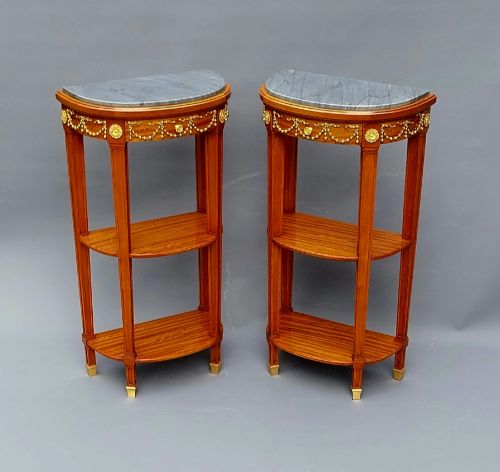
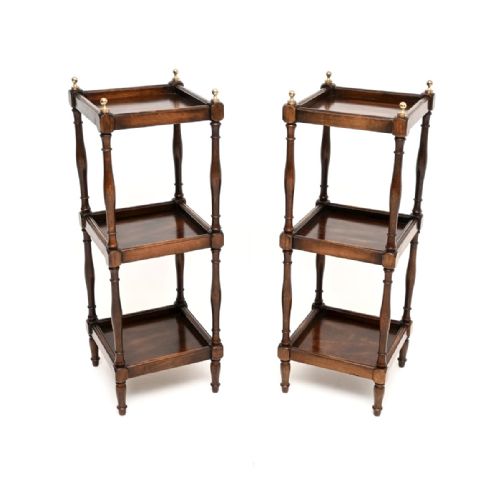
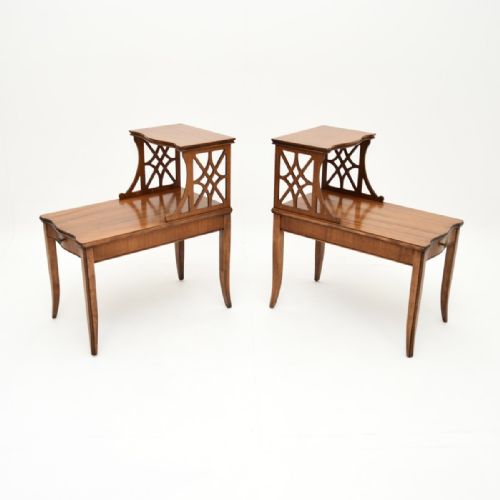
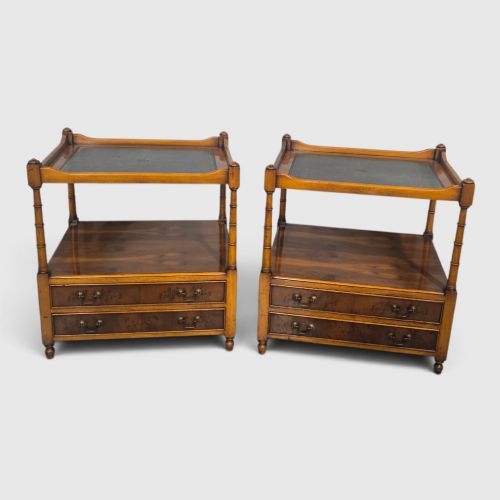
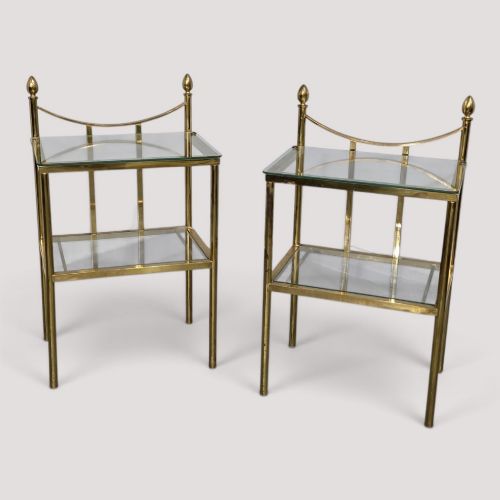
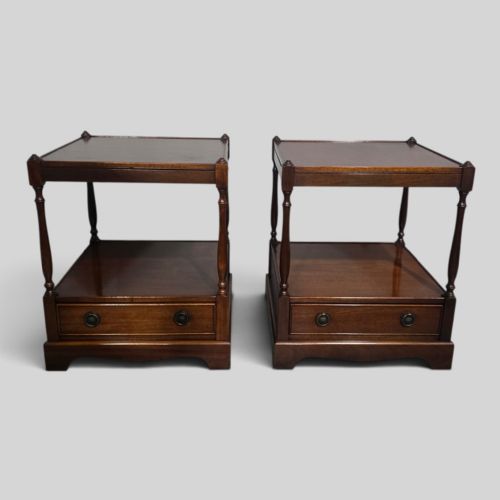
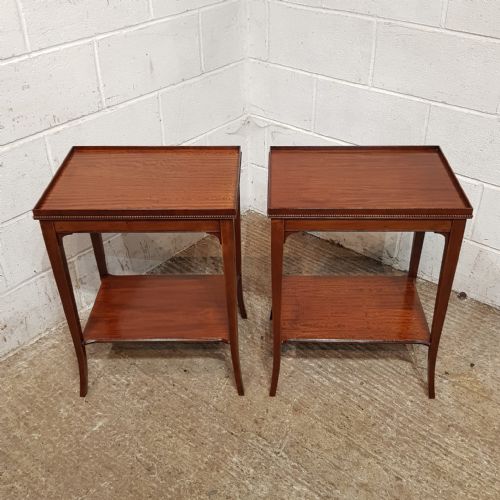
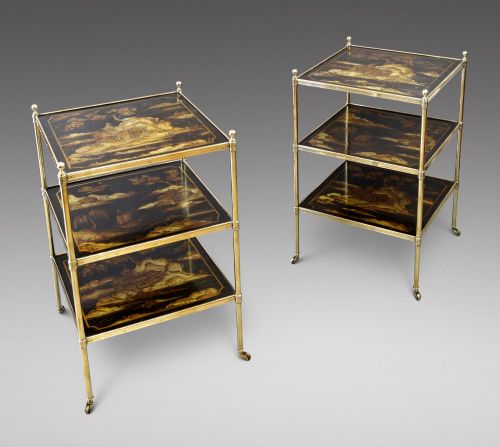
These pair tiered tables combine graduated surfaces with balanced proportion, offering dual levels for display and daily utility.
Pair Tiered Tables
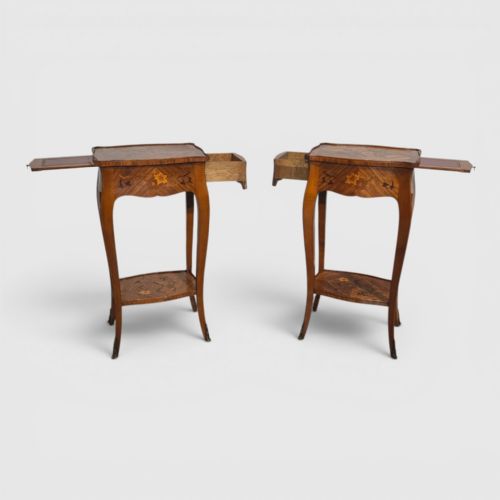
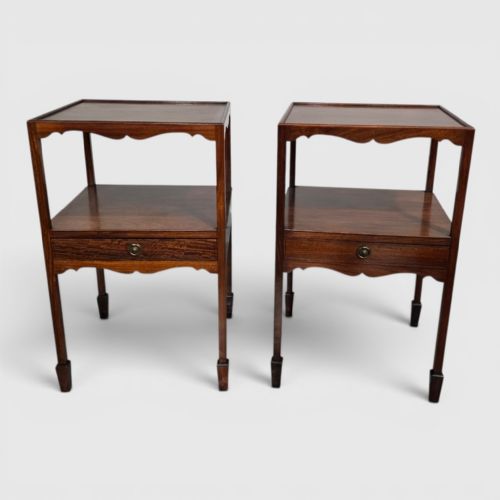
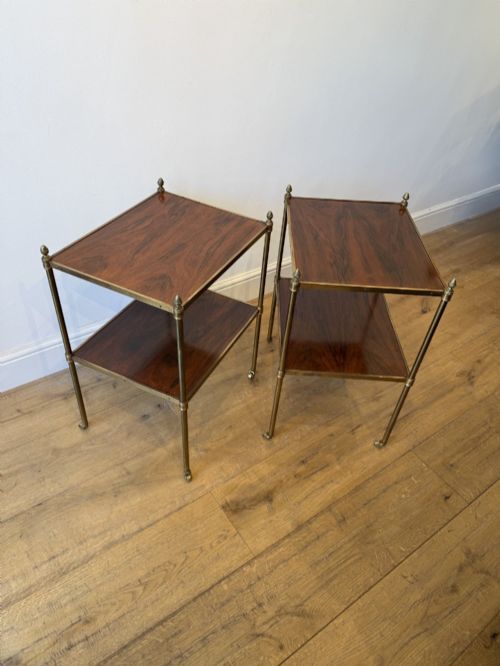
When you search for pair tiered tables, you encounter matching sets of multi-level furniture designed to provide stacked display space. The inventory spans lamp tables, etageres, whatnots and bedside stands across multiple historical periods.
Most examples you meet on this page originate from the Edwardian era and the nineteen-thirties, though older Regency and nineteenth-century forms appear regularly. These pieces function as side tables, plant stands and bedside surfaces where dual tiers double the usable footprint.
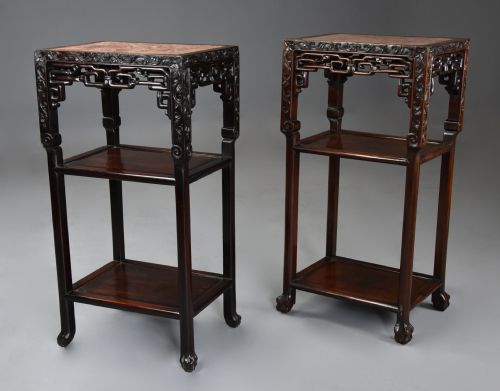
Forms range from simple two-tier mahogany bedside tables to complex three-tier etageres and Chinese hardwood pot stands. The selection covers diverse styles including Art Deco, French marquetry and traditional Georgian interpretations.
Materials and Construction
Cabinetmakers utilised a variety of timbers including mahogany, walnut, rosewood, satinwood and oak, often enhancing surfaces with intricate marquetry and inlay. Brass and gilt metal frequently form the structural frames or decorative mounts of etageres and lamp tables.
Marble inserts appear on specific Chinese and French tables, providing a durable and cool top surface. Construction techniques combine traditional joinery with specialised veneer work, particularly in French and Edwardian marquetry examples.
The listings span the nineteenth century through the nineteen-thirties, featuring mahogany, rosewood, walnut, brass and marble across various etagere and table forms.
Evaluating Quality
Quality rests in the crispness of timber selection, the precision of marquetry and the structural integrity of the tiers. Superior pieces exhibit well-figured grain, tightly fitted joints and refined bronze or brass mounts that integrate harmoniously with the wood.
Simpler production uses plainer secondary timbers and less detailed inlay work, while finer examples show meticulous attention to edge banding, turned supports and the balance between upper and lower shelves.
Gilbert Rohde·Mallett·John MaClean·E W Godwin·Donald Ross·Hille
The Pair Tiered Tables Glossary
- Etagere
- A piece of furniture consisting of a set of open shelves for displaying small objects. These tiered units often serve as lamp tables or decorative side stands.
- Whatnot
- An open set of shelves used for books or ornaments, popular throughout the nineteenth century. These multi-tiered items provide several levels of display surface.
- Marquetry
- Decorative veneer applied to furniture in geometrical patterns or pictorial designs. Craftsmen use contrasting coloured woods and sometimes metal to create elaborate surface decoration.
- Bonheur du jour
- A small light lady's writing desk with a tiered superstructure. These refined pieces feature small drawers and shelves above the main writing surface.
Pair Tiered Tables: Frequently Asked Questions
What are pair tiered tables used for?
These pieces function primarily as bedside tables, lamp tables and display stands in reception rooms. The multiple tiers provide dedicated surfaces for lighting, books and decorative objects without occupying excessive floor space.
Matching pairs allow for symmetrical placement on either side of a bed, fireplace or sofa. The stacked shelves maximise vertical display capacity in compact areas.
How do I identify Edwardian examples?
Edwardian tiered tables often feature lighter mahogany frames with delicate satinwood inlay and tapered legs. They reflect the revival styles popular around nineteen hundred, favoring refinement and brightness over heavy Victorian mass.
Construction during this period typically utilises machine-assisted precision alongside traditional hand finishing. Look for lighter secondary woods and characteristic Edwardian floral or string inlay motifs.
What is the difference between an etagere and a whatnot?
An etagere generally emphasises decorative display with lighter framing, often incorporating brass supports, glass, or fine marquetry. They originated largely in French design traditions for displaying porcelain and ornaments.
Whatnots tend to be sturdier wooden shelving units with multiple tiers, frequently associated with nineteenth-century English interiors. Both terms describe multi-level furniture, but etageres lean toward ornamental display while whatnots often served broader utility.
How do I care for antique tiered tables?
Maintain polished wood surfaces using traditional beeswax applied sparingly with a soft cloth. Avoid placing these tables in direct sunlight or near heat sources to prevent timber splitting and veneer lifting.
Protect marble and glass inserts by using coasters and pads under heavy objects. Regular gentle dusting preserves the finish without wearing down historical patination.