



Pair Spirit Bottles
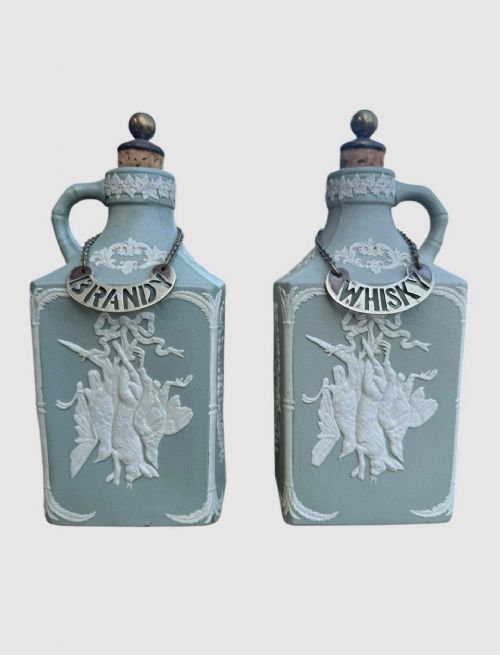
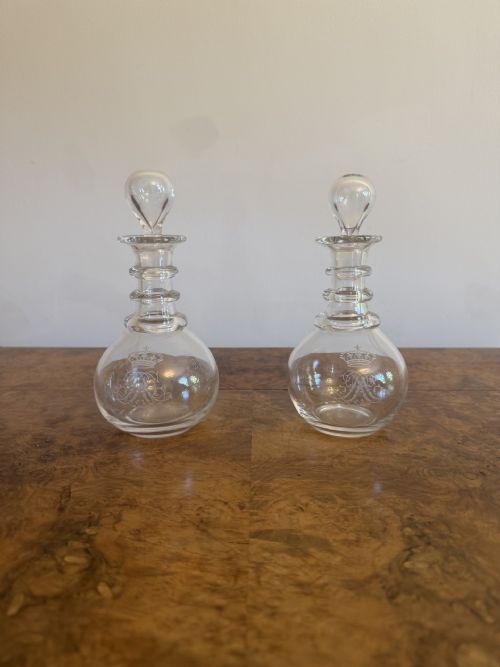
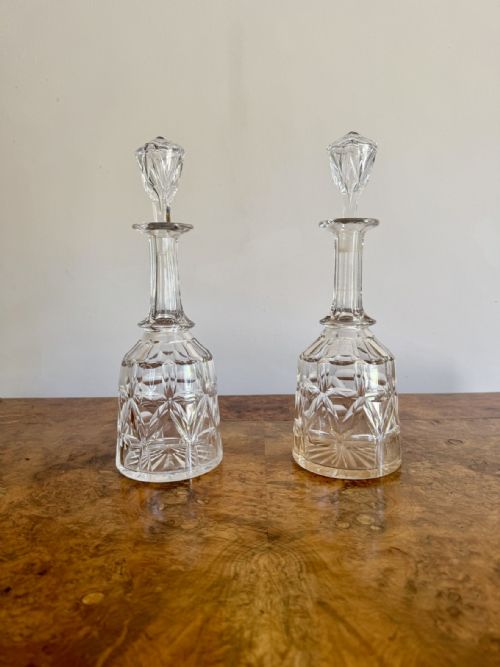
Pair spirit bottles bring symmetry to a sideboard, offering matched vessels designed to hold your chosen drams in period style.
Pair Spirit Bottles
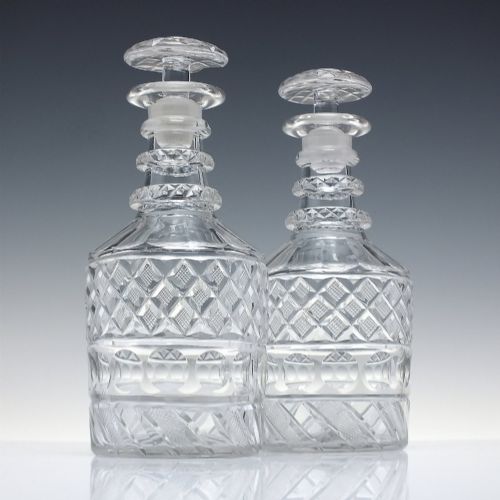
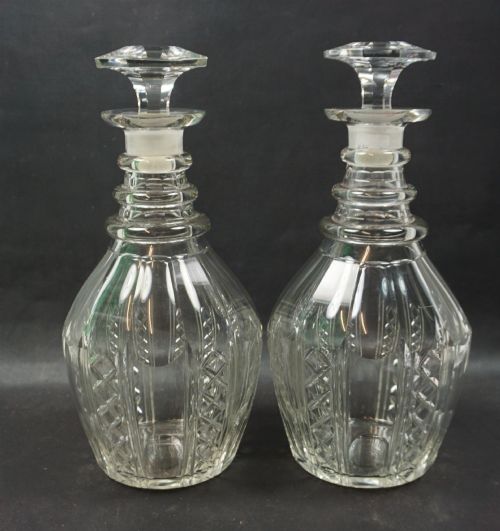
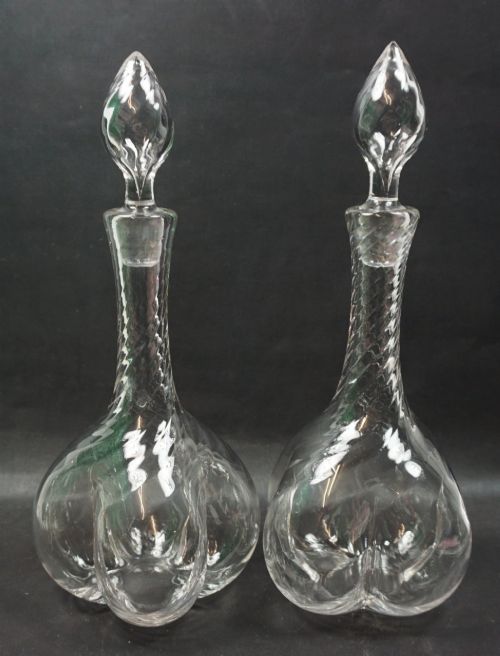
When you search for pair spirit bottles, you encounter matched vessels created to store and pour liquors side by side on a dining table or tray. These sets encompass traditional decanters, carafes, apothecary jars, and flagons originating from the Georgian, Victorian, Edwardian, and mid-century eras.
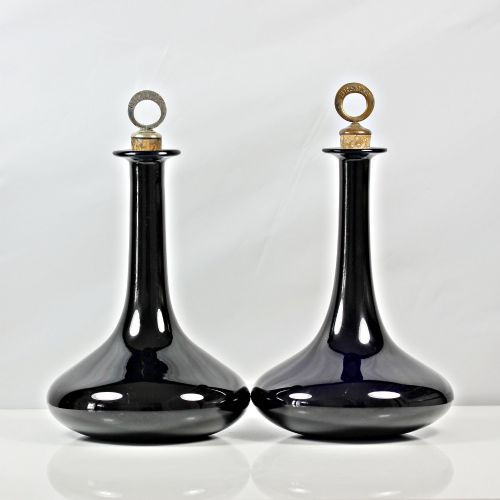
The pieces on this page lean heavily towards glass and crystal forms from the nineteenth and early twentieth centuries. You find clear cut glass alongside richly coloured examples in ruby, green, amethyst, Bristol blue, and cranberry hues.
Beyond standard decanters, the selection includes specialised vessels such as spirit flagons, tincture bottles, whisky noggins, and silver-mounted glass containers. They range from small George III table pieces up to large Victorian shaft and globe designs.
How they were made
Makers utilised high-grade glass, lead crystal, and clear glass shaped through optical blowing and heavy cutting techniques. Artisans achieved vibrant container colours by introducing metallic oxides into the molten material during production.
Finishing touches involved wheel engraving, silver mounts, cork stoppers, and fitted glass stoppers designed to seal the contents tightly. Certain workshops incorporated applied silver work, such as handles and collars, directly onto the glass bodies.
Pair Spirit Bottles Retail Price Guide 2026
Typical asking prices for pair spirit bottles among the pieces listed under this phrase on Sellingantiques today, from the lower quarter to the upper quarter. They describe what is for sale here now, not the wider market.
The listings span from the Georgian period through the Victorian and Edwardian eras into mid-century modern design.
What varies in quality
Quality rests upon the crispness of the glass cutting and the clarity of the material itself. Sharp, deep facets catch the light directly, whereas softer moulded patterns lack that defined brilliance.
The presence of original matching stoppers and hallmarked silver mounts elevates a pair significantly. Weight, balance, and unblemished colour saturation further distinguish standard utilitarian vessels from finer parlour examples.
James Powell·Mappin & Webb
The Pair Spirit Bottles Glossary
- Decanter
- A vessel used for holding and serving liquor. These containers usually feature a stopper and a flared neck for pouring.
- Lead crystal
- Glass containing lead oxide, which increases the weight, refractive index, and clarity of the material. This composition allows for deep, sharp cutting.
- Optically blown
- A glassblowing technique where molten metal is inflated inside a ribbed mould to create a pattern of parallel lines or optic effects in the walls.
- Noggin
- A small mug or vessel used for measuring and serving spirits. Silver-mounted versions often accompany a dedicated pouring lip and handle.
- Bristol blue
- A deep cobalt blue glass historically produced in Bristol during the eighteenth and nineteenth centuries. It became a popular choice for coloured spirit containers.
Pair Spirit Bottles: Frequently Asked Questions
What were pair spirit bottles used for?
These vessels served to hold different liquors securely on the dining table or sideboard for guests. Households utilised matched pairs to serve competing spirits like brandy and whisky side by side.
They kept the contents clean while adding formal symmetry to the room before the bottles went back into the cellar or cabinet.
How do I date a glass decanter?
Dating relies on examining the shape, the pontil mark on the base, and the style of the cutting. Georgian pieces often display different proportions and pontil scars compared to later Victorian or Edwardian examples.
Silver mounts with legible hallmarks also provide exact years of production and maker details.
Are original stoppers important?
Original stoppers that match the cut and colour of the body remain important for completeness and value. Decanters often became separated from their original partners over generations of use.
A matched pair with period-correct stoppers that fit snugly performs better and maintains historical integrity.
How should I clean antique glass?
Gentle washing in warm water with mild detergent preserves the surface of antique glass. Avoid harsh scrubbing or abrasive scourers that might scratch the old material or damage engraved surfaces.
Allow the vessels to air dry thoroughly before replacing the stoppers to prevent moisture retention inside.