





Handled Spirit Decanter
These handled spirit decanter pieces bring nineteenth and early twentieth century craftsmanship straight to the table, offering a functional centrepiece for any collection.
Handled Spirit Decanter
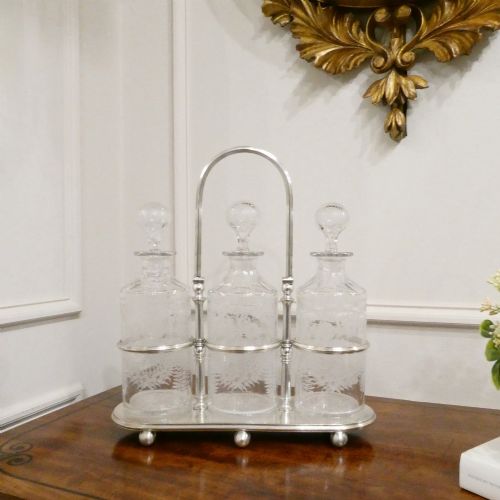
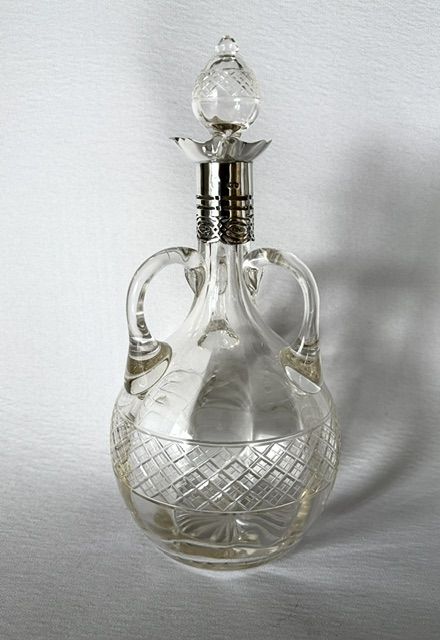
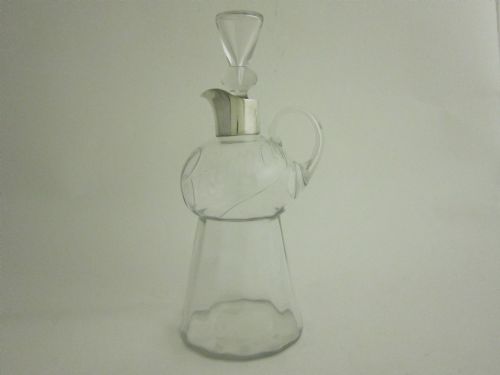
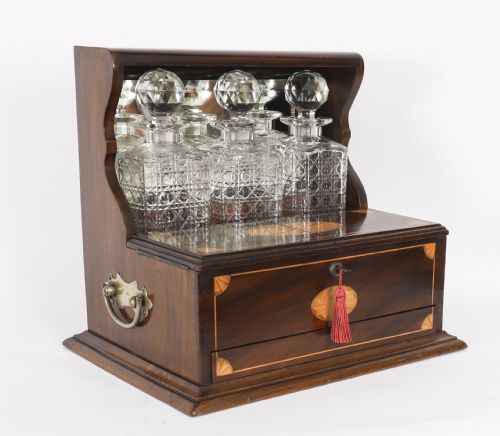
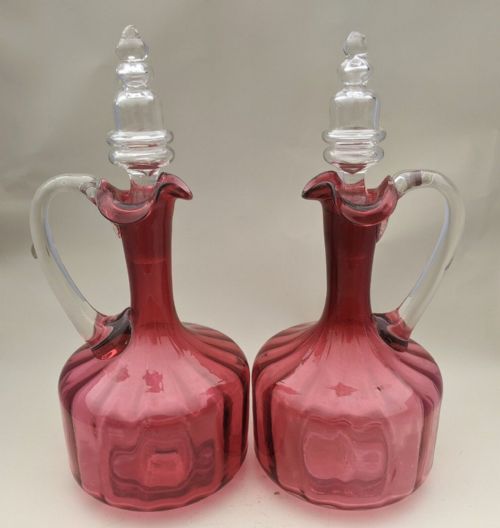
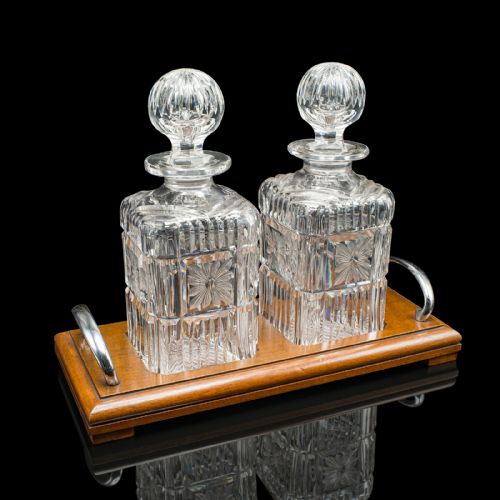
When you search for a handled spirit decanter, you are looking at nineteenth and early twentieth century vessels designed for serving liquor from periods such as the Victorian, Edwardian, and Georgian eras. The listings here show forms ranging from single cut glass bottles with silver mounts to pairs of coloured glass ewers and larger mahogany tantalus sets.
The version you are most likely to meet on this page is a glass or cut crystal vessel featuring a fitted handle, often enhanced with silver plate or sterling silver mounts. Alongside standalone bottles, the selection includes fitted stands and cellar units that house multiple spirit containers securely.
How they were made
Makers utilised heavy cut crystal and clear glass, alongside coloured varieties like cranberry and green glass, shaping them through traditional blowing and cutting techniques. Metalwork components involved sterling silver and silver plate, which were shaped into mounts, collars, and handles to secure the glass.
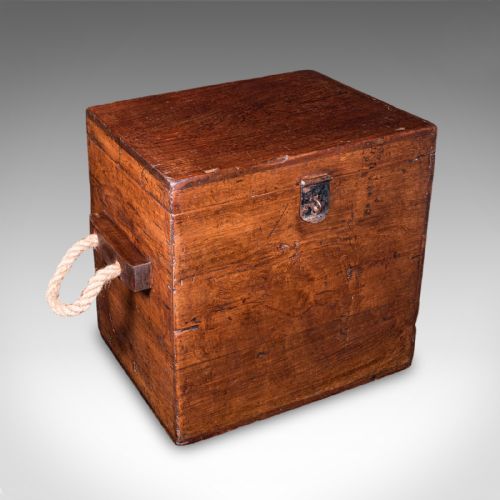
Wooden housings such as mahogany were constructed for tantalus sets and cellarettes, incorporating brass hardware and inlays to hold the decanters in place. These materials combined glasswork, metalsmithing, and cabinet making into functional barware.
Handled Spirit Decanter Retail Price Guide 2026
Typical asking prices for handled spirit decanter among the pieces listed under this phrase on Sellingantiques today, from the lower quarter to the upper quarter. They describe what is for sale here now, not the wider market.
Victorian hosts locked their whiskey away in mahogany tantalus frames so guests could admire the amber glow without sneaking a sip.
What varies in quality
The distinction between standard and finer examples rests on the crispness of the glass cutting and the weight of the metal mounts. Pieces with deep, sharp facets and substantial silver plating or solid sterling silver display a higher grade of manufacture than simpler alternatives.
Design complexity also separates the range, as demonstrated by examples featuring coloured glass or integrated mahogany frames with locking mechanisms. The presence of matching sets and named makers elevates the overall standard of the piece.
Mappin & Webb
The Handled Spirit Decanter Glossary
- Tantalus
- A locking wooden cabinet or stand that holds decanters securely while displaying the contents, preventing removal without a key. This device gained popularity in the nineteenth century for safeguarding spirits.
- Cellarette
- A fitted cabinet or box designed to hold bottles of wine and spirits, often standing on legs or placed beneath a sideboard. Georgian and Victorian examples utilised fine timbers like mahogany.
- Cut Crystal
- Glass containing lead oxide that is faceted with geometric patterns by grinding and polishing. This material provides greater brilliance and weight than standard glass.
- Silver Plate
- A base metal coated with a thin layer of silver using chemical or electrolytic processes. It allowed makers to produce decorative mounts and handles at a lower cost than solid silver.
- Ewer
- A large jug with a wide spout and a curved handle, adapted in some nineteenth century designs for serving spirits. These vessels often featured decorative Art Nouveau or Victorian styling.
Handled Spirit Decanter: Frequently Asked Questions
What is a handled spirit decanter?
A handled spirit decanter is a glass or crystal bottle fitted with a handle for pouring liquor, frequently decorated with silver or silver-plated mounts. These vessels date primarily from the Victorian and Edwardian periods.
They were produced in various forms, including single bottles, pairs, and units housed within tantalus frames or stands for domestic entertaining.
How were tantalus sets used?
Tantalus sets were used to store spirits securely in dining rooms and drawing rooms during the nineteenth and early twentieth centuries. The locking mechanism prevented unauthorized access to the liquor while displaying the cut glass decanters.
Servants or hosts kept the key, allowing drinks to be served safely in formal households.
How do I date a decanter?
Dating a decanter involves examining the style of the glass cutting, the shape of the handle, and any metal mounts. Georgian pieces often display simpler, heavier proportions, while Victorian and Edwardian examples show more varied coloured glass and intricate silver work.
Hallmarks on silver mounts provide exact dates and maker marks for reliable attribution.
Are coloured glass decanters authentic?
Coloured glass decanters in shades like cranberry and green are authentic products of nineteenth-century glasshouses. Makers utilised various mineral oxides during the melting process to achieve these distinct hues.
These coloured pieces often appear in pairs or within Edwardian and Victorian table services.
How should I clean antique glass?
Antique glass requires careful washing in lukewarm water with mild detergent, avoiding sudden temperature changes that can crack old material. Soft cloths help dry and polish the cut facets without scratching.
Silver mounts should be polished separately with appropriate cleaner to prevent staining the glass.