


Pair Small End Tables
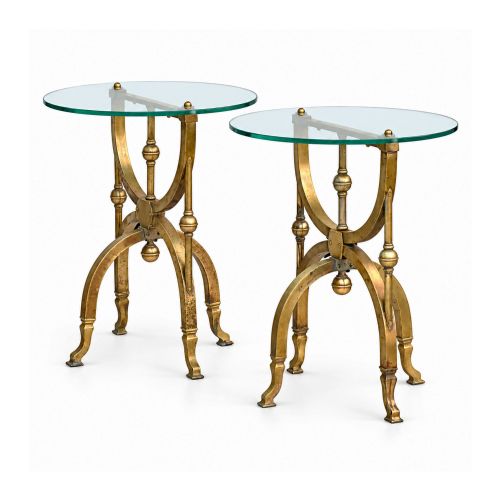
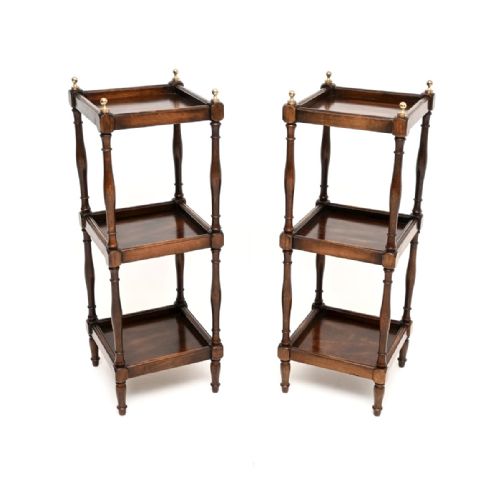
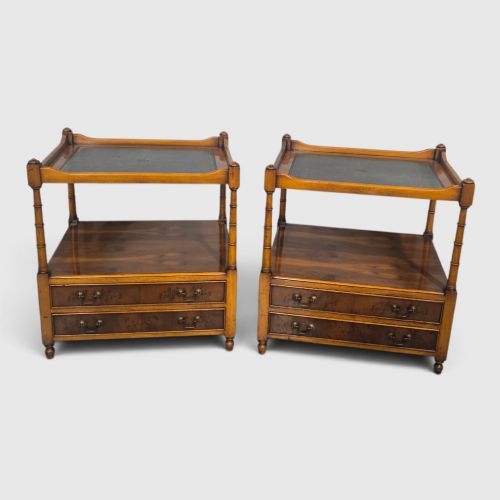
Pair small end tables bring matching utility to tight spaces, offering balanced surface area beside seating or beds without overwhelming the room.
Pair Small End Tables
Pair small end tables encompass compact dual items functioning as side tables, lamp tables, bedside tables, and corner tables. They serve primarily to hold lighting, books, and daily items within arm's reach in sitting rooms and bedrooms.
The selections span eras from the eighteenth century through the 1930s, incorporating Victorian, Edwardian, and Art Deco periods. Buyers frequently encounter mahogany, oak, and yew constructions reflecting styles such as Regency, Arts and Crafts, and Sheraton.
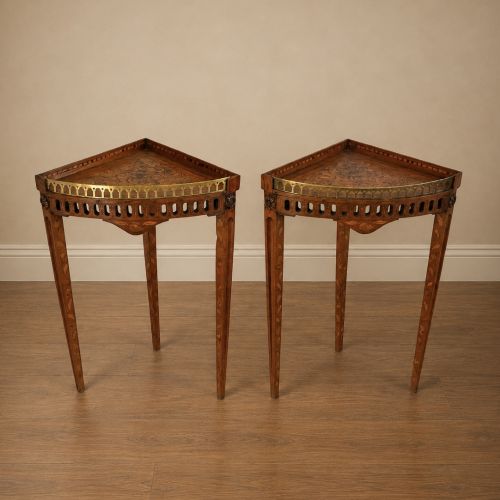
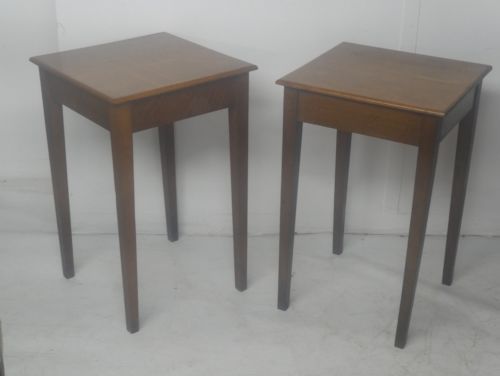
Configurations range from simple square and round wooden tops to kidney-shaped inlaid veneers, brass galleries, and revolving bookcase designs. Swedish birch and traditional painted finishes also appear among the compact forms.
What varies in quality
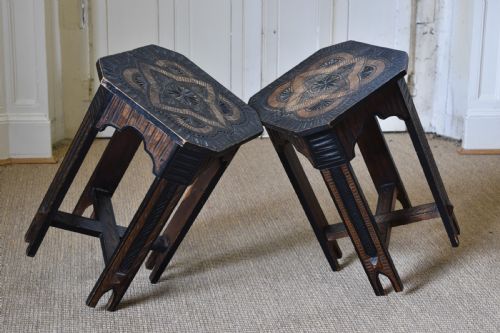
The standard of timber selection and veneer matching defines the visual depth of the piece, where carefully chosen grain patterns elevate simpler forms. Precision in inlay work and the crispness of chip carving distinguish standard production from finer cabinetmaking.
Structural integrity relies on the tightness of joints and the stability of small legs supporting the table tops. Original brass fixtures and intact leather inserts preserve the authentic character of older pieces better than later replacements.
Listings span from the eighteenth century to 1930, featuring materials like mahogany, oak, yew, satinwood, and brass.
Liberty type oak
The Pair Small End Tables Glossary
- Marquetry
- Decorative inlay work using various coloured woods to create pictorial or geometric patterns on furniture surfaces. It appears frequently on eighteenth-century and Edwardian tabletops.
- Brass gallery
- A small pierced metal rail fitted around the edge of a table top to prevent objects from sliding off. This detail is common on Georgian and revival pieces.
- Satinwood
- A durable, lustrous yellowish timber utilised for fine cabinetmaking and contrasting inlay work. It brings a bright reflective quality to classical revival surfaces.
- Kidney-shaped
- A curved, asymmetrical furniture form designed to fit comfortably against the body or in tight corners. This shape is typical of twentieth-century bedside tables.
Pair Small End Tables: Frequently Asked Questions
Where should I place pair small end tables?
These compact surfaces sit naturally beside armchairs, sofas, or twin beds where balanced proportions matter. Their modest footprint allows them to occupy neglected corners without crowding the floor.
They function well supporting reading lamps, drinks, or bedside essentials while maintaining symmetry in the room layout.
How do I identify the period of my tables?
Dating relies on examining the timber species, construction methods, and stylistic cues present in the design. Eighteenth-century pieces often show marquetry and brass galleries, whereas 1930s examples lean towards Art Deco simplicity or yew finishes.
Matching hardware, joinery techniques, and secondary woods help confirm the era of manufacture more accurately than exterior appearance alone.
Are matched pairs original?
Some tables were manufactured together as a pair by workshops, while others are matched pairs gathered later based on similar size and style. Both types offer the symmetry required for bedside or sofa placement.
Close inspection of timber ageing, wear patterns, and construction details reveals whether two pieces originated from the same workshop batch.
How do I care for antique wooden tables?
Routine maintenance involves dusting with a soft, dry cloth and avoiding placement near direct heat sources or strong sunlight. Maintaining stable room humidity prevents timber from splitting and preserves fragile veneers.
Applying occasional appropriate wax feeds the wood and protects historic finishes without building up heavy residue.