
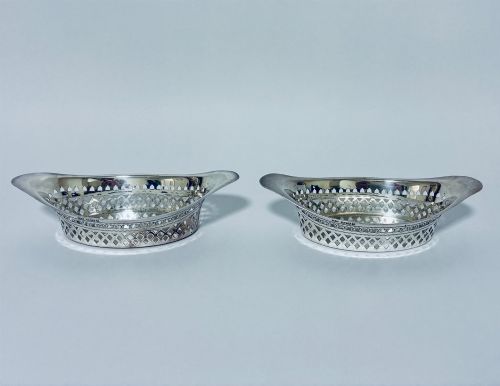
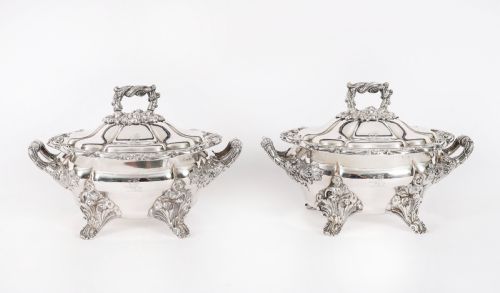


Pair Silver Serving Dishes
These pair silver serving dishes bring traditional elegance to a formal table, offering matched symmetry for grand dining.
Pair Silver Serving Dishes
When you search for pair silver serving dishes, you enter a domain of matched table accessories spanning from the Georgian era through to the Edwardian period. The forms on this page range from entree dishes and sauce tureens to bonbon dishes, chargers, and cloches.
You are most likely to meet silver plated or sterling silver oval entree dishes and warming dishes dating from the nineteenth century. These pieces reflect formal dining rituals where symmetry on the table mattered greatly to the host.
Materials and Methods
Silversmiths utilised solid sterling silver for high-status commissions, hammering and casting metal into substantial forms. Many pieces employ sterling silver, marked with hallmarks indicating city and year of assay.
For larger items, makers applied silver plating over base metals like copper, nickel silver, or pewter, sometimes using Old Sheffield Plate or electroplating techniques. This provided the brilliance of silver at a more accessible cost.
Object forms include warming dishes, sauce tureens, bonbon dishes, sweet dishes, chargers, and cloches alongside standard entree dishes.
Standards of Quality
The distinction between ordinary and superior pieces rests on the crispness of chased or embossed decoration and the weight of the metal. Heavier gauge silver retains its structural integrity through centuries of use and cleaning.
Maker marks from renowned silversmiths elevate a pair, indicating superior workshop standards and careful craftsmanship. The quality of the silver plating or the purity of the sterling metal determines how well the surface ages over time.
Hamilton and Inches·Edward and John Barnard·Walker and Hall·Elkington·Matthew Linwood·Cresswick
The Pair Silver Serving Dishes Glossary
- Entree dish
- A covered vessel designed for serving side dishes or main courses at the dining table. These often feature removable handles for versatile use.
- Tureen
- A deep, bowl-shaped vessel equipped with a lid, used for serving soups, sauces, or stews. Pairs were typically placed at opposite ends of large tables.
- Old Sheffield Plate
- A composite material made by fusing a thin sheet of sterling silver to a thicker copper base. This early technique produces a warm tone as the copper occasionally shows through.
- EPNS
- Electroplated Nickel Silver, a common nineteenth-century manufacturing method. An electrical current applies a layer of pure silver over a durable nickel alloy base.
- Cloche
- A bell-shaped cover designed to keep food warm on a platter. Matched pairs are particularly useful for formal presentation.
Pair Silver Serving Dishes: Frequently Asked Questions
How were pair silver serving dishes used?
These vessels were placed symmetrically on large dining tables during formal meals to serve meats, vegetables, or sauces. Servants brought them filled from the kitchen to keep food warm under matching covers.
In modern homes, they function as elegant table centrepieces or practical servers for family gatherings and dinner parties.
What is the difference between sterling and plated dishes?
Sterling silver items consist of solid precious metal marked with official assay office hallmarks. They hold intrinsic metal value and last indefinitely with proper care.
Silver plated items use a base metal like copper or nickel underneath a thin layer of silver. They offer the same visual appeal at a different price point.
How do I care for antique silver serving dishes?
Wash these pieces gently in warm water using mild soap, avoiding harsh abrasive sponges that scratch the surface. Dry them thoroughly with a soft cloth immediately after washing.
Apply a specialist silver polish sparingly only when necessary to remove tarnish, preserving any original plating or hallmarks.
Can I use antique silver dishes for serving food?
Most antique silver and silver plated dishes remain safe for serving dry or prepared foods. Avoid leaving acidic foods like citrus or vinegar sitting on the surface for extended periods.
Ensure plated items have intact surfaces so the base metal does not contact food directly.
How do I identify the date of a silver dish?
Look for hallmarks on sterling silver pieces, which include date letters, maker initials, and town marks corresponding to official records. Stylistic clues like Regency curves or Victorian ornamentation also help narrow down the period.
Maker stamps and plate marks on electroplated items provide further clues to their manufacturing decade.