



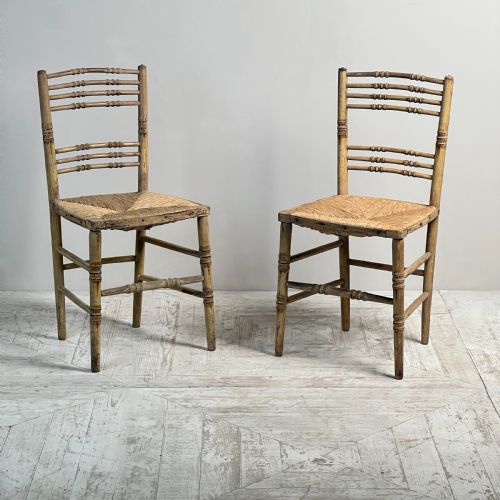


Pair Rush Seat Chairs
Pair rush seat chairs offer domestic utility through woven seating across periods from the Georgian era to the twentieth century.
Pair Rush Seat Chairs
Pair rush seat chairs combine timber frames with woven marsh grass seating designed for domestic sitting rooms, halls and dining spaces. These dual seating arrangements span several historic periods, including the Georgian, Regency, Victorian and Arts and Crafts eras.
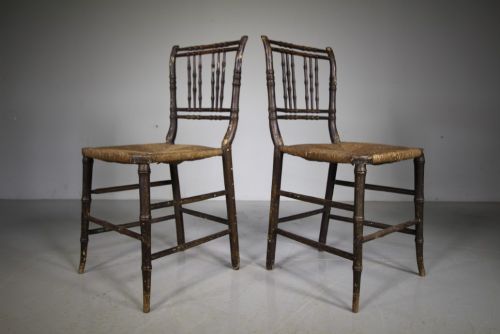
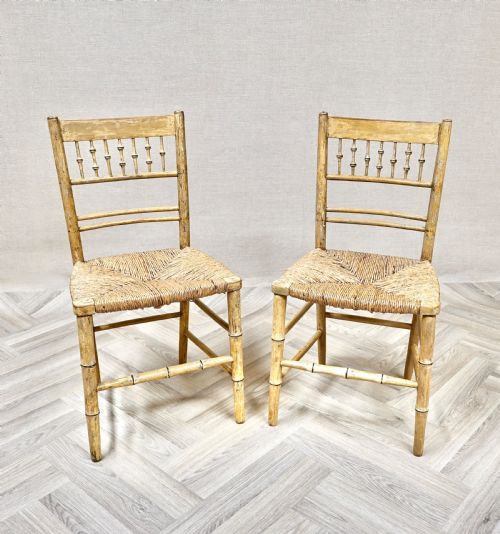
The regional country vernacular pieces feature heavily in elm and oak, often taking ladderback, spindleback or Lancashire forms. Alongside these rural types, buyers encounter Regency painted bamboo models and ebonised frames from nineteenth century workshops.
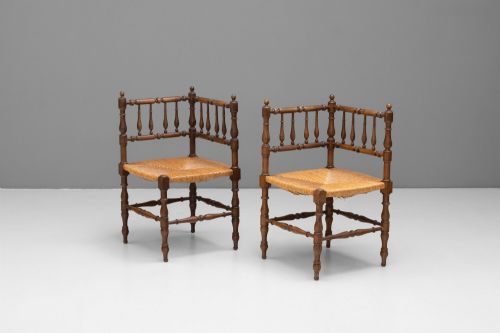
Armchairs, side chairs, carvers and corner chairs make up the available formats. Buyers frequently select these matched sets for everyday seating around dining tables or beside library writing desks.
What varies in quality
The tightness and regularity of the rush weave dictate the structural integrity of the seat, with closely twisted cords lasting decades longer than loose work. Timber selection also separates standard utility items from finer workshop pieces, particularly where cabinetmakers utilised figured elm or selected straight-grained oak.
Design sophistication marks the difference between basic regional seating and pieces influenced by specific aesthetic movements. Painted Regency bamboo frames or marked Arts and Crafts studio chairs demonstrate higher design ambition than plain provincial ladderbacks.
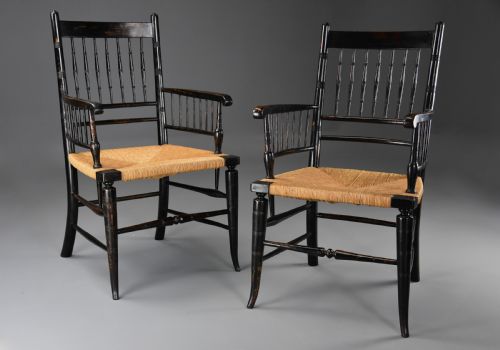
His and hers ebonised armchairs offered matched seating for Victorian sitting rooms.
Morris And Co·Dicon Nance·Lawrence Neal
The Pair Rush Seat Chairs Glossary
- Rush
- Dried marsh grass utilised for weaving traditional chair seats. It provides a flexible and durable seating surface when tightly twisted.
- Ladderback
- A chair back featuring multiple horizontal wooden rails between the upright posts. This traditional form appears frequently in country vernacular seating.
- Spindleback
- A chair design incorporating numerous thin turned wooden rods in the back support. These slender uprights distribute pressure evenly along the sitter's spine.
- Carver
- An armchair designed with open sides, historically placed at the head of a dining table. These pieces often match a set of smaller side chairs.
- Ebonised
- Timber treated with chemical finishes or black stain to imitate ebony. This dark surface treatment gained popularity during the Victorian and Arts and Crafts periods.
Pair Rush Seat Chairs: Frequently Asked Questions
How do I clean rush seat chairs?
Dust the wooden framework regularly with a dry cloth and vacuum the woven rush gently using a soft brush attachment. Avoid applying liquid cleaners or excess moisture, which can cause the dried marsh grass to become brittle and snap.
Keep these chairs away from direct heat sources and damp environments to preserve the natural flexibility of the woven fibres over time.
Can damaged rush seats be repaired?
Professional craftspeople can remove worn or broken cordage and entirely re-weave the seat using traditional marsh grass materials. The existing wooden frame remains intact while the new rush is laced around the original seat rails.
This restorative process maintains the historic integrity of the chair while returning the seating surface to full structural utility.
How do I date a rush seat chair?
Examine the turning styles of the wooden spindles, the method of frame construction, and any applied surface finishes such as paint or ebonisation. Country vernacular pieces often display regional characteristics typical of eighteenth or nineteenth century provincial workshop production.
Comparing the ladderback profiles and timber types against documented examples helps narrow down the period of manufacture.
Were these chairs used for dining?
Pairs of side chairs and carvers served as everyday seating around dining tables in both country homes and town residences. Their lightweight construction made them easy to move between rooms for various household tasks.
By the Victorian era, matched pairs frequently functioned as decorative bedroom or hallway furniture alongside their dining duties.