

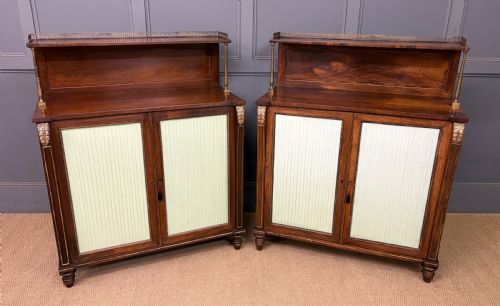


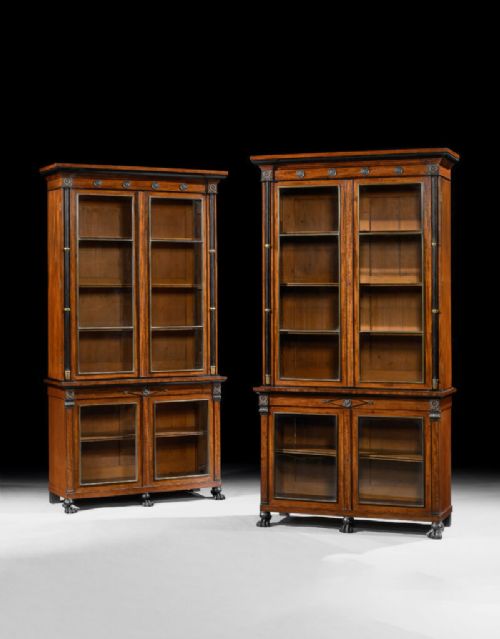


Pair Regency Bookcases
Pair regency bookcases bring symmetrical grace to a room, offering matched display and storage through disciplined timber and classical proportion.
Pair Regency Bookcases
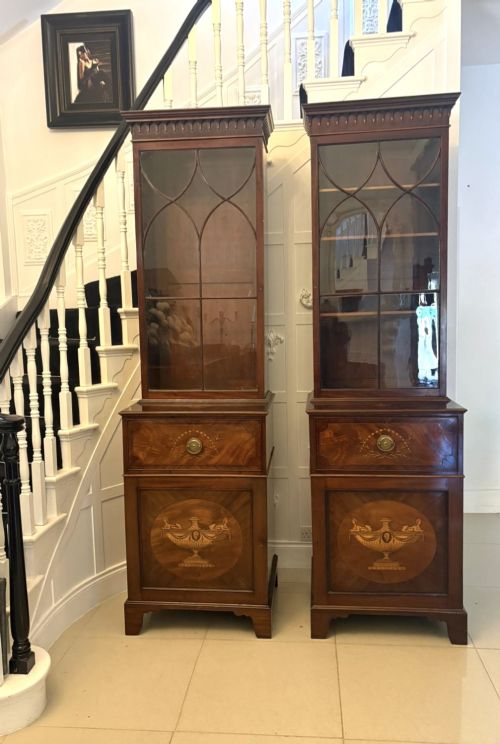
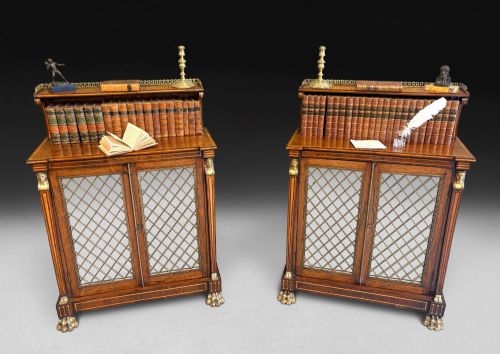
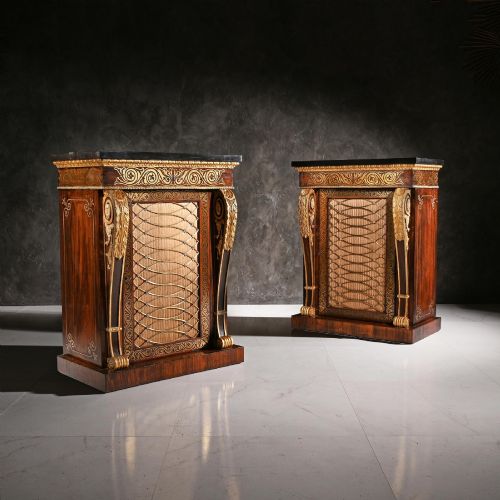
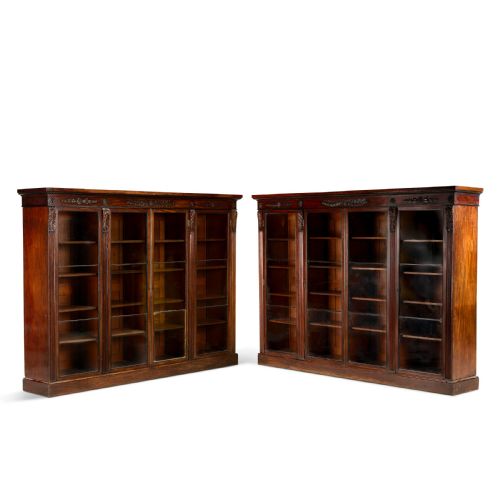
When searching for pair regency bookcases, a buyer encounters matching dual furniture forms spanning open shelves, glazed library cabinets, and enclosed side pieces. These items originate predominantly from the nineteenth century, including the Regency period itself alongside later revivals from the Victorian era and early twentieth century.
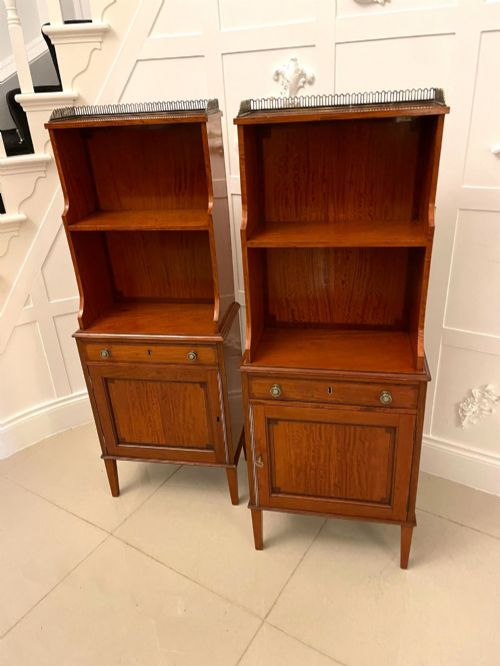
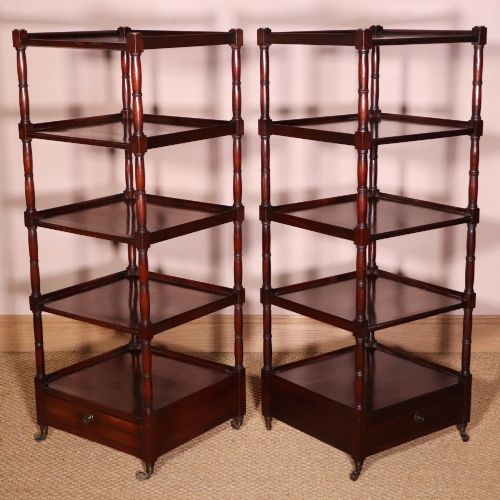
Mahogany and rosewood dominate the listings, frequently enriched with satinwood, boxwood, and burr walnut timbers. The forms range from grand glazed library bookcases down to compact waterfall bookcases and multi-tiered whatnots.
Makers and workshops of the period, such as Gillows and Marsh & Tatham, established templates of proportion that later makers replicated. Buyers will find both orthodox nineteenth-century pieces and subsequent revivals sharing the same classical vocabulary.
Construction and materials
Cabinetmakers built these pieces using dense hardwoods like mahogany and rosewood, often applying crossbanding, boxwood stringing, and elaborate veneers to flat surfaces. Secondary timbers provided internal framing while fine grains were selected for external visibility.
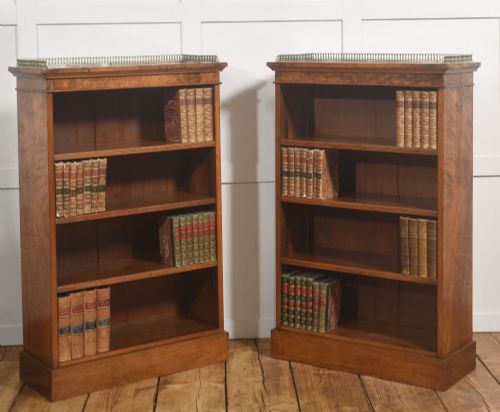
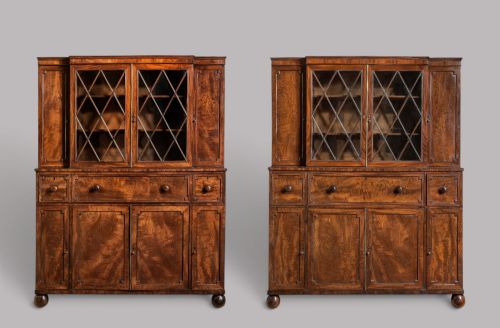
Decorative detailing relied on cast or chased brass mounts, ormolu enrichments, and delicate brass galleries atop open shelves. Glazed doors utilised astragal bars arranged in geometric or gothic tracery to frame the book collections within.
Makers incorporated specialised techniques such as steam-curving for specific mouldings and precise inlay work to secure contrasting woods into the primary carcase.
Pair Regency Bookcases Retail Price Guide 2026
Typical asking prices for pair regency bookcases among the pieces listed under this phrase on Sellingantiques today, from the lower quarter to the upper quarter. They describe what is for sale here now, not the wider market.
Distinctions in craftsmanship
Quality rests upon the selection of timber, where tightly figured mahogany or richly oiled rosewood distinguishes superior examples from plain utility pieces. The precision of the cabinet joints and the crispness of applied brass inlay reveal the hand of skilled workshops.
Proportion and balance dictate the architectural success of the pair, ensuring that matching units mirror each other accurately in grain orientation and height. Finer examples display meticulous attention to internal shelving adjustments and uncompromised backboards.
Gillows·Marsh & Tatham·Louis Constantin Le Gaigneur
The Pair Regency Bookcases Glossary
- Astragal glazed
- Glass doors divided by narrow wooden bars into smaller panes. This technique secures the glass while adding linear pattern to the cabinet front.
- Waterfall bookcase
- A tiered shelving unit where each successive shelf steps back from the one below. It creates a cascading silhouette popular in the nineteenth century.
- Crossbanding
- A border of veneer laid with the grain running perpendicular to the central panel. It provides a neat framing edge to table tops and cabinet doors.
- Ormolu
- Gilded bronze mounts applied to furniture for decorative accent. The technique creates metallic highlights against dark rosewood and mahogany.
- Whatnot
- A multi-tiered piece of freestanding furniture designed for displaying small objects and books. These units typically feature slender supports and open shelves.
Pair Regency Bookcases: Frequently Asked Questions
What is a waterfall bookcase?
A waterfall bookcase is a tiered shelving unit where each shelf steps back progressively from the bottom to the top. This design creates a distinctive cascading profile suited to smaller books and decorative items.
These pieces appeared in both mahogany and satinwood across the nineteenth and early twentieth centuries, offering a lighter alternative to enclosed library furniture.
How do I distinguish revival pieces?
Revival pieces from later decades adopt the proportions and decorative vocabulary of the nineteenth century but utilise machine-cut veneers and different internal construction methods. Examining the secondary timbers and the uniformity of the grain helps clarify the date of manufacture.
Makers working in the later periods often applied eclectic stylistic touches, such as ebonised finishes or walnut burls, which differ from standard Regency orthodoxy.
Where were side cabinets used?
Side cabinets served as versatile storage and display furniture within principal reception rooms and libraries. They held collections of volumes, portfolios, and ornamental objects while providing a flat surface for lamps or sculptures.
Matching pairs allowed symmetrical placement flanking a fireplace, window, or large doorway within formal interiors.
What woods were used?
Makers relied heavily on dense tropical hardwoods, primarily mahogany and rosewood, for their rich colour and stability. Secondary decorative timbers included satinwood, burr walnut, and boxwood for contrasting stringing and inlay.
Brass inlays and ormolu mounts were frequently added to these primary woods to catch the light in candlelit rooms.