
Pair Oriental Table Lights
These pair oriental table lights bring symmetry and rich historical decoration to a room, drawing on centuries of Asian and decorative arts.
Pair Oriental Table Lights
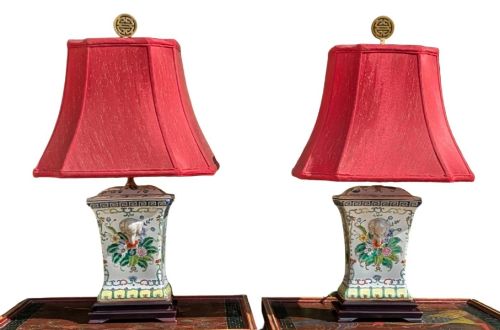
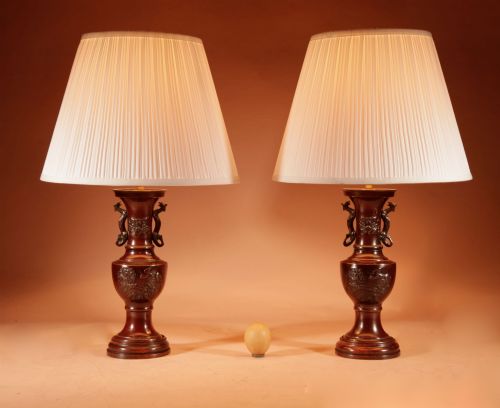
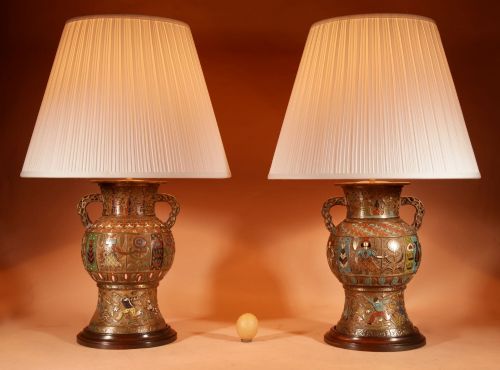
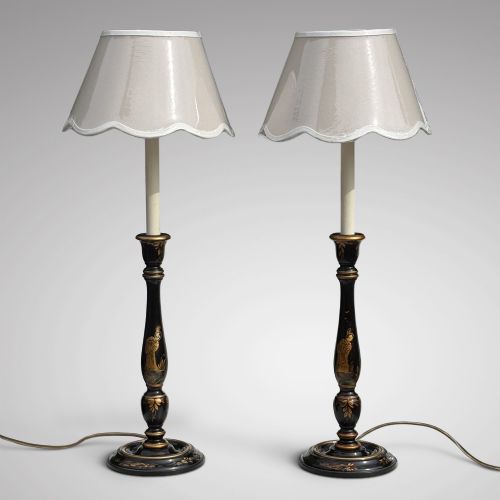
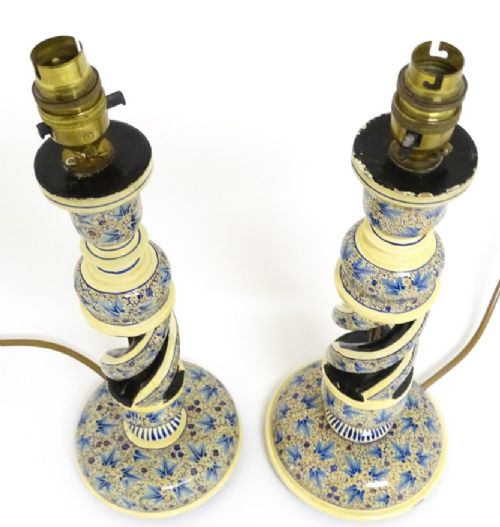
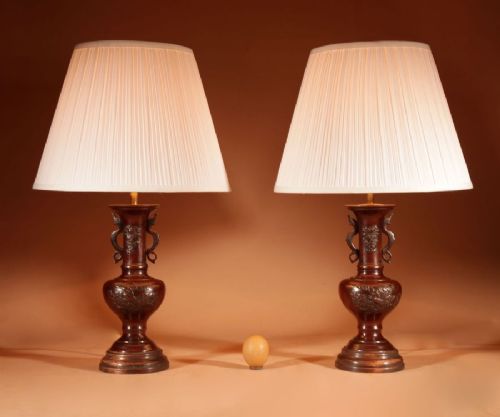
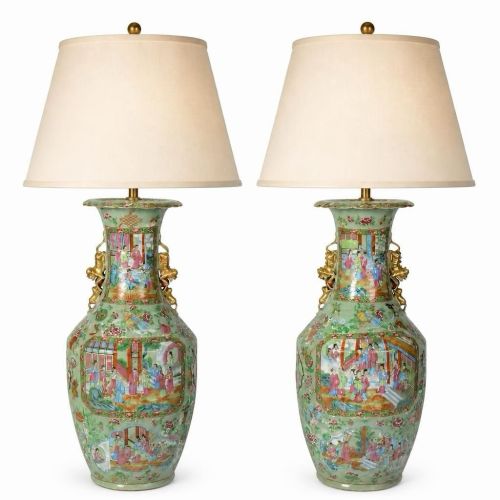
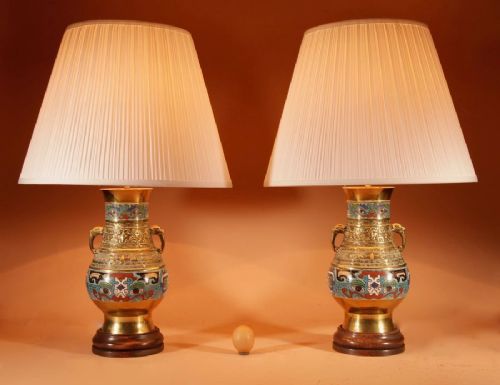
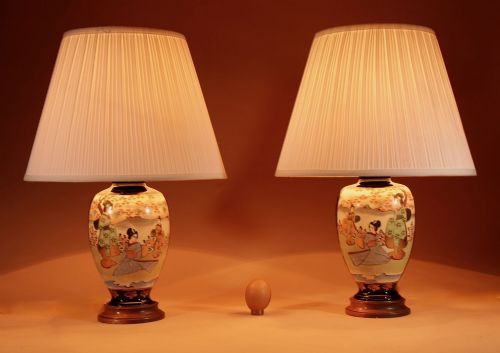
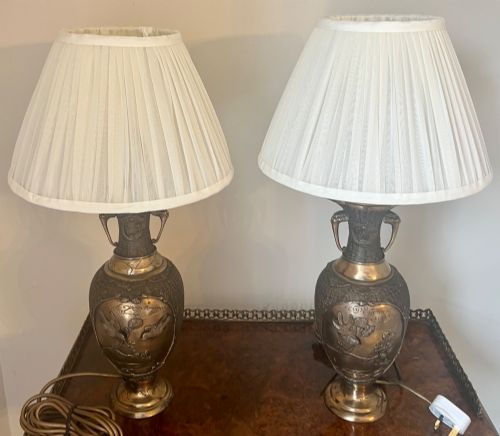
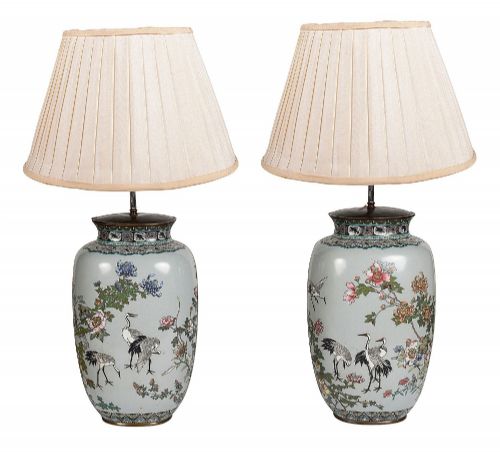
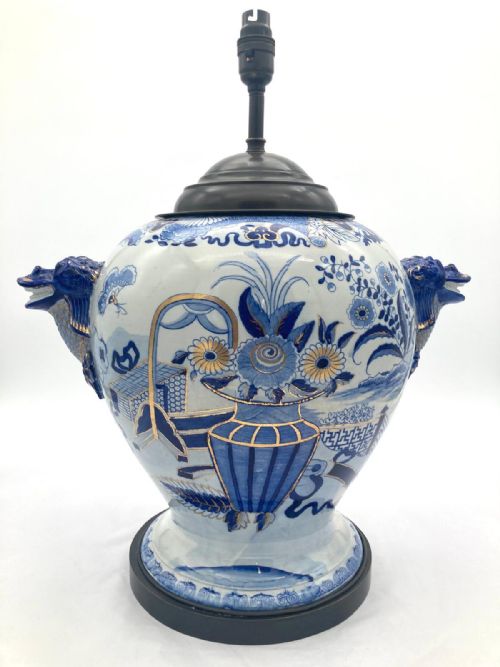
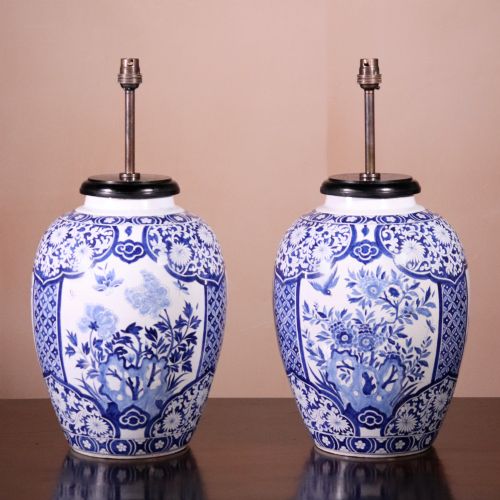
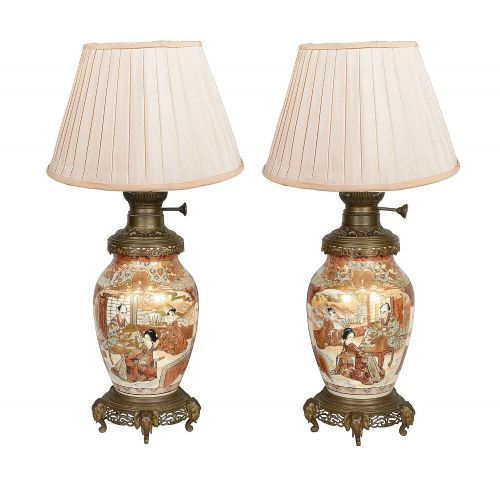
A pair oriental table lights selection comprises matched pairs of lamps fashioned from converted vases, ginger jars, and decorative vessels originating from Chinese and Japanese traditions. Buyers seeking these items encounter notable nineteenth-century craftsmanship alongside pieces from the early twentieth century, spanning periods such as the Meiji era and Qing Dynasty. Many examples utilise porcelain, bronze, and cloisonné enamel, reflecting distinct aesthetic movements like Chinoiserie and Chinese Export.
The objects commonly begin life as decorative vases or jars before receiving electrical fittings to serve as functional table lamps. Surviving examples demonstrate diverse forms, including blue and white porcelain, Satsuma ware, famille rose, and cast bronze figures such as Shi Lions. These dual arrangements provide balanced illumination while displaying intricate hand-painted motifs or textured metallic surfaces.
Materials and construction methods
Makers utilised durable base materials such as heavy bronze, brass, and dense ceramic bodies, often mounting porcelain vessels on ormolu or wooden bases for stability. Cloisonné and champlevé techniques involve soldering wire compartments onto metal surfaces and filling them with coloured enamel before firing and polishing. Hand-painted porcelain incorporates underglaze blue pigments or rich overglaze famille rose enamels applied directly to the ceramic body.
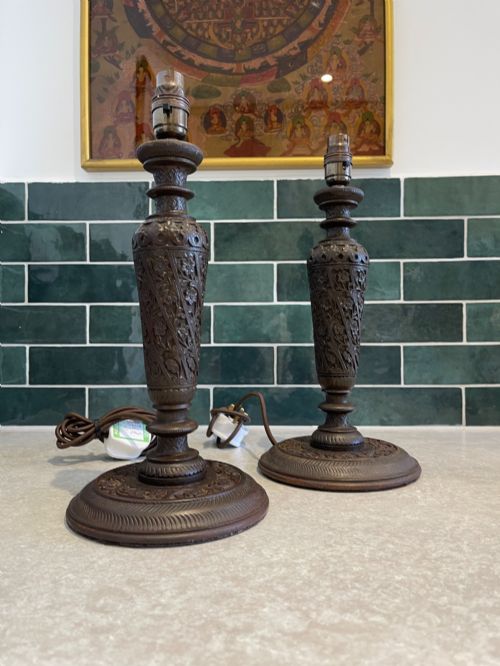
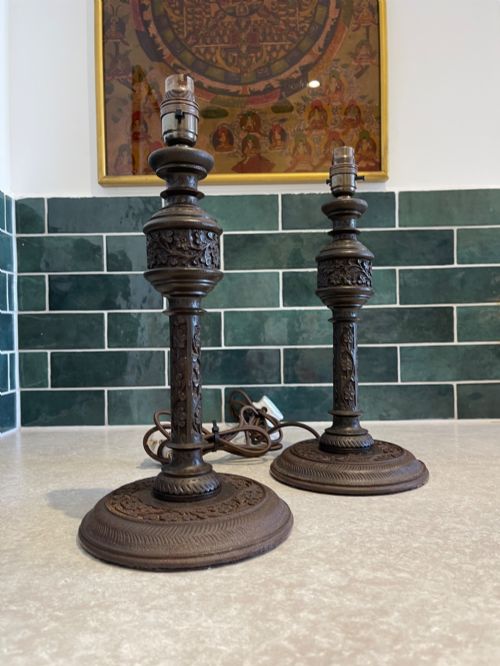
Materials documented across the available items include porcelain, bronze, brass, enamel, wood, fabric, and silk.
Distinctions in quality
Quality rests upon the fineness of the hand-painting, the crispness of bronze casting, and the precision of enamel work on the original vessel. Superior pieces exhibit well-defined cloisonné wirework, rich and even glaze colours, and harmonious proportions between the decorative body and the lighting fixture.
The physical match within the pair influences desirability, as true pairs share identical dimensions, coloration, and decorative motifs rather than merely similar designs. Furthermore, the integration of period mounts, such as cast ormolu or carved wood, elevates the overall execution of the conversion.
The Pair Oriental Table Lights Glossary
- Cloisonné
- Enamelwork in which coloured areas are separated by thin metal strips soldered to a metal base. This technique creates distinct patterned cells across the surface of the vase.
- Famille Rose
- A prominent palette of Chinese porcelain enamels dominated by opaque pink or rose colours. Introduced in the Qing Dynasty, it allowed for nuanced shading and detailed floral motifs.
- Satsuma
- Japanese earthenware featuring a crackled ivory glaze decorated with polychrome enamels and gilt. These wares were widely produced for export during the late nineteenth and early twentieth centuries.
- Champlevé
- An enamelling technique where troughs or cells are carved into a metal surface and filled with vitreous paste. The metal partitions remain visible as lines defining the pattern.
- Ormolu
- Gilded bronze mounts applied to decorative objects and furniture, popular in European-influenced adaptations of Asian ceramics. It provides a polished, decorative metallic trim to the base or rim.
Pair Oriental Table Lights: Frequently Asked Questions
How do I care for these lamps?
Dust ceramic and bronze surfaces gently with a dry, soft cloth to protect the painted details and metal patination. Avoid harsh chemical cleaners that might damage delicate enamel or gilt highlights.
Check the electrical wiring periodically, and consult a qualified electrician if rewiring is necessary to maintain safe usage in a modern home.
Where should I place them?
Matched pairs provide visual symmetry when placed on sideboards, mantelpieces, or large bedside tables. Their substantial height and colourful decoration suit balanced arrangements in living rooms or studies.
Ensure they sit on stable, level surfaces away from direct foot traffic due to their porcelain and bronze construction.
How are periods identified?
Dating relies on stylistic markers such as the reign marks on porcelain, the specific palette of famille rose or blue and white glazes, and the manufacturing methods of the bronze or cloisonné.
Nineteenth-century pieces often display heavier potting and intricate hand-applied enamels, while early twentieth-century examples reflect transitional export styles.
Were these originally made as lamps?
Most of these objects began as decorative vases, ginger jars, or ceremonial vessels before being converted into lamps at a later date. The conversion process adapts antique containers for functional household lighting.
Metal collars, drilled bases, and fitted electrical components are standard additions applied during this transformation.