


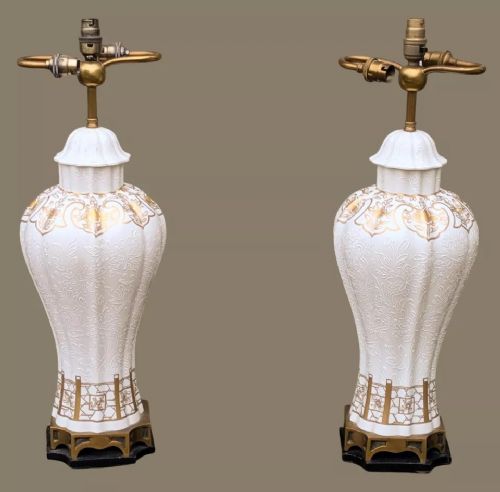


Gilt Porcelain Bedside Lamps
These gilt porcelain bedside lamps bring rich nineteenth-century colour and metalwork detail to a room, offering warm light alongside antique character.
Gilt Porcelain Bedside Lamps
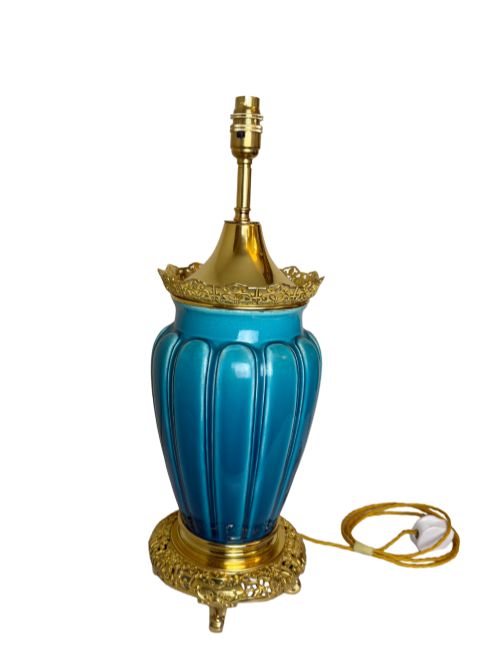
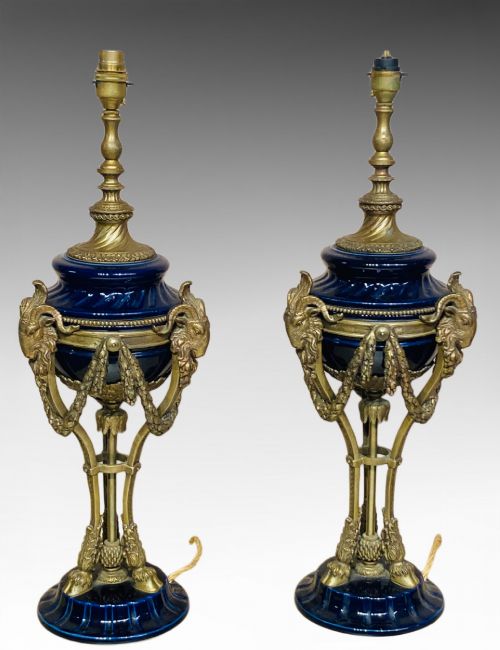
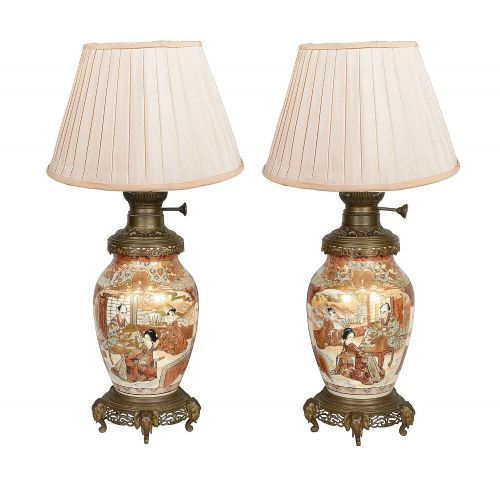
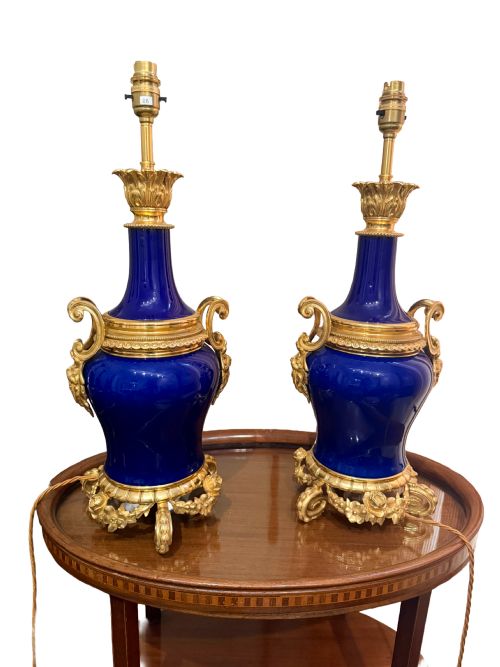
When you search for gilt porcelain bedside lamps, you encounter nineteenth-century table lamps that combine glazed ceramic bodies with metal mounts. The selection on this page leans heavily toward pairs, often featuring French or Asian ceramic bodies set upon ormolu or gilt brass bases.
The forms originate from diverse traditions, ranging from French Paris ware and Sevres style vases to Japanese Satsuma and Chinese Famille Rose wares. Many of these pieces began life as vases or oil lamps before conversion for modern electrical use.
Victorian and Napoleon III aesthetics dominate the groupings, frequently displaying hand-painted cobalt blue, turquoise, or white surfaces accented by gilded bronze trim. Their scale suits bedroom placement, where they add a distinct historical presence to a bedside table.
Materials and construction
The primary bodies utilise porcelain, earthenware, or china, often finished with cobalt glazes or hand-painted botanical and figurative details. These ceramic vessels provide the sturdy structural foundation for each lamp.
Gilt bronze, ormolu, and gilt brass mountings frame the ceramic elements, secured with fitted collars, bases, and handles. Fabric and silk shades, occasionally handmade, complete the construction when paired with the metal and porcelain bodies.
Brass, ormolu, and gilt bronze serve as the primary metal mountings across porcelain, earthenware, and china lamp bodies.
Judging quality and craftsmanship
The fineness of the hand-painted decoration on the ceramic body dictates much of the visual merit. Crisp brushwork and carefully applied cobalt or polychrome enamels elevate certain pieces far above standard factory output.
The weight and casting quality of the ormolu or gilt bronze mounts also separate simpler examples from superior ones. Detailed chasing on the metal trim indicates a higher standard of period craftsmanship.
The Gilt Porcelain Bedside Lamps Glossary
- Ormolu
- Gilded bronze, commonly utilised for decorative mounts and bases in nineteenth-century French lighting. This technique adds a bright metallic contrast to the adjacent porcelain.
- Paris porcelain
- Ceramics produced by various independent workshops in and around Paris during the nineteenth century. These wares are known for fine white bodies and rich gilding.
- Satsuma
- Japanese earthenware featuring a crackled ivory glaze decorated with enamels and gilt. These pieces frequently appear adapted as decorative table lamps.
- Cloisonné
- Metalwork technique where compartments are created with wire and filled with enamel paste before firing. Examples in this medium provide a textured, colourful surface.
- Famille Rose
- Chinese ceramic palette distinguished by opaque pink or rose enamel colours. This style gained immense popularity during the nineteenth century.
Gilt Porcelain Bedside Lamps: Frequently Asked Questions
How do I style these lamps in a modern bedroom?
Pair the colourful porcelain bodies with simple neutral linens to let the nineteenth-century metalwork and glazes stand out. Their compact scale fits neatly on standard bedside tables.
Position them away from heavy foot traffic to protect the delicate hand-painted surfaces and mounted gilt brass or ormolu trim.
Were these originally made as lamps?
Many examples began as decorative vases, oil lamps, or ginger jars before conversion into modern electrical table lamps. This adaptation practice is standard for nineteenth-century ceramics.
Inspect the collar and base fittings to understand how the original ceramic body was adapted to house wiring and lamp hardware.
How can I tell French styles apart from Asian ones?
French pieces like Paris ware or Sevres style lamps typically display cobalt blue grounds, cherubs, or formal neoclassical gilt mounts. Japanese and Chinese pieces rely on Satsuma, Kutani, or Famille Rose palettes with distinct floral and figurative motifs.
Examine the glaze texture and the style of the hand-painted scenes to identify the regional origin of the ceramic body.
How do I care for antique gilt metal and porcelain?
Dust the porcelain and ormolu gently with a dry, soft cloth to prevent buildup in the intricate crevices. Avoid harsh chemical cleaners that might strip the delicate gilding from the metal mounts.
Check the electrical wiring periodically to ensure safe operation, as many older conversions benefit from updated internal components.