



Asian Style Lighting
Asian style lighting brings decorative lamps and stands into a room, drawing on periods from the nineteenth century to the mid-twentieth century.
Asian Style Lighting
Asian style lighting encompasses table lamps, floor lamps, and standard lamps fashioned from earlier pottery, porcelain, and metalwork. These pieces draw upon Chinese Ming and Qing styles as well as Japanese Meiji period aesthetics and later Chinoiserie interpretations.
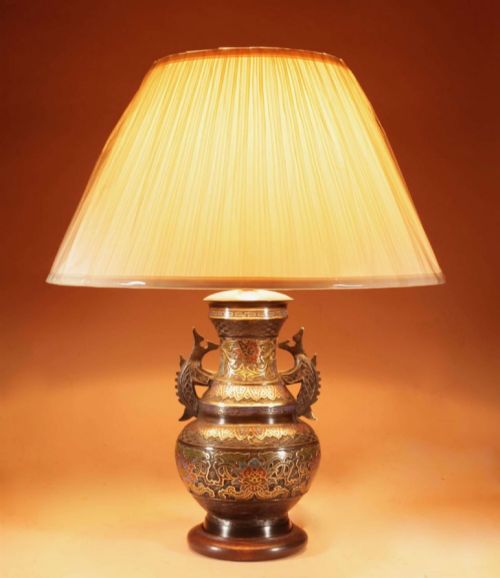
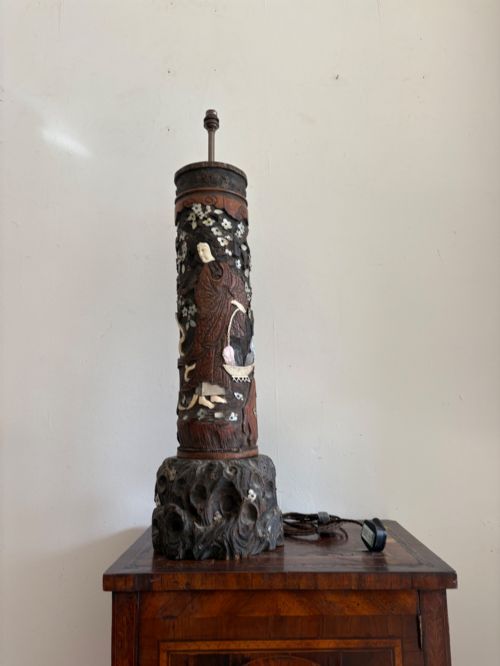
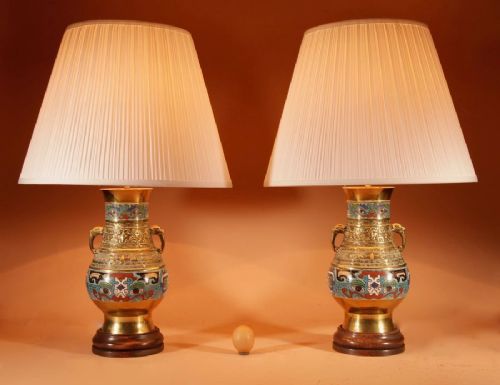
The selection frequently includes converted vases, jars, and brush pots fitted for electricity alongside purpose-built standard lamps. Lacquered wood and champlevé bronze also appear among the forms.
Most examples date from the nineteenth century through the early decades of the twentieth century, reflecting varied interpretations of Eastern design across European and domestic markets.
Materials and Construction
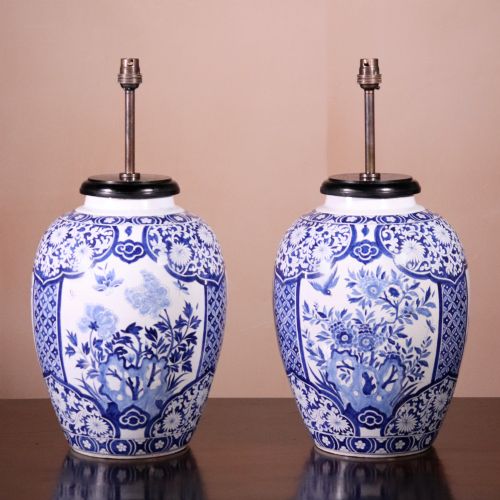
Makers utilised traditional materials such as porcelain, bronze, brass, and elm, often mounting vessels on custom bases for electrical use. Ceramic bodies display blue and white, celadon, and famille verte or famille noire glazes.
Wood elements involve elm, hardwood, and lacquered finishes, sometimes paired with gilt or carved mother-of-pearl details. Metal components feature champlevé enamel work on bronze and brass structures.
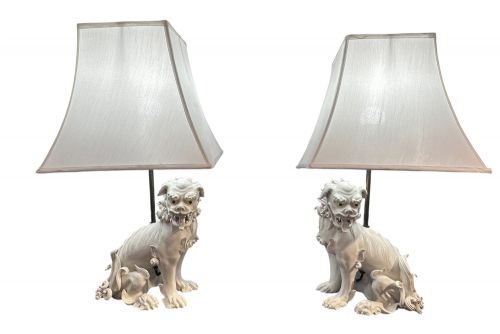
Shi Lions keeping watch over a room double as lamp bases, proving that mythological guardians make surprisingly good reading companions.
Judging Quality
Quality rests upon the original craftsmanship of the underlying vessel and the appropriateness of its conversion into a lamp. Hand-carved woodwork and finely detailed bronze champlevé separate superior pieces from standard commercial adaptations.
The condition of the glaze, the depth of the lacquer, and the integrity of the original mounts determine the standing of each piece within its period.
The Asian Style Lighting Glossary
- Champlevé
- Enamelling technique where troughs are dug into metal and filled with vitreous enamel before firing. This method creates decorative patterns on bronze and brass lamp bases.
- Chinoiserie
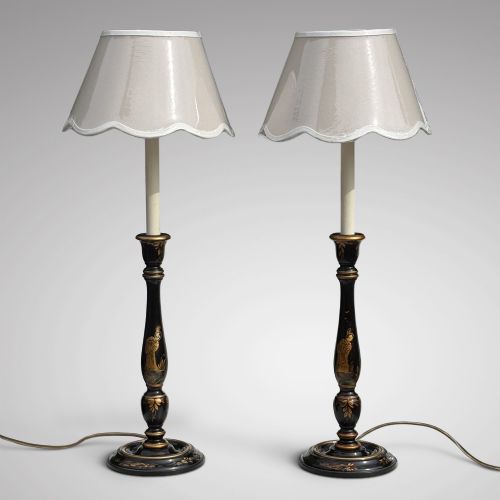
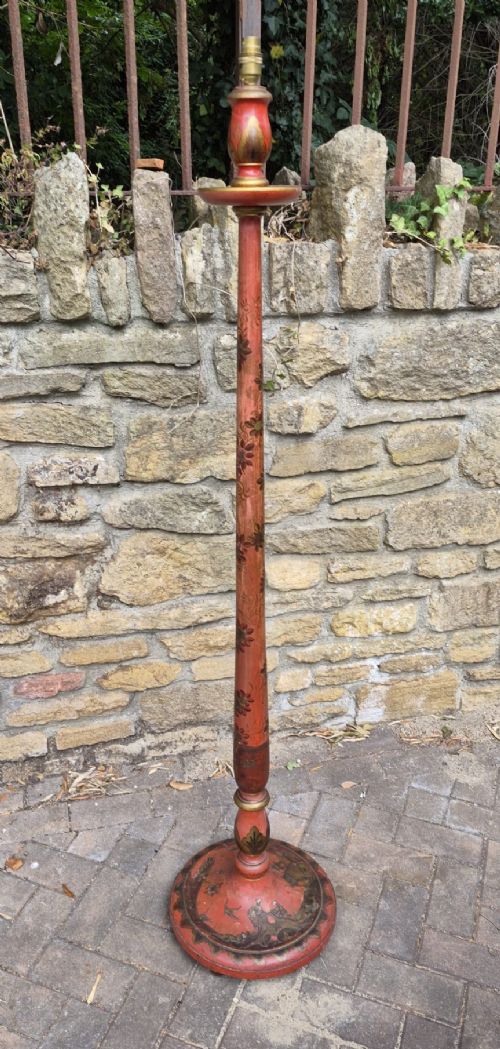
- European interpretation and imitation of Chinese and East Asian artistic traditions. This style dominates the lacquered floor and standard lamps from the early twentieth century.
- Meiji Period
- Era of Japanese history lasting from 1868 to 1912. Pieces from this time include bronze lamps and carved brush pots.
- Celadon
- Pale green glazed ceramic finish originating in China. Twin-handled vases featuring this glaze frequently appear converted into table lamps.
- Blanc de Chine
- White porcelain produced in Fujian province, China. Figures such as Shi Lions or Dogs of Fo are modelled in this ware.
Asian Style Lighting: Frequently Asked Questions
What periods do these lamps cover?
The pieces span the nineteenth century and the early twentieth century, with dates reaching from the eighteen-nineties into the nineteen-thirties.
This timeframe captures both original Meiji period items and subsequent Chinoiserie revivals.
How are antique vases adapted into lamps?
Vases and jars are typically fitted with electrical wiring and holders, occasionally mounted to custom bases to ensure stability.
Many conversions preserve the original ceramic body without altering the glazed surfaces.
What materials are most common?
Ceramics dominate the selection, including blue and white porcelain, celadon, and famille verte glazes.
Bronze, brass, lacquered wood, and elm also appear frequently across the lamp and stand categories.
How do I distinguish Chinese from Japanese pieces?
Chinese examples often display traditional forms such as horseshoe armchairs, elm side tables, and ginger jars with celadon or famille style decoration.
Japanese items frequently incorporate champlevé bronze work, Meiji period carvings, and Satsuma earthenware.
Are floor lamps period pieces?
Floor lamps and standard lamps in this category generally date from the Edwardian era through the nineteen-thirties.
They utilise Chinoiserie red lacquered finishes and Oriental styling popular during those decades.