

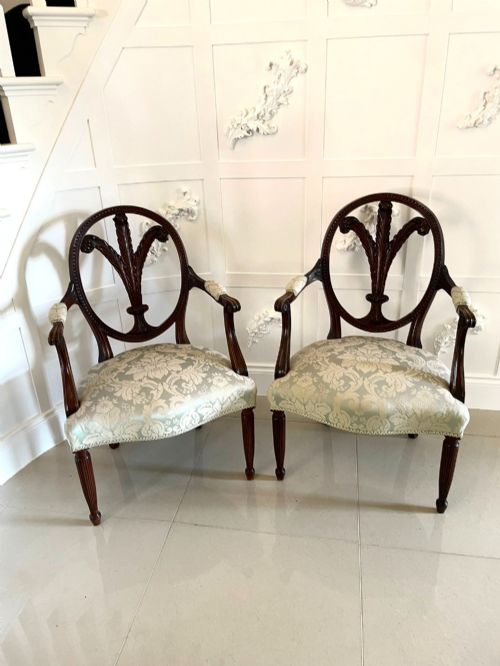
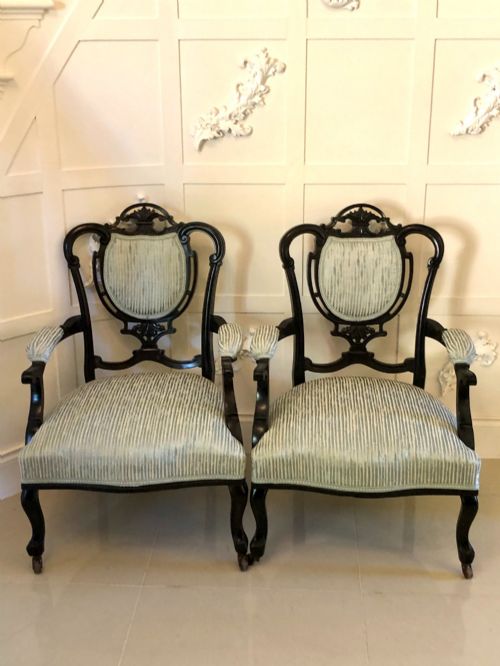
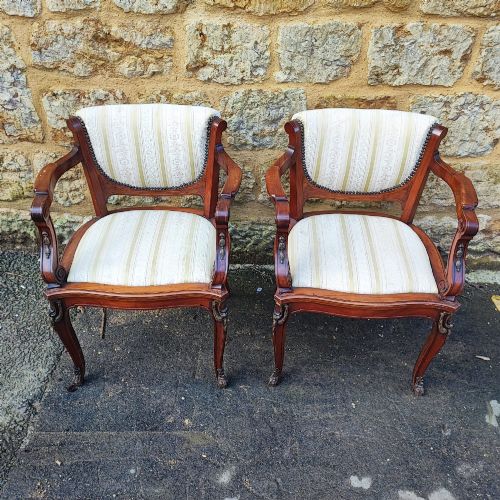
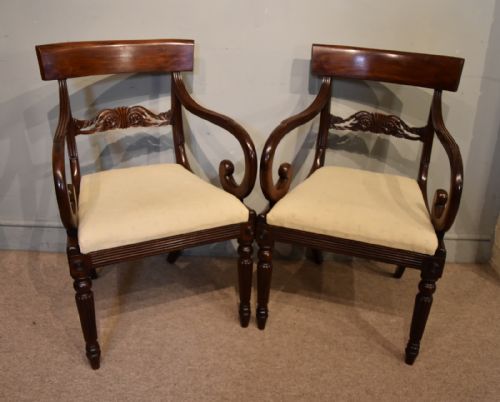



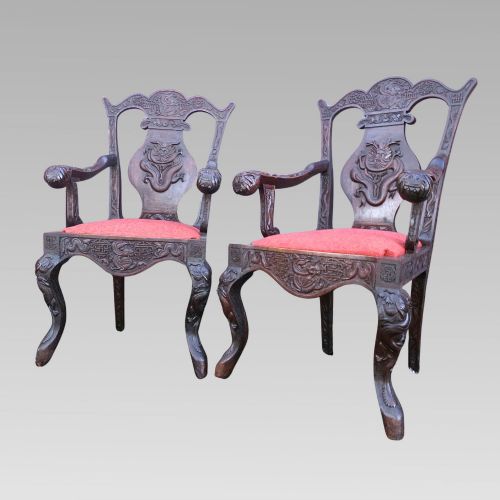


Pair Open Arm Armchairs
Pair open arm armchairs bring structural symmetry and open woodwork to seating, offering period craftsmanship and matching proportions for a balanced room layout.
Pair Open Arm Armchairs
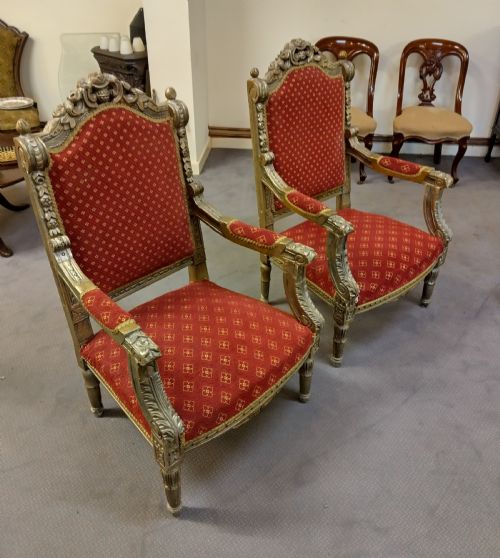
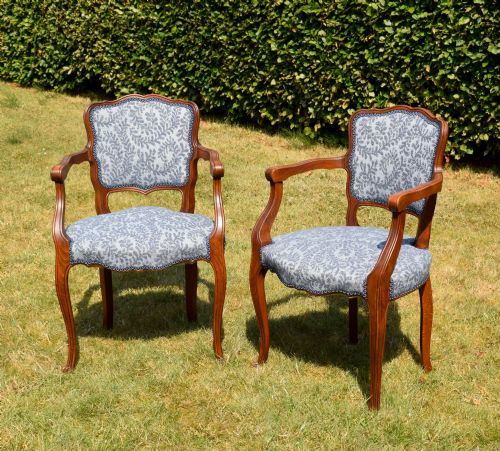
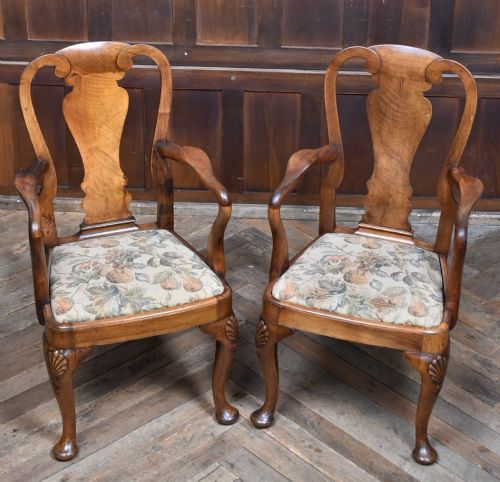
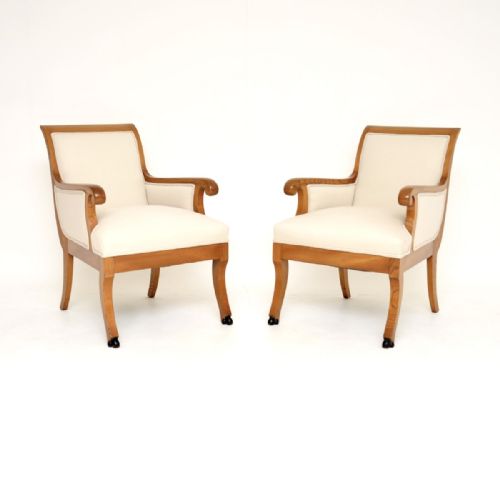
When searching for pair open arm armchairs, buyers encounter matched seating defined by exposed wooden frames and structural arm supports rather than fully enclosed upholstery. These dual pieces span various historical periods, including the Victorian era, the Regency period, and the early twentieth century.
Origin and form vary considerably across the inventory, with continental European workshops, British cabinetmakers, and Asian craft traditions all represented. Buyers frequently discover both formal parlor chairs and more relaxed country house or provincial variants.
Materials and Construction
Cabinetmakers utilised hardwoods such as mahogany, walnut, oak, birchwood, and rosewood to construct the load-bearing frames, often employing traditional joinery to ensure stability. Carved ornamentation, gilded finishes, and inlaid details frequently decorate the wooden show-frames.
Upholstery techniques involve fabric, velvet, and specialised padding secured over webbing or springs, whilst other versions present solid wood or woven seating panels. Brass accents and painted surface treatments appear across specific nineteenth and twentieth century examples.
Pair Open Arm Armchairs Retail Price Guide 2026
Typical asking prices for pair open arm armchairs among the pieces listed under this phrase on Sellingantiques today, from the lower quarter to the upper quarter. They describe what is for sale here now, not the wider market.
Several armchairs come equipped with bolster heads, ensuring that nineteenth century afternoon snoozes proceeded with adequate neck support.
Assessing Quality and Execution
The distinction between standard examples and the finest items rests upon the crispness of hand-carving, the selection of figured timber veneers, and the integrity of the frame construction. Superior pairs exhibit harmonious proportions and balanced matching between both chairs.
Refinement in the joinery, the subtlety of applied gilding or polish, and the retention of original surface patination elevate certain pieces above mass-produced or heavily altered counterparts.
Howard And Sons·Holland And Sons·Heals·Gordon Russell
The Pair Open Arm Armchairs Glossary
- Fauteuil
- An open-arm armchair originating in France, typically featuring an exposed wooden frame with upholstered back and seat. These chairs often display carved floral motifs or moulded scrollwork along the arms and rails.
- Giltwood
- Timber treated with a thin layer of gold leaf or metallic gilt finish. This decorative technique highlights carved architectural and floral details on formal nineteenth century frames.
- Open arm
- A chair design where the space beneath the armrests remains unobstructed by upholstery or solid panels. This construction lightens the visual weight of the seating.
- Marquetry
- Decorative veneer work created by fitting small pieces of contrasting wood or other materials into a predetermined pattern. It frequently enhances the backsplats or rails of refined mahogany and walnut seating.
Pair Open Arm Armchairs: Frequently Asked Questions
How do I date a pair of armchairs?
Dating relies on examining the timber species, joinery techniques, and stylistic ornament characteristic of specific periods like the Regency or Victorian eras. Secondary woods and tool marks underneath the seat rail offer further clues.
Comparing the carving style against known historical revivals helps separate older originals from later copies.
Where should I place a pair in my home?
Matched pairs work effectively placed symmetrically beside a fireplace, flanking a console table, or arranged within a formal drawing room seating group. Their matching proportions create visual balance.
In smaller spaces, they function as occasional chairs that provide extra seating without crowding the floor plan.
Are French and English styles different?
French armchairs often emphasise fluid carved lines, exposed show-wood frames, and influences from Louis XV or Neoclassical design. English variants frequently highlight mahogany timbers and Georgian or Sheraton proportions.
Both traditions utilise exposed wooden arm structures but express distinct regional aesthetic priorities.