



Carved Rosewood Salon Armchairs
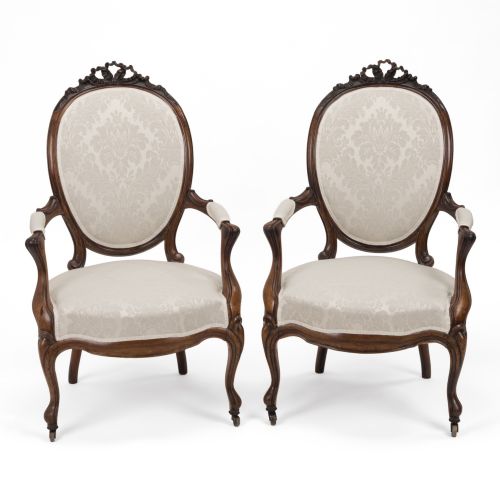
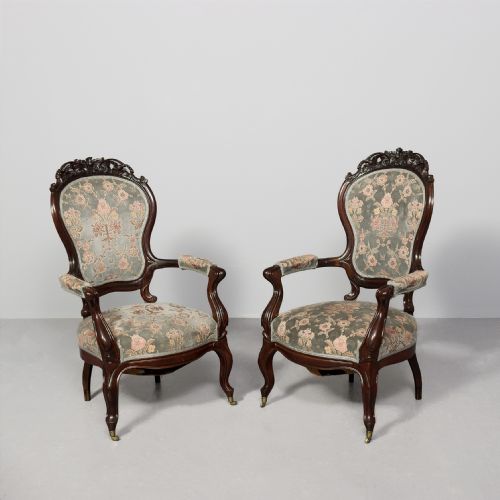
These carved rosewood salon armchairs combine dense tropical timbers with exuberant Victorian and Edwardian scrollwork, offering both formal presence and deep seating comfort.
Carved Rosewood Salon Armchairs
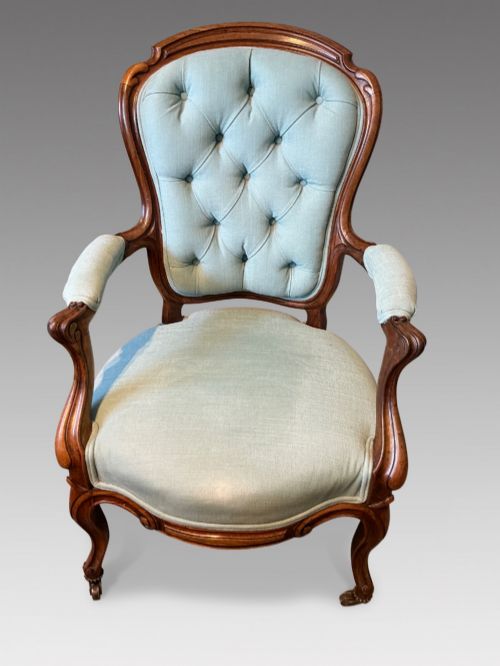
When searching for carved rosewood salon armchairs, you encounter Victorian and Edwardian seating designed for formal entertaining rooms. The selection on this page ranges from mid nineteenth century open armchairs to matched pairs featuring button backs and cabriole legs.
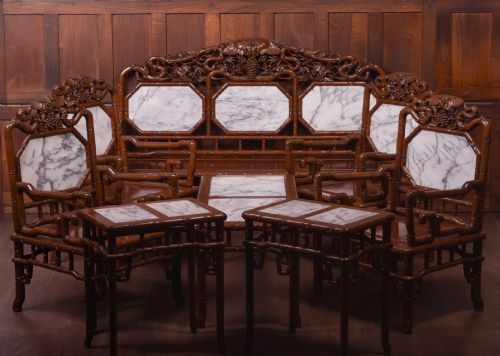
The forms span British Victorian revival styles alongside French inspired fauteuils and Chinese export hardwood suites. Most examples date from the eighteen fifties to nineteen hundred, reflecting diverse nineteenth century tastes in parlour and drawing room furniture.
Buyers frequently find armchairs paired with sofas or occasional chairs, constructed to furnish complete reception rooms. The timber grain and carved detailing define their character, whether expressed through heavy Victorian scrollwork or subtle Edwardian inlay.
How they were made
The primary material is dense, dark rosewood, selected for its strength and rich grain which permitted deep manual carving. Artisans shaped the frames by hand, integrating cabriole legs, open arms, and intricate structural joints directly into the dense timber.
Upholstery techniques involved traditional stuffing methods beneath surface coverings of velvet, leather, or woven fabric. Many pieces incorporated brass hardware and button back detailing to secure the padding within the rigid wooden armature.
Carved Rosewood Salon Armchairs Retail Price Guide 2026
Typical asking prices for carved rosewood salon armchairs among the pieces listed under this phrase on Sellingantiques today, from the lower quarter to the upper quarter. They describe what is for sale here now, not the wider market.
Several armchairs include hidden mother of pearl inlay that catches the candlelight unexpectedly during evening parlour gatherings.
What varies in quality
Quality rests in the crispness of the carved ornamentation and the architectural proportion of the frame. Finer examples display deeply undercut foliage and scrollwork that remains sharp rather than softened by wear or restoration.
The selection of the rosewood timber itself dictates the visual weight of the piece, with well figured grain enhancing the overall presence. Structural integrity in the joints and the retention of original upholstery configurations further separate standard production from superior examples.
The Carved Rosewood Salon Armchairs Glossary
- Rosewood
- A dense, heavy tropical hardwood prized for its dark colour and distinct grain patterns. It provides the rigid structural foundation for these nineteenth century frames.
- Cabriole leg
- A furniture leg featuring a double curve, typically arching outward and then tapering inward toward a scroll or pad foot. This design appears frequently on mid Victorian seating.
- Fauteuil
- An open-framed armchair with upholstered seat and back, originating in France. These pieces feature exposed wooden arms and refined stylistic influences.
- Button back
- An upholstery style where depressions are formed in the padding by stitching buttons through to the frame in a grid pattern. This secures internal stuffing and creates a textured surface.
Carved Rosewood Salon Armchairs: Frequently Asked Questions
Where were these armchairs placed?
These chairs belonged in the formal reception rooms, parlours, and drawing spaces of nineteenth century homes. They served both as decorative seating for guests and as comfortable chairs for daily use.
Pairs were often arranged around fireplaces or conversational groupings within the main entertaining rooms of the house.
How do I date an armchair?
Dating relies on observing the stylistic markers, such as the exuberant curves of Victorian Rococo revival pieces versus the lighter, inlaid frames of the Edwardian era. Material choices and construction methods also point toward specific decades between eighteen fifty and nineteen hundred.
Comparing the carved motifs to documented periods helps narrow the year of manufacture.
Are these chairs comfortable for daily use?
Many of these pieces were engineered with generous proportions and padded upholstery designed for prolonged sitting. Button back designs and upholstered arms provide substantial physical support.
Living with them requires accepting traditional padding depths, which may feel firmer than modern seating.
How do I care for rosewood furniture?
Rosewood requires stable indoor humidity levels to prevent the dense timber from splitting or warping over time. Dusting with a soft, dry cloth preserves the polished surface without damaging the grain.
Keeping the chairs away from direct sunlight protects the dark timber and upholstery fabrics from fading.