



Pair of Wood Candle Holders
A pair of wood candle holders brings immediate warmth to a room through carved texture and aged grain.
Pair of Wood Candle Holders
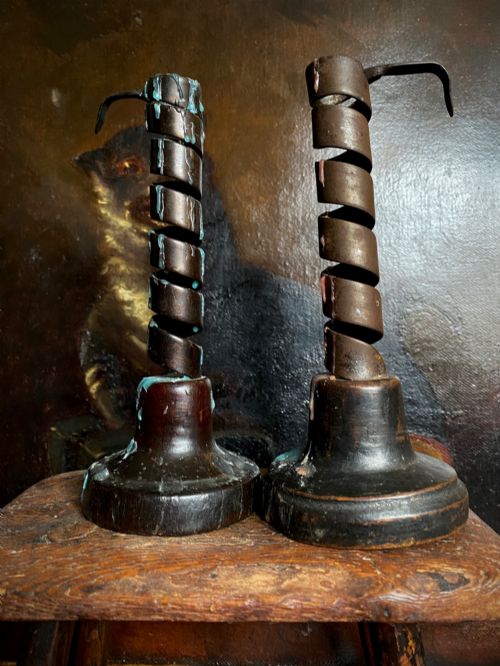
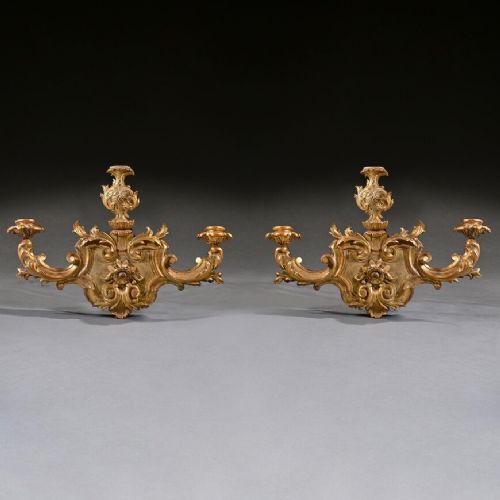
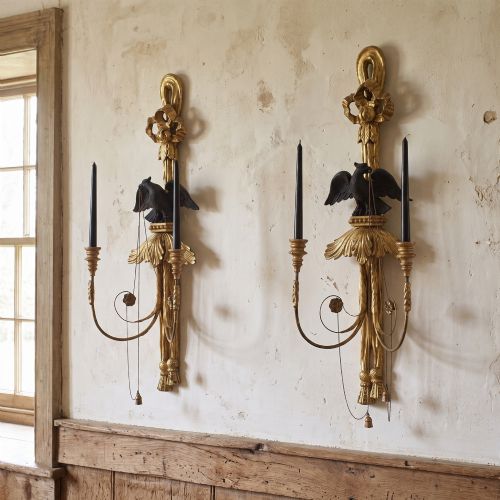
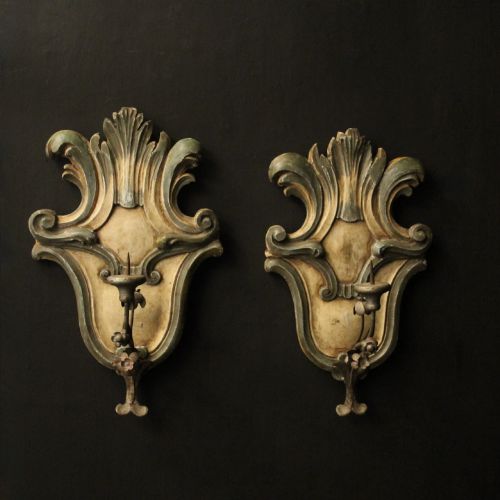
A pair of wood candle holders encompasses functional table candlesticks, altar lamps, and wall-mounted sconces designed to support candles in pairs. These objects appear in forms ranging from simple turned oak columns to elaborate gilded altar pieces and folk art carvings.
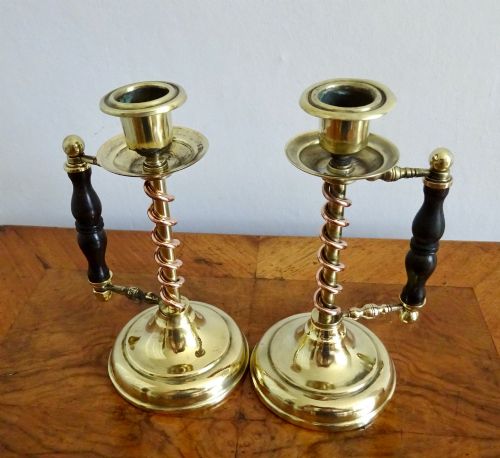
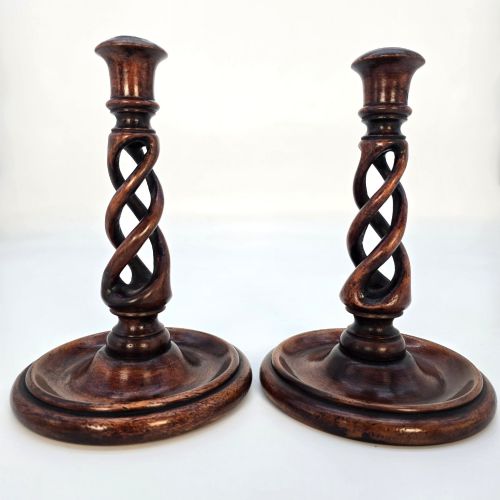
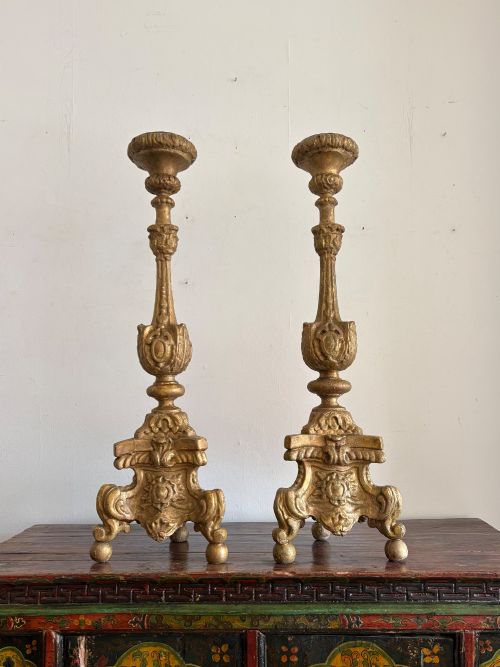
The versions most commonly met on this page include barley twist oak candlesticks from the early twentieth century and nineteenth-century turned treen items in mahogany, walnut, or fruitwood. Buyers also encounter Continental giltwood wall sconces and baroque altar types dating back to the seventeenth and eighteenth centuries.
Makers utilised various timber species alongside applied brass drip pans, copper elements, and carved details to create matching pairs for domestic and ecclesiastical interiors. Each set reflects the dominant decorative style of its period, from Italian Neoclassical and French Chateau to Victorian and Edwardian interpretations of earlier designs.
How they were made
Makers shaped timber using wood-turning lathes to produce smooth columns, bobbin shapes, and open barley twists in oak, mahogany, walnut, and fruitwood. Hand-carving methods created figural elements, cherubs, and folk art forms, often finished with gesso and gold leaf or polychrome paint.
Many pairs incorporate brass sconces, nozzles, and weighted bases attached to the turned wooden shafts to catch wax and provide stability. Artisans also integrated mirrored panels into wall sconces to reflect candle light across the room.
Pair of Wood Candle Holders Retail Price Guide 2026
Typical asking prices for pair of wood candle holders among the pieces listed under this phrase on Sellingantiques today, from the lower quarter to the upper quarter. They describe what is for sale here now, not the wider market.
Listings feature items spanning from the seventeenth century through to the Edwardian period, executed in oak, mahogany, giltwood, and brass.
What varies in quality
The refinement of the turning and the depth of the hand-carving separate standard items from superior examples. Crisp detailing in foliate motifs or figural work indicates skilled workshop production rather than routine manufacturing.
The integrity of the timber surface and the preservation of original gilding or polish determine the visual authority of a pair. Matching grain patterns and harmonious proportions between the two pieces demonstrate careful initial selection by the maker.
The Pair of Wood Candle Holders Glossary
- Treen
- Small handmade wooden household objects. These items display the turning and carving skills of earlier domestic woodworkers.
- Barley twist
- A spiral column carved or turned into the shaft of a candlestick. This decorative form gained particular popularity during the seventeenth and early twentieth centuries.
- Pricket
- A sharp metal spike on a candlestick designed to secure a candle. This form derives primarily from ecclesiastical altar lighting.
- Girandole
- A decorative wall-mounted candlestick with a mirrored backplate. The glass surface reflects and amplifies the candlelight.
- Giltwood
- Timber coated with fine gold leaf or gesso and gold paint. This finish creates a bright reflective surface under candlelight.
Pair of Wood Candle Holders: Frequently Asked Questions
How do I date my wooden candle holders?
Examine the turning style, tool marks, and timber species to establish an approximate period. Eighteenth-century pieces often display hand-turned irregularities and dense fruitwood or carved gilt surfaces, while twentieth-century examples frequently feature machine-planed barley twists in oak.
Check for the presence of brass fittings and secondary woods which correspond to specific manufacturing eras. Comparing the construction methods with documented domestic objects helps narrow down the decade of production.
Were these holders meant for tables or walls?
Wooden candle holders served both table and wall functions depending on their base and backplate design. Candlesticks and candelabra stood on furniture surfaces, whereas wall sconces and girandoles featured flat backs with hanging brackets for vertical placement.
Wall-mounted versions directed light across a room from a fixed position, while portable turned items moved easily between chambers.
How should I clean antique wood candle holders?
Dust the timber gently with a soft, dry cloth to protect the aged patina and dry wax finishes. Avoid using wet cleaning products or modern chemical polishes that can strip original surfaces or soften gesso.
If wax accumulates in the metal sconces, remove it carefully with warm air rather than scraping the surrounding wood. Preserving the dry surface texture maintains the historic integrity of the piece.
Why are most of these items sold in pairs?
Lighting arrangements in historic interiors relied on symmetry for balance on mantelpieces, side tables, and flanking mirrors. Makers produced matching sets to illuminate rooms evenly during evening gatherings.
Surviving pairs indicate that the two objects remained together through generations of domestic use.