



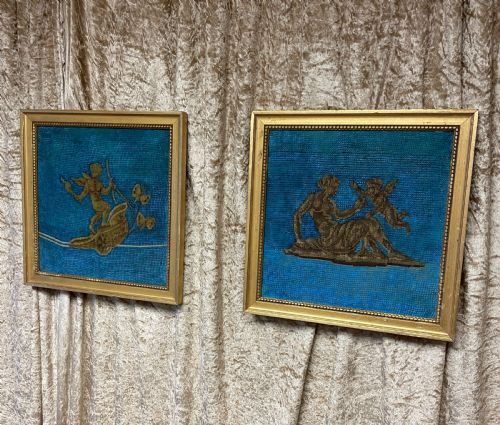


Pair of Silk Pictures
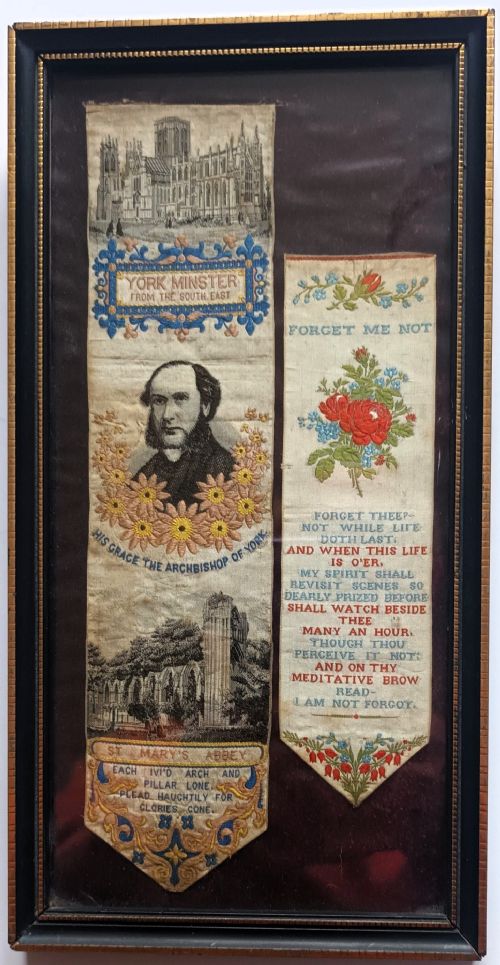
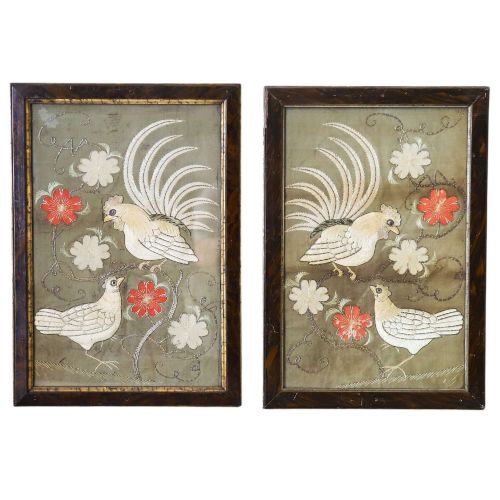
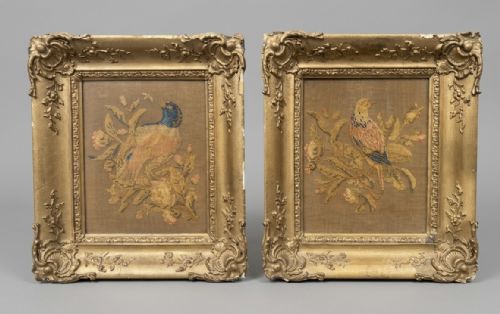
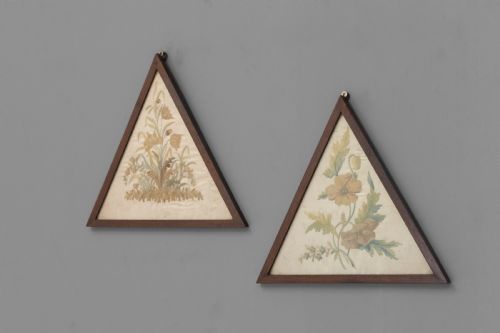
A pair of silk pictures brings needlework and painted textile art into a room, offering matched symmetry for walls.
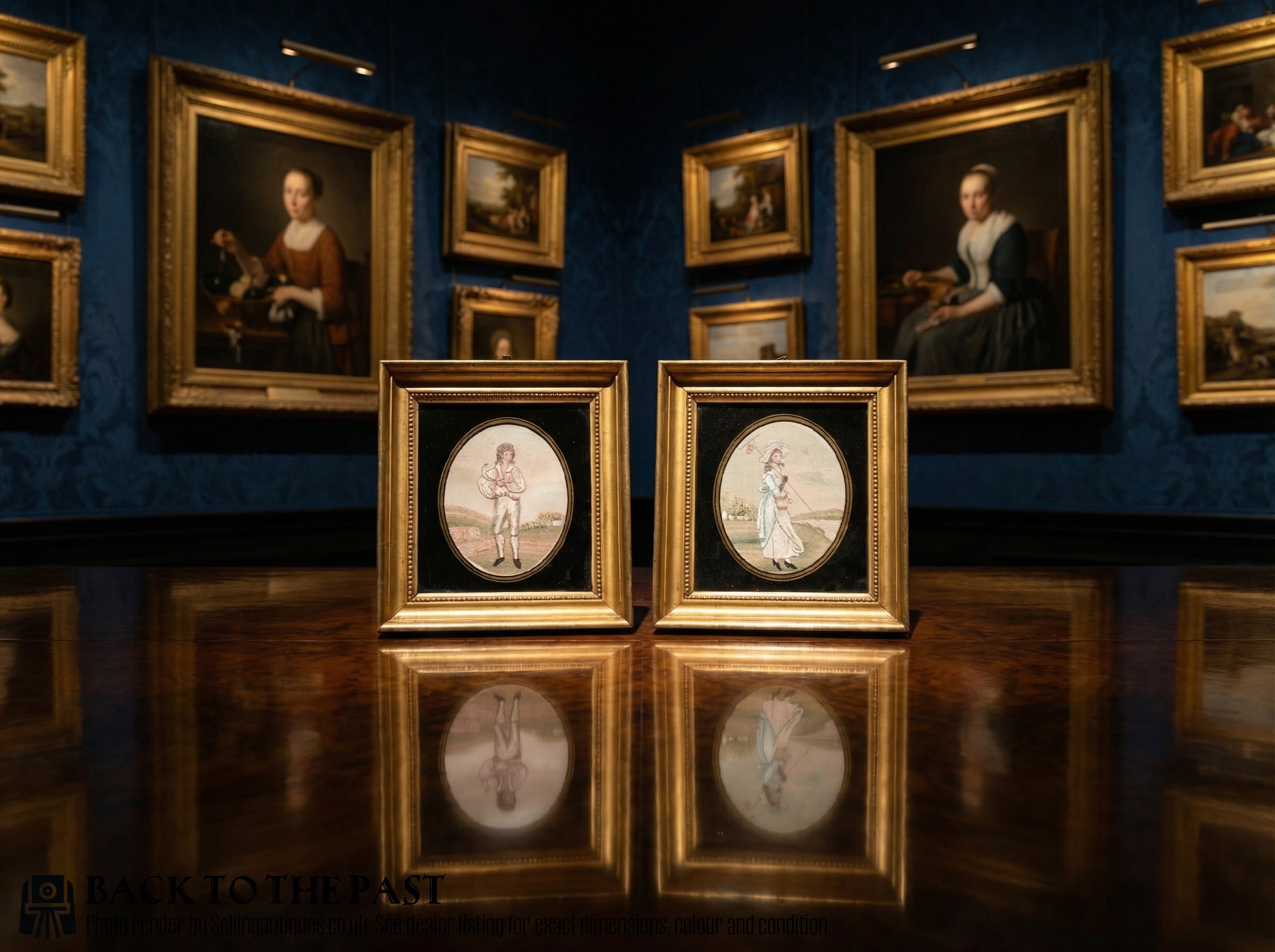
Pair of Silk Pictures
These works comprise matched textile panels designed for display as wall art, bringing together needlework and painting on woven grounds. A buyer seeking a pair of silk pictures encounters framed works spanning the eighteenth century through to the nineteenth century, including Regency, Victorian, and Meiji period examples.
The subjects on this page range from English and French bird embroideries and theatrical scenes to Chinese and Japanese panels featuring garden birds, mandarin ducks, and figurative subjects. Many retain their original framing, such as gilt wood, water gilded oval mounts, or black glass surrounds.
English country house interiors and French salons frequently housed these framed textiles, which were worked in silk threads alongside wool and paper elements. The matching pair format ensures balanced placement on either side of a fireplace or architectural feature.
How they were made
Makers utilised fine silk grounds stretched over supportive panels or paper backings, often combining long stitch and needlework embroidery with painted details in gouache or watercolour. Silk threads provided lustrous highlights for plumage, garments, and floral motifs.
Framing played a vital role in preservation, utilising wood, giltwood, gold leaf, and specialised mezzotint black glass to protect the delicate textiles from dust and light exposure while enhancing the visual depth of the composition.
Pair of Silk Pictures Retail Price Guide 2026
Typical asking prices for pair of silk pictures among the pieces listed under this phrase on Sellingantiques today, from the lower quarter to the upper quarter. They describe what is for sale here now, not the wider market.
The listings feature silk pictures spanning the eighteenth century, the Regency period, and the nineteenth century, utilising silk, wool, paper, and giltwood frames.
What varies in quality
The fineness of the needlework and the preservation of the silk ground distinguish the standard of execution across different examples. Intricate stitchwork and well-defined pictorial detail elevate the visual impact of the composition.
The survival of original frames, whether water gilded oval wood or faux tortoiseshell, contributes significantly to the integrity of the piece. Matching proportions and harmonious colour retention in the silk threads complete the measure of quality.
Stevens of Coventry
The Pair of Silk Pictures Glossary
- Silkwork
- Embroidery executed primarily in silk threads upon a woven silk or fabric ground. This technique allows for subtle shading and a reflective surface finish.
- Giltwood
- Wood carved and coated with gold leaf or metallic gilt preparation. It frames many Regency and Victorian textile pieces on this page.
- Mezzotint glass
- Dark or black glass used in framing to create a contrasting border that frames the picture window. It frequently accompanies Regency needlework pictures.
- Long stitch
- An embroidery stitch where threads span longer distances across the canvas to create smooth pictorial fills. It appears frequently in nineteenth-century examples.
Pair of Silk Pictures: Frequently Asked Questions
How should I hang silk pictures?
Position them away from direct sunlight to prevent the silk threads and painted details from fading over time. Maintain stable indoor humidity levels to protect both the antique textile and the wooden frame.
Hang the matched pair at eye level with secure wall fixings that support the weight of the original glass and timber frames.
What periods do these pictures span?
The available pieces predominantly date from the eighteenth and nineteenth centuries, encompassing Georgian, Regency, and Victorian eras. Meiji period Japanese examples also appear within the selection.
Stylistic cues such as frame construction, subject matter, and stitching techniques help distinguish between these historical periods.
Are the frames original?
Many examples retain their period surrounds, including gilt wood, water gilded oval frames, and faux tortoiseshell designs. Original frames are noted in individual descriptions where present.
Protective black glass borders are also found on several Regency period pieces in this collection.
What subjects are depicted?
Common subjects include English and French birds, cockerels, hens, mandarin ducks, and theatrical scenes. Chinese and Japanese export panels feature traditional garden and battle motifs.
Floral arrangements and needlework landscapes complete the range of pictorial themes represented on this page.