





Georgian Oval Needlepoint
Georgian oval needlepoint pieces are textile pictures and framed works that bring period interior warmth to a room.
Georgian Oval Needlepoint
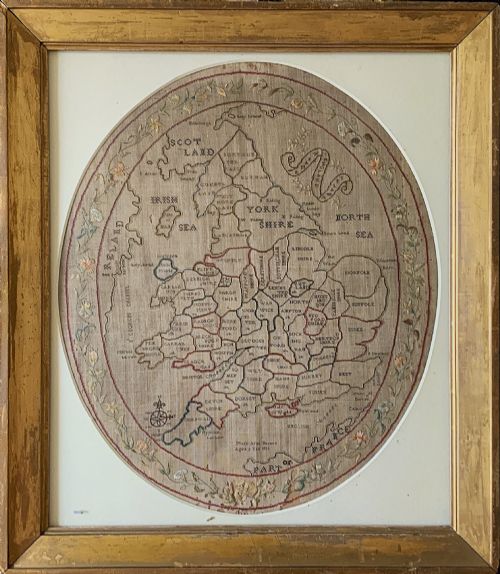
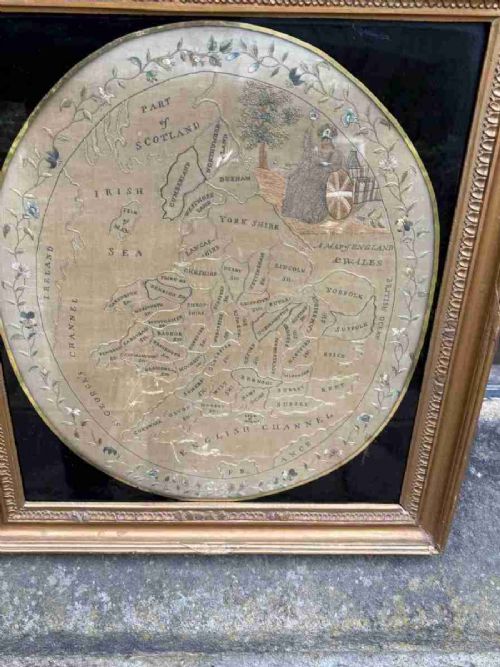
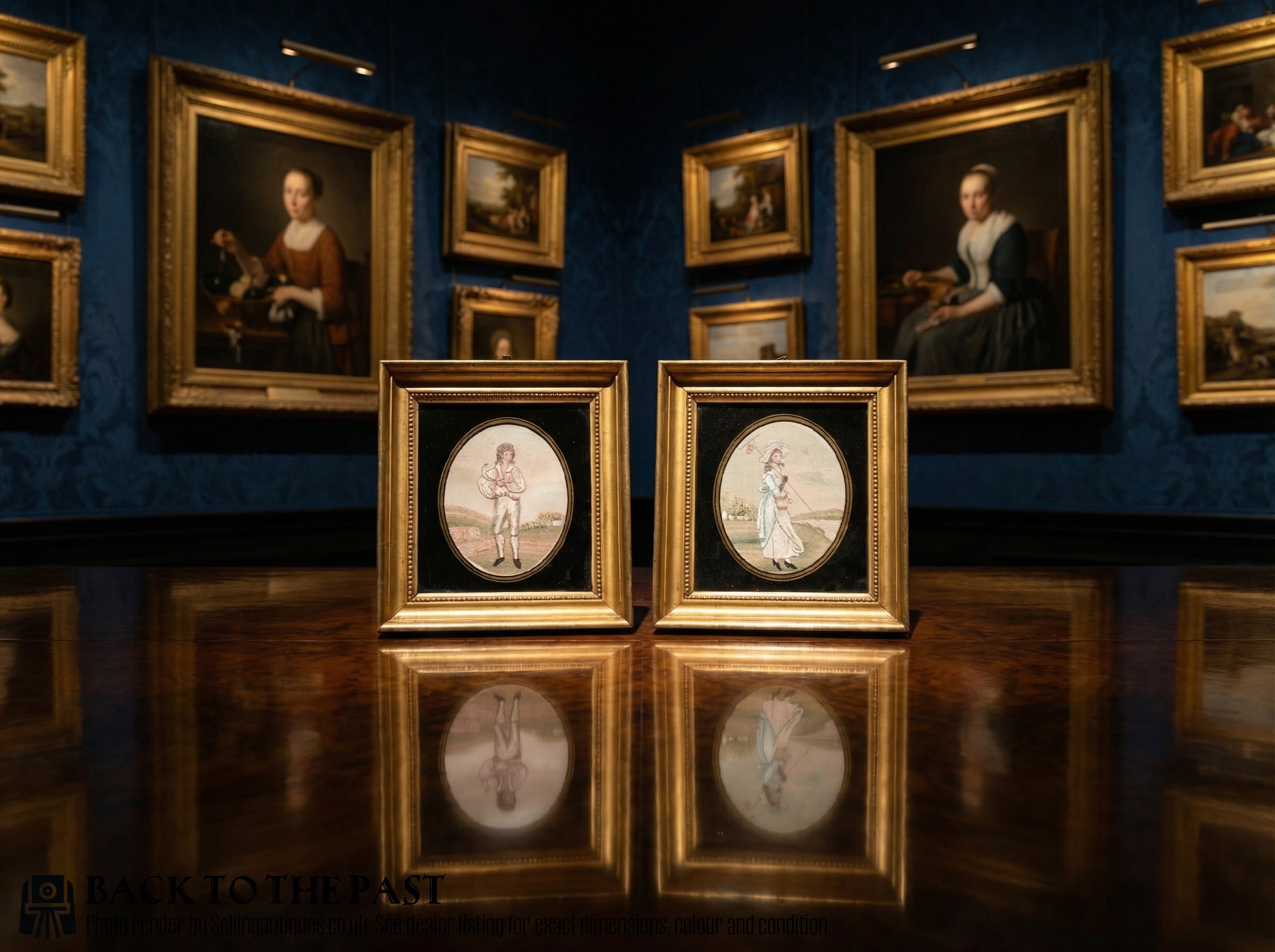
When you search for georgian oval needlepoint, you encounter framed textile art, silk embroideries, woolwork pictures, and maps of England and Wales. These works span the Georgian, Regency, and early nineteenth century periods, reflecting the needlework skills of the era.
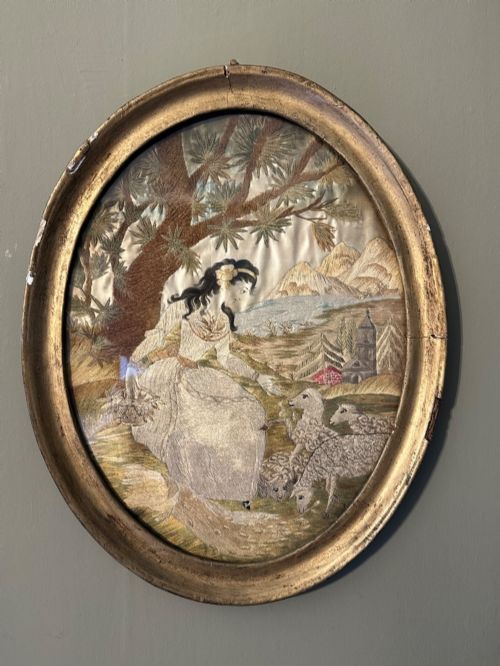
The format typically involves a vertical or horizontal oval composition, often preserved behind glass in original giltwood or verre églomisé frames. Subjects range from figurative scenes of girls in gardens and oyster sellers to religious depictions and educational map samplers.
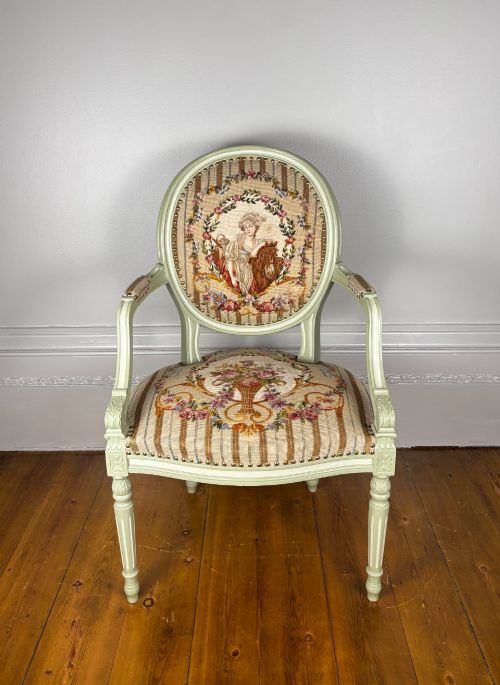
While many examples exist as independent wall art, the broader category also incorporates upholstered elements on period furniture like side chairs, stools, and adjustable pole firescreens.
How they were made
Maker execution relies on silk, wool, and felt threads worked onto linen base fabrics, creating textured surfaces for pictorial scenes and maps. Stitchers utilised fine silk and wool yarns to achieve tonal variation in figurative and landscape subjects.
Framing involved specialist techniques, notably water gilded wood moulding and verre églomisé glass adorned with painted or gilded borders. These protective surrounds completed the oval presentation favoured by Georgian and Regency households.
Georgian Oval Needlepoint Retail Price Guide 2026
Typical asking prices for georgian oval needlepoint among the pieces listed under this phrase on Sellingantiques today, from the lower quarter to the upper quarter. They describe what is for sale here now, not the wider market.
Young Mary Banion picked up her needle at age nine to map out all of England and Wales in silk.
What varies in quality
The standard of execution in the needlework itself dictates much of the visual distinction, from precise silk embroidery stitches to simpler woolwork. Purity of subject matter, such as detailed cartography on map samplers or expressive faces in figurative scenes, elevates the piece.
Preservation of the original housing plays a major role, particularly the survival of water gilded frames and verre églomisé glass panels. Intact original framing maintains the historical integrity of the textile within.
Mary Banion·Mary Pinfold
The Georgian Oval Needlepoint Glossary
- Verre églomisé
- A process of applying design and gilding to the reverse side of glass. This technique creates a reflective, decorative border often found framing Regency and Georgian needlework pictures.
- Silkwork
- Embroidery executed primarily using silk threads. It allows for fine detail and subtle colour gradation in pictorial textile art.
- Pole screen
- A firescreen featuring an adjustable vertical panel mounted on a central stand. The panel often houses a needlepoint embroidery designed to deflect hearth heat from a person's face.
- Sampler
- A piece of needlework produced to demonstrate proficiency in various stitches. Map samplers combined geography lessons with needlework skill.
- Giltwood
- Wood carved and coated with gold leaf or a gold-coloured finish. It provides a bright, ornamental frame for wall art.
Georgian Oval Needlepoint: Frequently Asked Questions
How should I hang a framed silk embroidery?
Keep textile art out of direct sunlight to prevent the silk and wool threads from fading over time. Indirect light preserves the original colours of the stitching.
Ensure the wall is dry and stable, using appropriate fixings to support the weight of the antique glass and wooden frame.
Were map samplers made by children?
Many surviving map samplers were worked by young girls as part of their education in boarding schools or academies. Signatures and ages, such as nine years old, frequently appear stitched into the composition.
These projects combined geography with technical needlework training, serving as display pieces for the family home.
What is a verre églomisé frame?
Verre églomisé is a technique where artisan workers paint and gild designs onto the reverse side of glass panels. This creates a glossy, reflective matt border around the central textile picture.
Such frames are characteristic of the Regency period and require careful handling to protect the fragile reverse decoration.
Can I use a pole screen near a fireplace?
Pole screens were originally designed to protect faces from the intense heat of open hearth fires by adjusting the height of the needlepoint panel. Today, they function primarily as decorative furniture pieces in reception rooms.
Positioning them away from modern heat sources protects the antique wood, silk, and wool from drying out.