

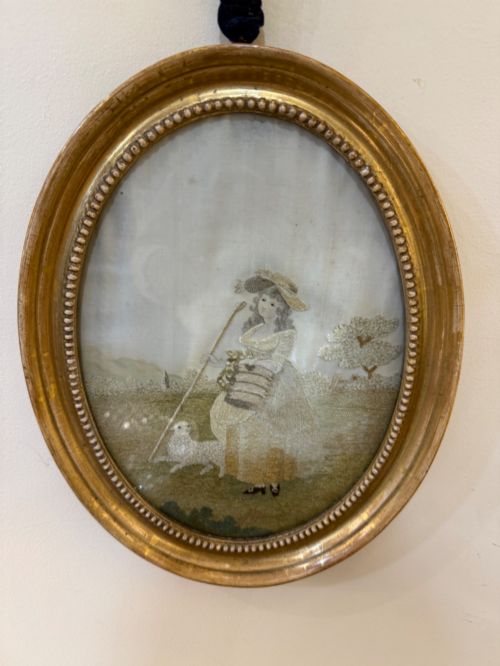

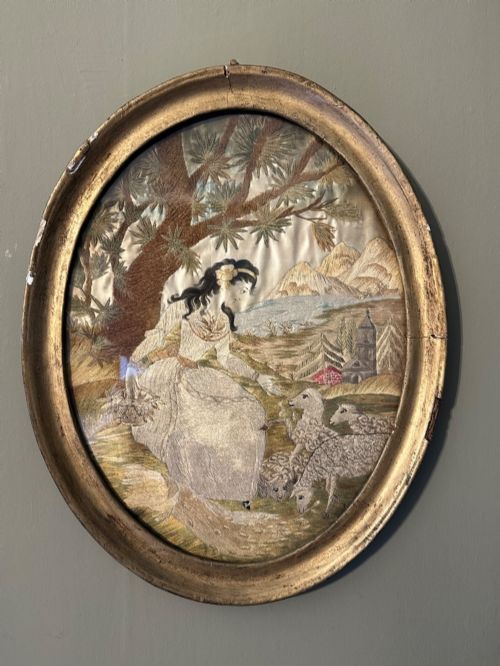


Framed Pastoral Embroidery
These framed pastoral embroidery pieces bring rustic scenes to life through silk and wool needlework, offering a glimpse into historic country landscapes.
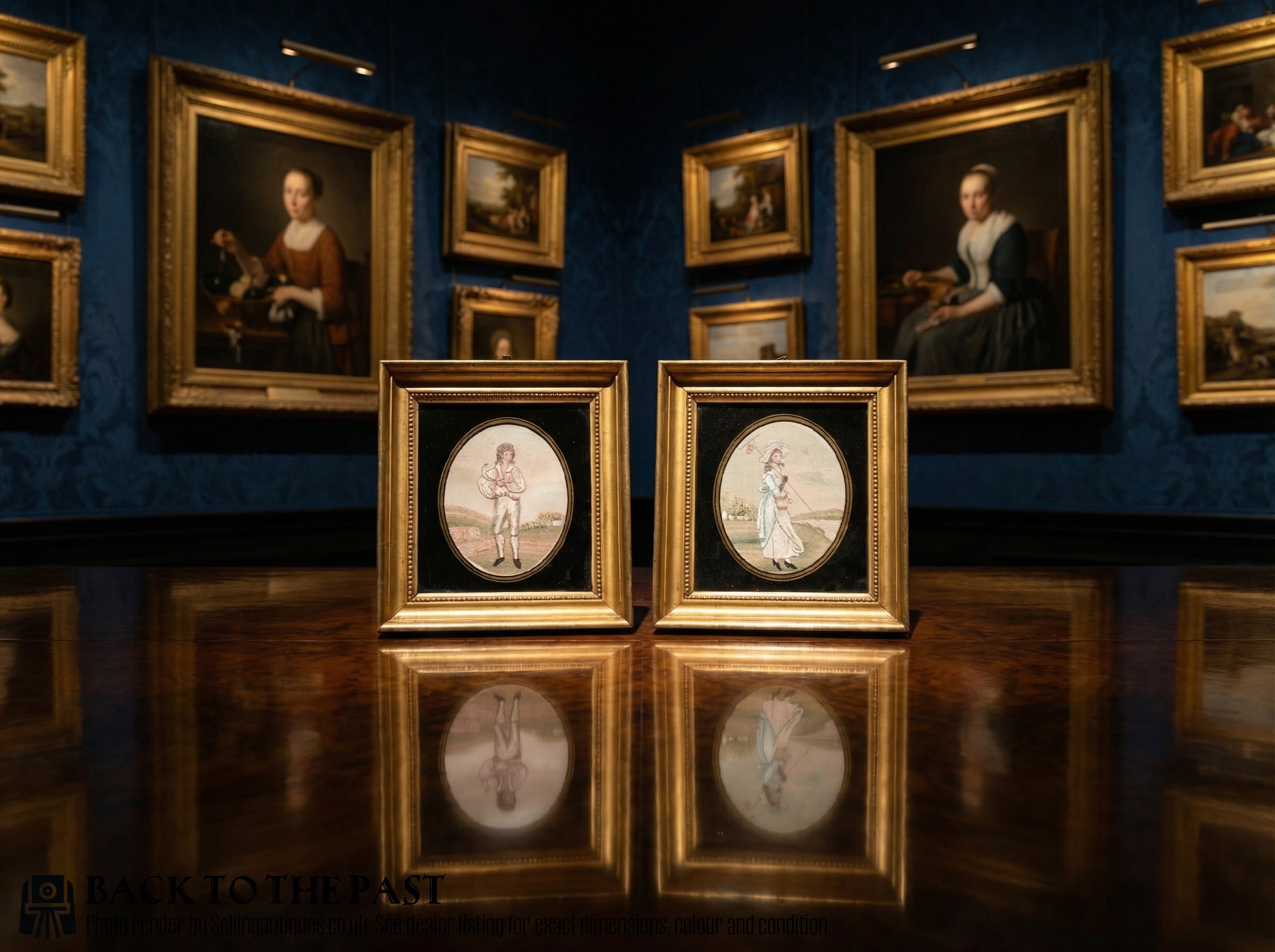
Framed Pastoral Embroidery
When you search for framed pastoral embroidery, you encounter needlework pictures capturing rural scenes, shepherdesses, and garden figures from past centuries. These works span the Georgian, Regency, and Victorian periods, reflecting shifting tastes in domestic wall art.
The most common examples on this page are silk and wool embroideries housed in period frames, often depicting pastoral farming or figures in gardens. Pieces range from early eighteenth-century needlework pictures to nineteenth-century woolwork compositions.
Origins vary across English and continental workshops, with some works presenting Italian provenance from around seventeen hundred. Each textile art piece serves as a window into historical craft, preserved behind glass in giltwood or rosewood mouldings.
Materials and Construction
These works combine fine textiles like silk, wool, and linen as the base and thread for the needlework pictures. Artisans employed various stitching techniques, including gros and petit point, alongside crewel work to build depth in pastoral scenes.
Framing is integral to the survival of these textiles, utilising glass and gold leaf or giltwood to protect the fabric. Mezzotint black glass and verre églomisé frames appear regularly, adding distinct decorative borders to the embroidered artwork.
Framed Pastoral Embroidery Retail Price Guide 2026
Typical asking prices for framed pastoral embroidery among the pieces listed under this phrase on Sellingantiques today, from the lower quarter to the upper quarter. They describe what is for sale here now, not the wider market.
The inventory relies heavily on the Regency and eighteenth-century eras, using silk, wool, and giltwood.
Assessing Quality and Execution
Quality rests in the finesse of the needlework and the preservation of the delicate silk and wool threads. Superior examples demonstrate intricate stitch control and harmonious colour retention across the pastoral subject matter.
The original framing plays a significant role in the overall integrity of the piece. Matching pairs with original gilt wood or mezzotint glass frames elevate the status of the textile art.
The Framed Pastoral Embroidery Glossary
- Needlework picture
- A piece of art created by stitching thread onto a fabric backing, typically framed for wall display. These function as textile paintings executed with a needle.
- Verre églomisé
- A process of applying gold or silver leaf to glass combined with engraving and painting. It creates a decorative, reflective border for historic frames.
- Gros point
- A coarse counted-thread embroidery stitch used for the background or heavier details in wool work. It provides a sturdy texture compared to finer stitches.
- Petit point
- A fine tent stitch executed on canvas, allowing for high detail and subtle shading in silk or wool. It marks more meticulous needlework.
- Crewel work
- Embroidery using wool yarn on a linen or cotton twill fabric. It creates tactile, textured surfaces suited to historic designs.
Framed Pastoral Embroidery: Frequently Asked Questions
What periods do these embroideries come from?
The listings span several eras, predominantly featuring eighteenth-century and nineteenth-century examples alongside Regency and Victorian pieces.
You also find works dating back to seventeen hundred, showcasing early Italian needlework traditions.
How were these pictures originally displayed?
These textile works were mounted behind glass to protect the delicate silk and wool threads from dust and environmental damage.
They sit within period frames such as giltwood, rosewood, or mezzotint black glass borders designed for domestic wall hanging.
What subjects appear in pastoral embroidery?
The imagery focuses on rural life, farming scenes, and figures set within gardens or idealized country landscapes.
Compositions often portray shepherdesses or children in nature, reflecting the romanticized view of the countryside popular in earlier centuries.
Are these works sold as pairs?
Several listings feature matching pairs of silk embroideries created in the Regency or eighteenth-century periods.
These paired items typically share identical framing and complementary pastoral motifs intended for symmetrical wall placement.