
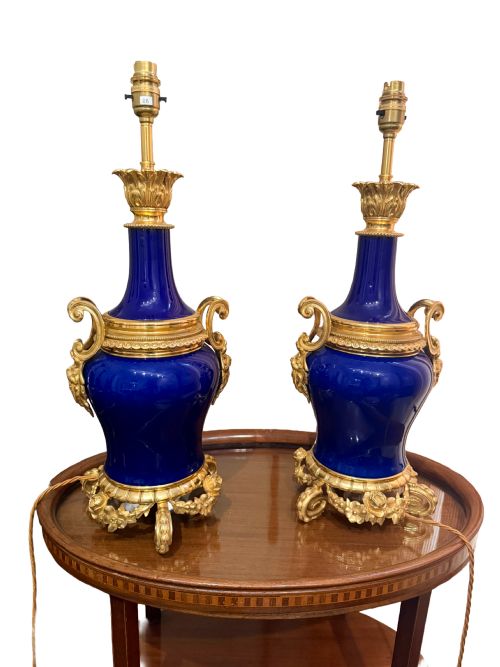


Pair of Porcelain Lamps
These porcelain lamps combine decorative ceramic bodies with metal mounts, offering balanced illumination and period character for symmetric interior placement.
Pair of Porcelain Lamps
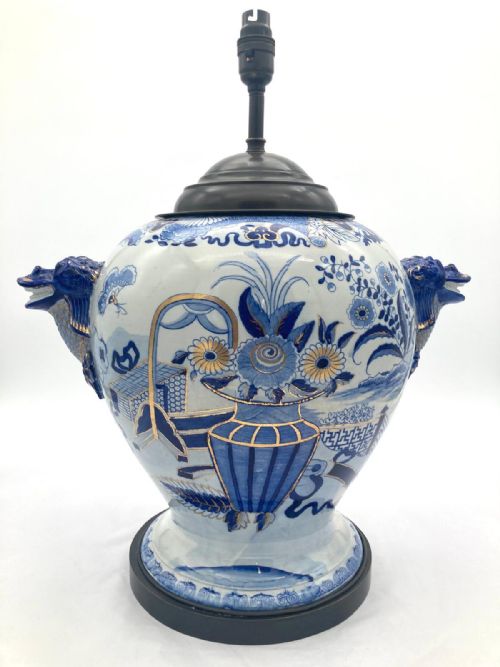
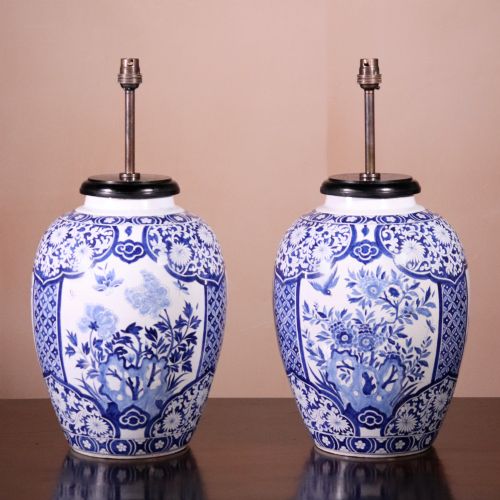
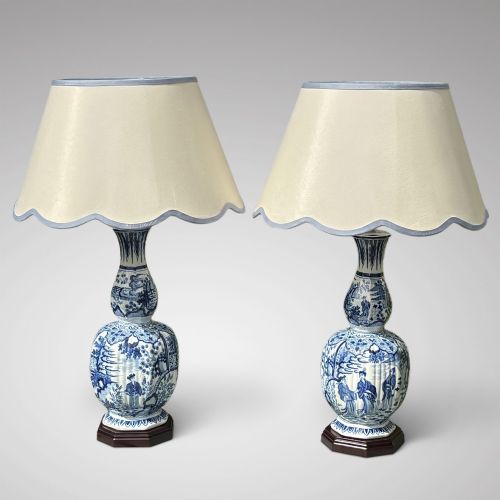
A pair of porcelain lamps typically comprises matching vessels, such as ginger jars, baluster vases, or figural sculptures, which have been converted into table lighting. These objects bridge decorative arts and functional home fixtures, frequently incorporating historical ceramic traditions from European manufactories and Asian export kilns.
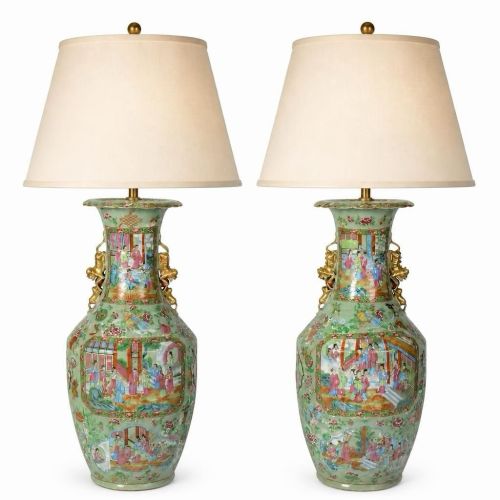
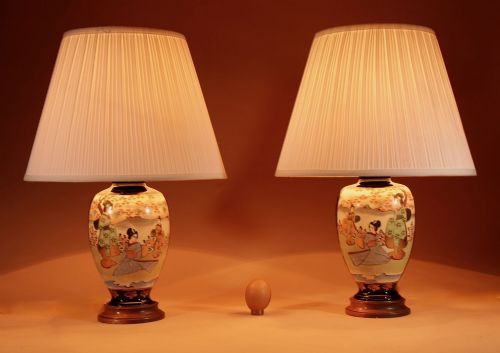
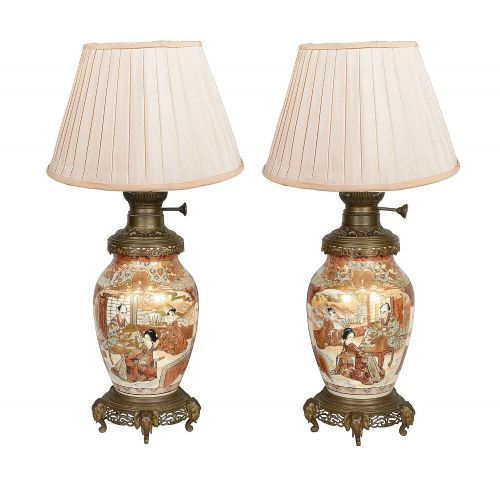
The selections available range widely across periods, including eighteenth-century Mandarin vases, nineteenth-century French factory output, and early twentieth-century Japanese Satsuma or Kutani wares. Many examples retain their original ceramic forms, utilising converted oil reservoir fittings or drilled bases to house modern electrical components.
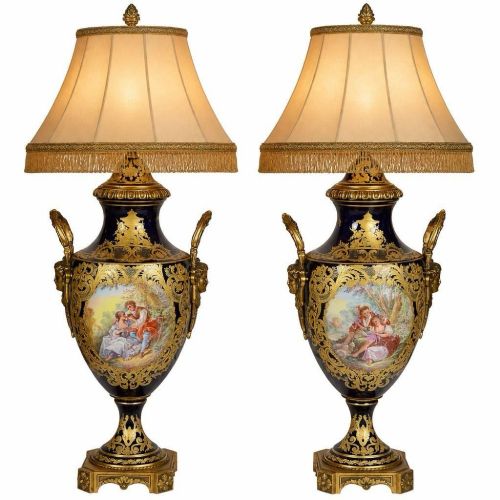
European makers are well represented by Continental porcelain styles, including pieces styled after Sevres, Meissen, and Paris porcelain workshops. Alongside these, East Asian ceramics dominate the selection, featuring famille rose, blue and white, and powder blue glazing techniques adapted into matching pairs.
How they were made
The foundation of these objects rests on fired ceramic bodies, often decorated with hand-painted enamel pigments, cobalt underglazes, or raised pate-sur-pate relief work. Ceramic artists shaped these vessels on the wheel or in moulds before applying intricate surface designs and secondary glazes.
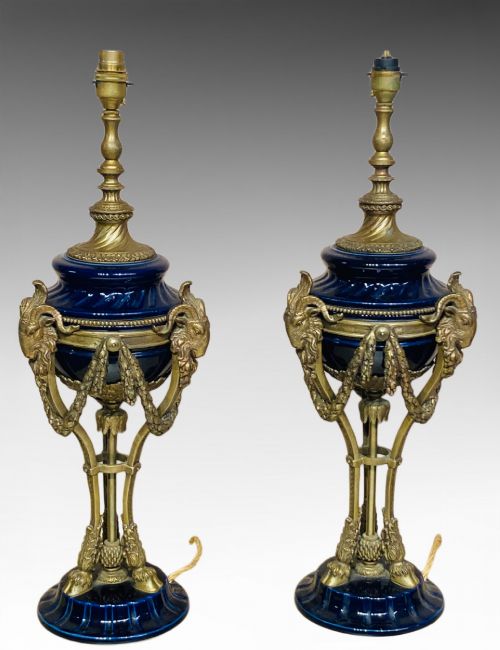
Many porcelain lamps incorporate metalwork elements, utilising cast ormolu, gilt bronze, brass, and gilt brass to form decorative mounts, bases, and neck collars. These metallic components were custom-cast to fit the contours of the ceramic bodies, securing the lighting hardware and adding structural weight.
Conversion from vases or oil lamps to modern table lamps involved careful adaptation, sometimes retaining original brass or bronze burner assemblies while integrating wired sockets and fabric shades. The combination of fragile ceramic and heavy metal mounts required precise fitting to maintain balance and stability.
Observed styles span Chinoiserie, Chinese Export, Japanese Meiji, Qing Dynasty, Meiji Period, Rococo Revival, and Chinese Qing Dynasty aesthetics.
What varies in quality
The standard of painting and enamel work heavily influences the character of a pair, distinguishing finely detailed hand-painted scenes from mass-produced transfer prints. Artisans who executed delicate brushwork, precise gilding, and expressive figural details created pieces with greater visual depth.
The integration and quality of the metal mounts contribute significantly to the overall craftsmanship, separating standard commercial castings from richly chased ormolu and gilt bronze. Heavier, finely chased mounts that conform precisely to the ceramic contours indicate higher workshop standards.
The symmetry and matching consistency of the two vessels determine the success of the pair, as ceramic pieces fired in historical kilns often experienced warping or shrinkage. Matching pairs that share uniform dimensions, balanced glaze tones, and identical mounting details represent the upper tier of the range.
Sitzendorf·Meissen·Hicks and Meigh·Gien·Minton
The Pair of Porcelain Lamps Glossary
- Ormolu
- A golden-coloured alloy of copper, zinc, and sometimes tin, used to cast decorative mounts and bases for porcelain vessels. This material provides a bright, durable metallic contrast to ceramic bodies.
- Famille Rose
- A palette of opaque enamel colours dominated by pink or rose hues, introduced in Chinese ceramics during the Qing dynasty. Artisans utilised these enamels to render detailed floral and figural scenes.
- Pâte-sur-Pâte
- A ceramic technique where wet porcelain slip is built up in successive layers on a contrasting background to create a low relief cameo effect. This meticulous method highlights the skill of nineteenth-century European decorators.
- Satsuma
- Japanese earthenware or porcelain featuring a crackled ivory glaze decorated with intricate overglaze enamels and gilt details. These wares were widely exported and adapted into decorative lamps.
- Sevres
- A renowned French porcelain manufactory known for producing highly decorated, luxurious tablewares and decorative objects often mounted in bronze. Pieces styled after this factory emulate its distinctive blue grounds and gilded cartouches.
Pair of Porcelain Lamps: Frequently Asked Questions
How do I convert oil lamps?
Most antique porcelain oil lamps have already been adapted for electricity by previous owners or specialised dealers. The conversion process typically involves running a cord through the existing burner mechanism or drilling the base without damaging the core ceramic body.
When handling older wiring, it is advisable to have a qualified electrician inspect the internal components to ensure safety standards are met. Preserving original ormolu and brass fittings during any electrical work maintains the integrity of the piece.
How do I clean porcelain lamps?
Dust the ceramic body and any fabric shades regularly with a soft, dry cloth to prevent grime accumulation. Avoid using harsh chemical cleaners or abrasive materials that might damage hand-painted overglaze enamels or gilt highlights.
For metal mounts made of brass or ormolu, use a gentle cleaner specifically formulated for metals, taking care not to let cleaning solutions touch the porcelain surface. Maintaining the lamps in a stable indoor environment protects both the ceramic glaze and the internal wiring.
Are these lamps handmade?
The ceramic bases of these pieces were produced using traditional hand-throwing, moulding, and glazing techniques common to historical workshops. Artisans applied surface decoration, enamel painting, and gilding by hand before firing the ceramics in kilns.
The metal mounts were individually cast and chased to fit the contours of each specific vase or jar. This combination of hand-formed pottery and custom metalwork means no two pairs are entirely identical.
Can I replace the lamp shades?
Lamp shades can be updated to suit modern interior preferences, provided the fitter size matches the harp or gallery of the existing hardware. Many pairs feature custom or handmade shades designed to complement the scale and colour palette of the porcelain bases.
When selecting a replacement shade, consider the height and width of the ceramic body to maintain proper visual balance. Choosing neutral silk or fabric shades allows the detailed painting and gilt mounts of the lamps to remain the focal point.