
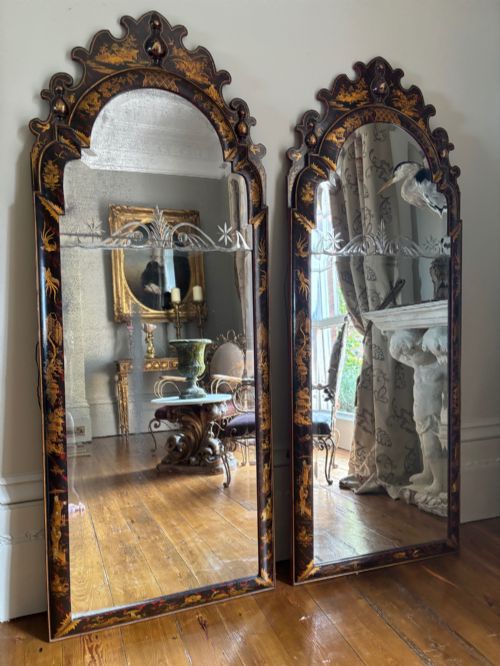
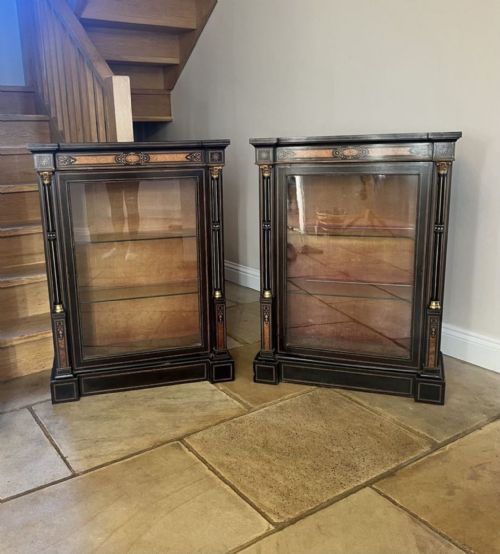
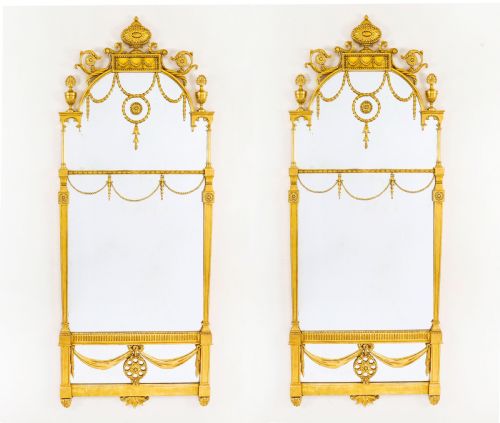
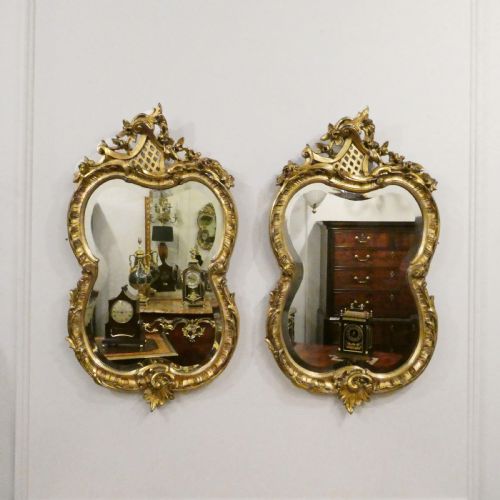
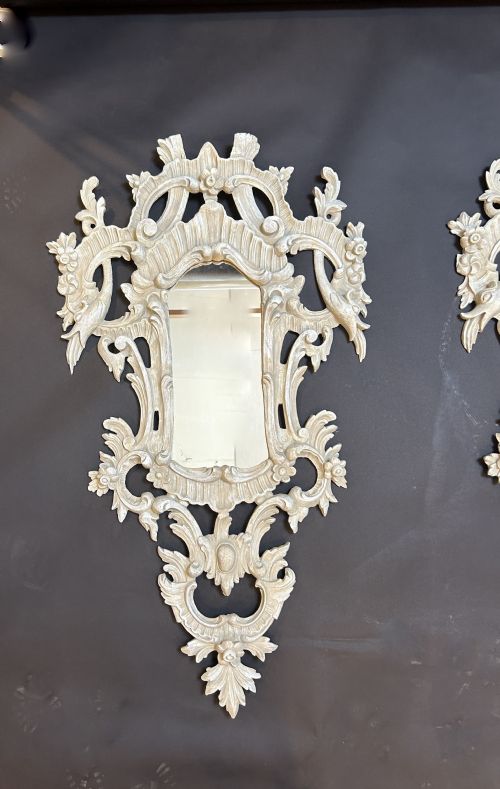


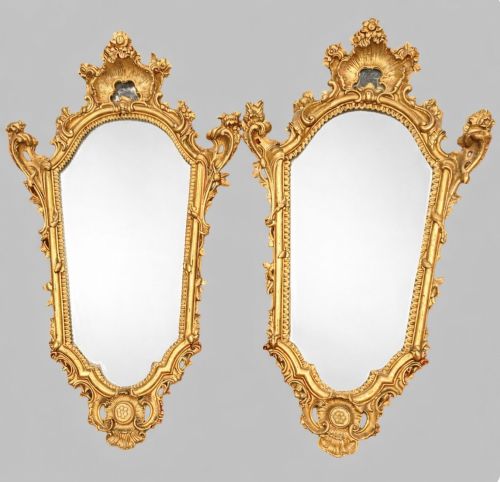


Pair of Pier Glasses
These pair of pier glasses are matched domestic mirrors built to flank windows or architectural piers, offering symmetry and reflective light to period interiors.
Pair of Pier Glasses
A pair of pier glasses consists of two matching wall mirrors designed specifically for the narrow wall spaces situated between windows in formal rooms. Buyers seeking these items will find examples originating primarily from the nineteenth century, alongside revival styles that emulate earlier classical periods.
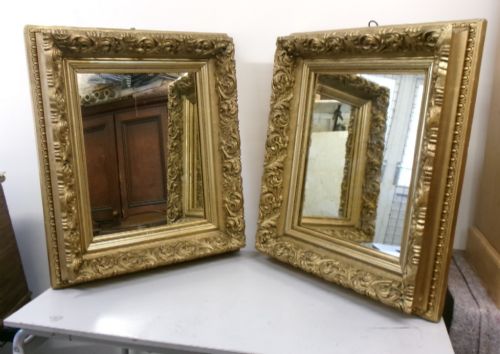
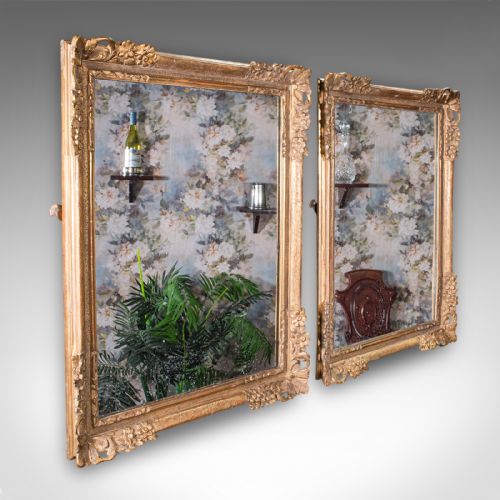
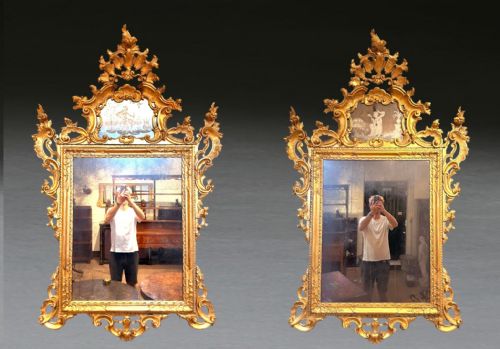
The selections span various aesthetic movements including Regency, Victorian, and Rococo Revival, frequently paired or associated with low cabinets or console tables. Most items present giltwood frames, carved timber, or polished walnut structures intended to elevate domestic interior decoration.
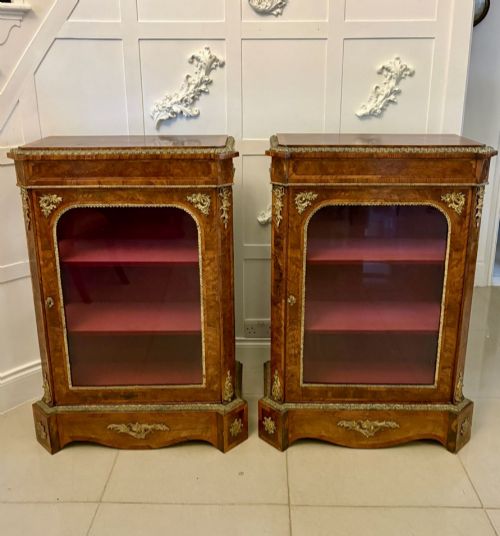
While traditional pier glasses are tall vertical mirrors, the listings here also encompass broader wall mirrors and matched cabinets designed to occupy the same architectural role. Finding a true matching pair remains a primary objective for collectors aiming to restore symmetrical balance to a reception room.
Materials and construction methods
Makers constructed the primary frames of these mirrors using timber such as walnut, rosewood, and ebonised woods, often enhanced with applied gesso and giltwood decoration. Carved wooden elements provided relief ornamentation, while individual pieces incorporated brass, ormolu mounts, and marquetry inlays.
The reflective surfaces consist of traditional mirror glass set within heavy timber or composite frames, frequently secured with backboards. Gilding techniques applied gold leaf over prepared gesso grounds to achieve the bright metallic finishes seen across the Regency and Victorian examples.
Many a Victorian homeowner placed these reflective glasses between windows simply to bounce enough candlelight around the room to read the evening paper.
Factors of craftsmanship and execution
Quality reveals itself in the crispness of the wood carving and the depth of the gesso work applied beneath the gilding. Superior examples display refined hand-carved details rather than cast plaster substitutes, maintaining sharp architectural profiles across both matching frames.
The integrity of the original mirror glass and the preservation of the surface patination significantly influence the standing of a piece. Finer examples retain their original gilding or polished timber finishes without excessive modern intervention, ensuring historical consistency between the matched pair.
The Pair of Pier Glasses Glossary
- Pier glass
- A tall mirror designed to hang on the narrow pier of wall between two windows. These mirrors frequently sat above console tables or pier cabinets to create a unified decorative scheme.
- Giltwood
- Timber that has been coated with a thin layer of gold leaf over a prepared gesso base. This finish provides a bright, reflective surface characteristic of formal period furniture.
- Gesso
- A plaster-like mixture applied to wooden frames as a smooth base for gilding or painting. Skilled artisans carved intricate relief designs directly into this layer.
- Ormolu
- Gilded bronze mounts used as decorative enrichment on furniture and frames. This technique was popular during the eighteenth and nineteenth centuries to accent fine woods.
- Marquetry
- Inlaid patterns formed using various coloured wood veneers to create pictorial or geometric designs. This decorative technique appears on the cabinets frequently associated with these mirrors.
Pair of Pier Glasses: Frequently Asked Questions
Where should pier glasses be hung?
These mirrors are traditionally positioned on the narrow wall space between two windows to maximise natural light and create symmetry in a formal room.
They also sit effectively above console tables or matched pier cabinets to anchor the furniture grouping.
What periods do these mirrors represent?
The selection includes pieces from the nineteenth century, including Regency and Victorian eras, alongside revival styles referencing earlier periods such as George III and Queen Anne.
Stylistic markers like carved giltwood frames or ebonised details help indicate the specific era of manufacture.
How should I clean giltwood frames?
Dust the carved surfaces gently with a soft, dry brush to prevent damage to the delicate gold leaf layer. Avoid using liquid cleaners or abrasive cloths on giltwood or antique mirror glass.
Professional conservation is recommended if the surface finish requires more intensive attention.