
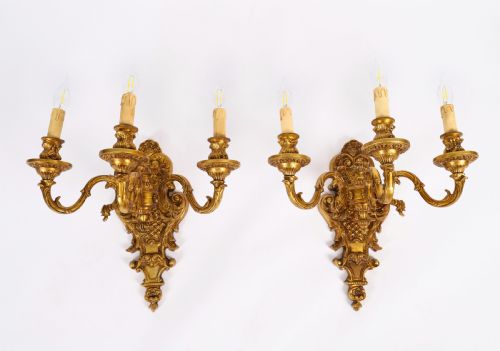
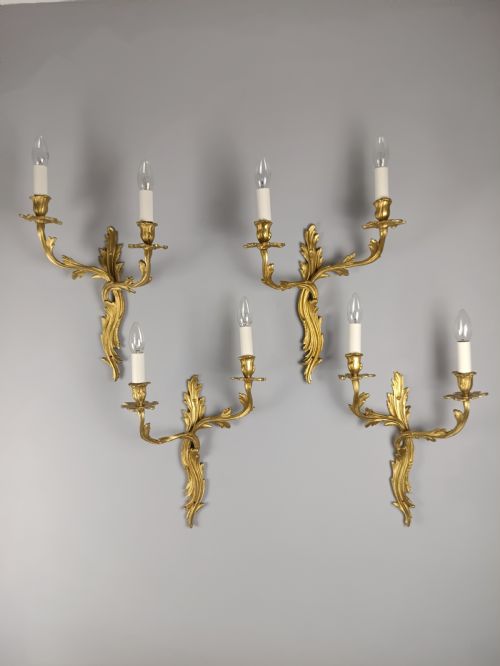
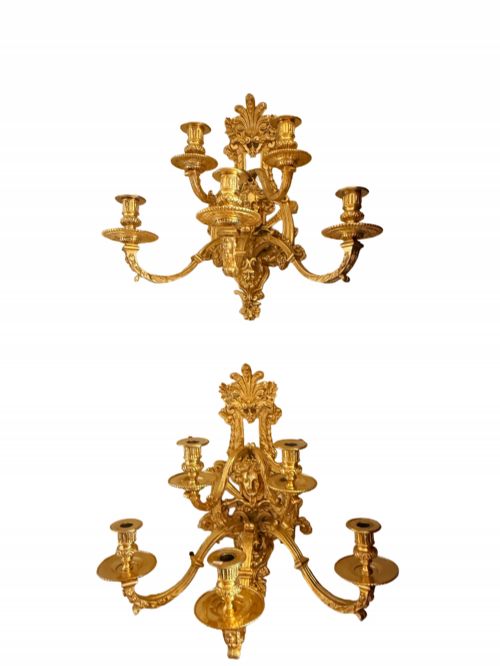
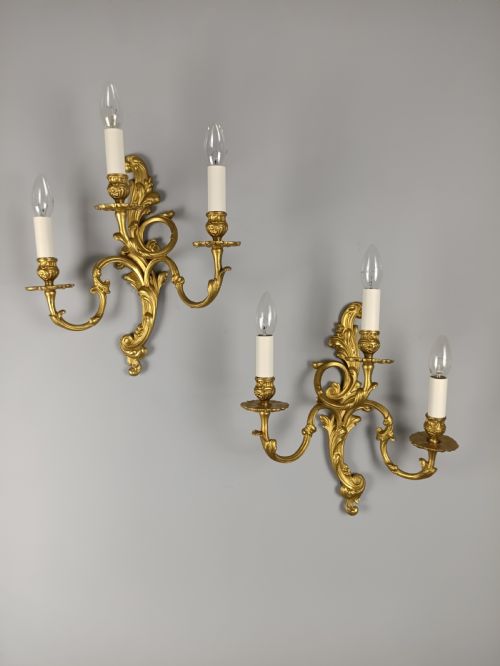
Pair of Ormolu Sconces
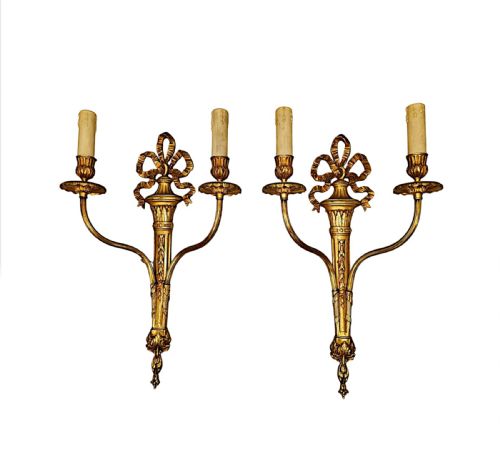
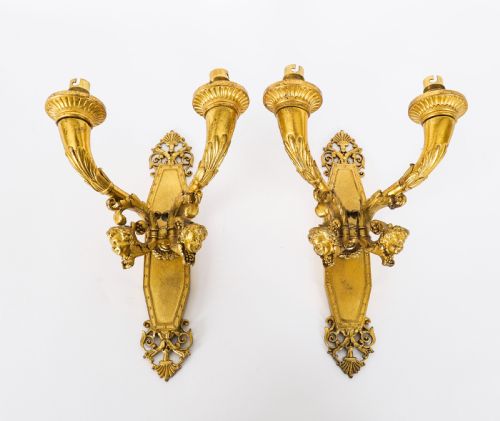
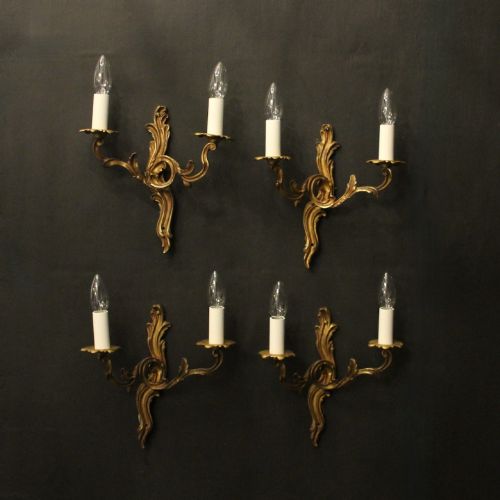
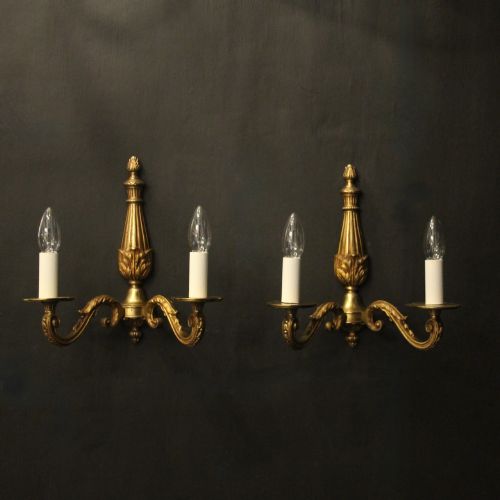
A pair of ormolu sconces brings warm, reflected candlelight and classical French design to an interior wall.
Pair of Ormolu Sconces
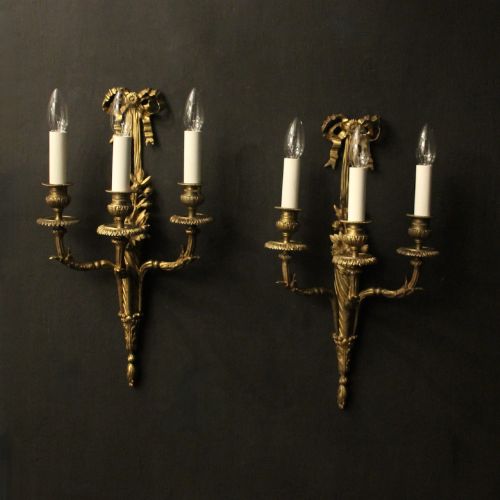
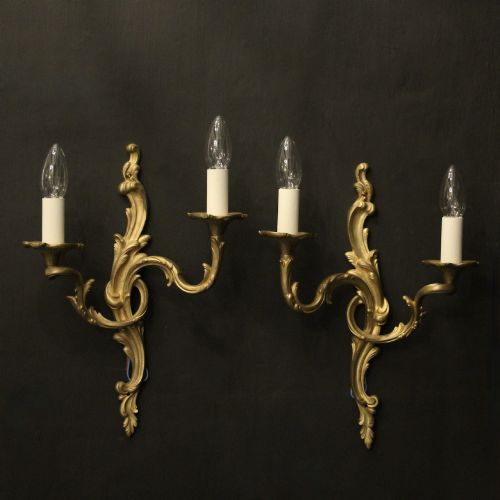
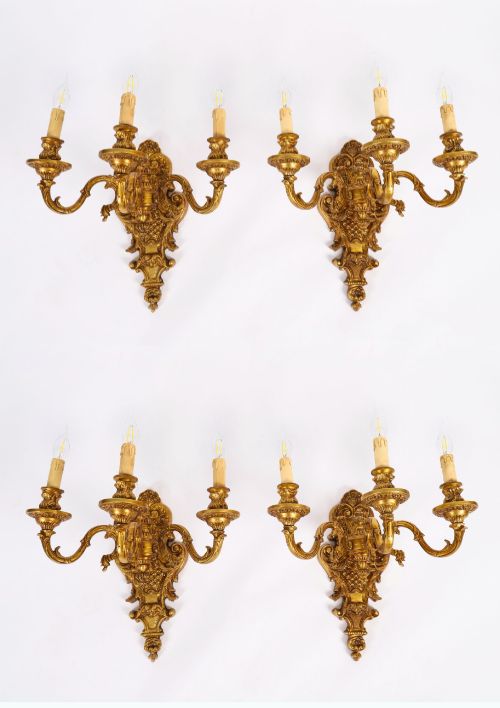
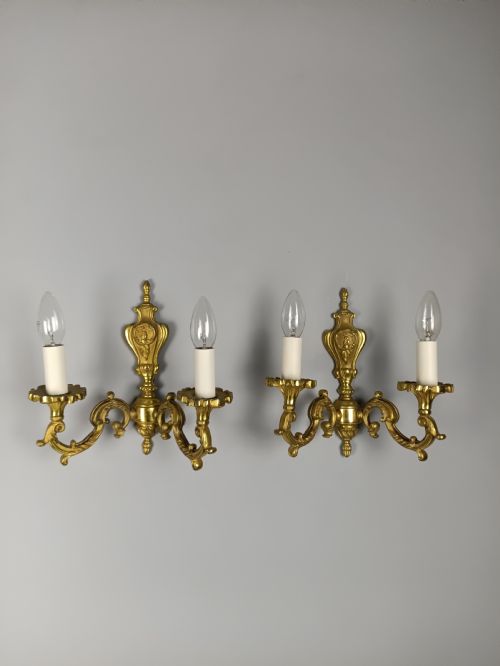
A pair of ormolu sconces consists of matched wall-mounted light fixtures designed to hold candles or electric bulbs, typically made with mercury-gilded metal. These decorative lighting pieces originate largely from French workshops across the nineteenth and early twentieth centuries, spanning periods from eighteen-eighty to nineteen-thirty.
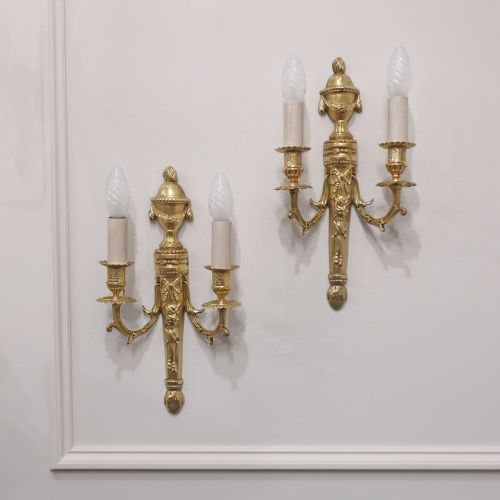
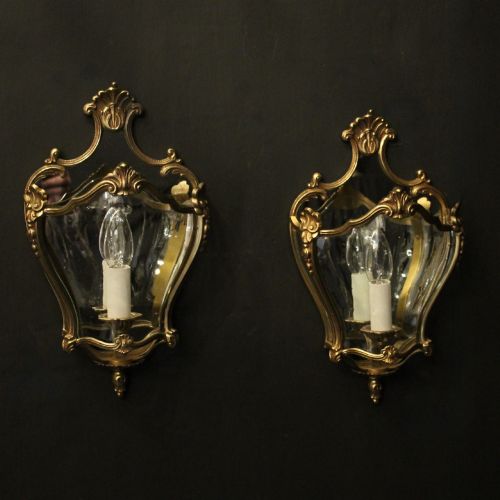
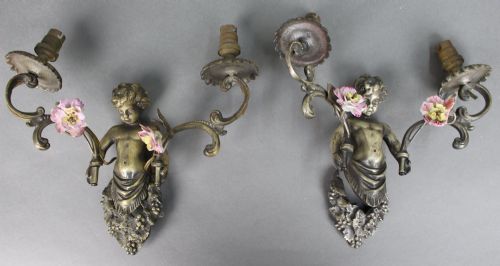
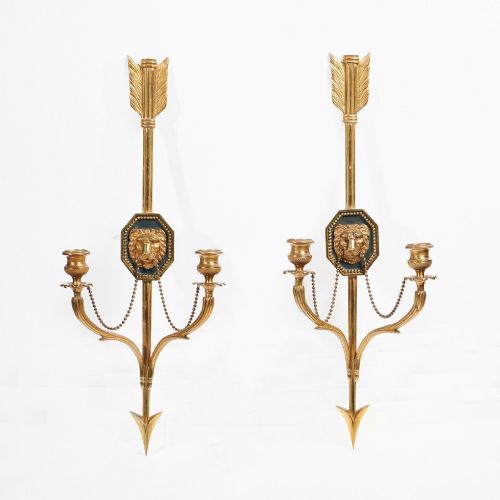
The selections available here emphasise wall lights and appliques configured in twin-arm, triple-arm, and single-arm formats. Buyers will frequently encounter French Rococo and Louis XVI revival styles, often featuring decorative elements such as cherubs, porcelain flowers, or flaming torches.
Originating predominantly from France alongside occasional Italian examples, these wall fixtures served to illuminate reception rooms and parlours. The surviving pairs demonstrate diverse forms, ranging from modest two-branch candle sconces to large multi-armed gilt bronze candelabras.
Materials and construction
The primary metal components of these wall lights are cast in bronze, brass, or gilt metal, subsequently finished with ormolu, which involves applying a fine layer of gold amalgam to the bronze base. This mercury gilding technique creates a durable, luminous golden surface that resists tarnishing over decades.
Makers integrated contrasting materials into the metal framework, utilising white marble, onyx, glass, and painted porcelain flowers to enhance the visual texture of the sconces. Patinated bronze details frequently appear alongside polished ormolu sections to create depth and highlight the cast ornamentation.
Casting methods allowed workshops to produce intricate sculptural details such as acanthus leaves, rocaille scrolls, and neoclassical urn motifs. Individual arms were mechanically secured or pinned to the main backplate, supporting candle nozzles and drip pans designed to catch melted wax.
The inventory incorporates several distinct materials, including gilt bronze, ormolu, patinated bronze, onyx, and white marble.
Assessing quality in gilt bronze lighting
The thickness and completeness of the original mercury gilding dictate the lasting richness of the object, as thinner applications wear away to reveal the base metal underneath. Heavier, more substantial bronze frames indicate a higher grade of manufacture compared to lighter brass alternatives produced in volume.
Casier·Henri Vian
The Pair of Ormolu Sconces Glossary
- Ormolu
- A method of applying finely ground gold mercury amalgam to a bronze or brass object to produce a rich golden finish. This historical technique is also referred to as gilt bronze.
- Applique
- A wall-mounted light fitting designed to be fixed directly to vertical surfaces. The term is frequently used interchangeably with wall sconce.
- Rococo
- An ornate design style characterised by asymmetric scrolls, shell motifs, and naturalistic plant forms popular in French decorative arts. Pieces from the revival periods replicate these sweeping eighteenth-century lines.
- Champleve
- An enamelling technique where troughs are carved into the metal surface and filled with vitreous enamel before firing. This decorative method appears on nineteenth-century candlesticks and associated hardware.
- Candelabra
- A branched lighting fixture designed to hold multiple candles simultaneously. These larger fixtures often feature removable branches or central decorative stems.
Pair of Ormolu Sconces: Frequently Asked Questions
How do I date a pair of ormolu sconces?
Dating relies on identifying the prevailing design style, such as French Empire, Louis XVI, or Rococo Revival, alongside the manufacturing characteristics of the bronze casting. Nineteenth-century pieces often display heavier bronze construction and deeper hand-chasing than later twentieth-century reproductions.
Examining the backplates, mounting fixings, and screw types provides additional clues regarding the period of manufacture. Workshops active in the eighteen-eighties and nineteen-hundreds frequently reproduced earlier French designs with distinct technical methods.
Are these wall lights suitable for modern wiring?
Many antique wall sconces are adapted for contemporary electrical standards by running insulated wiring through the existing hollow arms and backplates. This conversion allows historic fixtures to operate safely with low-wattage candle bulbs.
Buyers should inspect the internal wiring status of each pair to confirm whether professional rewiring has been completed. Qualified electricians can easily integrate these metal fixtures into standard domestic lighting circuits.
What is the difference between ormolu and gilt brass?
Ormolu specifically denotes mercury-gilded bronze, a technique that produces a deep, warm golden lustre through the application of a gold and mercury mixture fired in a kiln. Gilt brass or gilt metal typically represents a less expensive manufacturing process utilising alternative metal alloys and modern plating methods.
Closer inspection of the weight, colour saturation, and metal density helps distinguish traditional ormolu from later brass substitutes. Heavier bronze bases generally indicate higher quality nineteenth-century production standards.