

Antique Three Arm Sconces
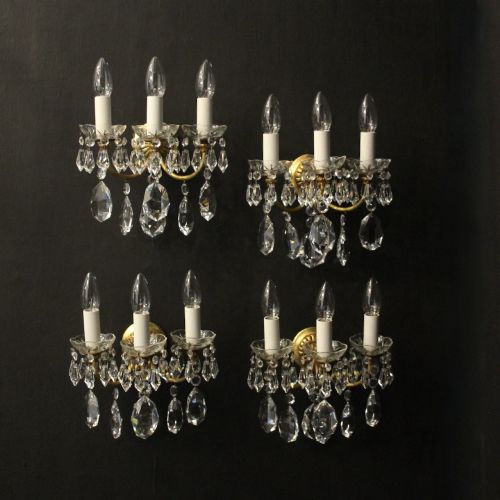
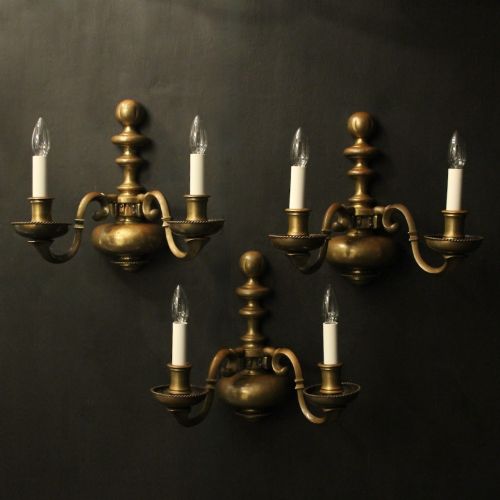
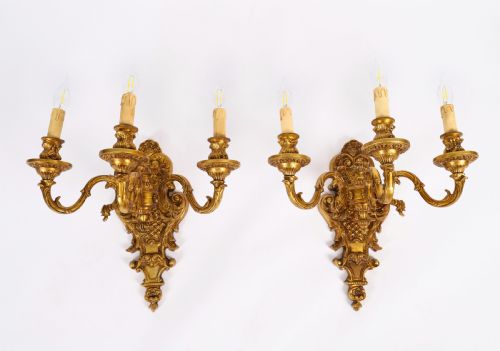
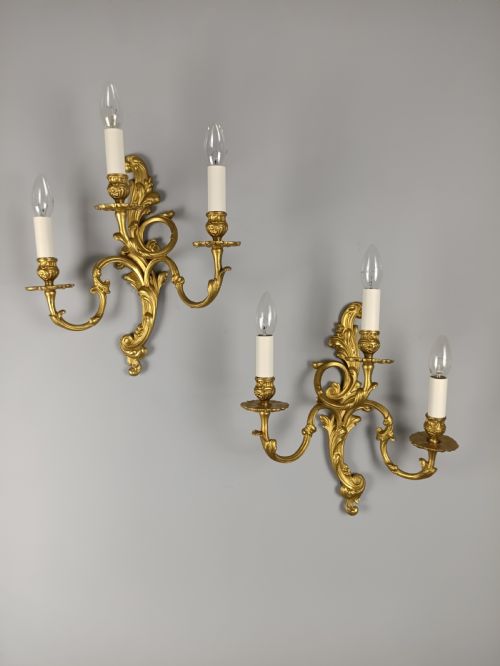
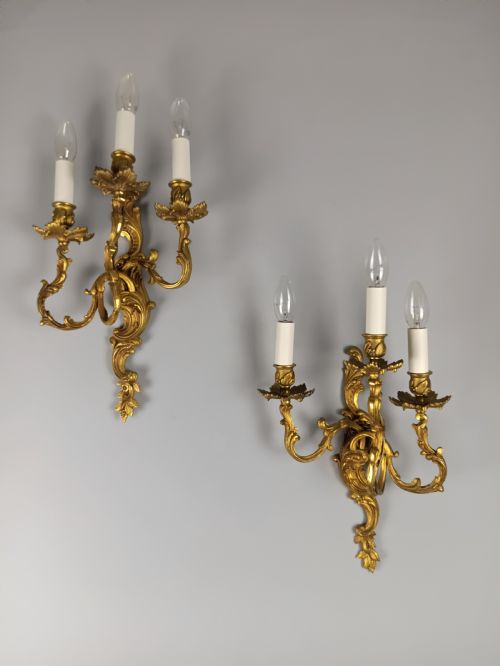
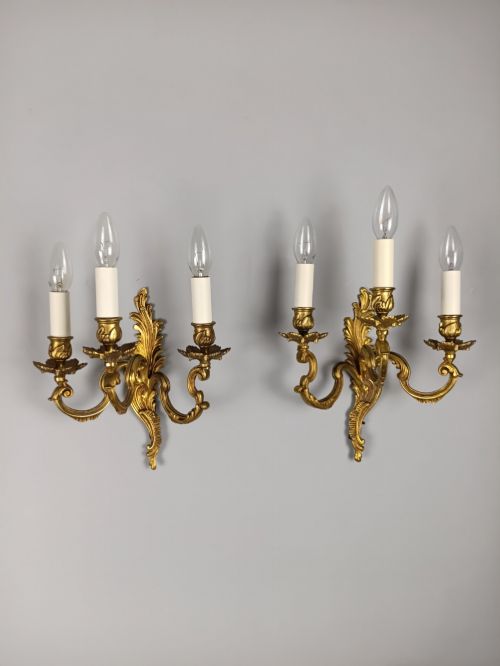
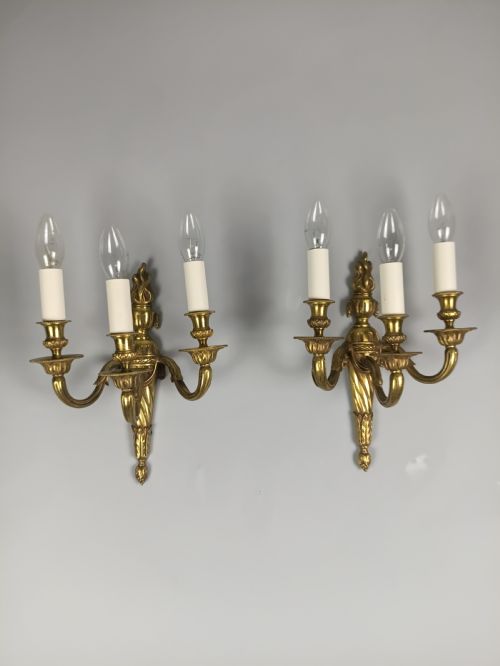
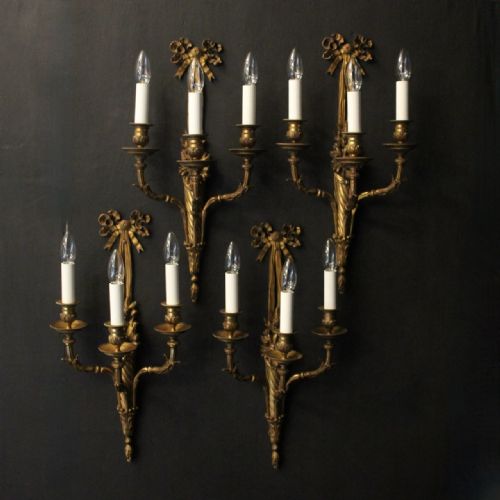
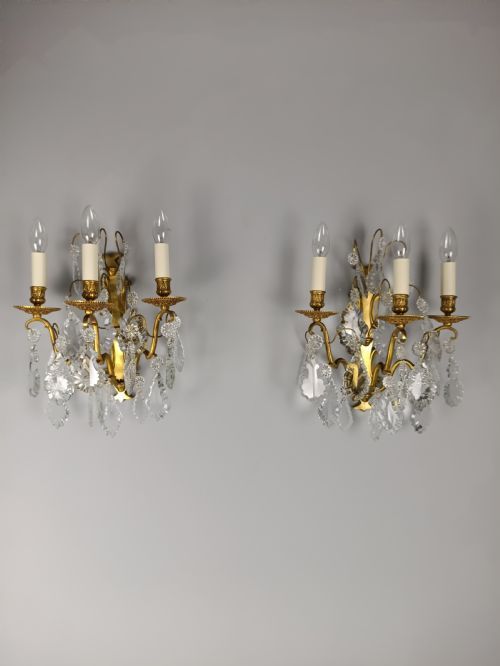
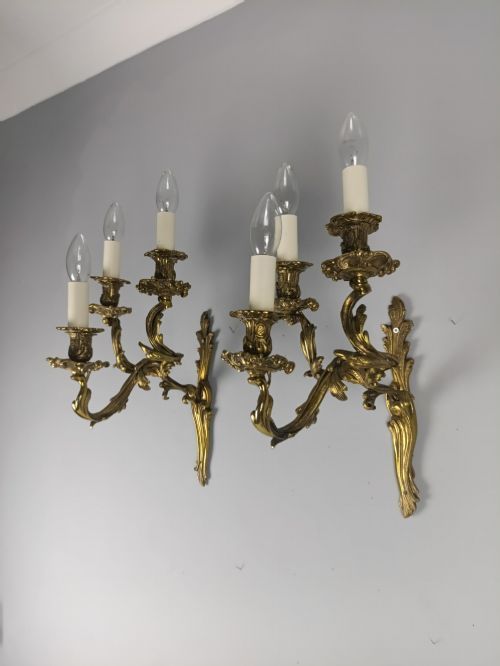
These antique three arm sconces bring three-branch illumination to walls through periods spanning the eighteenth to the twentieth centuries.
Antique Three Arm Sconces
Antique three arm sconces provide multi-point wall illumination using branches or arms projecting from a central backplate. The selection centres heavily on French origins, alongside English and Italian examples.
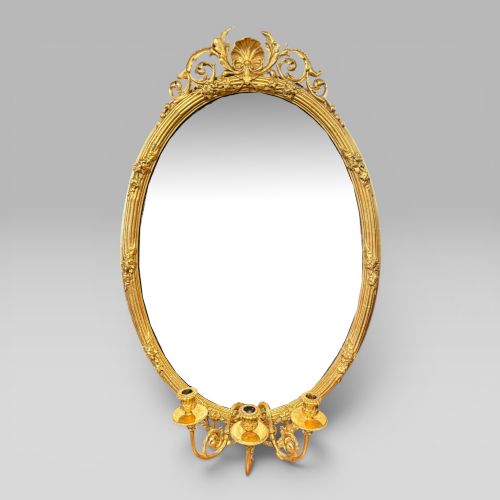
The inventory demonstrates forms extending from wall lights and wall sconces to mirrored girandole plates. Pieces date across the eighteenth century, the Victorian era, and into the 1920s and 1930s.
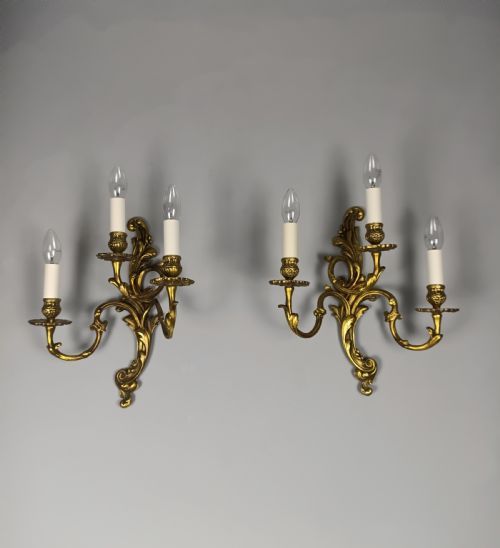
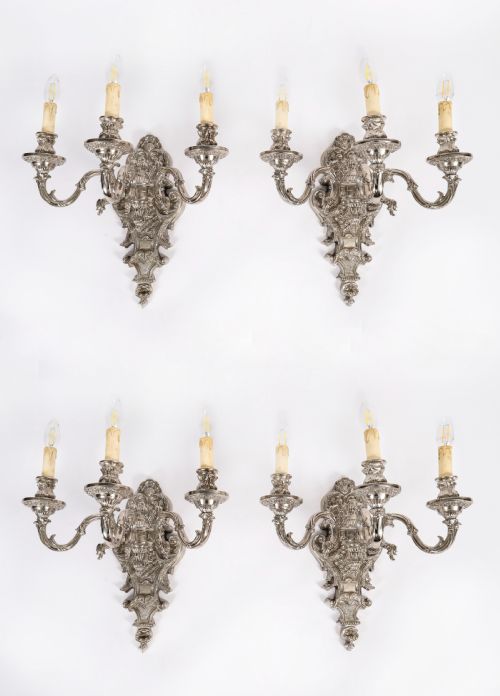
Sets frequently appear alongside pairs, offering matched lighting arrangements for larger rooms. Common configurations utilise three branches to support candle-style fittings or electrical conversions.
Materials and construction
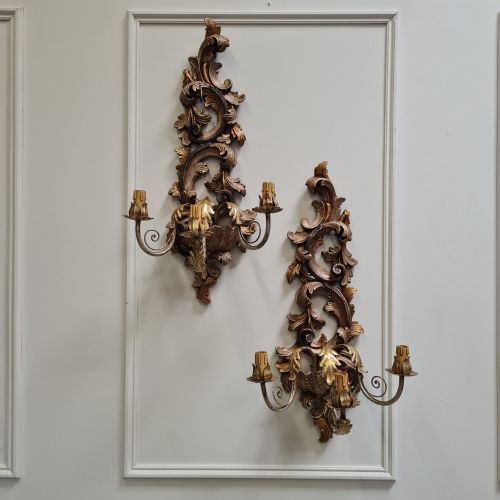
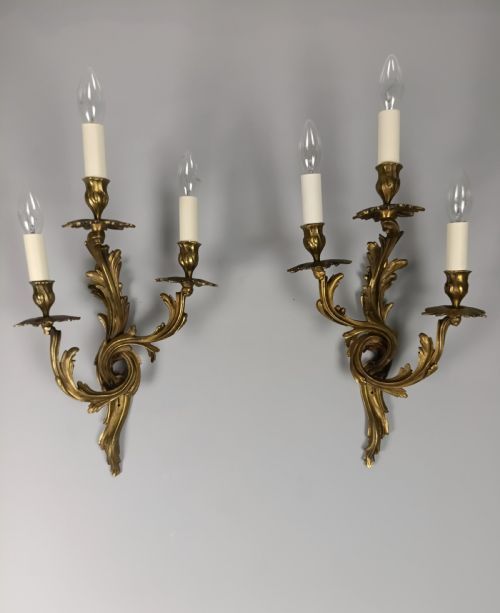
Metal fabrication dominates the construction, utilising brass, bronze, gilded brass, gilt bronze, and ormolu. Artisans also employed wrought iron, silver plating, and patinated brass to shape the branching frames.
Carved wooden elements appear in giltwood and wooden wall lights, often paired with mirrored glass or crystal drops. Gilding techniques enhance the metallic surfaces across French Rococo and Florentine styles.
Some sconces spent a century holding gas flames before welcoming the twentieth-century electrician's wire.
Assessing craftsmanship
Distinctions in quality arise from the crispness of the casting and the depth of the chasing on bronze and brass work. Finer examples display sharp, hand-finished ornamentation rather than soft surface detail.
The integration of crystal elements and the execution of the gilding further divide standard production from superior output. Carved wooden giltwood sconces rely on the precision of the underlying woodwork and the fidelity of the gilding application.
The Antique Three Arm Sconces Glossary
- Ormolu
- Gilded bronze produced through a mercury amalgamation technique, creating a rich golden surface finish on decorative metalwork. This process was common in French decorative arts.
- Girandole
- A branched wall light incorporating a mirror backplate to reflect and amplify the illumination from candles or bulbs. These fixtures frequently feature ornate carved or gilded frames.
- Rococo
- A decorative style characterised by asymmetrical scrollwork, C-scrolls, and organic plant motifs. It appears widely on French sconces from the eighteenth and nineteenth centuries.
- Applique
- A French term for a wall-mounted light fitting or sconce. The descriptor is often applied interchangeably with wall lights in period listings.
- Giltwood
- Timber that has been coated with a thin layer of gold leaf or gold paint. This material is prominent in Florentine and Venetian wall light production.
Antique Three Arm Sconces: Frequently Asked Questions
How do I install antique sconces?
Many surviving wall lights arrive rewired and ready for installation by a qualified electrician. Surface mounting brackets secure the backplate directly to wall studs or conduit boxes.
Heavier cast bronze or carved wooden pieces require appropriate wall anchors to support their weight safely. Professional mounting ensures the fixture sits flush against the wall surface.
What periods do these sconces date from?
The available pieces span multiple centuries, ranging from eighteenth-century items down to the 1920s and 1930s. Victorian and late nineteenth-century examples also appear regularly within the selection.
Stylistic cues such as Rococo revival ornamentation or Louis XVI motifs help align pieces with their respective manufacturing eras.
Where were these wall lights made?
French workshops produced a significant proportion of the recorded inventory, particularly in gilded bronze and brass. Italian makers are represented by Florentine and carved giltwood designs.
English manufacture accounts for traditional brass and bronze variants, including Victorian gasolier adaptations.
How do I clean gilded metal surfaces?
Dusting with a soft, dry brush prevents the accumulation of particles without disturbing delicate patinas or gilding. Avoid using abrasive commercial metal cleaners on ormolu or gilded surfaces.
Moisture should be kept away from antique wiring and porous wooden components during routine maintenance.