

Vintage French Brass Sconces
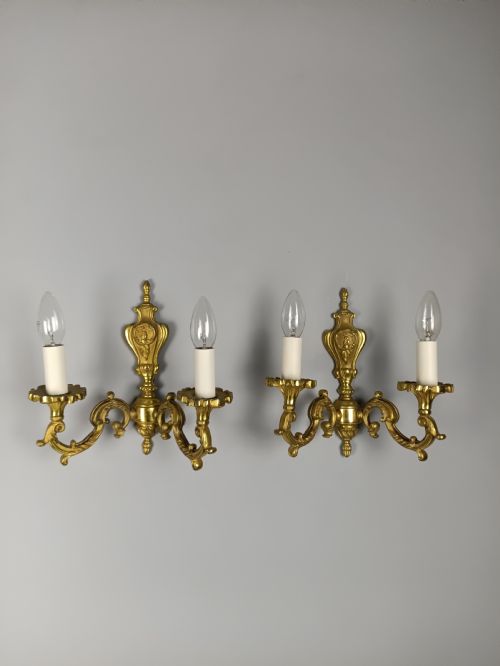
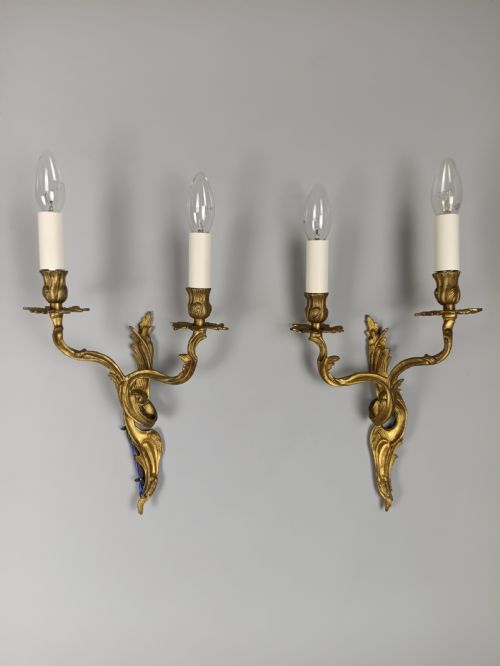
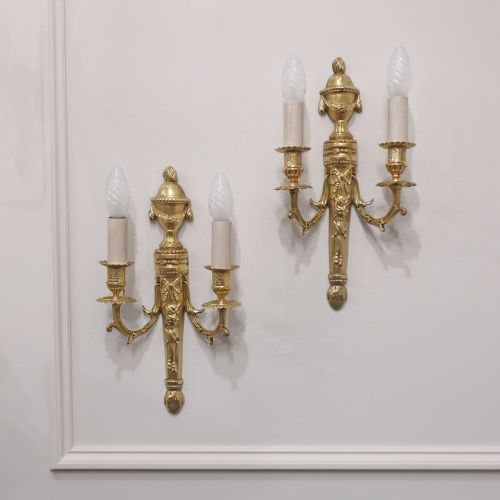
Vintage French brass sconces bring period warmth to a room through cast metal, gilt surfaces and traditional illumination.
Vintage French Brass Sconces
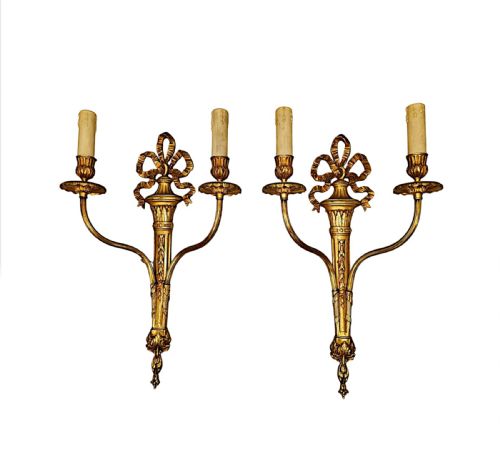
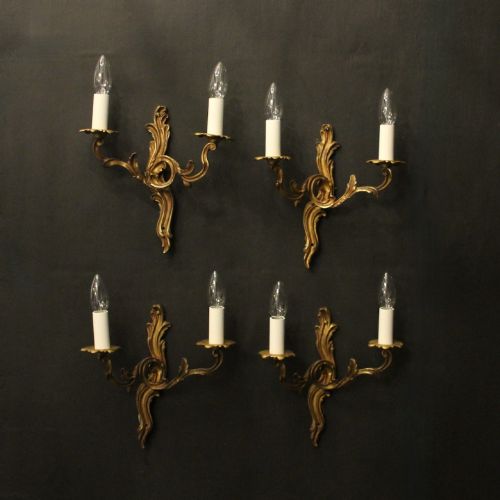
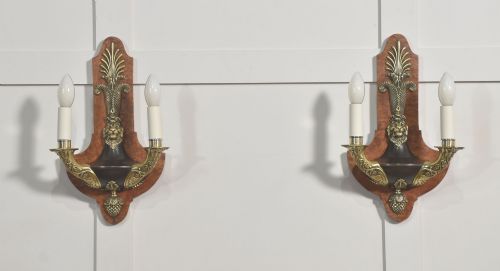
Vintage French brass sconces are wall-mounted lighting fixtures designed to hold candles or electrical bulbs, originating primarily from the nineteenth and early twentieth centuries. These pieces reflect historical design movements such as Rococo, Empire and Louis XVI, incorporating classical motifs and ornate castings.
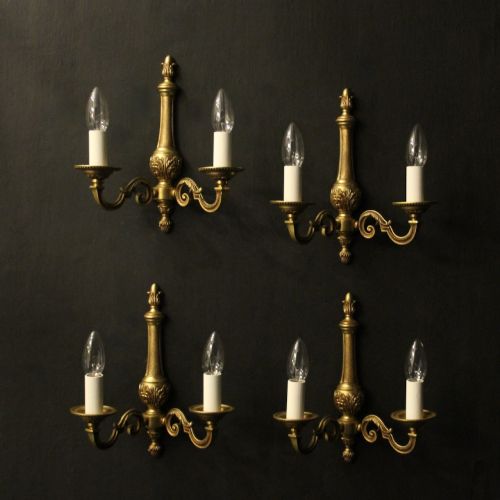
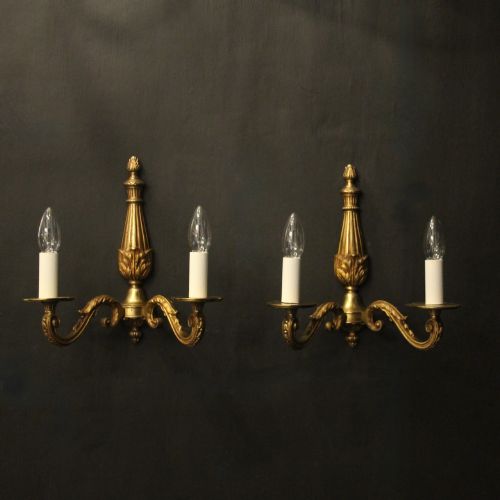
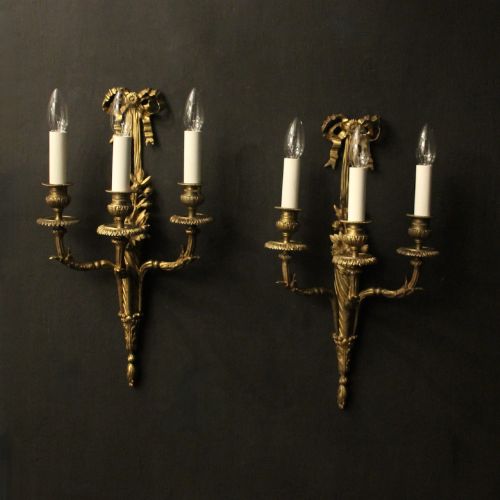
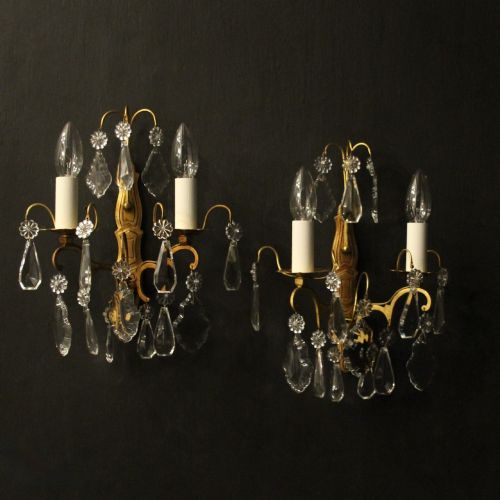
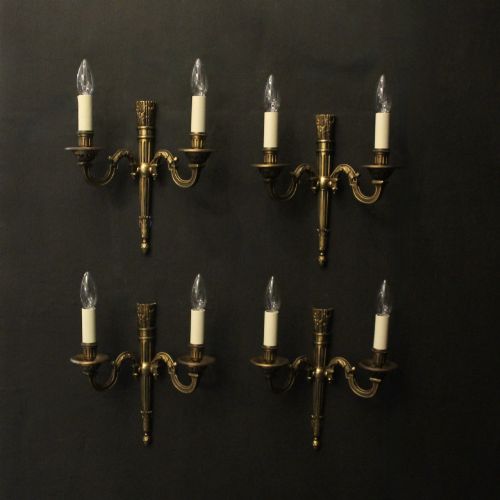
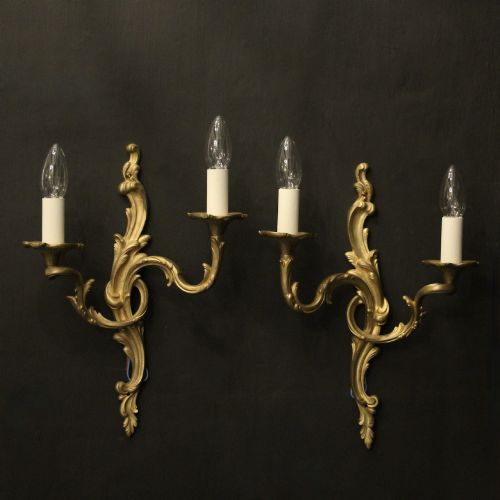
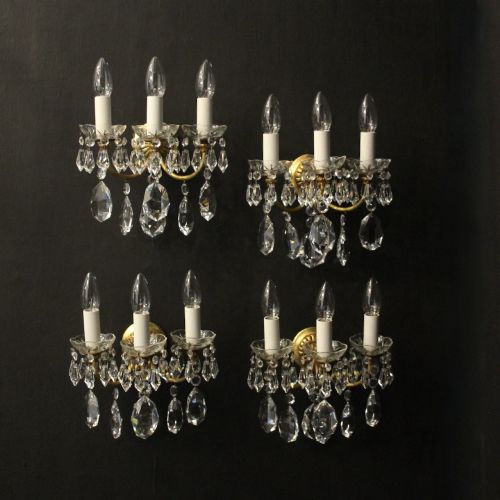
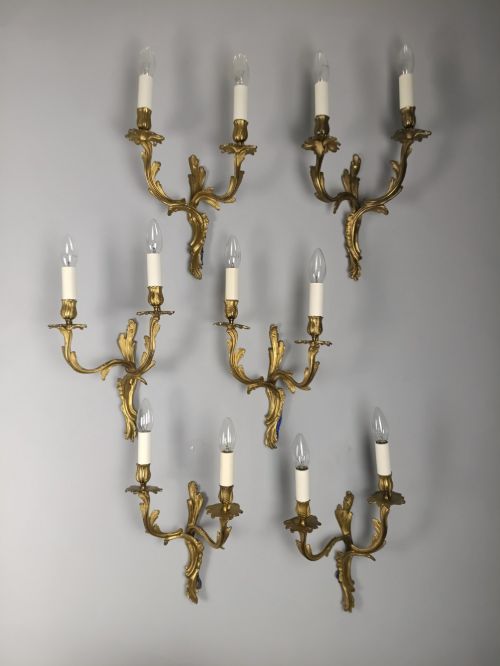
Buyers browsing this selection most frequently encounter matching pairs or larger sets from the 1920s and 1930s constructed in gilded brass, bronze or ormolu. Twin-arm and triple-arm configurations dominate the available items, often complemented by cut crystal drops or ribbon details.
The assortment spans diverse forms including convex half lanterns, wall mirrors and appliques alongside standard wall lights. While many date to the interwar decades, nineteenth-century examples appear alongside Edwardian and Georgian-influenced designs.
Materials and construction methods
Foundries produced these wall lights using brass, bronze and gilt metal, applying surface gilding or ormolu to achieve a bright, reflective finish. Metal components were cast in sections, chased by hand to sharpen details, and assembled with threaded screws or pins.
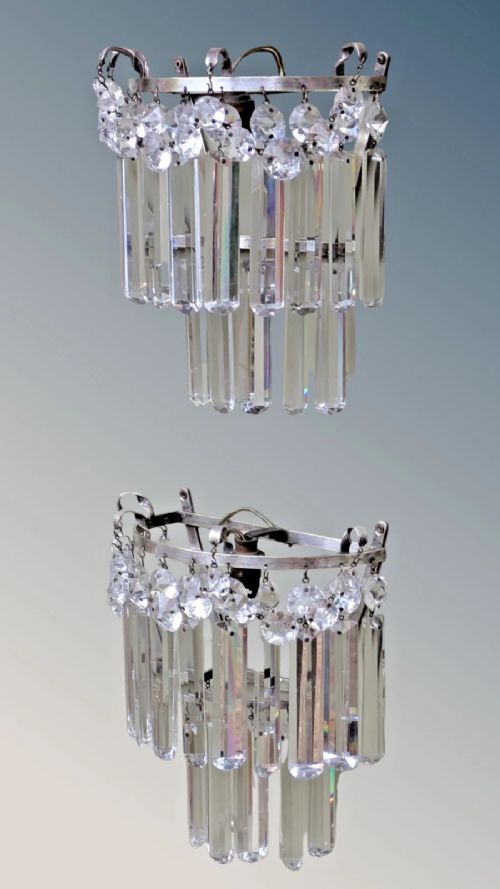
Glass elements such as cut crystal drops and bobeches were integrated into many designs to refract the light from candles or early electrical fittings. Selected models also incorporate decorative elements like porcelain flowers, onyx or burr walnut panels.
Materials span plain metal, standard brass, gilded brass, ormolu, and gilt bronze, frequently augmented with cut crystal and porcelain.
Evaluating the standard of execution
The crispness of the cast ornamentation dictates the visual hierarchy of these fixtures, distinguishing finely chased bronze models from simpler pressed brass alternatives. Superior examples retain their original fire gilding or heavy gold leaf with minimal rubbing, whereas lower tiers show duller plated surfaces.
Weight and structural rigidity set apart substantial cast pieces from lighter, more utilitarian counterparts. The complexity of the arm configurations, from single stems to elaborate multi-arm Rococo scrolls, reflects the original ambition of the maker.
Casier
The Vintage French Brass Sconces Glossary
- Ormolu
- A technique of applying finely ground high-carat gold to a bronze object using a mercury amalgam, followed by firing to leave a rich metallic coating. This finish was widely employed on French decorative items from the eighteenth century onwards.
- Applique
- A wall-mounted light fixture designed to hold candles or lamps, functioning synonymously with a wall sconce. The term frequently appears in descriptions of continental European lighting.
- Champlevé
- An enamelwork technique where recesses are carved into the metal surface and filled with vitrified paste before firing. It appears on nineteenth-century decorative metalwork associated with these lighting fixtures.
- Bobeche
- A small collar or disc fitted beneath the candle nozzle to catch melting wax. These glass or metal rings are often paired with hanging crystal prisms.
- Rococo
- A decorative style characterised by asymmetry, scrollwork, and naturalistic plant motifs. This aesthetic heavily influences many of the nineteenth- and twentieth-century French wall lights found in the collection.
Vintage French Brass Sconces: Frequently Asked Questions
How do I wire old sconces?
Most vintage wall lights require modern electrical rewiring to meet current safety standards. A qualified electrician can thread modern flex through the existing internal channels without altering the exterior metalwork.
Original backplates often feature mounting holes that align with standard wall brackets, though professional installation ensures the weight of solid bronze or brass fixtures is securely supported.
Were these originally for candles or electricity?
The pieces in this category span a transitional era when both candle power and early electricity were utilised in domestic interiors. Many surviving examples from the 1920s and 1930s were manufactured specifically for electrical wiring, whilst nineteenth-century models typically started life holding candles.
Converted pieces often show interior adaptations where electrical fittings replaced original drip pans or prickets. Examining the internal channels and backplates usually reveals whether electrification was original or added later.
How do I clean gilded brass?
Gilt surfaces require gentle maintenance to preserve the delicate gold leaf or ormolu layer beneath. Dusting with a soft, dry brush prevents dirt accumulation without wearing away the metallic finish.
Harsh chemical polishes must be avoided entirely, as they strip away the historic gilding and expose the base metal. Warm water with a mild, neutral soap applied on a damp cloth is sufficient for light cleaning.
What is the difference between ormolu and gilt brass?
Ormolu specifically denotes mercury gilding applied to a bronze substrate, producing a deep, luminous golden tone characteristic of high-end French decorative arts. Gilt brass typically involves a brass base with a secondary metallic coating applied via various historical or modern plating methods.
Bronze provides a heavier, more rigid foundation for intricate casting than brass, allowing for sharper chisel work during the finishing process. Both materials were used extensively across different price points in French lighting.