


Pair of Open Salts
A pair of open salts brings distinct period character to a table setting, offering small decorative vessels designed to hold loose salt before modern shakers took over.
Pair of Open Salts
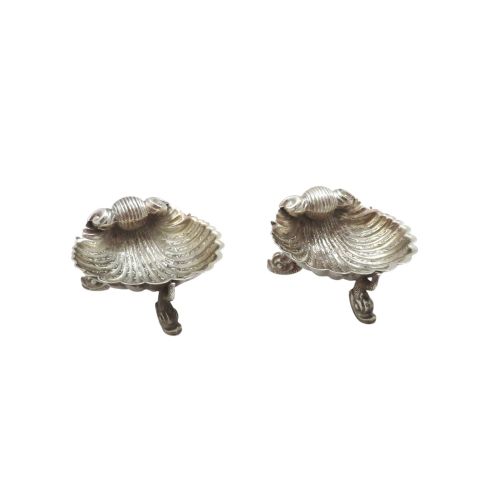
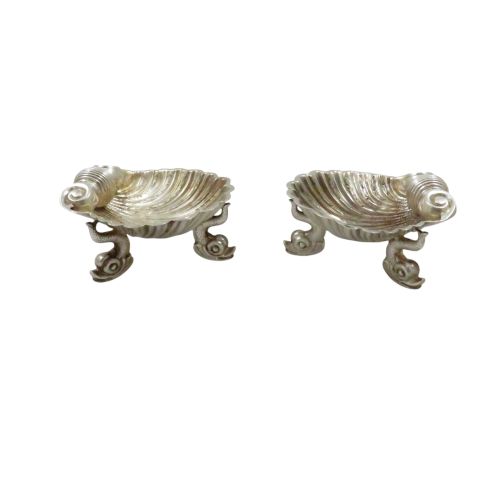
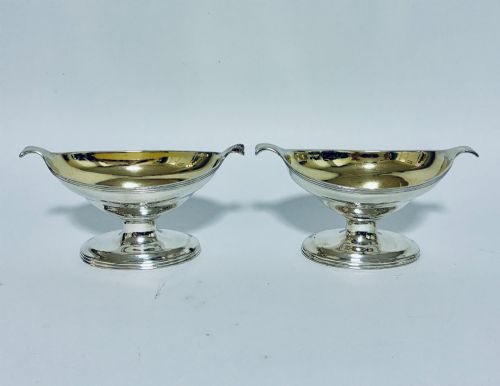
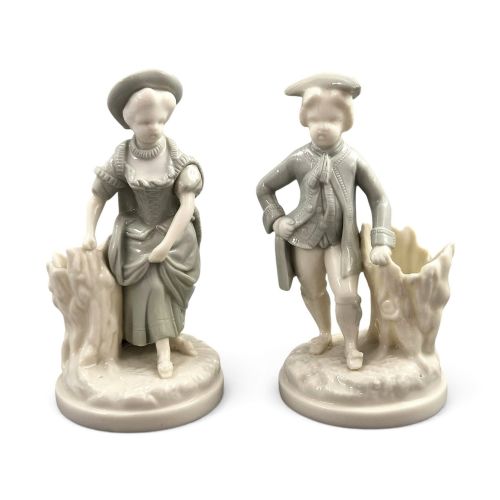
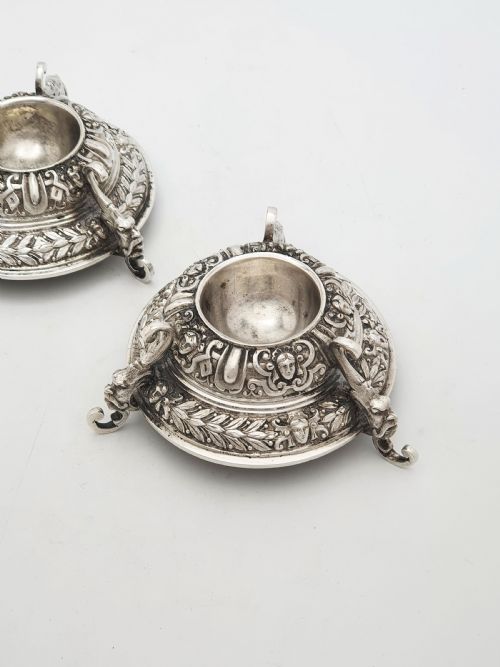
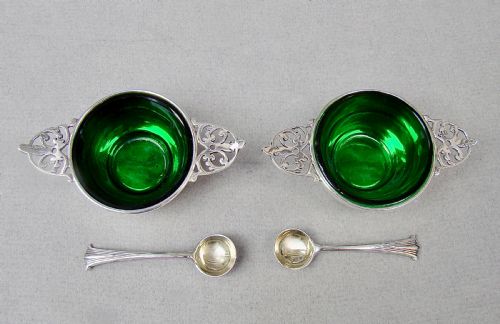
When you search for a pair of open salts, you encounter small decorative tableware items designed to hold grains of salt for individual diners at the dining table. These pieces emerge across Georgian, Victorian, and Edwardian periods, taking forms ranging from simple boat shapes and cauldrons to elaborate figural designs, bird motifs, and novelty quaichs.
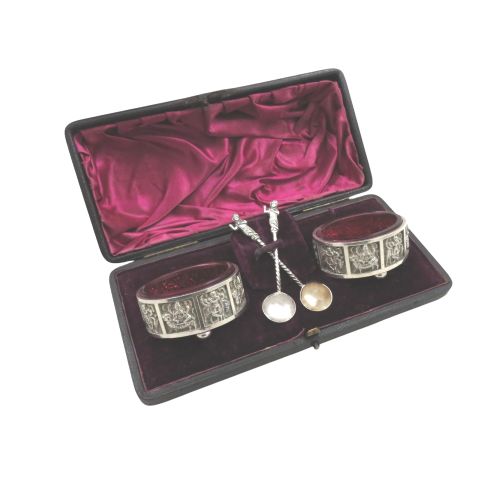
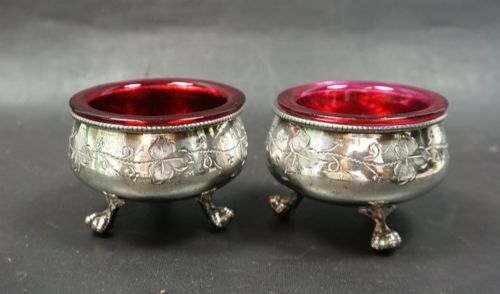
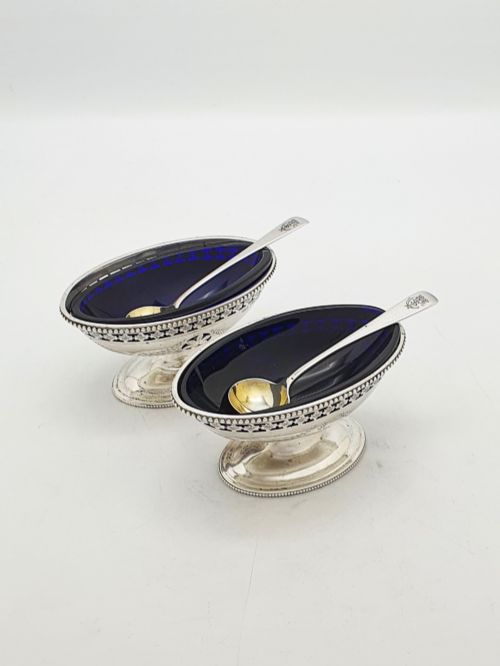
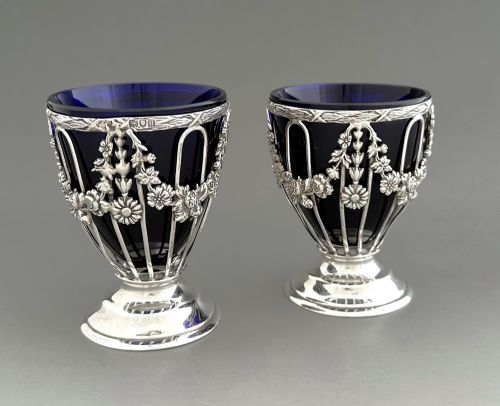
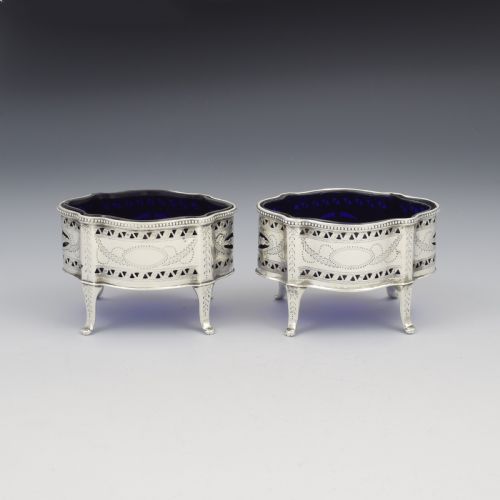
The version you are most likely to meet on this page is sterling silver, often resting upon small feet or pedestals, frequently accompanied by contrasting coloured glass liners. Examples span simple silver wirework condiment tubs to pierced serpentine table salts and cast metal figures such as dolphins, eagles, and swans.
Originating largely from British workshops and silversmiths spanning the eighteenth through the early twentieth centuries, these salt cellars reflect the changing tastes of dining etiquette. Alongside silver, variations include timber capstan forms, ironstone china, and silver plate with cranberry or cobalt glass inserts.
Materials and methods of construction
Silversmiths utilised sterling silver and silver plate, shaping metals through casting, piercing, and hand-hammering to produce sturdy bodies with intricate pierced fretwork or smooth polished surfaces. Many designs incorporate contrasting materials, pairing metal frames with blown or moulded glass liners in cobalt blue or cranberry hues.
Earlier eighteenth-century pieces often relied on heavier cast silver construction with sturdy bases like the traditional trencher salt, while later Victorian and Edwardian examples embraced elaborate repoussé ornamentation, gilding, and novelty figural casting representing birds, shells, and garden wheelbarrows.
Listings feature sterling silver, silver plate, ironstone, and timber, spanning Georgian, Victorian, and Edwardian eras.
Distinctions in quality
Quality rests upon the crispness of the chasing, the weight and gauge of the silver, and whether original liners and matched spoons remain intact. Superior examples display fine hand-piercing, clear hallmarks denoting maker and year, and sculptural casting without softness in the detail.
The integration of materials dictates distinction, where properly fitted original cobalt or cranberry glass liners complement the metal framework rather than acting as later replacements. Maker attribution to notable silversmiths further elevates the standing of an individual pair.
Josiah Williams And Co·David Hennell·John Edmonstone·Edward Wood·Vale Brothers And Sermon·Rebecca Emes·Christofle And Baccarat
The Pair of Open Salts Glossary
- Trencher salt
- A heavy, solid salt cellar, often square or octagonal, designed to sit directly on the dining table during the seventeenth and eighteenth centuries before elevated pedestal salts became fashionable.
- Capstan salt
- A table salt shaped like a ships capstan, tapering inward from a wide base to a narrower top, frequently constructed from turned timber such as pollard oak.
- Quaich
- A traditional Scottish two-handled drinking vessel scaled down in these listings to serve as a novelty salt cellar.
- Liner
- A removable insert made of coloured glass, usually cobalt blue or cranberry, fitted inside open silver wirework or pierced metal salt cellars to protect the metal from corrosion.
- Hallmark
- An official stamp applied to precious metals indicating the standard of purity, the assay office, the maker, and the year of manufacture.
Pair of Open Salts: Frequently Asked Questions
What are open salts used for?
Open salts served as small table vessels holding loose salt for guests to spoon onto their plates before the invention of the salt shaker.
Diners used tiny accompanying salt spoons to transfer small quantities of salt beside their food during formal meals.
How do I clean antique silver salts?
Silver salts require gentle cleaning with a soft cloth and proprietary silver polish formulated to preserve antique patination and delicate hallmarks.
Glass liners should be removed and washed separately in warm soapy water to avoid moisture damage to any underlying metal or cement.
Are original glass liners important?
Original glass liners significantly enhance the authenticity and completeness of open salts, particularly when paired with intricate pierced silver frames.
Replacements function adequately for display, but matching period glass adds historical integrity to collector pieces.
How can I tell the period?
Hallmarks stamped on the silver provide the most reliable method for dating, identifying the exact assay office and year of manufacture.
Stylistic shifts, such as Georgian simplicity versus Victorian ornate figural casting or Edwardian wirework, also offer clear chronological indicators.
Can I use them on my dining table?
These small vessels adapt readily to modern dining use as salt cellars, nut bowls, or decorative table accents.
Careful handling protects delicate glass inserts and intricate silver or ceramic structures from accidental knocks during meals.