


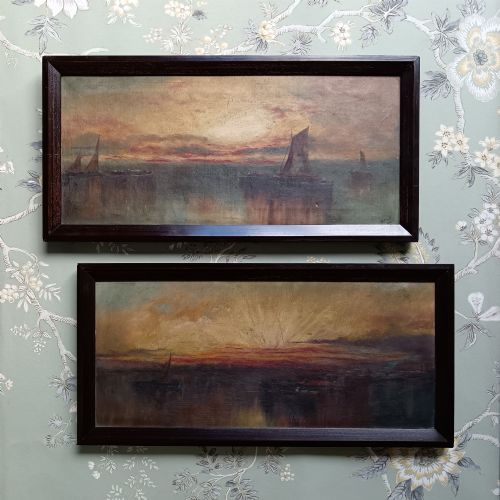


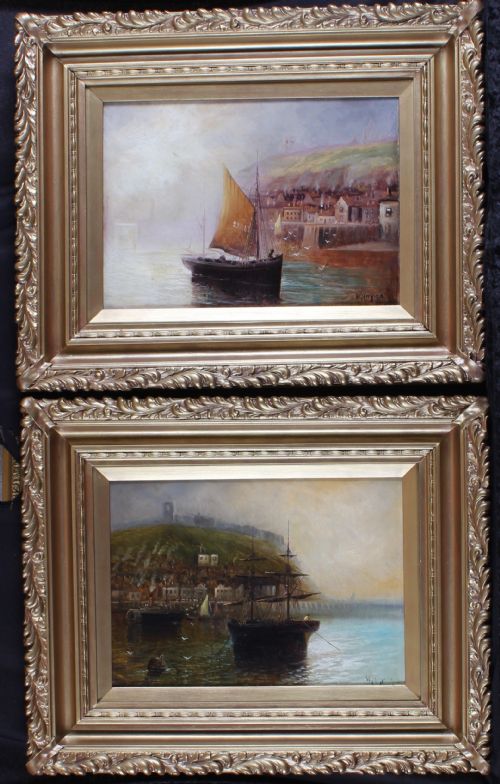


Pair of Maritime Paintings
A pair of maritime paintings brings the motion of the nineteenth-century sea and coastal shipping directly onto your wall.
Pair of Maritime Paintings
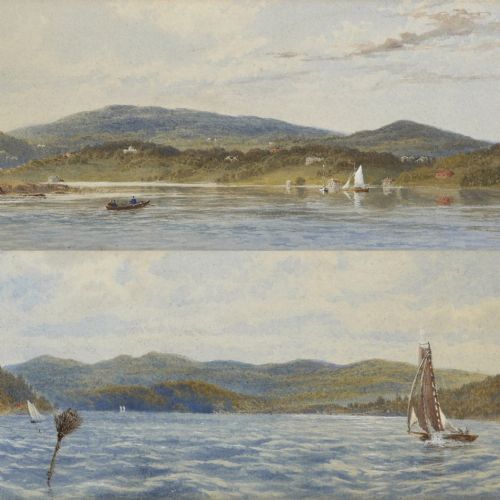
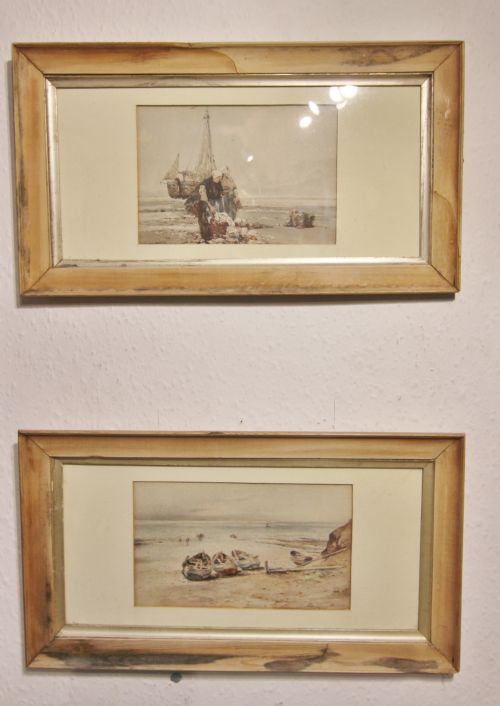
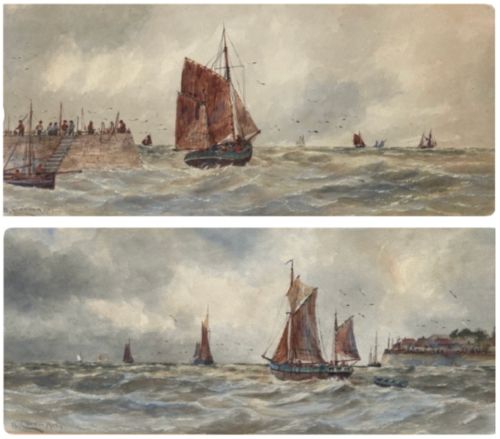
A search for a pair of maritime paintings opens up matching works created during the nineteenth century, the Victorian period, and into the early twentieth century. These duos often capture coastal views, fishing boats, and open sea shipping scenes designed to balance each other in a room.
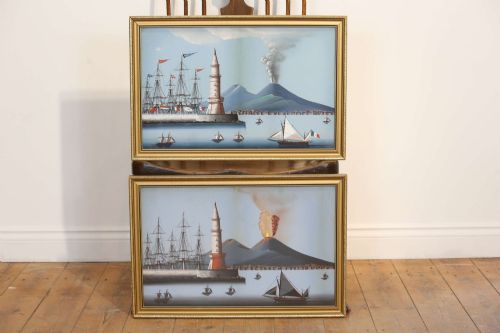
The pieces on this page span oil paintings on canvas or board, delicate watercolours, gouache views, and enamel plaques. Common subjects range from British fishing vessels and bustling harbours to Neapolitan scenes and sunrise or sunset seascapes.
Many of these works arrive housed in their original frames, including gilt gesso, pine, and ebonised moulding. The pairing typically links two contrasting light conditions, such as morning and evening, or two complementary coastal locations.
Materials and techniques
Artists painted these scenes using oil paint or watercolour applied to canvas, paper, wood, or prepared board. Oil on canvas allows for textured waves and dramatic skies, whilst watercolour and gouache capture bright coastal light and clear maritime detail on paper.
Frames utilise wood, glass, and gold leaf, with gesso mouldings shaped to match the period aesthetic. Enamel plaques offer an alternative vitreous surface fired to preserve detailed narrative imagery of coastal life.
Pair of Maritime Paintings Retail Price Guide 2026
Typical asking prices for pair of maritime paintings among the pieces listed under this phrase on Sellingantiques today, from the lower quarter to the upper quarter. They describe what is for sale here now, not the wider market.
Sailors departing and returning find themselves immortalised not just on canvas, but fused in shiny enamel plaques.
What separates the works
Quality rests upon the artist's ability to render the movement of water, the rigging of vessels, and the shifting atmosphere of the sky. A stronger pair demonstrates confident brushwork and precise control of light across both canvases or sheets.
The preservation of the original framing and the condition of the pigment matter significantly. Intact gilt gesso or ebonised wood frames that complement the paintings without later alteration elevate the overall integrity of the pair.
William Cannon·B. Nash·John Moore of Ipswich·Abraham Hulk I·Gustave De Bréanski·Adrian Van Porten·George Dodgson Callow·Leslie Rackham·Jan van Couver·Thomas Bush Hardy·Ebeneezer Colls·Hubert Thornley·John James Wilson·Walter Meegan·Pieter Cornelis Dommersen·John Mc Ghie·Francis Moltino·Walter Williams·Gordon Meadows
The Pair of Maritime Paintings Glossary
- Gouache
- An opaque watercolour paint that dries to a matte finish. It allows artists to build solid areas of colour and bright highlights in maritime scenes.
- Gesso
- A plaster-like mixture applied to wooden frames before gilding. It provides a smooth base for intricate moulded decoration.
- Giltwood
- Wood carved and covered with thin gold leaf or metal powder. This finish is typical of period frames designed to catch the light around a painting.
- Ebonised
- Wood treated to imitate ebony, producing a dark, dense black finish. This technique was popular for framing nineteenth-century works to provide high visual contrast.
Pair of Maritime Paintings: Frequently Asked Questions
How should I hang a pair?
Hang the two works at eye level with a consistent gap between them to create a balanced display. Matching frames allow the pair to anchor a wall space effectively.
Position them in a room with stable humidity away from direct sunlight to protect the paper, canvas, and original gilt frames.
What subjects do these pairs show?
These pairings frequently depict British and European coastal scenes, fishing boats at sea, and harbour shipping. Many contrast dawn with dusk or calm waters with stormy weather.
Specific locations include the Medway, the Thames, Scarborough, Portsmouth, and Naples, recorded through nineteenth and early twentieth-century brushwork.
Are original frames common?
Many listings retain their period frames, such as original gilt gesso, pine, or ebonised surrounds. These frames were built specifically to house the matching artworks together.
Checking the frame construction helps confirm the period and keeps the pair in its authentic historical presentation.
How do I care for watercolour pairs?
Watercolour and gouache works require protection behind glass to prevent atmospheric damage to the paper surface. Keep them out of direct sunlight to avoid fading the delicate pigments.
Maintain a stable indoor climate to prevent warping of the paper or cracking of the protective wooden frames.