


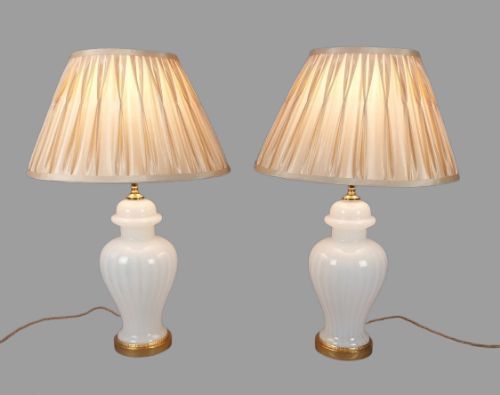
Pair of Glass Shades
These pair of glass shades offer matched illumination and period character, bringing balanced light and period design to interior spaces.
Pair of Glass Shades
A pair of glass shades unites matching diffusers designed to fit lighting fixtures like wall lights, pendants, and table lamps. When you search for pair of glass shades, you encounter items intended to balance symmetrical rooms or mantelpieces.
The selections span Victorian, Edwardian, and Art Deco periods, pairing functional glass elements with mountings of brass, chrome, or gilt metal. Many examples emerge combined with oil lamps, gas wall lights, and pendant ceiling fixtures.
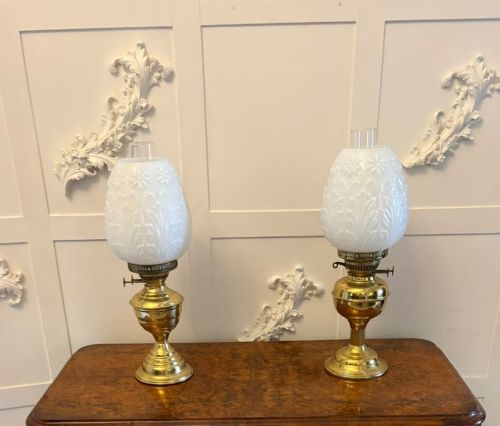
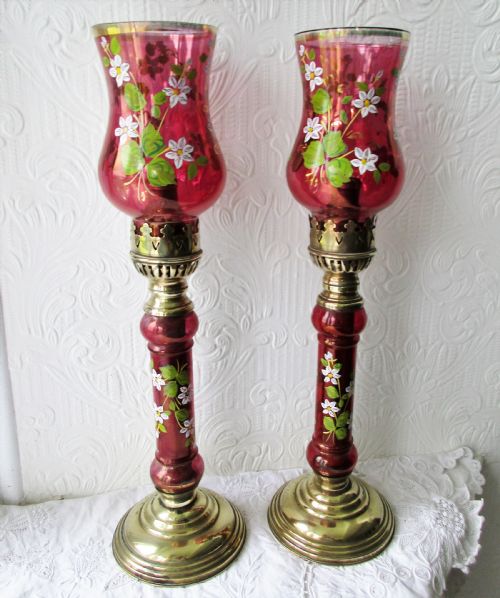
Opaline glass, frosted glass, and cranberry glass dominate the offerings, occasionally accompanied by cut glass or milk glass. These variations reflect domestic lighting needs across the nineteenth and twentieth centuries.
Materials and construction
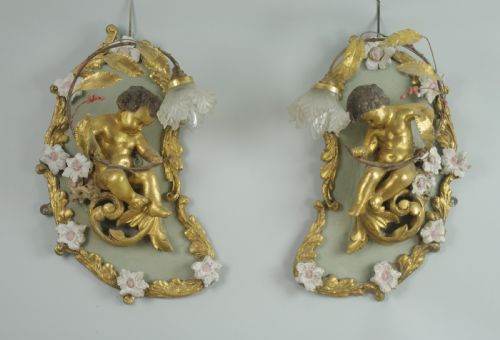
Makers shaped glass through blowing, moulding, or cutting techniques, producing forms from frilly edged milk glass to smooth opaline bowls and cloud-shaped wall light sconces. Metal components like turned brass, chrome, and ormolu provide structural support for the glass elements.
Individual pieces integrate brass frames, iron, and spelter structures to hold the diffusers securely. Decorative details rely on etched patterns, ruby staining, and mirrored mercury surfaces applied directly to the glass.
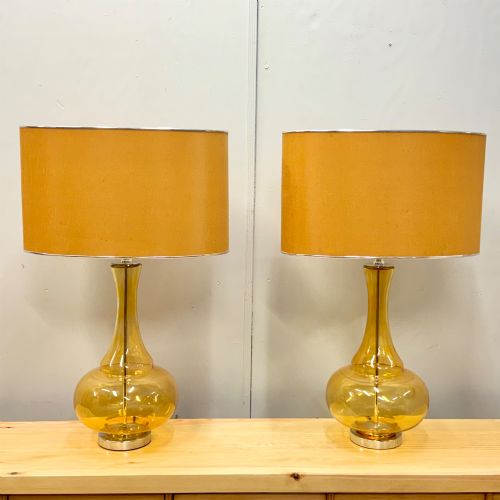
Listings feature brass, chrome, and copper hardware paired with opaline, frosted, cranberry, and mercury mirrored glass across several decades.
Assessing quality in matching shades
The standard of a pair of glass shades depends on the uniformity of the matching pair, the crispness of moulded or cut details, and the integrity of the glass colour. Superior examples maintain identical dimensions and even thickness across both items.
The sophistication of the paired metal mountings, whether cast brass, ormolu, or chrome, contributes to the overall distinction of the fixture. Original matched components demonstrate a higher degree of historical coherence than assembled sets.
Wild & Wessel·Meissen·Baccarat·F. & C. Osler·Murano
The Pair of Glass Shades Glossary
- Opaline glass
- An opaque or semi-translucent glass, often white, used extensively for soft light diffusion in Victorian and Edwardian shades. This material creates a milky appearance when illuminated.
- Cranberry glass
- A rich red glass produced by adding gold chloride to the molten mixture during manufacture. It appears frequently in nineteenth-century decorative lighting.
- Holophane
- A brand of scientific glass shades featuring prismatic ribs designed to direct and diffuse light efficiently. These items appear in early twentieth-century industrial and commercial contexts.
- Storm shade
- A tall cylindrical glass shade designed to protect a candle or oil flame from draughts. They are also known as hurricane shades.
- Spelter
- A zinc alloy frequently used as a substitute for bronze in decorative lamp bases and mountings during the nineteenth century. It is often painted to resemble bronze or brass.
Pair of Glass Shades: Frequently Asked Questions
How do I date a pair of glass shades?
Dating relies on combining the stylistic markers of the glass form with the manufacturing techniques of the accompanying metal hardware. Victorian examples often feature ornate brass and opaline or cranberry glass, whereas Art Deco pieces utilise chrome, bakelite, and geometric cloud shapes.
Examining the mounting construction, screw threads, and glass finishing methods provides further chronological context. Pieces from the 19th century display heavier turned brass, while 1920s and 1930s items lean toward streamlined metals and moulded patterns.
Can these shades be used with modern wiring?
Many antique wall lights and pendant fixtures accommodate modern electrical standards when handled by a qualified professional. The glass shades themselves serve as diffusers and fit standard galleries or holders.
Original lamp fittings often require rewiring to meet contemporary safety requirements before installation in domestic spaces. The underlying metal frames and galleries usually accept updated internal wiring without altering the exterior appearance.
What is the difference between opaline and milk glass?
Opaline glass is a translucent material that diffuses light with a soft glow, frequently found in French and English lighting from the 19th and early 20th centuries. It can display subtle colour variations when held to the light.
Milk glass is generally a heavier, opaque white glass popular in Edwardian and Victorian utilitarian pieces. Both materials were utilised extensively for pendant lights and oil lamp shades.
How should I clean antique glass shades?
Cleaning requires warm water and mild soap, avoiding harsh abrasive materials that can damage etched surfaces, mercury mirrored finishes, or applied colours. Removable shades should be detached from their brass or chrome frames before washing.
Care must be taken with delicate frilly edges and hand-painted or flashed details such as ruby etching. Drying the glass thoroughly with a lint-free cloth preserves the clarity of the material.