



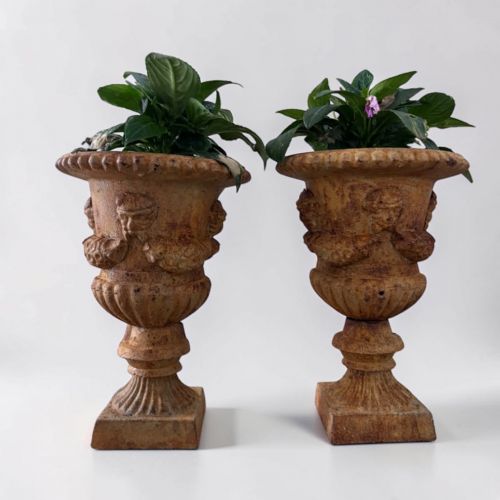
Pair of Garden Urns
A pair of garden urns brings classical balance to an outdoor space, anchoring terraces and pathways with enduring architectural presence.
Pair of Garden Urns
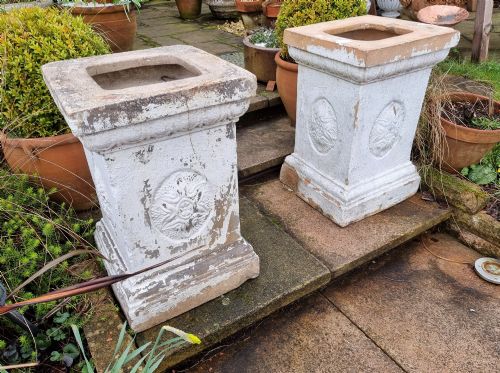
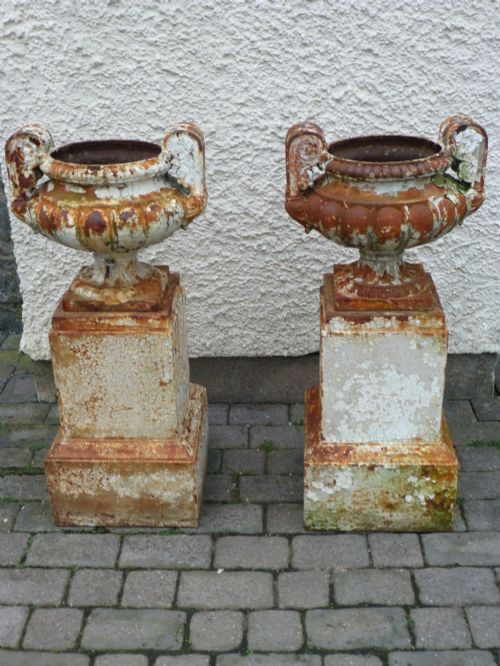
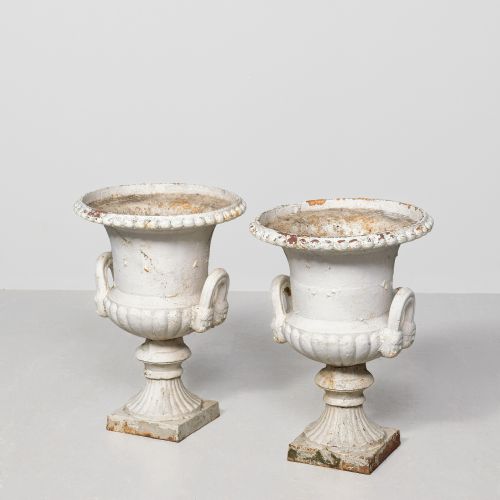
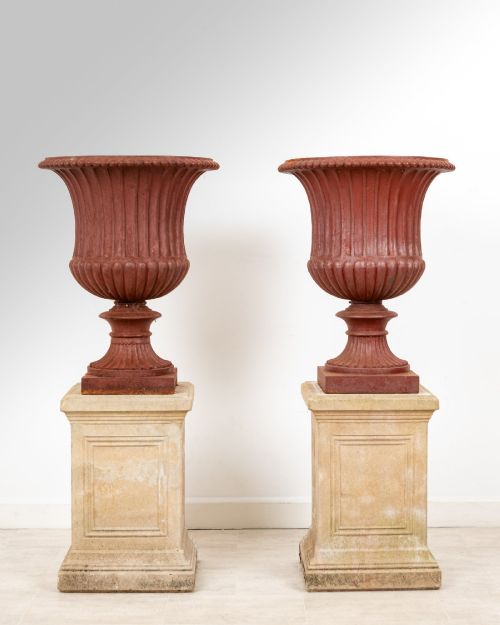
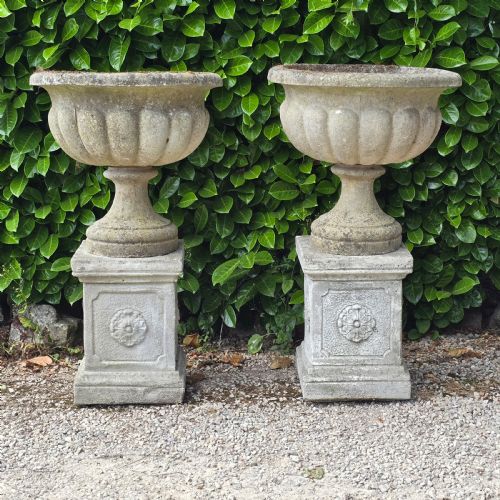
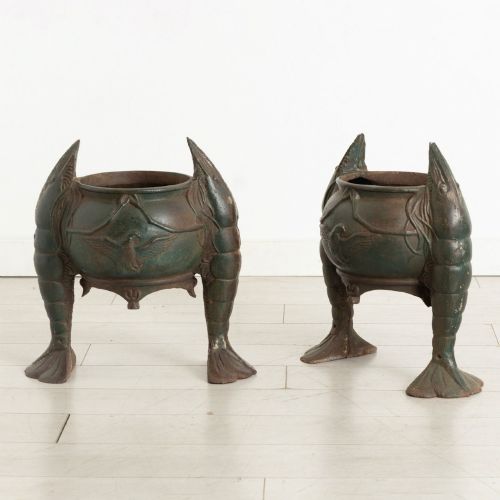
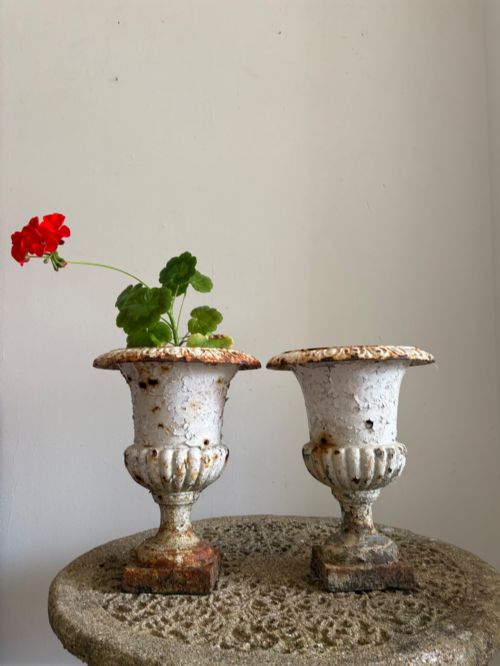
A pair of garden urns functions as matching focal points in landscape design, commonly positioned on stone plinths or flanking entranceways to create formal symmetry. These vessels appear frequently in heavy cast iron, often taking the classic Campana or Medici form associated with Victorian and nineteenth-century gardens.
The materials span resilient metals and earthy ceramics, including terracotta, reconstituted stone, and carved marble from various periods. Buyers encountering these listings will discover pieces ranging from compact table urns to monumental outdoor display vessels set upon original pedestals.
Casting and carving methods
Foundries produced many traditional examples using molten metal poured into moulds, resulting in heavy cast iron bodies with crisp fluting and classical relief details. Iron pieces frequently received protective coats of paint to withstand outdoor weathering over decades of use.
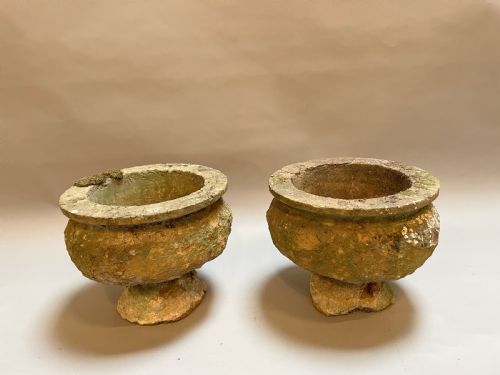
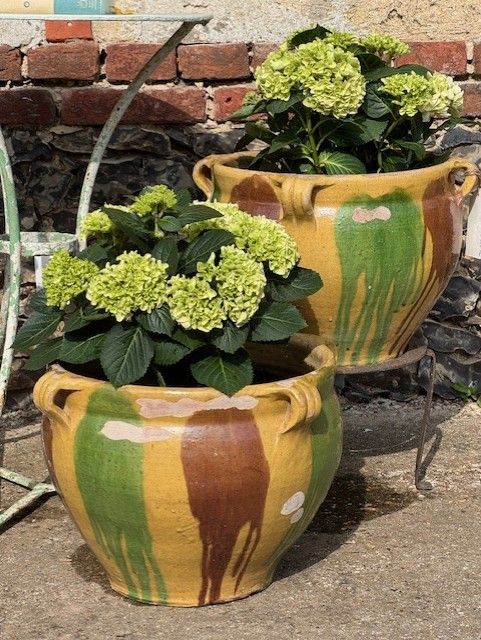
Makers also worked with porous terracotta and composite stone, pressing clay or bonded aggregates into large forms to create durable garden planters. Natural materials like white marble and soft stone were laboriously hand-carved, yielding distinctive textural variations across classical tazza shapes.
Pair of Garden Urns Retail Price Guide 2026
Typical asking prices for pair of garden urns among the pieces listed under this phrase on Sellingantiques today, from the lower quarter to the upper quarter. They describe what is for sale here now, not the wider market.
Judging the standard of execution
Quality rests upon the crispness of the cast or the depth of the carving, where finer examples display sharply rendered acanthus leaves and well-defined classical moulding. Superior metal vessels demonstrate substantial weight and thickness in the iron, indicating robust foundry work from periods such as the nineteenth century.
The integrity of matching pairs depends on uniformity in surface weathering and original proportions, as true pairs share identical foundry marks or hand-carved nuances. Surviving original elements, such as matching plinths, lids, or undisturbed historic paint surfaces, elevate the historical completeness of the ensemble.
Dunfermline Clay Company·Falkirk Carron foundry·Coalbrookdale·Compton Pottery·Hakusan
The Pair of Garden Urns Glossary
- Campana
- A bell-shaped garden urn featuring an everted rim and a deep bowl, frequently mounted upon a short stem and square foot.
- Tazza
- A shallow cup-shaped vessel raised on a high stem and base, often utilised in marble or cast iron for ornamental garden planting.
- Medici urn
- A large classical krater form with a fluted body and handles, taking inspiration from a famous antique marble vase found in Rome.
- Reconstituted stone
- A durable material made from crushed natural stone mixed with a binder, moulded into architectural garden ornaments and plinths.
Pair of Garden Urns: Frequently Asked Questions
How do I place a pair of garden urns?
These vessels suit formal focal points, such as flanking stone steps, terminating garden vistas, or standing at the entrance of a terrace. Matching pairs create immediate visual balance within planting schemes.
Positioning them on stone plinths or pedestals elevates the height and protects the base from damp ground and excessive soil moisture.
Can cast iron urns stay outside all winter?
Cast iron handles outdoor conditions well, enduring frost and rain when the metal has been properly protected with traditional paint finishes. Ensuring drainage holes remain clear prevents trapped water from expanding during freezing temperatures.
Heavier iron versions require minimal seasonal maintenance beyond checking the painted surfaces for weathering and touch-ups.
What is the difference between terracotta and stone?
Terracotta provides a porous, warm-toned ceramic body that breathes well for plant roots, developing an organic weathered patina over time. Stone and composite materials offer greater mass and rigidity, resembling classical architectural marble or carved masonry.
Both materials demand careful consideration of weight, particularly when selecting large nineteenth-century examples for garden terraces.