

Pair of French Candlesticks
A pair of french candlesticks brings disciplined symmetry and warm metalwork to a mantelpiece, offering period decorative utility from centuries past.
Pair of French Candlesticks
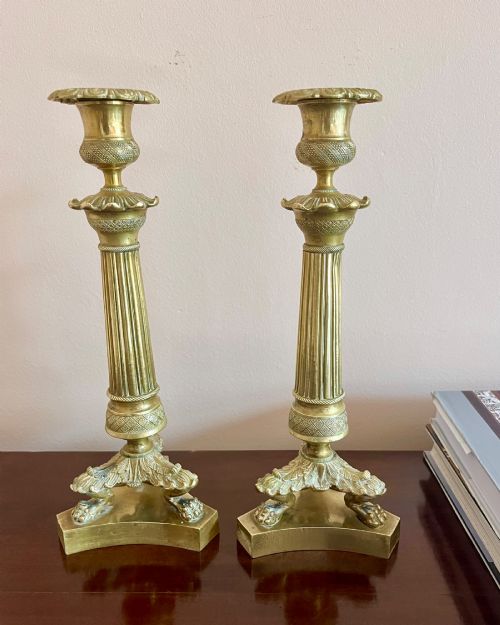
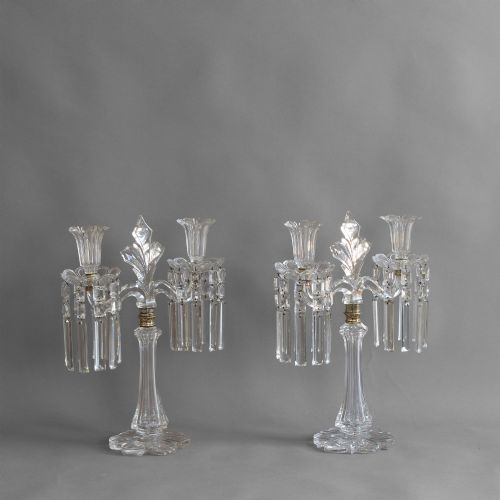
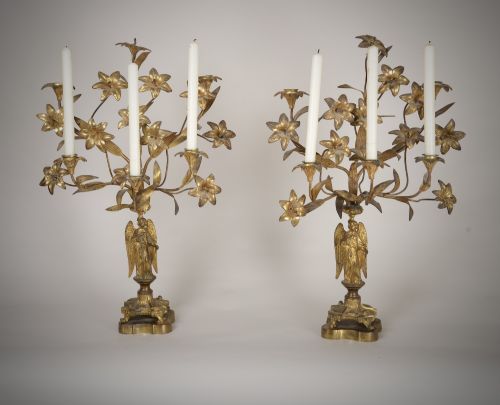
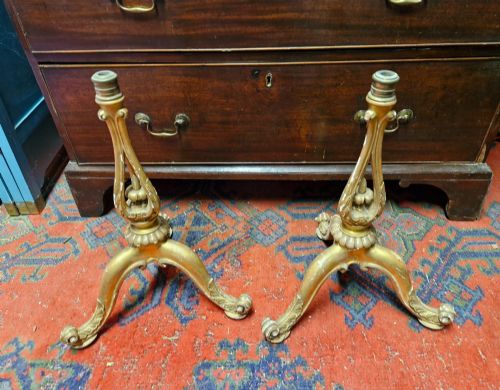
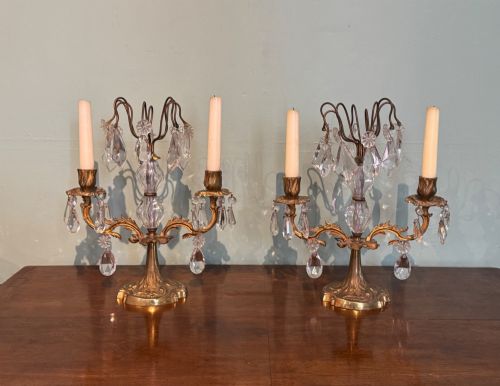
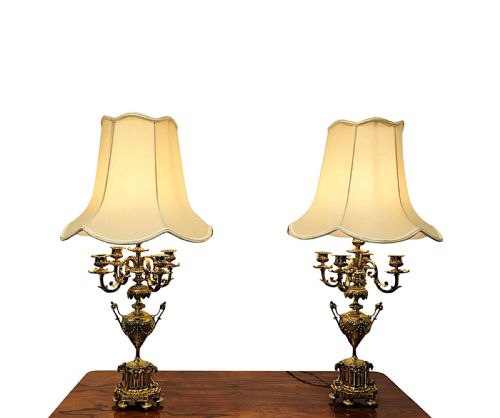
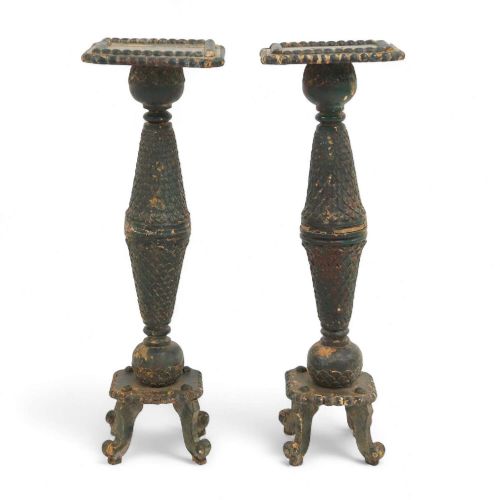
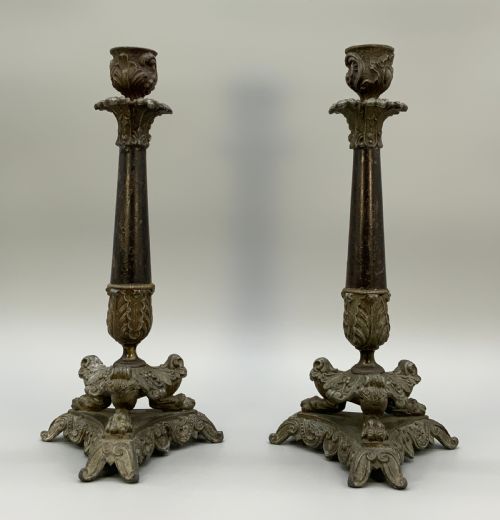
A pair of french candlesticks comprises matching candle holders or multi-branch candelabra originating from French workshops, spanning classical revival styles like Louis XVI and Empire to later Rococo and Victorian interpretations.
Most examples encountered on this page date from the nineteenth century, utilising cast metals and patinated finishes designed to illuminate formal reception rooms.
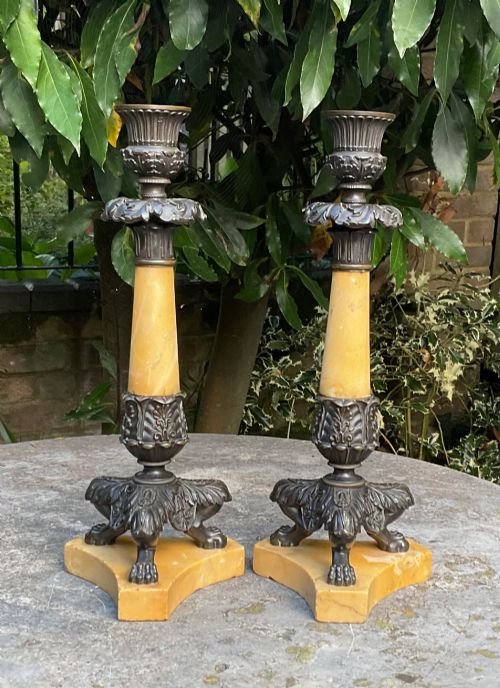
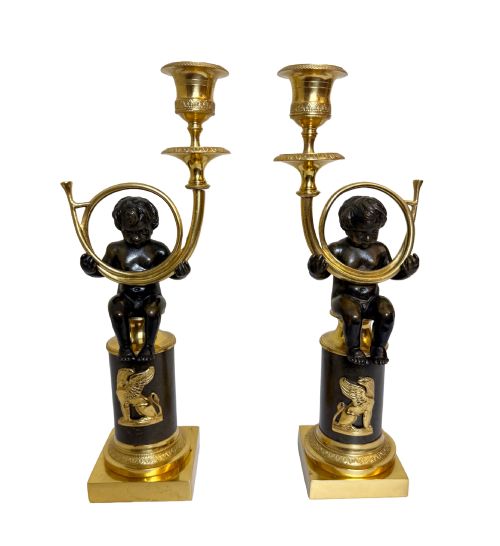
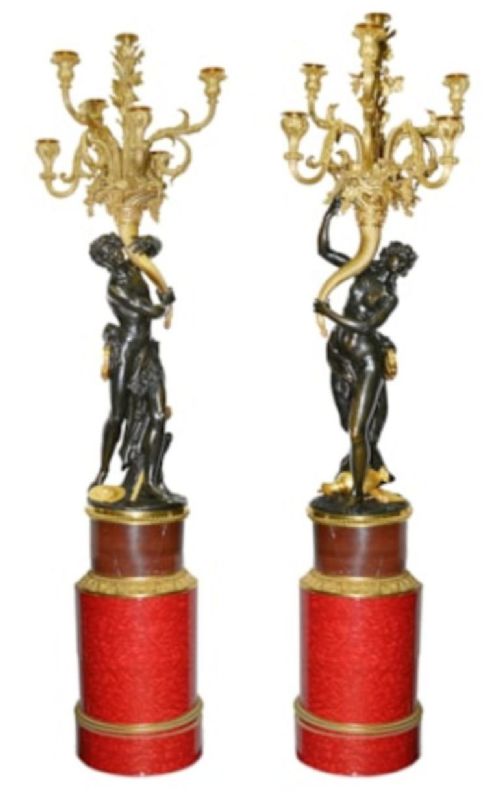
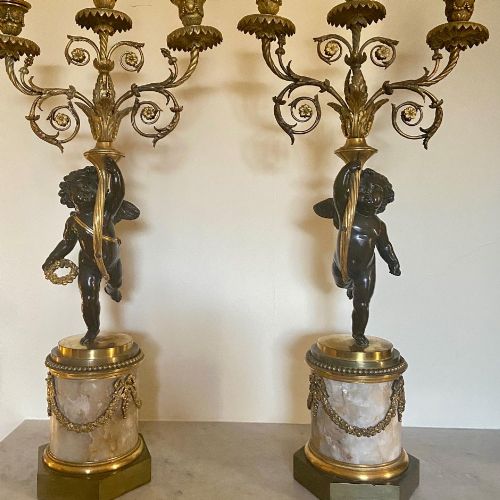
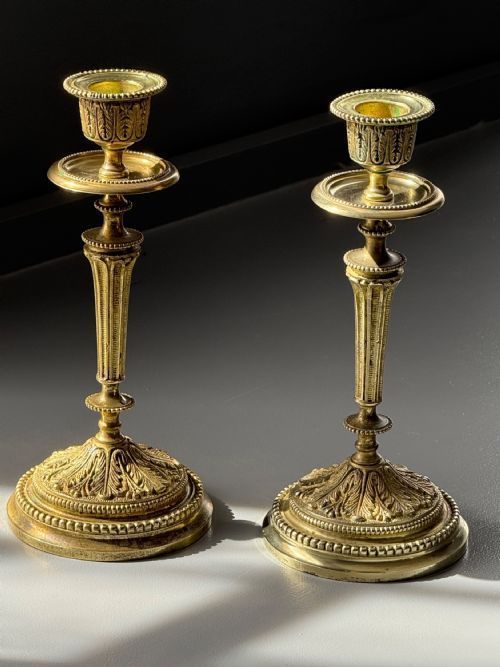
Forms range from simple column sticks to elaborate figural compositions incorporating cherubs, caryatids, and mythological subjects mounted on marble or onyx bases.
Materials and construction methods
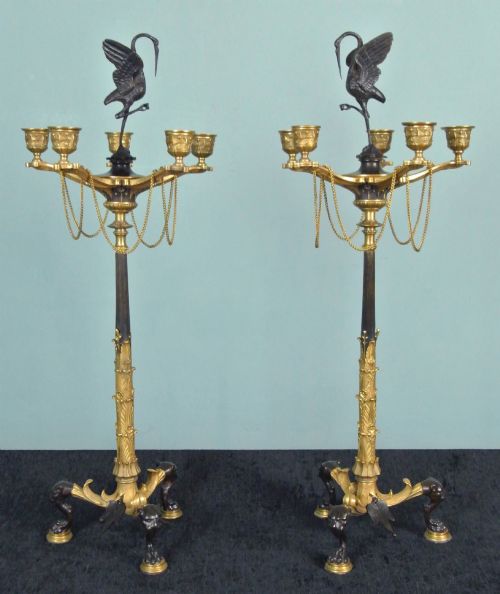
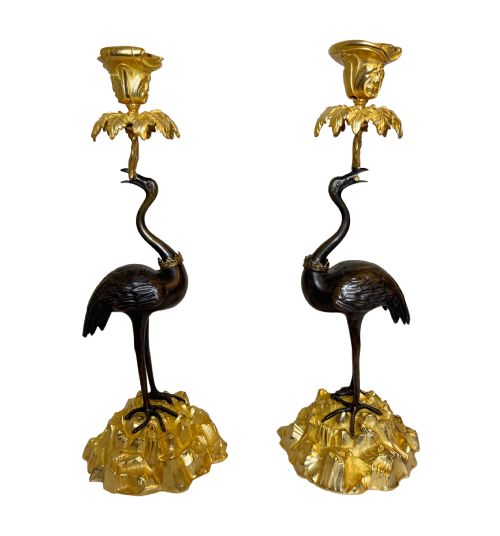
Foundry work relies heavily on cast bronze and brass, frequently enhanced with mercury gilding or ormolu to achieve a rich, durable golden surface.
Many specimens combine metal components with contrasting natural materials such as white marble, onyx, or carved stone columns, secured with internal threaded rods.
Surface decoration often involves champlevé enamel work, fine chasing, and applied patination to create depth within the figural details.
Several bronze stags and does bear candles upon their antlers.
Assessing craftsmanship and finish
The distinction between standard production and top-tier pieces rests on the crispness of the chased detail and the weight of the cast bronze or ormolu components.
Superior pairs display precise assembly where individual cast elements fit tightly without visible seams, whereas lesser examples show softer ornamentation and hurried finishing.
The integration of secondary materials like marble or stone bases also dictates grade, with select items utilising finely turned minerals rather than basic cast substitutes.
Francois Redmond·Abel Landry·Dugourc·Barbedienne
The Pair of French Candlesticks Glossary
- Ormolu
- Gilded bronze produced through a mercury amalgamation process, yielding a deep metallic lustre common on classical lighting.
- Candelabra
- A branched candlestick designed to hold multiple candles simultaneously from a single central stem.
- Champlevé
- An enamelling technique where troughs are dug into a metal surface and filled with vitreous paste before firing.
- Retour d'Egypte
- A neoclassical design style inspired by Napoleon's campaign in Egypt, featuring motifs like sphinxes and pharaonic figures.
- Pricket
- A sharp metal spike fitted to the top of a candlestick to secure a heavy church candle.
Pair of French Candlesticks: Frequently Asked Questions
What periods do these candlesticks represent?
The selection spans from the eighteenth century through the nineteenth century, including Regency, Empire, and Victorian interpretations of classical French design.
Most items reflect the nineteenth-century revival movements, incorporating Louis XVI and Rococo aesthetic principles into domestic metalwork.
How were multi-branch candelabra used?
Multi-branch examples provided primary illumination on dining tables, sideboards, and mantelpieces before the widespread adoption of gas and electric lighting.
Their reflective ormolu and gilt surfaces maximised the ambient light cast by multiple candles during evening gatherings.
How do I care for antique ormolu surfaces?
Maintenance requires only gentle dusting with a soft, dry cloth to prevent the accumulation of grit within the chased recesses of the metal.
Harsh chemical polishes must be avoided entirely, as abrasive cleaning strips away the historic mercury gilding and exposes the base brass or bronze underneath.
Can converted pieces revert to candles?
Many examples adapted for electricity retain their original sockets and internal channels, making professional restoration back to standard candle use feasible.
Consulting a specialist ensures that any wiring removal preserves the structural integrity of the antique bronze or marble components.