



Pair of Framed Drawings
A pair of framed drawings brings symmetrical balance to a wall, offering matched works on paper created in pastel, ink, pencil, and watercolour.
Pair of Framed Drawings
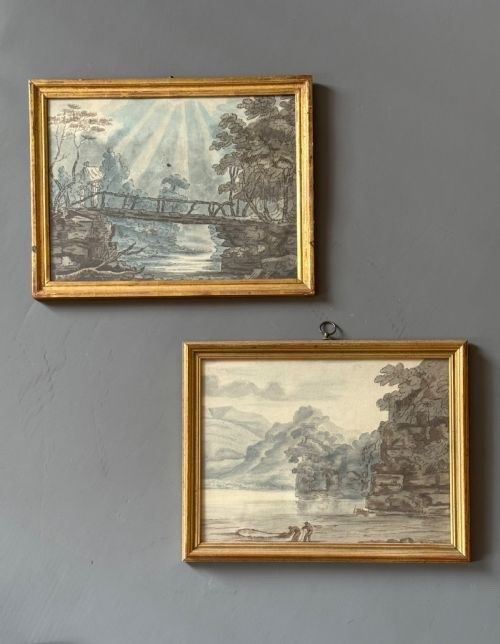
A pair of framed drawings consists of two complementary works on paper housed behind glass within wooden or giltwood surrounds, created across periods ranging from the eighteenth century to the mid-twentieth century. Buyers seeking this search phrase encounter portraiture, landscape scenes, architectural studies, and life drawings originating from British, Irish, and French hands.
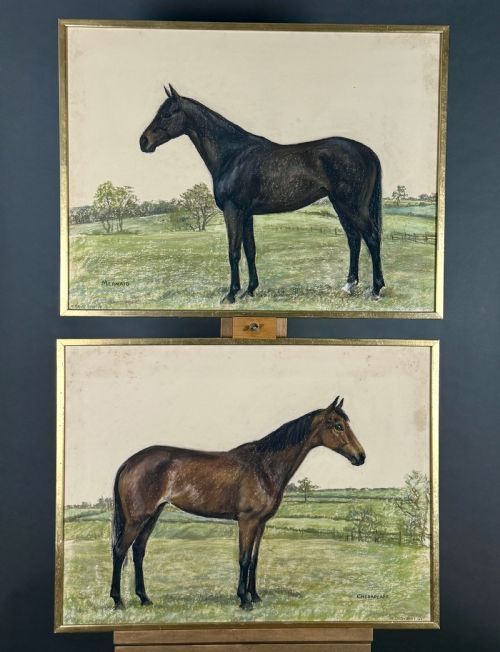
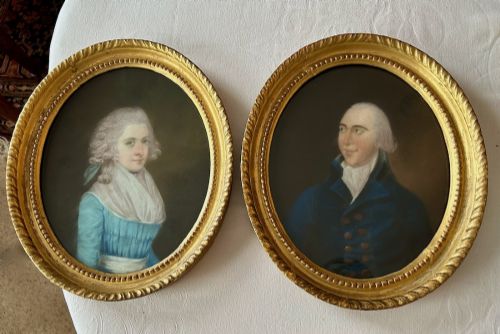
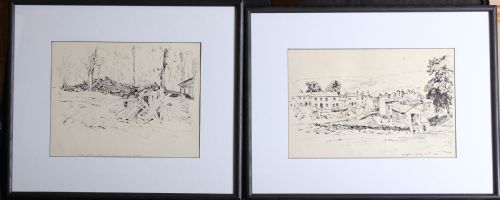
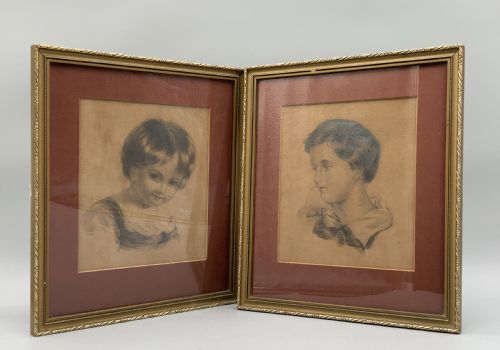
The selections on this page span Georgian, Regency, Victorian, Edwardian, and mid-century modern aesthetics, encompassing salon suites, equestrian studies, and detailed ink sketches. These matched pairs provide historical depth, often recording specific sitters, buildings, or transport subjects through the intimate touch of graphite, charcoal, or pastel.
Materials and technique
These works utilise paper as the primary support, marked by media such as graphite, ink, pastel, charcoal, and watercolour applied by hand. Artists built their compositions through linear precision in pen and pencil or through the soft blending of dry pigment and sepia washes.
Framing relies on wood and giltwood to enclose the artwork beneath protective glass, preserving delicate pigments and fragile paper surfaces from atmospheric damage.
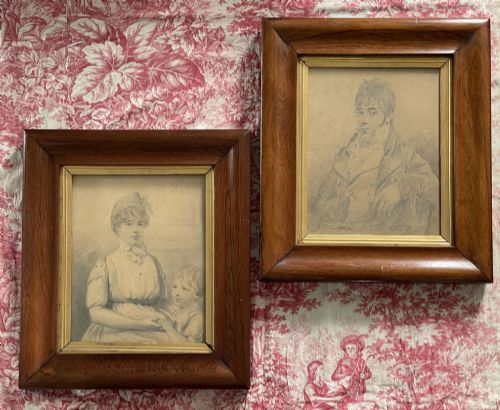
A pair of nineteenth-century pencil drawings captures a Regency couple who likely sat very still indeed.
The spectrum of quality
Quality in these works rests upon the surety of the draughtsmanship and the expressive capability shown in handling the medium, whether capturing the likeness of a sitter in pastel or defining architectural mass with pen and ink. Stronger pieces display confident line work, anatomical accuracy, and successful compositional balance between the two matched sheets.
The preservation of the paper support and the integrity of the original or period frame further distinguish superior examples. Works that retain their vibrancy without excessive foxing or pigment loss demonstrate higher merit among collectors.
Emily Eyres·Fred Lawson·Robert Richard Scanlan·Winifred Eugene Ballard·Ozias Humphry·Jean Cuny·Henry Edridge
The Pair of Framed Drawings Glossary
- Pastel
- A dry painting medium consisting of powdered pigment and a binder, frequently utilised for portraits on paper. It allows for rich colour blending and soft tonal gradations.
- Gouche
- An opaque watercolour medium containing pigment mixed with a water-bound gum and a white filler material. It creates solid, flat areas of colour with a matte finish.
- Foxing
- Brown spots and discolouration that develop on antique paper over time due to chemical reactions. It is a common occurrence in works dating from the eighteenth and nineteenth centuries.
- Giltwood
- Wood carved and coated with gold leaf or a gold-coloured finish. This material is frequently found on traditional picture frames from the Georgian and Victorian eras.
Pair of Framed Drawings: Frequently Asked Questions
How should I hang a pair of framed drawings?
Hang the two pieces side by side at eye level, maintaining equal spacing to preserve the visual symmetry intended for a matched set. Keeping them away from direct sunlight protects the delicate paper and water-soluble pigments from fading.
Ensure the hardware on the back of each frame is secure before mounting them on the wall. Balanced placement enhances their decorative impact in a room.
What periods do these drawings come from?
The pieces span the eighteenth, nineteenth, and twentieth centuries, including Georgian, Regency, Victorian, and Edwardian eras. Mid-century examples from the 1950s and 1960s also appear.
Each period brings distinct stylistic traits, from formal portraiture to architectural sketches and nude life studies. The materials often reflect the prevailing artistic practices of their specific decade.
Are these works original art?
Yes, the selections consist of original hand-drawn or hand-painted pieces on paper rather than mechanical reproductions. Artists created them directly using graphite, ink, pastel, charcoal, or watercolour.
Signatures, initials, and period inscriptions frequently accompany the artwork, confirming their status as unique historical items. They provide direct insight into the hand of the maker.
How are pastel drawings protected?
Pastel works are protected beneath glass housed within wooden or giltwood frames to prevent the fragile pigment from smudging or dusting away. This barrier also shields the paper from airborne dust and moisture.
Because pastel sits loosely on the paper surface, framing without direct contact between the glass and the drawing is essential. Proper sealing preserves the soft textures of the medium.