
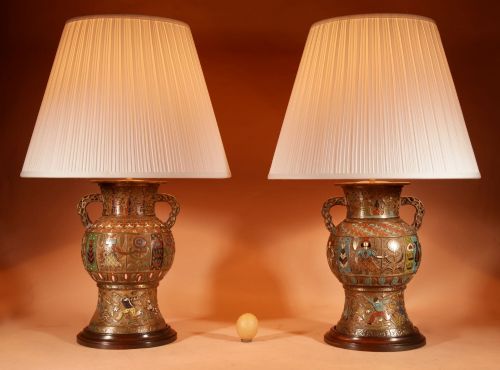
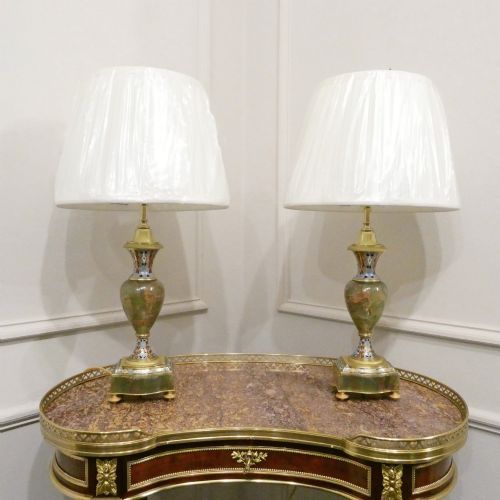
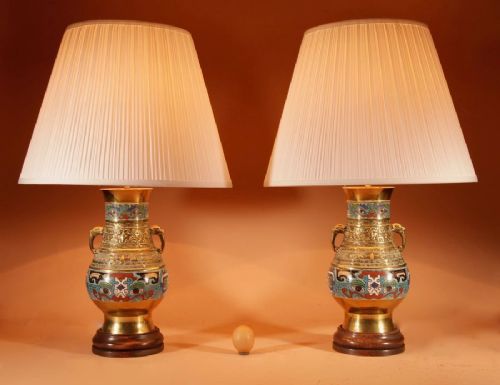
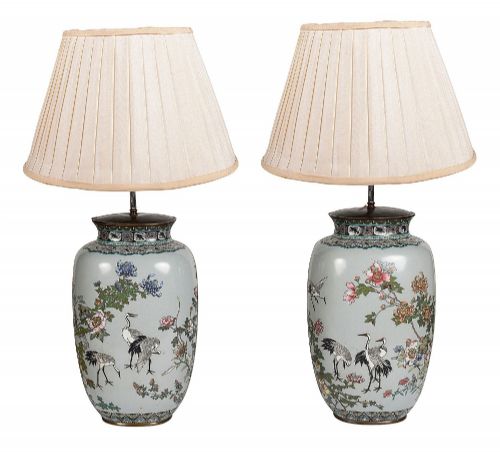


Pair of Enamel Lamps
These pair of enamel lamps bring rich colour and patterned metalwork directly from nineteenth-century export traditions into domestic lighting.
Pair of Enamel Lamps
When you search for a pair of enamel lamps, you encounter decorative vases and vessels transformed into table lighting across the nineteenth and early twentieth centuries. Many of these pieces originate from Chinese and Japanese workshops, alongside French, Italian and English examples.
The common form involves matching pairs of vases mounted with electrical fittings or converted from earlier mantle lustres and decorative vessels. They combine hand-applied enamel work with brass, bronze, gilt bronze, or copper mounts to create balanced sets.
You will regularly find Chinese cloisonné and Rose Medallion pieces alongside Japanese Meiji period examples and Victorian brass mountings. These items bridge the gap between antique oriental porcelain or metalwork and functional interior lighting.
How they were made
The foundation of these pieces relies on metal bases of brass, copper, or bronze, often shaped as vases or urns. Artisans applied coloured enamels within wire compartments for cloisonné or via recessed cells for champlevé.
Porcelain variants utilise painted ceramic bodies finished with glazed polychrome decoration, later fitted with metal mounts. Many objects started life as decorative vases before receiving subsequent metal mountings and electrical conversions.
Several vases started out holding mantelpiece prisms before someone decided they belonged by the bedside reading a novel.
What varies in quality
The refinement of the enamel work dictates the primary tier of quality, distinguishing crisp, complex wirework from simpler coloured fills. Weight and substance in the underlying brass, bronze, or copper mounts also indicate superior manufacture.
Match fidelity between the two objects determines visual success, as pairs assembled later from disparate vessels lack the harmony of pieces created together. The integration of mounts and the survival of original patination preserve the integrity of the work.
The Pair of Enamel Lamps Glossary
- Cloisonne Enamel
- A technique where thin metal wires are soldered to a metal base to form compartments filled with enamel paste and fired. This method creates intricate patterned designs across the surface of the vessel.
- Champleve Enamel
- A process where troughs or cells are hollowed directly into the surface of a metal object and filled with enamel before firing. It produces bold designs embedded within the thick metal body.
- Ormolu
- Gilt bronze ornamentation applied to furniture, clocks, and lighting fixtures. This decorative metal mount provides a bright golden accent to the enamel body.
- Famille Rose
- A palette of Chinese porcelain enamels dominated by opaque pink or rose colours introduced in the eighteenth century. These floral and figurative motifs continued onto nineteenth-century export wares.
- Mantle Lustre
- A decorative ceramic or glass vase hung with crystal prisms, designed to stand on a mantelpiece. Many were subsequently adapted to hold lamp fittings.
Pair of Enamel Lamps: Frequently Asked Questions
How do I clean enamel lamps?
Dust the surface gently with a soft, dry cloth to protect the delicate metal wires and vitreous enamel.
Avoid chemical polishes or water on the enamelled sections, as moisture can damage older metal mounts and porous ceramic bodies.
Were these originally made as lamps?
Most pieces started life as decorative vases, mantle lustres, or temple vessels before conversion into lighting.
Craftsmen added electrical wiring and brass mountings later in their lifespan to suit changing domestic interiors.
How do I date Chinese cloisonne lamps?
Examine the weight of the metal base, the brightness of the enamel colours, and the style of the wirework patterns.
Nineteenth-century export pieces often display denser brass foundations and distinct colour palettes compared to earlier dynasties.
Can I use modern lamp shades?
Standard shade carriers fit most converted lamps provided the shade proportions match the height of the vase body.
Fabric shades complement the colourful enamel surfaces without overwhelming the intricate detail of the metalwork.