

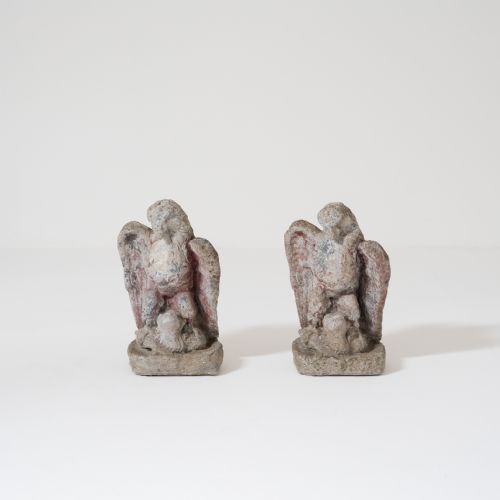


Pair of Eagles
A pair of eagles brings heraldic drama to a room, appearing across centuries as carved wall sconces, garden statues and decorative metalwork.
Pair of Eagles
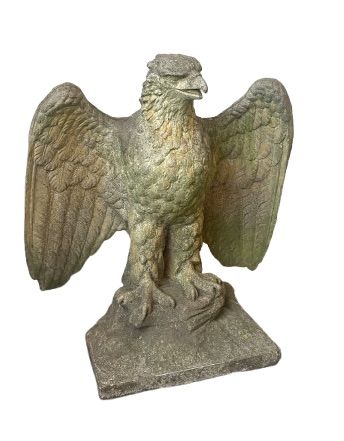
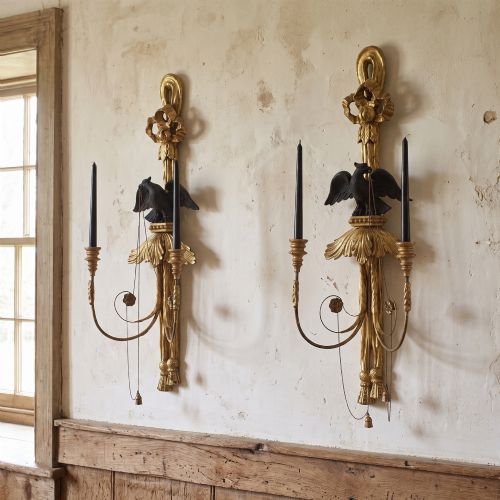
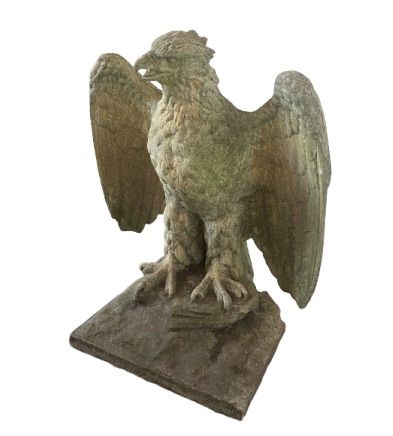
A search for a pair of eagles leads to matching decorative objects and furnishings modelled on the bird of prey, ranging from domestic tabletop items to large architectural fittings. The selection includes giltwood wall sconces, solid wood armchairs, cast brass lamps, silver plated salts, and substantial garden statuary carved from stone.
The objects span from the eighteenth century through to the early twentieth century, taking in George III style, Regency, Victorian, and Edwardian periods. Buyers encounter both interior decorative items, such as girandole mirrors and glass lustres, and outdoor garden pieces designed to withstand the elements.
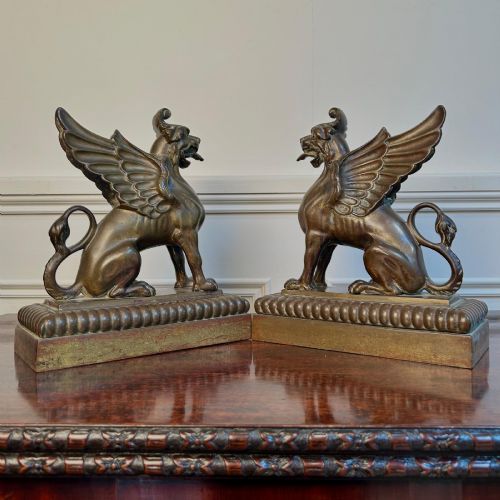
Giltwood wall sconces and carved wood figures appear frequently alongside metalwork in brass, bronze, and iron. Many pieces draw on classical and neoclassical motifs, reflecting shifting tastes in interior ornament across the nineteenth and twentieth centuries.
Assessing quality in bird sculpture and fittings
Quality rests upon the precision of the carving or casting and the integrity of the original surface finish. Finely rendered feather detail and anatomical proportion separate superior sculptural work from coarser production.
The condition of surface treatments such as original gilding, patination on bronze and brass, and weathering on stone significantly influences the character of the piece.
Pair of Eagles Retail Price Guide 2026
Typical asking prices for pair of eagles among the pieces listed under this phrase on Sellingantiques today, from the lower quarter to the upper quarter. They describe what is for sale here now, not the wider market.
The documented periods span from the eighteenth century through the Regency, Victorian, and Edwardian eras into the 1930s.
Austin & Seeley·Henry Stuart Brown
The Pair of Eagles Glossary
- Giltwood
- Wood that has been coated with a thin layer of gold leaf. It is frequently found on eighteenth and nineteenth century wall sconces and mirror frames.
- Ormolu
- Finely ground high-carat gold-copper mercury gilding applied to an object of bronze. This technique creates a rich golden finish on decorative mounts and urns.
- Gesso
- A paint mixture consisting of a neutral binder mixed with chalk, gypsum, or pigment. It served as a smooth base for gilding on carved wood frames.
- Pier Finial
- An architectural ornament placed on top of a gate pier, wall, or pillar. Stone and composite examples appear as garden statuary.
- Girandole
- A branched wall sconce or mirror fitted with candle holders. The reflective backing amplifies the light within a room.
Pair of Eagles: Frequently Asked Questions
Where were wall sconces placed?
Wall sconces were traditionally positioned around a room to reflect candlelight from mirrors and polished surfaces.
Pairs often flanked chimney breasts or doorways to create symmetry in formal interiors.
How do I care for giltwood?
Giltwood requires dry dusting with a soft brush to protect the delicate gold leaf and underlying gesso layer.
Moisture and harsh cleaning agents must be avoided entirely to prevent lifting of the surface.
Are stone statues suitable for outdoors?
Composite stone and stoneware garden pieces tolerate outdoor placement, developing a natural weathered patina over time.
Severe frost can affect older porous materials, so sheltered placement during winter months is advisable.
What is the difference between brass and ormolu?
Brass is a durable alloy of copper and zinc used for solid lamps and cast metal objects. Ormolu denotes a specific mercury gilding process applied to bronze.