
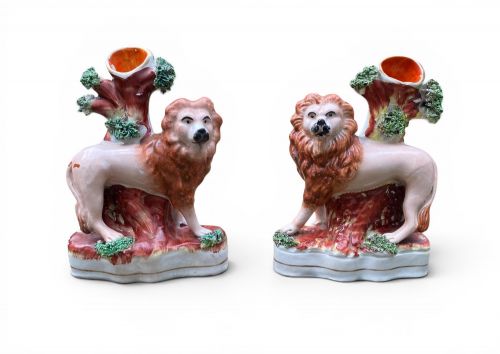


Pair of Chimney Ornaments
A pair of chimney ornaments brings symmetry and character to a hearth, offering a glimpse into domestic display from the Victorian and Edwardian eras.
Pair of Chimney Ornaments
A pair of chimney ornaments is designed to sit symmetrically upon a mantelpiece, transforming a practical hearth into a domestic focal point. When you search for this phrase, you encounter decorative objects intended to be viewed from the front rather than the round.
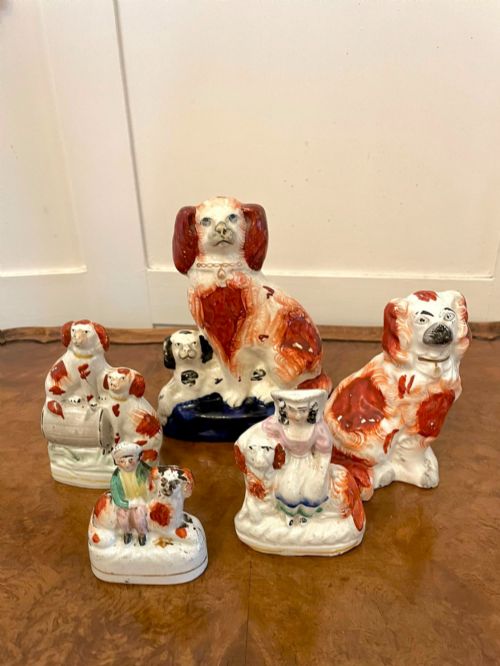
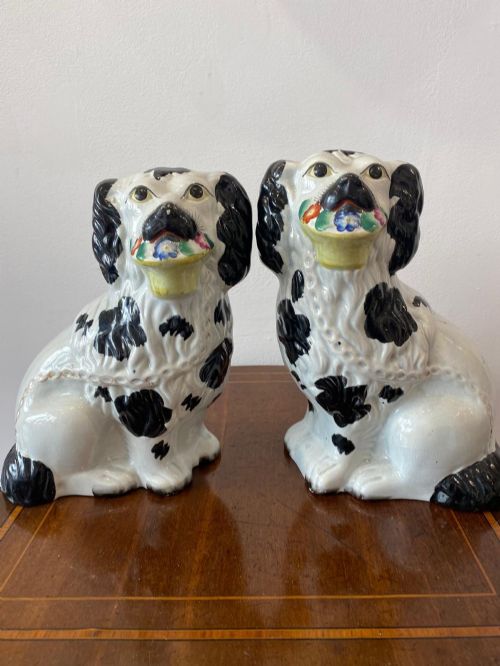
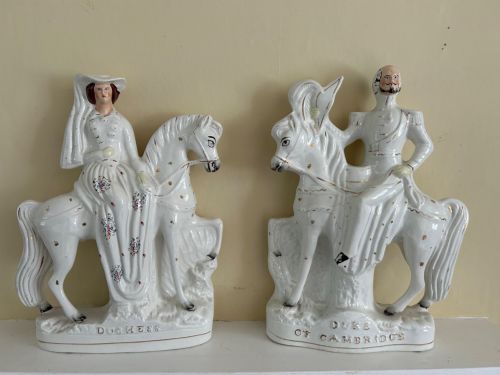
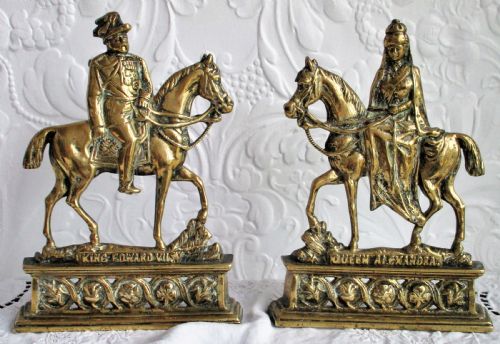
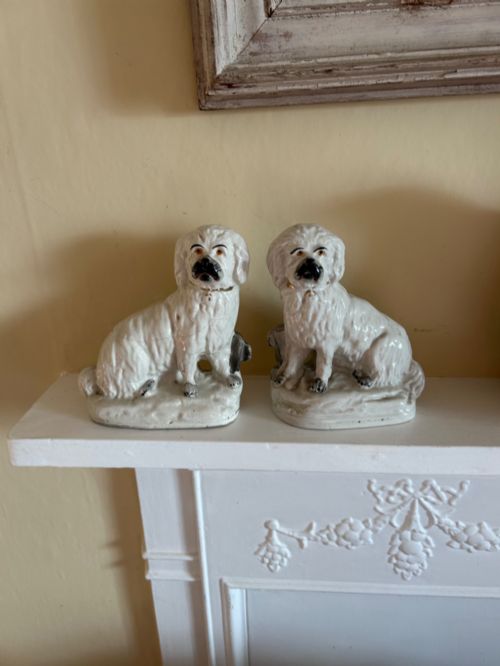
The versions most likely to meet you on this page are earthenware Staffordshire figures and heavy brass pieces. These include dogs, lions, pugs, and royal figures, alongside utilitarian forms that doubled as doorstops or spill vases.
The evidence spans the nineteenth and early twentieth centuries, capturing periods from the Georgian style through Victorian manufacturing to Edwardian commemoratives. Each matched pair reflects the tastes of parlour display during those decades.
How they were made
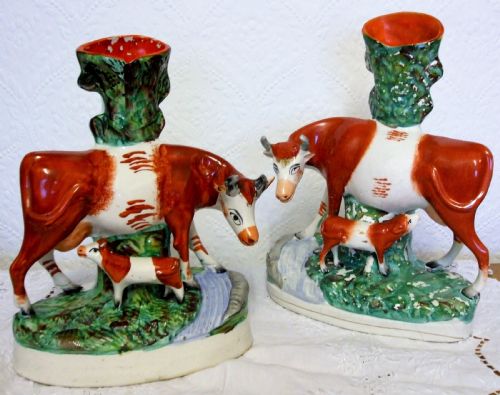
Pottery examples rely on earthenware and terracotta bodies shaped by moulds, then finished with glaze and enamel painting. Artisans applied hand-painted details over the fired ceramic base, sometimes adding gilt highlights to enhance the visual weight of the figures.
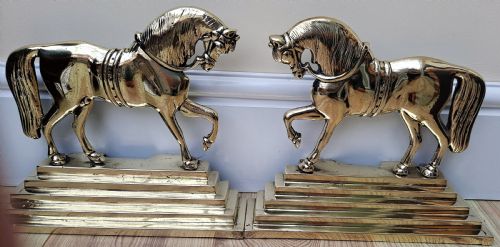
Brass examples utilise metal casting techniques to create durable decorative objects that doubled as door porters. These metal pieces often feature refined surface finishing, using the natural warmth of polished brass to catch the flicker of coal fires.
Listings feature earthenware, terracotta, and brass materials spanning the Victorian, Georgian, and Edwardian styles.
What varies in quality
The quality of a pair of chimney ornaments rests largely on the crispness of the moulding and the control shown in the hand-painting. Firmer lines in the facial expressions of pottery animals or sharper cast details in brass horse figures distinguish finer examples from simpler work.
Preservation of the original glaze, enamel, and gilt surface also dictates the standing of a piece. Finer survivals retain their original colouring without excessive wear, keeping the intended decorative impact intact for the mantelpiece.
The Pair of Chimney Ornaments Glossary
- Flatback
- A style of pottery figure shaped with a flat, unglazed or minimally finished back because it was intended to stand directly against a wall or mantelpiece. This method saved materials and focused detail entirely on the frontal view.
- Spill vase
- A hollow ceramic vessel incorporated into a figure, designed to hold taper splints used for lighting candles or pipes. These dual-purpose objects combine decorative modelling with practical hearth utility.
- Earthenware
- A porous pottery body fired at lower temperatures than stoneware or porcelain, requiring a glaze to achieve impermeability. It serves as the primary material for nineteenth-century Staffordshire figures.
- Door porter
- A heavy decorative object, often cast in brass, designed to hold doors open against drafts. Many items sharing this form were also displayed on hearths as chimney ornaments.
- Gilt
- A thin layer of gold or gold-coloured material applied to the surface of ceramics or metalwork. It provides decorative accents that reflect light in a dimly lit Victorian parlour.
Pair of Chimney Ornaments: Frequently Asked Questions
Where were chimney ornaments displayed?
These pieces were placed in matching pairs upon the mantelpiece, framing the fireplace as a central domestic display.
Their frontal design suited narrow shelves, catching the eye of visitors entering the room.
How do I identify a Victorian Staffordshire pair?
Victorian Staffordshire pairs typically feature earthenware bodies with hand-painted enamel decoration over a glazed surface.
Look for flat backs and characteristic subjects such as spaniels, lions, pugs, and historical figures.
Were brass chimney ornaments used for doors?
Many heavy brass chimney ornaments doubled as door porters to keep heavy interior doors from swinging shut in draughty rooms.
Their substantial weight made them suitable for both the hearth and the floor.
What is a spill vase figure?
A spill vase figure incorporates a small cylindrical holder beside or behind the main ceramic subject to store wooden tapers.
These tapers transferred fire from the hearth to lamps and pipes before safety matches became common.
How do I care for antique ceramic ornaments?
Dust these glazed earthenware pieces gently with a dry, soft cloth to protect the painted enamel and gilt surfaces.
Keep them away from direct moisture and handling that could chip the historic ceramic body.