



Pair of Carved Cherubs
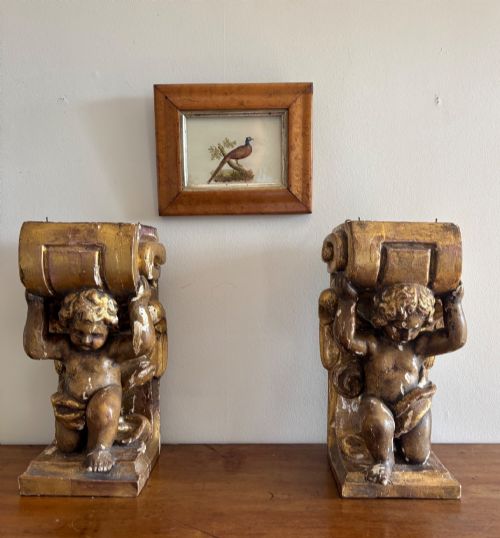
A pair of carved cherubs brings spirited movement and historic theatre to a room, whether supporting a wall bracket or flanking a mirror.
Pair of Carved Cherubs
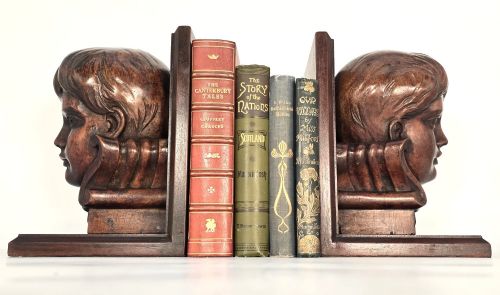
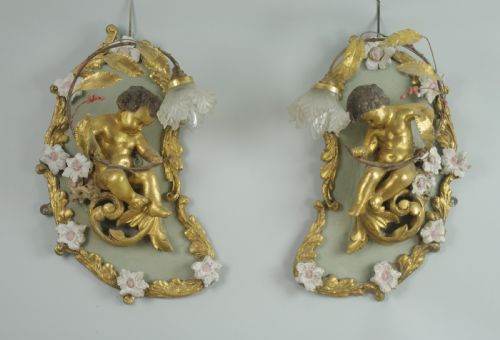
When you search for a pair of carved cherubs, you encounter figures ranging from lively Baroque wall brackets and giltwood appliques to ecclesiastical bookends and freestanding figures. The selections include works from the seventeenth century through to the early twentieth century, spanning Italian, French and Flemish origins.
The most frequent examples on this page are nineteenth-century giltwood wall brackets and Italian carved figures, alongside earlier seventeenth-century limewood and oak panels. These objects frequently served functional roles as architectural supports, candle sconces, and library bookends rather than purely decorative ornaments.
How they were made
Carvers shaped these figures primarily from timbers such as oak, mahogany, limewood, and general carved wood, applying gesso and gold leaf to create luminous giltwood surfaces. Polychrome paint and silvered finishes also appear, lending colour and varied texture to the wood and plaster bodies.
Artisans employed traditional joinery and carving techniques suited to each period, from seventeenth-century Flemish relief panels to nineteenth-century Italian and French giltwood brackets. Metal fittings and glass components integrate with the carved wooden structures in later wall lights and candelabra.
The listings span from the 17th century to the 1930s, uniting French, Italian, and Flemish decorative traditions across wall lights, bookends, and panels.
What varies in quality
Quality rests upon the depth of the carving and the vitality given to the anatomy and expression of the figures. Finer pieces display confident, fluid knife work in the hair and wings, whereas simpler items show more rigid, mechanical cutting.
The preservation of original surface treatments - such as untouched giltwood, gesso layers, and polychrome paint - separates superior survivals from those stripped or heavily repainted over time.
The Pair of Carved Cherubs Glossary
- Putti
- Plump, wingless or winged infant figures common in Renaissance and Baroque art. They often appear wrestling, playing instruments, or supporting architectural elements.
- Giltwood
- Timber coated with fine gold leaf over a prepared gesso ground. This technique creates a rich metallic sheen that catches candlelight.
- Wall bracket
- A projecting architectural shelf attached to a wall to support an object. In these listings, cherubs frequently form the structural support underneath.
- Polychrome
- Decorated in multiple colours. This paint treatment brings naturalistic skin tones and garment hues to carved wooden figures.
- Amorini
- Alternative term for cupids or cherubs originating from Italian art. They lend a playful, classical character to furniture and wall decorations.
Pair of Carved Cherubs: Frequently Asked Questions
How were these figures used originally?
Many of these pieces served architectural and functional purposes in period interiors. They functioned as wall brackets for lamps, structural supports for shelves, or ecclesiastical decorations in chapels and libraries.
Others acted as bookends or formed part of larger panelling schemes in French and Flemish rooms. Their dual role as sculpture and support defined their placement.
How do I distinguish seventeenth-century pieces from nineteenth-century revivals?
Seventeenth-century items typically utilise heavy native hardwoods like oak and limewood with deep, hand-cut relief showing tool marks consistent with early joinery. The carving style aligns with seventeenth-century Flemish or Baroque traditions.
Nineteenth-century revival pieces often employ softer pine or gesso constructions mimicking earlier styles with brighter giltwood finishes. Examining the back of the timber and the wear patterns reveals the true age of the object.
How do I hang heavy giltwood wall brackets safely?
Heavy carved wall brackets require secure wall anchorages into masonry or structural studs rather than simple plasterboard fixings. The substantial weight of the timber and gesso demands robust weight-bearing screws.
Consulting a professional installer ensures the bracket level remains true and safe when supporting lamps or decorative objects. Check the original hanging loops on the reverse to ensure they remain structurally sound.
Where should I place these pieces in a modern room?
These figures suit placement as flanking elements above a mantelpiece, framing a mirror, or mounted low on a library wall. Their sculptural presence works well against plain plaster or dark painted walls.
Smaller pairs function effectively as desk accessories or bookends on study shelves. Positioning them near natural light sources highlights the details of the carved wood and gilding.