


Pair of Botanical Paintings
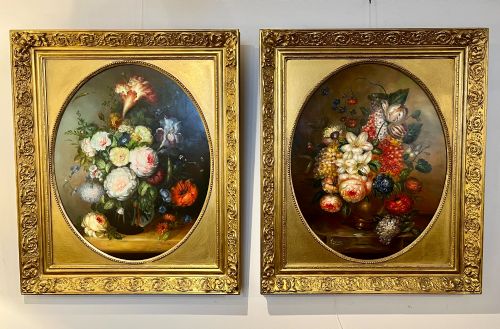
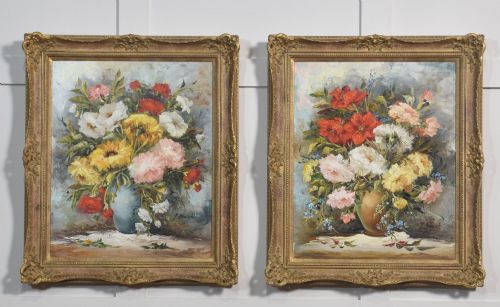
These pair of botanical paintings bring natural colour and balanced symmetry to a wall, matching the exact decorative rhythm a room needs.
Pair of Botanical Paintings
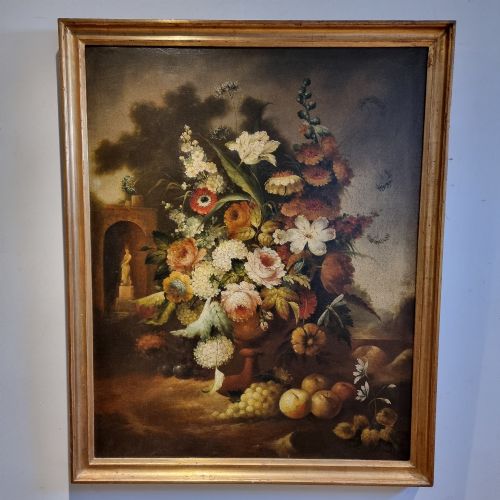
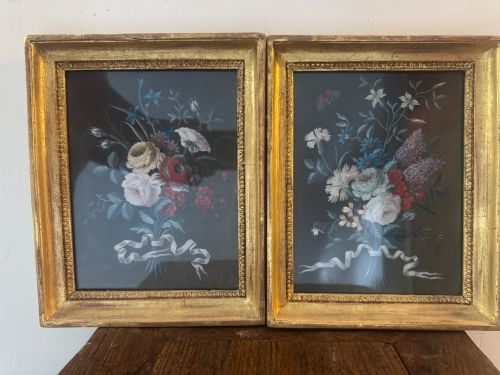
A buyer seeking a pair of botanical paintings encounters matched sets depicting flowers, fruit, and garden flora rendered across centuries. These works range from Victorian hand-painted fruit pictures to early nineteenth-century Italian compositions and twentieth-century interpretations.
The versions most commonly met on this page combine traditional floral subjects with oil, watercolour, or gouache mediums housed in wood and gilded frames. Creators draw on Dutch Golden Age, Baroque, and Neoclassical styles to frame natural specimens with formal elegance.
Compositions often balance arrangements of garden blooms and seasonal fruit, designed specifically to hang as symmetrical pairs on either side of a mantelpiece or doorway. Each pairing reflects the enduring domestic desire to bring the garden indoors through permanent, painted studies.
Materials and execution
Painters apply oil paint or watercolour onto paper, canvas, or wood panels to build up detailed layers of petals, leaves, and stems. The resulting pigment captures the tonal depth of natural specimens through careful brushwork and colour blending.
Many works are secured behind glass within wood frames, occasionally enhanced with gold leaf or gilt details that catch the light. These surrounds give the watercolours and oil paintings structural support while completing the classical aesthetic.
Materials recorded across the inventory include canvas, paper, wood, glass, and gold leaf applied to framed botanical and still life compositions.
Judgement of quality
Quality rests in the precision of the botanical rendering and the harmony between the two companion pieces. Stronger examples demonstrate confident brushwork in the depiction of petals and fruit, whereas weaker works rely on rigid outlines.
The depth of the framing materials also elevates a piece, distinguishing simple wood surrounds from richly gilded frames that complement the painting's historical style.
Manuela Bonati·Henry Schouten·Edgar Bundy·M.K Rhodes·Oliver Clare
The Pair of Botanical Paintings Glossary
- Gouache
- An opaque water-based paint that dries to a matte finish, allowing artists to build vibrant floral details on paper. This medium provides strong colour saturation compared to traditional watercolours.
- Gilt
- A thin layer of gold applied to wood frames to create a reflective, decorative surface. It frames the artwork with a traditional metallic sheen.
- Still life
- An artwork depicting inanimate subject matter, typically featuring arranged groupings of flowers and fruit. These compositions dominated Dutch and Victorian botanical traditions.
- Oil on board
- A painting technique where oil pigments are applied directly to a rigid wooden panel rather than stretched canvas. This surface offers a stable base for detailed brushwork.
Pair of Botanical Paintings: Frequently Asked Questions
How should I hang them?
Hang the pair at eye level with a modest gap between them to maintain visual balance on the wall. This placement allows the matched subjects to frame a doorway, mantel, or piece of furniture effectively.
Ensure they hang away from direct sunlight to protect the paper, canvas, and pigments from fading over time.
What frames are typical?
Wood frames, often finished with gold leaf or gilt detailing, enclose most pieces in this category. These surrounds reflect the period styles of the paintings, from Victorian moulding to eighteenth-century revival designs.
Some works also incorporate glass protection over watercolours and delicate paper mediums.
Are they all oil paintings?
No, while oil paint on canvas, board, or wood is common, the selection also includes watercolours and gouache on paper. Each medium produces a distinct surface texture, from the glossy finish of oils to the matte appearance of gouache.
Checking the listing details confirms the specific material used for each artwork.
How do I date a pair?
Dating relies on stylistic clues, framing materials, and the medium used by the artist. Victorian and nineteenth-century pieces often feature distinct floral arrangements compared to twentieth-century revivals of Dutch styles.
Signatures and dealer attributions further help place the works within specific historical decades.