
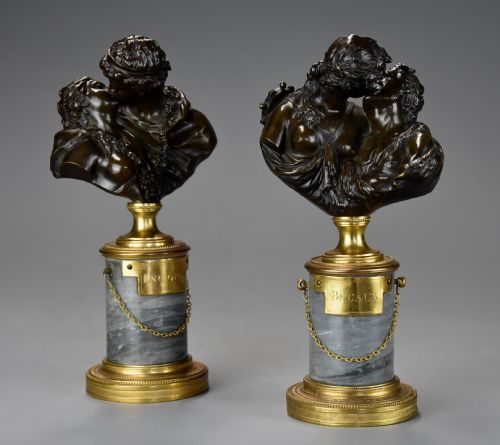


Pair of Busts
A pair of antique busts brings character and classical symmetry to a room, offering twin focal points carved in marble, bronze, terracotta and wood.
Pair of Busts
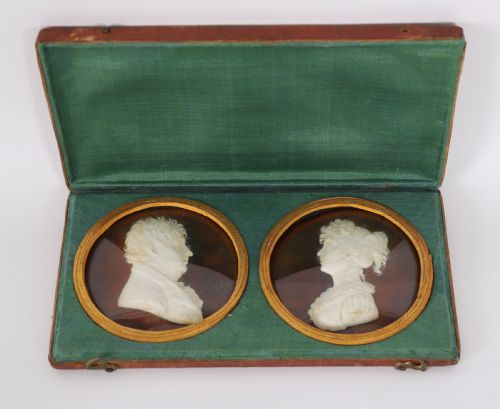
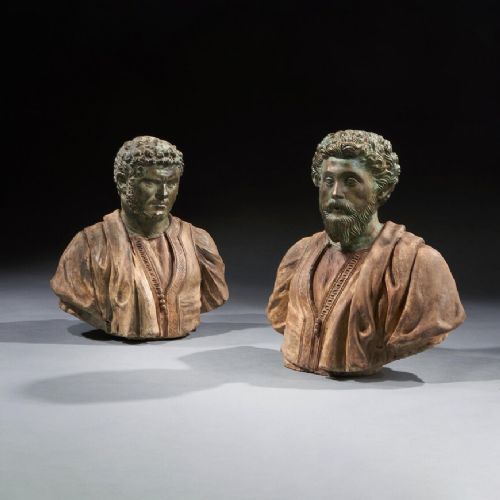
A pair of antique busts comprises matched sculptural portraits or figural representations designed to be displayed together on pedestals, brackets or shelves. When searching for a pair of antique busts, collectors encounter works executed in diverse materials ranging from Italian marble and cast iron to carved mahogany and wax relief. These sculptural pairs often depict classical figures, Roman emperors, philosophers, literary figures or historical personages originating from the eighteenth and nineteenth centuries.
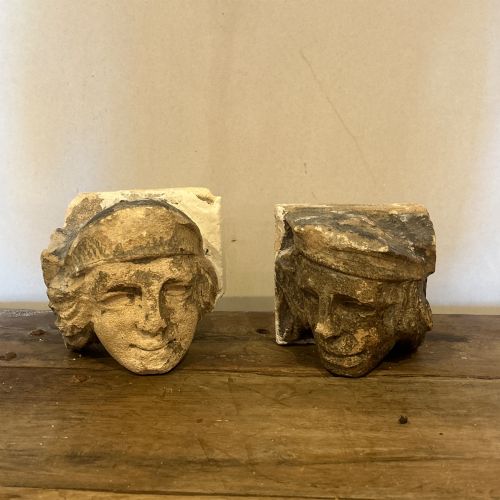
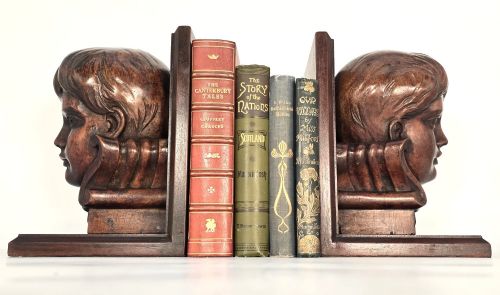
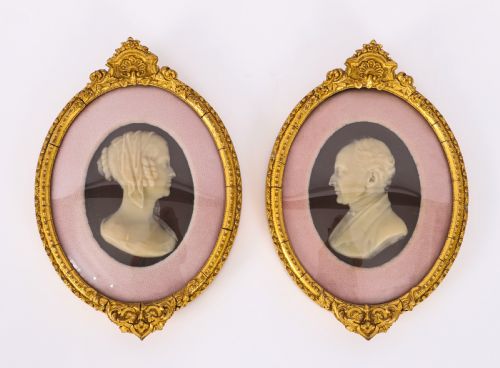
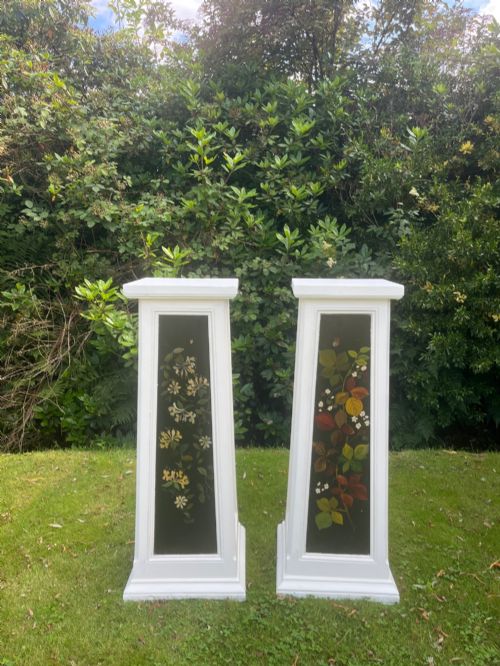
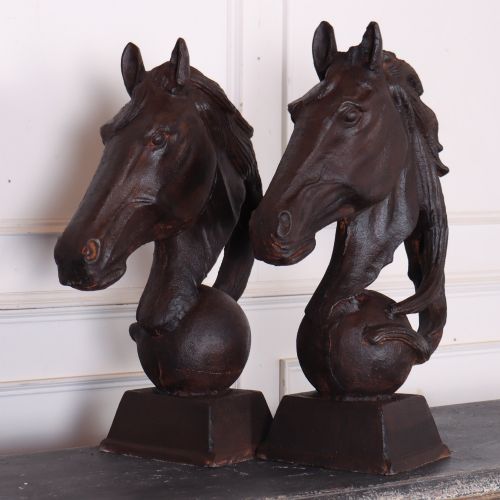
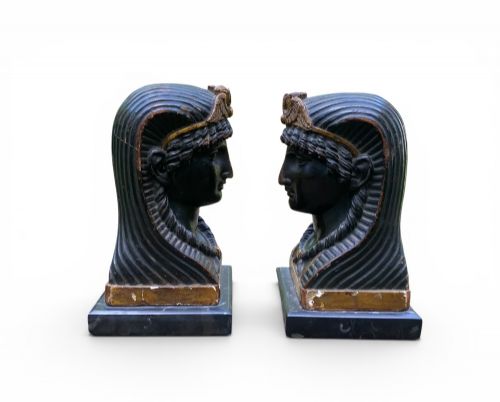
The objects appearing in this category extend beyond traditional free-standing head and shoulder sculptures to include profile plaques, cast iron horseheads, architectural corbels, and figural bookends. Grand Tour souvenirs from Italy feature prominently alongside English and French interpretations in bronze, terracotta, and alabaster. Buyers find both monumental library ornaments and intimate framed miniature reliefs among the available selections.
Materials and methods of construction
Framed works and wall pieces combined relief modelling with backing boards of wood or fabric, whilst functional items like bookends and hitching posts integrated heavy cast metals with stable wooden bases. Makers applied surface finishes ranging from polychrome paint to natural wax polishes to protect and enrich the underlying substrate.
Listed periods range from pre-sixteenth century medieval work to 1920s Art Deco pieces, with a strong nineteenth-century presence.
Factors that distinguish quality
The finesse of the carver's hand or the precision of the foundry cast determines the artistic merit of each piece, distinguishing spirited, life-like portraiture from mechanical reproduction. Superior examples display subtle anatomical accuracy, expressive facial musculature, and clean detailing in complex areas such as hair curls and garment folds.
The selection of raw material significantly influences overall distinction, with flawless statuary marble, richly figured mahogany, and heavy, well-chased bronze or ormolu mounts commanding greater appreciation. Preservation of the original surface patination, absence of major structural repairs, and the integrity of matched pairs further elevate the standing of individual sculptures.
Thomas Hope·Jean Antoine Houdon·Leonhard Posch·Friedrich Goldscheider·V Ramirez
The Pair of Busts Glossary
- Grand Tour
- A cultural journey undertaken by wealthy young Europeans in the eighteenth and nineteenth centuries to study classical art. Souvenirs such as carved marble cameo reliefs and small bronze busts were commonly acquired during these travels.
- Ormolu
- Gilded bronze, produced by applying a finely ground high-carat gold-mercury amalgam to a bronze object before heating to drive off the mercury. This decorative technique adds a bright metallic contrast to marble and wood.
- Corbel
- A structural piece of stone jutting from a wall to carry a superincumbent weight. In earlier architectural contexts, these frequently took carved figural or bust forms.
- Spelter
- A zinc alloy utilised as a less expensive substitute for bronze, particularly during the nineteenth century. It was frequently painted or electroplated to imitate higher-value metals.
- Bas-relief
- A sculptural technique where the figures project only slightly from the background plane. This method was widely used for profile portraits and cameo plaques.
Pair of Busts: Frequently Asked Questions
How were antique busts displayed originally?
In period interiors, sculptural busts were typically positioned symmetrically upon dedicated pedestals, library bookshelves, architectural brackets, or torcheres to lend gravity and classical learning to a space.
They frequently flanked doorways, dominated library chimney pieces, or served as focal points within long galleries and grand hallways.
How do I distinguish bronze from spelter?
Bronze is heavier, denser, and generally possesses a warmer, more resilient metallic patination that develops character over time. Spelter, a zinc alloy, feels lighter and often shows grey metal beneath worn paint or plating.
Spelter is also more brittle and prone to bending or snapping under stress.
Can I place marble busts outdoors?
Most interior antique marble and alabaster sculptures are vulnerable to moisture, frost, and atmospheric pollution and should remain indoors. Terracotta and cast iron pieces are more resilient but still suffer surface degradation when exposed directly to harsh weather over extended periods.