



Pair of Accent Stools
A matched pair of accent stools brings balance and versatile seating to a room, offering practical utility alongside distinct period character.
Pair of Accent Stools
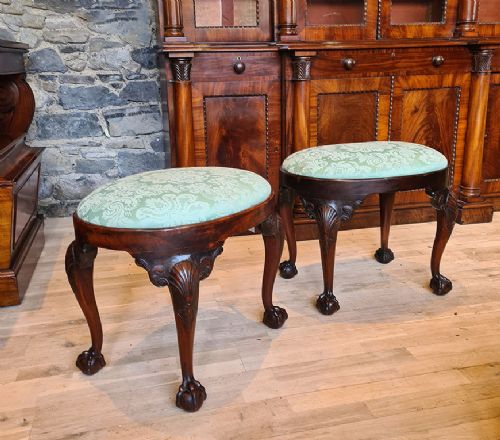
A pair of accent stools spans several centuries of design, with pieces ranging from eighteenth-century Georgian and Irish examples to nineteenth-century vernacular and Asian scholarship. Buyers searching for a pair of accent stools encounter various forms that double as side tables, plant stands, and low window seats.
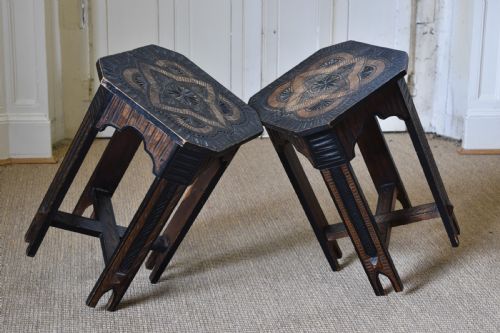
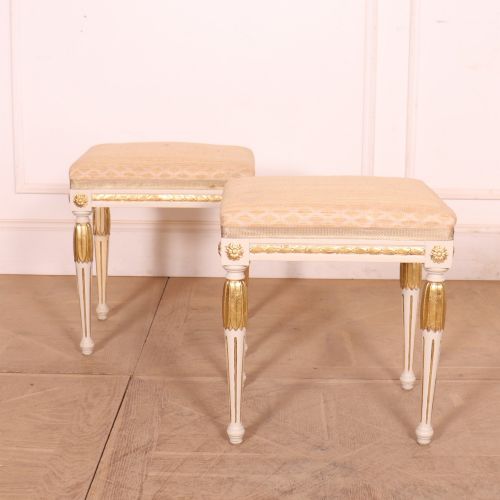
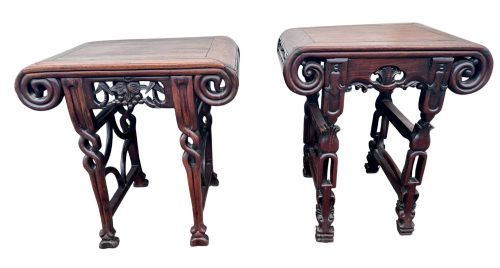
The selection includes robust jointed oak structures, painted Swedish designs, and intricately carved hardwood pieces from the Qing dynasty. These dual-purpose items function equally well as standalone decorative objects or practical perches in hallways and libraries.
Originating from diverse traditions such as Gustavian, Spanish Revival, and Arts and Crafts movements, these pairs display remarkable versatility. The inventory balances European country traditions with formal imported hardwoods and low tables.
Materials and construction methods
Carpenters relied primarily on solid timbers including oak, mahogany, walnut, yew wood, and various Asian hardwoods such as hongmu. Joinery techniques such as mortise and tenon construction ensured the structural integrity necessary for daily seating use.
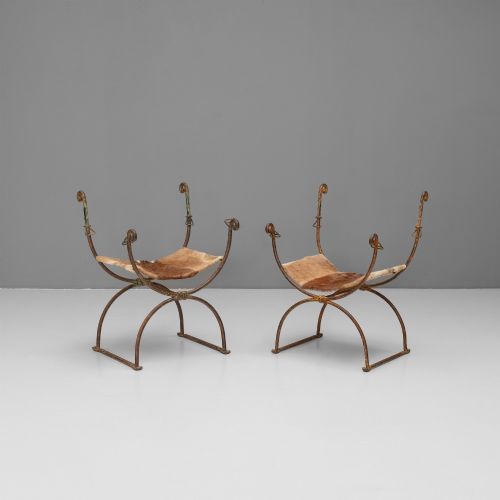
Surface treatments range from simple painted finishes and chip carving to elaborate Chinese lacquer and cloisonne work. Iron and brass elements appear structurally and ornamentally, complementing the predominant wooden frameworks.
Several pairs blur the boundary between seating and architecture, originally built low enough for pious knees or library window ledges.
Assessing craftsmanship and condition
Quality reveals itself in the integrity of the timber selection and the precision of the joinery, particularly where legs meet the seat rails. Superior examples maintain their original surface patination, whether through polished hardwood grain or undisturbed early paint layers.
Design ambition distinguishes ordinary utility items from exceptional pieces, noting particularly fine chip carving, balanced proportions, and integrated decorative motifs. The cohesion of a matched pair depends on uniform timber weathering and consistent hand-carving details.
The Pair of Accent Stools Glossary
- Joint stool
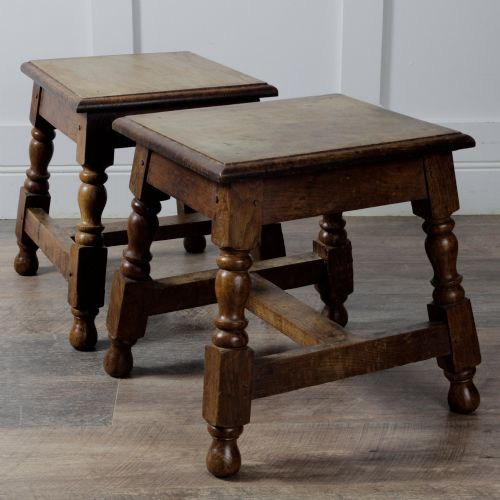
- A sturdy wooden seat constructed with mortise and tenon joinery using wooden pegs rather than metal nails. These items often double as small side tables.
- Hongmu
- A dense, dark Asian hardwood frequently utilised for Qing dynasty stands and low tables. The material accepts intricate hand carving exceptionally well.
- Prie-Dieu chair
- A low devotional chair featuring a padded shelf or ledge for kneeling during prayer. Victorian examples frequently utilise walnut or mahogany.
- Gustavian
- A Swedish aesthetic style characterised by lighter painted finishes and neoclassical restraint. Pieces from this tradition often feature pared-down geometric forms.
- Cloisonne
- An ancient decorative technique where metal wire is soldered to a base to form compartments filled with enamel paste. This ornamentation appears on select imported tables.
Pair of Accent Stools: Frequently Asked Questions
How do I use a pair of accent stools in a modern living room?
These versatile items function flexibly as impromptu seating beside a fireplace or as low side tables positioned next to armchairs. Their modest footprint allows them to move easily between rooms as living arrangements require.
Matching pairs provide visual symmetry when placed flanking a doorway, window, or fireplace hearth. They also serve effectively as display surfaces for lamps, plants, or decorative objects.
What is the difference between a joint stool and a standard stool?
A joint stool relies on specialised framing joined by wooden pegs, creating a rigid structure originally intended for heavy domestic use. Standard stools often employ simpler turned legs secured into a solid seat slab.
Joint stools typically date from earlier periods and exhibit superior architectural joinery. Their robust construction explains why many survive in usable condition today.
Can these stools support regular daily seating?
Most solid hardwood and jointed construction provides adequate structural strength for everyday sitting. However, delicate lacquer finishes, antique paintwork, or diminutive plant stands require more careful treatment.
Checking the stability of the leg frame and rail connections ensures safe daily use. Heavier oak and mahogany variants generally withstand practical seating better than lighter decorative stands.