
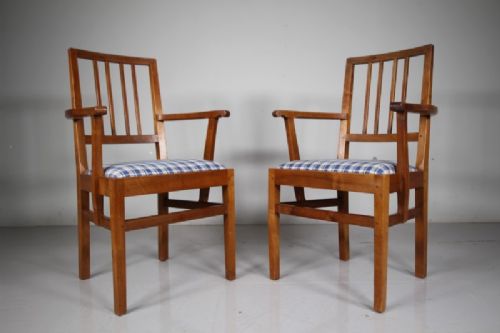
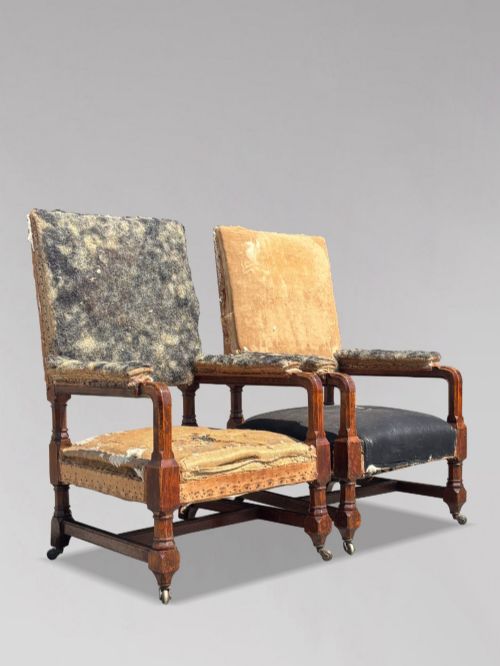
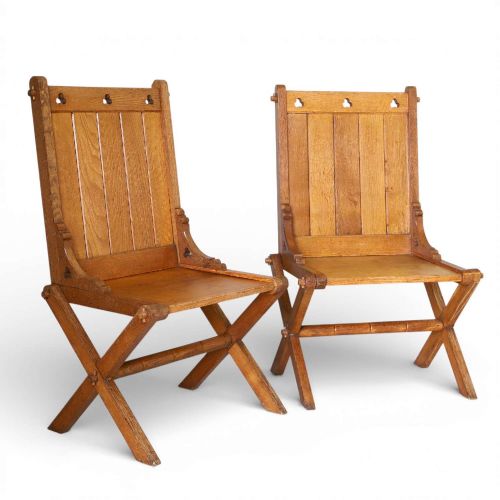
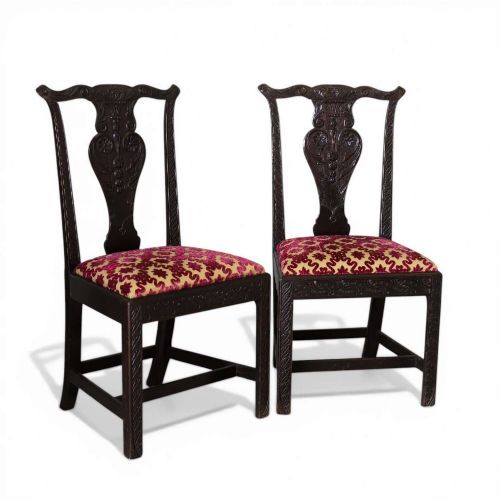

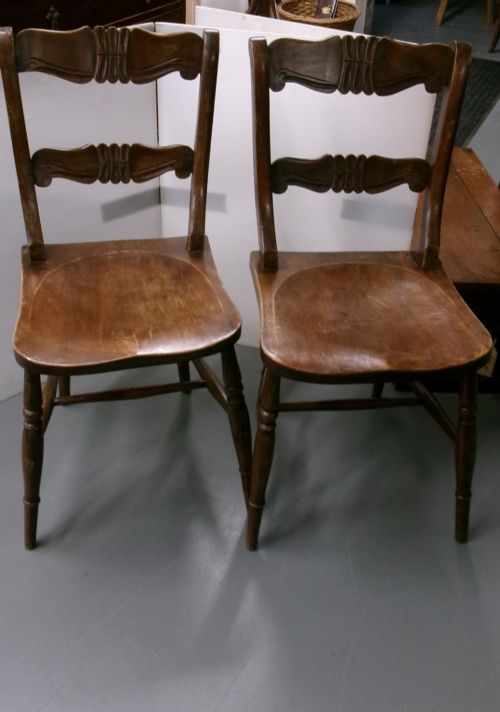

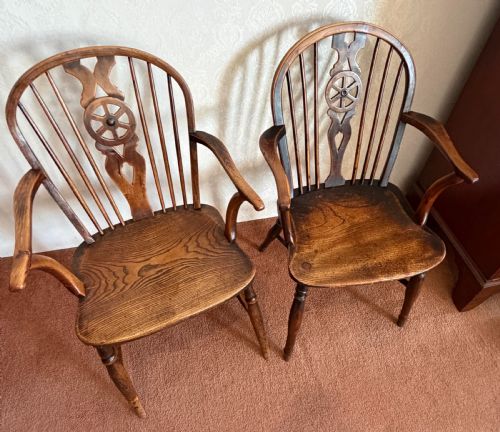


Pair Oak Desk Chairs
When you search for pair oak desk chairs, you enter a dense lineage of workspace seating built from solid timber across three centuries.
Pair Oak Desk Chairs
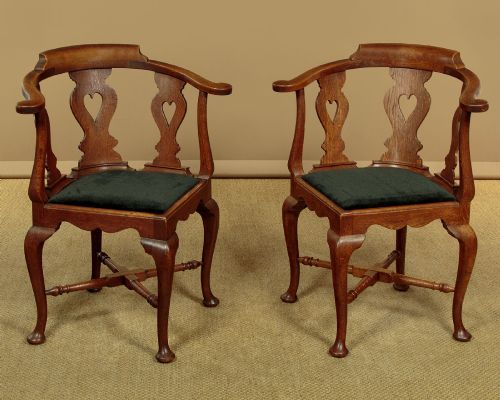
Pair oak desk chairs unite sturdy domestic timber with utilitarian office forms, appearing most frequently in Victorian, Edwardian and early twentieth-century iterations.
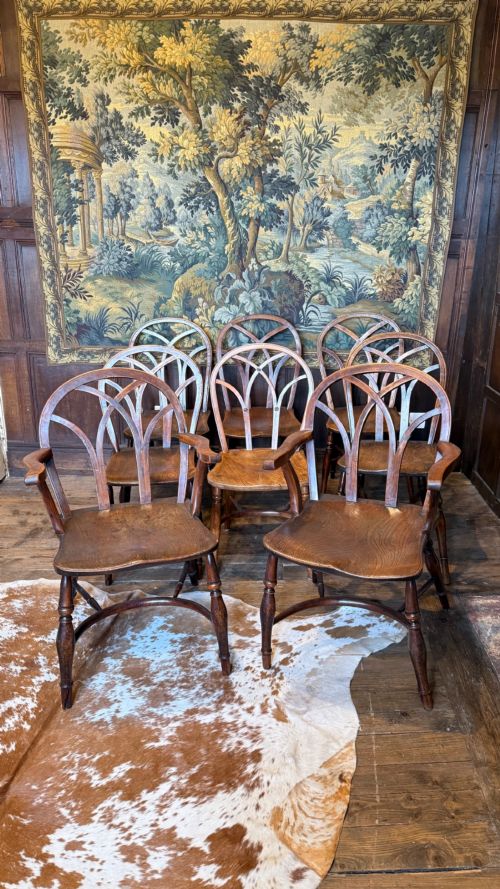
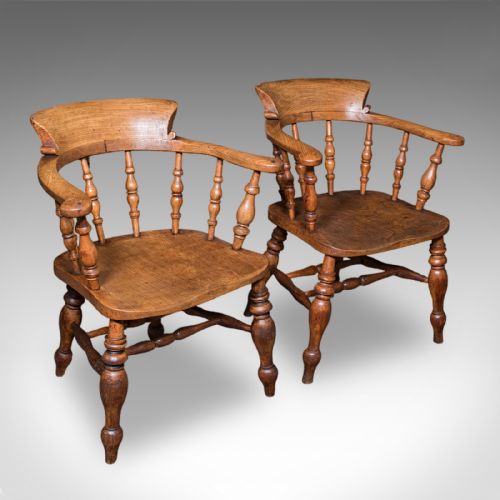
These seating pairs range from simple spindle-backed Windsor forms and revolving captain's chairs to heavy Arts and Crafts library armchairs.
Makers adapted traditional dining and occasional chair patterns into functional desk seating by lowering frames and integrating supportive armrests.
Materials and construction
Makers relied on solid oak as the primary structural frame, frequently supplemented by secondary woods like beech, elm or ash for turned spindles and steam-bent components.
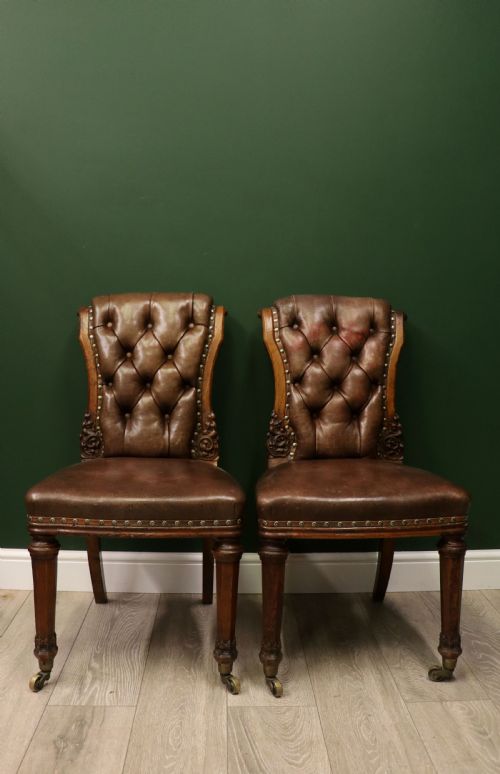
Upholstery techniques combined traditional horsehair stuffing with leather, velvet or woven fabric, secured using brass studs or decorative trimming.
Joinery methods relied on mortise and tenon joints alongside pegged construction to endure the constant shifting and weight associated with daily office use.
Listings feature oak combined with leather, brass, and woven fabrics across Victorian and Edwardian periods.
Assessing construction and design
Superior examples display precise joinery and substantial timber thickness, whereas lesser versions rely on hurried assembly and thinner gauge boards that loosen over decades of use.
Design distinction separates standard utilitarian office seating from pieces bearing the carved details and thoughtful proportions of workshops influenced by the Arts and Crafts movement.
The integrity of the original wood finish and the authenticity of replacement leather or fabric significantly influence the visual weight and historical cohesion of a matched pair.
Edward Barnsley·Shapland and Petter·Simpoles of Manchester·T. Oliver Torquay·Gillow's
The Pair Oak Desk Chairs Glossary
- Carver armchair
- A sturdy wooden chair featuring integrated armrests, traditionally placed at the head of a table or utilised at a large writing desk.
- Captain's chair
- A low-backed wooden armchair with a curved top rail supported by spindles, designed originally for shipboard and later office use.
- Windsor chair
- A chair constructed with a solid wooden seat into which the legs and back spindles are directly inserted.
- Curule
- An ancient X-shaped structural form adapted during revival periods to create distinctive folding or fixed cross-frame armchairs.
- Bobbin
- A style of turned furniture leg or stretcher shaped to resemble spools of thread placed end to end.
Pair Oak Desk Chairs: Frequently Asked Questions
How do I date an oak desk chair?
Dating relies on observing structural clues such as the method of joint cutting, tool marks left on the underside of the seat, and the wear patterns on the timber.
Stylistic flourishes like Gothic revival tracery or Arts and Crafts simplicity also anchor a piece firmly within a specific nineteenth or twentieth-century decade.
Were these chairs originally meant for offices?
Many examples began life in domestic libraries, study rooms, or administrative offices where durable seating was essential for long hours of writing and administration.
Over time, these utilitarian pieces transitioned into versatile domestic furniture prized for their robust proportions.
Are revolving mechanisms common on antique desk chairs?
Revolving mechanisms appear frequently in later nineteenth and early twentieth-century office models, utilising iron spindles and wooden threaded screws to allow rotation and height adjustment.
Simpler stationary side and armchairs remain equally common across domestic writing setups from the same eras.
How do I care for leather upholstery on old desk chairs?
Maintaining vintage leather involves applying specialised conservation waxes to nourish the hide and prevent cracking caused by dry atmospheric conditions.
Avoiding direct sunlight and excessive heat preserves both the supple texture and the original colouration of the material.