




Oak Leather Dining Armchairs
Oak leather dining armchairs bring robust frames and tactile hides to the table, offering sturdy comfort rooted in centuries of craft.
Oak Leather Dining Armchairs
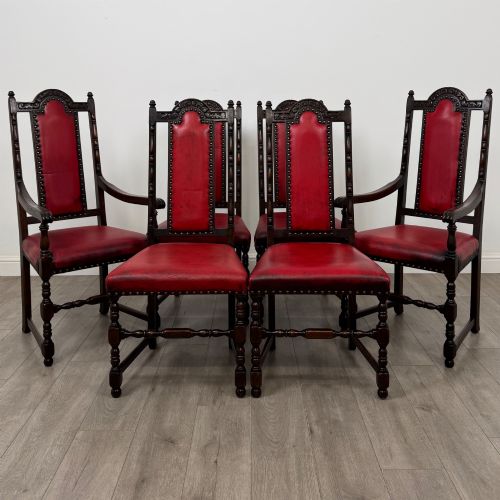
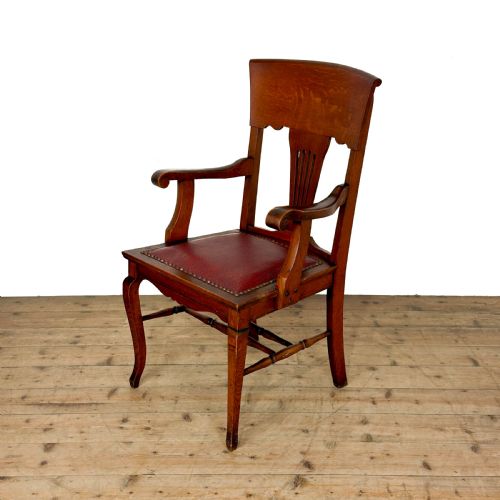
Oak leather dining armchairs combine heavy timber frames with hide upholstery, serving as substantial seating around the dining table. These pieces emerge primarily from Victorian, Edwardian, and early twentieth century workshops, spanning revival styles from Jacobean to Arts and Crafts.
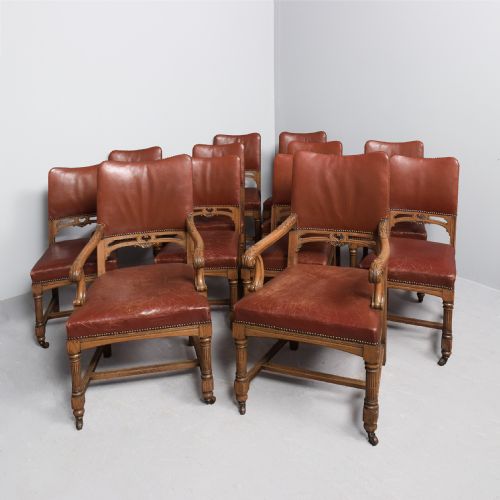
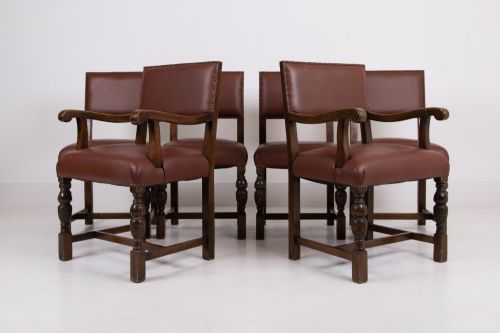
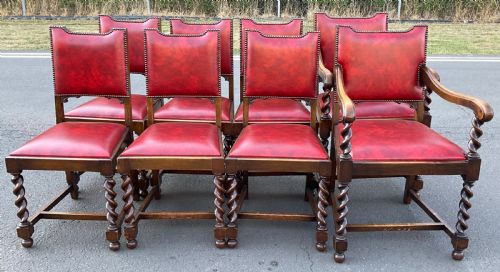
The versions most commonly met on this page range from single carver chairs to large sets of dining chairs featuring open arms or elbow supports. Makers utilised durable timber alongside brass metal studs to secure the leather seats and backs, creating functional seating designed for daily use.
How they were made
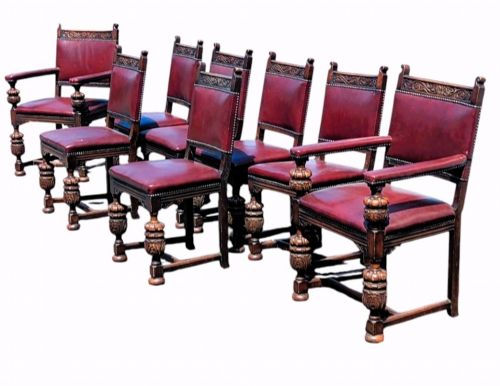
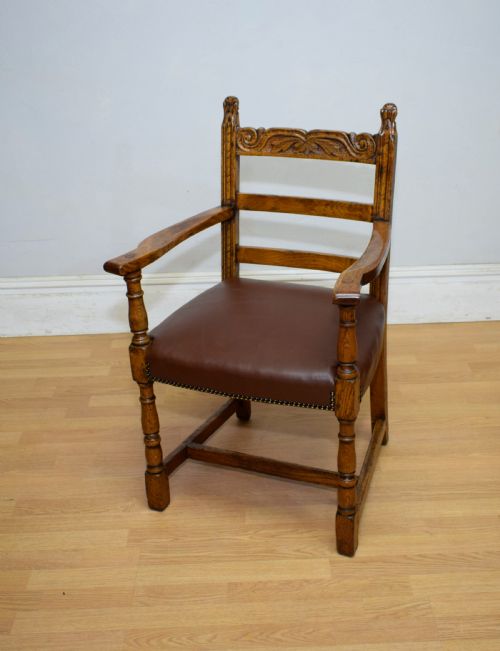
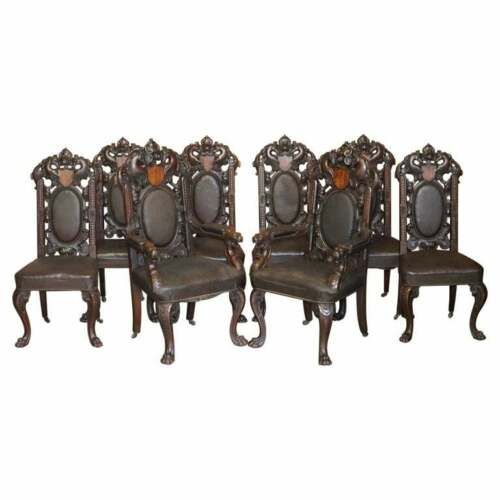
Constructed predominantly from solid oak, these frames rely on traditional joinery methods to support heavy use at the dining table. Timber surfaces often display carved detailing, reflecting revival movements such as Gothic and Renaissance influences.
Leather upholstery is fastened directly to the oak frames using metal studs, providing a firm yet resilient surface. Workshops also incorporated brass hardware alongside mahogany elements in specific hybrid designs.
One set carries a political pedigree, linked directly to Winston Churchill at Harry Warren House.
What varies in quality
The standard of carving across the oak framework distinguishes simpler utility seating from ambitious exhibition pieces. Deeply carved throne carvers and heavily detailed Victorian frames demand greater skill than plain Edwardian timber rails.
The treatment and selection of the leather upholstery also dictate the tier of the piece. Thick hides secured with neat rows of metal studs indicate higher workshop standards than thin replacements.
Lamb Of Manchester·Howard & Son's
The Oak Leather Dining Armchairs Glossary
- Carver armchair
- An armchair designed with open elbows, traditionally placed at the head of a dining table. These pieces match larger sets of side chairs.
- Gothic Revival
- An architectural and decorative style drawing inspiration from medieval design. Pieces often feature pointed arches, heavy mouldings, and religious motifs.
- Jacobean Revival
- A furniture style reviving early seventeenth century English forms. It is characterised by dark oak, geometric panel turnings, and stiff upright backs.
- Brass metal studs
- Small decorative fasteners with rounded heads used to secure leather upholstery to wooden frames. They trace the edges of seats and backs.
- Elbow armchair
- A seating form featuring low armrests designed to support the elbows. These chairs offer a compact alternative to full carvers.
Oak Leather Dining Armchairs: Frequently Asked Questions
How do I care for antique leather?
Keep leather away from direct sunlight and heat sources to prevent the hide from drying out and cracking.
Apply a specialist leather conditioner periodically to maintain flexibility and preserve the original finish.
Can I mix armchairs with side chairs?
Placing carver armchairs at the head and foot of a dining table while using matching side chairs along the sides is a traditional arrangement.
Ensure the timber tones and period styles align closely to maintain a cohesive look across the dining set.
How do I distinguish Edwardian from Victorian oak?
Victorian oak framing tends to feature heavier proportions and darker, more intense finishes influenced by Gothic and Renaissance revivals.
Edwardian pieces often utilise lighter golden oak tones with simpler lines reflecting the transition towards Arts and Crafts simplicity.
Are these chairs suitable for daily use?
Solid oak frames and durable leather seats make these armchairs robust enough for regular seating around a modern dining table.
Check that the joints remain tight and the upholstery support is stable before putting them into daily service.