

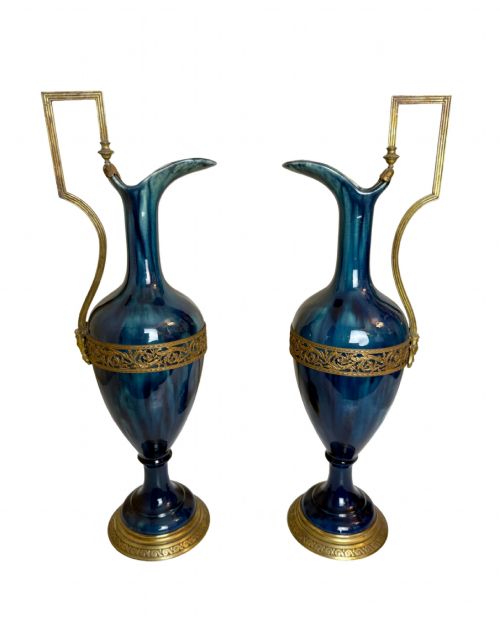
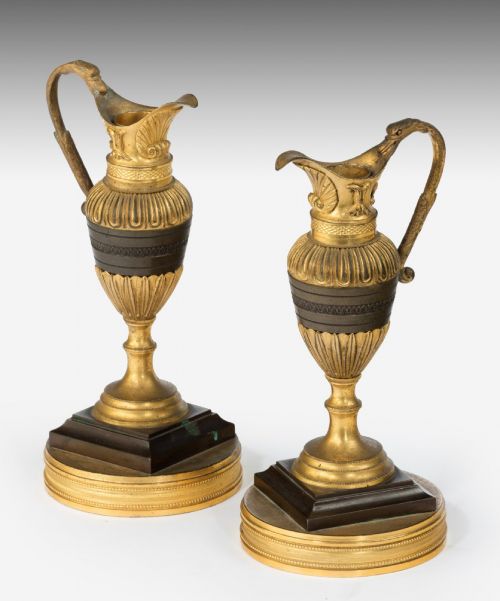

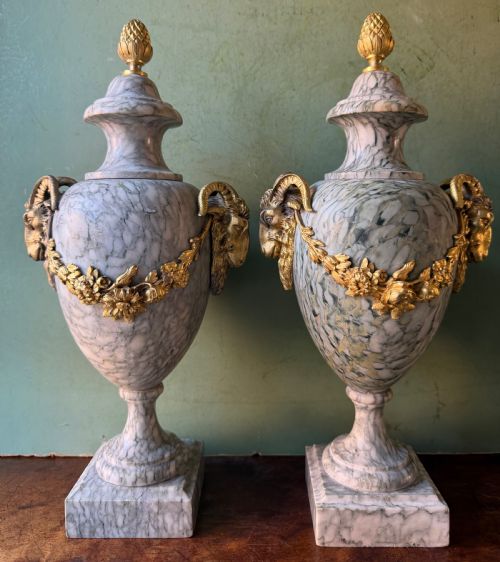
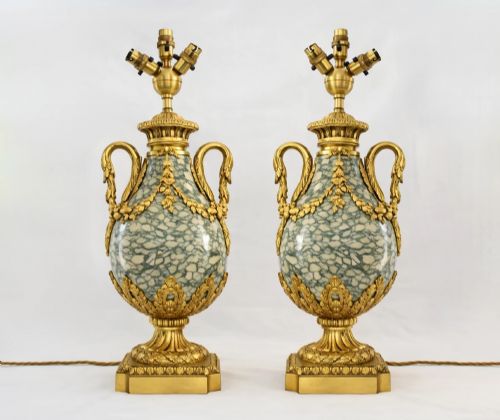



Pair Neoclassical Bronze Vases
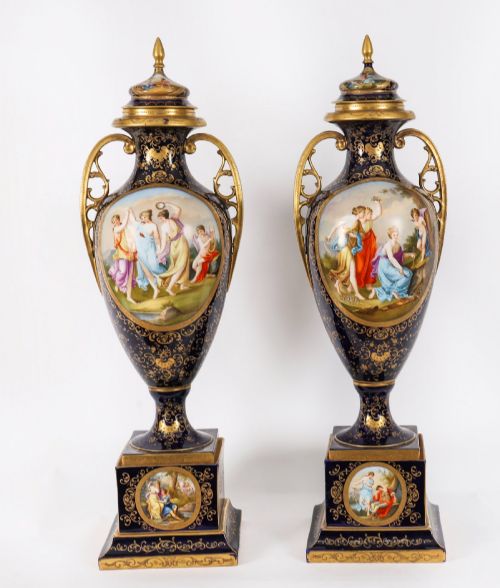
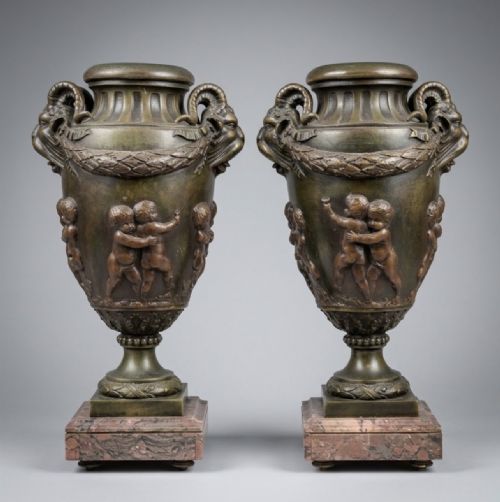
Pair neoclassical bronze vases bring classical antiquity into domestic interiors through sculptural metalwork shaped into ancient vessel forms.
Pair Neoclassical Bronze Vases
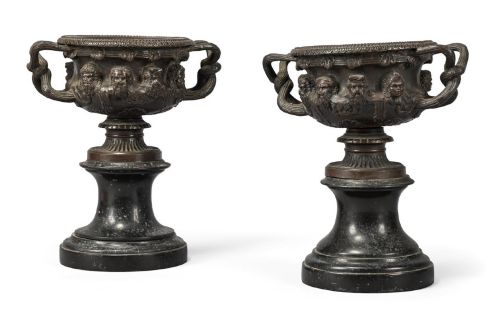
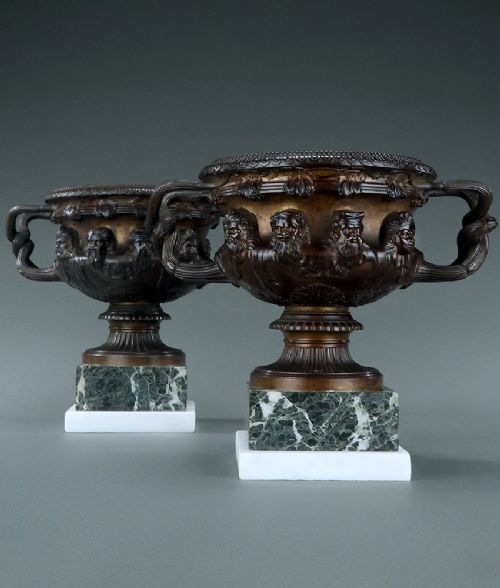
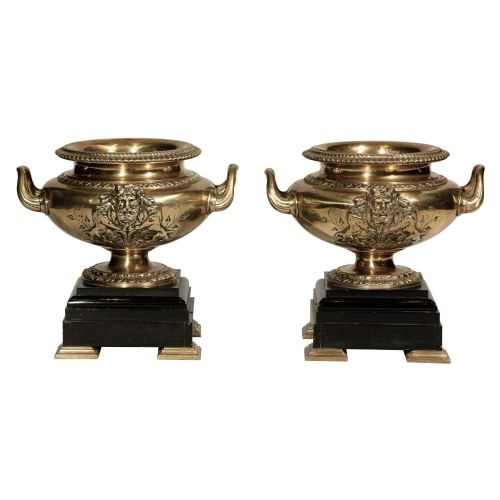
When you search for pair neoclassical bronze vases, you find decorative metal vessels modelled on ancient Greek and Roman urns, amphorae, and cassolettes. The pieces available here span the nineteenth century, with French Empire, Louis XVI style, and Grand Tour iterations appearing frequently alongside Victorian examples.
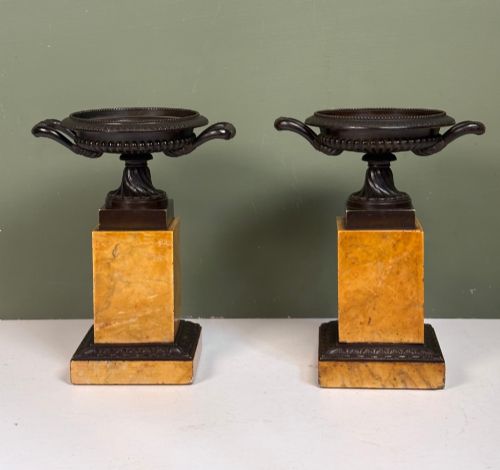
Makers and foundries cast these objects in bronze, ormolu, and spelter, frequently mounting them on marble plinths made of white, green, or rouge stone. Forms range from campana urns and tazza vases to lidded cassolettes and ewers intended purely for display.
Origin points cluster around French and Italian workshops producing decorative objects for collectors on the Grand Tour. Buyers encounter matching sets designed symmetrically for mantelpieces, console tables, and pedestals.
Materials and construction methods
Foundries utilised lost-wax and sand-casting techniques to shape bronze and ormolu into classical contours. Artisans then chased the cooled metal surfaces by hand to sharpen architectural details like acanthus leaves, classical figures, and beaded borders.
Stonemasons turned marble and onyx on lathes to create weighty bases and bodies, drilling internal channels when objects functioned as table lamps. Ormolu mounts and gilt bronze trim were mechanically fastened or pinned to the stone components.
Pair Neoclassical Bronze Vases Retail Price Guide 2026
Typical asking prices for pair neoclassical bronze vases among the pieces listed under this phrase on Sellingantiques today, from the lower quarter to the upper quarter. They describe what is for sale here now, not the wider market.
Some nineteenth-century decorators converted ancient wine vessels into reading lamps simply by drilling through the middle of a Roman emperor.
Assessing quality in cast metal and stone
Quality rests primarily on the crispness of the metal chasing and the depth of the subsequent patination. Finer examples display sharp relief work where human hands have refined the raw cast, whereas lower tiers show softened edges and uniform factory finishing.
The choice of materials also divides the range, distinguishing solid bronze castings with fire-gilt ormolu from substitute metals like spelter mounted on simpler stone bases. Heavier, denser marble plinths and tightly fitted joints indicate superior workshop production.
Sevres
The Pair Neoclassical Bronze Vases Glossary
- Ormolu
- Gilt bronze produced by applying a mercury-gilding amalgam to cast bronze. This technique creates a durable, golden surface finish characteristic of French decorative metalwork.
- Campana urn
- A bell-shaped vessel with a flaring rim and a pedestal foot. The form derives directly from ancient terracotta and marble garden pots discovered in Italy.
- Cassolette
- A decorative vase featuring a reversible lid that functions either as a solid cover or an incense burner. These dual-purpose vessels often incorporate ormolu mounts on marble bodies.
- Tazza
- A shallow saucer-like cup mounted on a stem and foot. Ancient examples served for libations, while nineteenth-century ornamental versions displayed classical relief scenes.
- Grand Tour
- A cultural journey undertaken by wealthy young Europeans to study classical antiquities in Italy. Souvenirs purchased on these trips inspired domestic bronze reproductions.
Pair Neoclassical Bronze Vases: Frequently Asked Questions
What is the difference between bronze and spelter?
Bronze is an alloy of copper and tin that yields high tensile strength and accepts sharp chasing work after casting. Spelter is a softer zinc-based alloy that required less labour to produce and appears more frequently in late nineteenth-century decorative pieces.
Objects cast in bronze maintain crisper surface details and greater weight compared to spelter alternatives. This distinction affects both the durability of the vessel and its position in the historical hierarchy of manufacture.
Were these vases made to hold water?
Nineteenth-century decorative metal and stone vessels were created primarily for visual display rather than horticultural use. Many incorporate internal lead liners or mounting pins that preclude practical utility.
Placing water or fresh flowers inside these antique pieces can damage interior linings, stone bases, and metal patination. Owners use them exclusively as standalone sculptural objects or fitted lamp bases.
How do I care for nineteenth-century ormolu?
Gilt bronze requires gentle dusting with a soft, dry brush to prevent the accumulation of grit within recessed chasing. Moisture, abrasive cleaners, and chemical polishes will strip the original surface gilding permanently.
Maintaining a stable indoor humidity level prevents the underlying metal from oxidizing and protects any attached marble components from thermal shock or staining.
What defines the Grand Tour style?
Grand Tour objects are nineteenth-century miniature bronze or marble replicas of famous classical antiquities seen in Italian collections. These pieces satisfied the desire of travellers to bring archaeological aesthetics back to domestic drawing rooms.
Common subjects include specific excavated artefacts like the Warwick vase, the Albani vase, and the Borghese vase. Workshops in Rome, Florence, and Paris specialised in producing these accurate scale models.